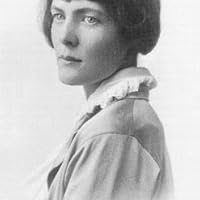
Jean-François Lyotard (DrE, Literature, University of Paris X, 1971) was a French philosopher and literary theorist. He is well-known for his articulation of postmodernism after the late 1970s and for his analysis of the impact of postmodernity on the human condition.
He went to primary school at the Paris Lycées Buffon and Louis-le-Grand and later began studying philosophy at the Sorbonne. After graduation, in 1950, he took a position teaching philosophy in Constantine in French East Algeria. He married twice: in 1948 to Andrée May, with whom he had two daughters, and for a second time in 1993 to the mother of his son, who was born in 1986.
Lyotard has been accused of troping the figure of "the jew" in this text, but isn't his point precisely the fact that the Jewish people are subjected to scapegoating because of this mechanism of troping, this uncanny doubling in which they symbolically figure both as a specific category and a general "type"? Nevertheless, the entire first section is a reading of Freud on repression in relation to memory, while the latter is a short excursus on Heidegger in the wake of Farias' 1987 publication which largely takes its cues from Lacoue-Labarthe on the same topic.
Normally I don't count books on GR that I only intended to partially read in the first place, but I'm behind on my "reading goal," so alas.
Lyotard takes the Holocaust to psychoanalysis in the first essay. Ideally the reader here would be very well-versed in Freud, which I am not. Also helpful to have read Wiesel, who Lyotard spends a lot of time on. All in all a pretty compelling essay. David Caroll's introduction is also pretty fantastic.