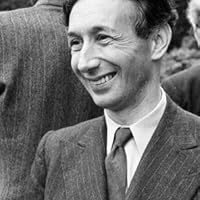
The late J.L. Austin's influence on contemporary philosophy was substantial during his lifetime, and has grown greatly since his death in 1960. This third edition of Philosophical Papers , the first edition of which was published in 1961, includes all of Austin's published papers (except "Performatif-Constatif") as well as a new essay entitled "The Line and the Cave in Plato's Republic ", which has been reconstructed from Austin's notes.
John Langshaw Austin (March 26, 1911 – February 8, 1960) was a British philosopher of language, born in Lancaster and educated at Shrewsbury School and Balliol College, Oxford University. Austin is widely associated with the concept of the speech act and the idea that speech is itself a form of action. His work in the 1950s provided both a theoretical outline and the terminology for the modern study of speech acts developed subsequently, for example, by (the Oxford-educated American philosopher) John R. Searle, William P. Alston, François Récanati, Kent Bach, and Robert M. Harnish.
After serving in MI6 during World War II, Austin became White's Professor of Moral Philosophy at Oxford. He occupies a place in philosophy of language alongside Wittgenstein in staunchly advocating the examination of the way words are used in order to elucidate meaning. Unlike many ordinary language philosophers, however, Austin disavowed any overt indebtedness to Wittgenstein's later philosophy. His main influence, he said, was the exact and exacting common-sense philosophy of G. E. Moore.
He was president of the Aristotelian Society from 1956 to 1957.
J. L. Austin in these collection of essays seeks to dissolve many traditional philosophers problems by seeking to re-orient how often our language escapes what we want to articulate and leads us astray into inflating correct claims wrongly. Instead, basing ourselves on our ordinary language with its regular use in practical action, they should have the first word to consider in being likely more diagnostic in distinguishing between things at least -- even if these may be insufficient. His general appeal towards a deflationism in what we speak about is also very good.
He has an excellent discussion of, say, "truth" and how truth is just one of many ways we judge sentences in fitting their sentences in their appropiate ways -- with truth being more so a minimum or an ideal in its use, which however is often minimised by reducing the discussion to a binary of truth and wrong. Further, he discusses well what we often do with language: seek to convey and do things, and how most philosophy is incapable of doing so. He also addresses skepticism well, in how we regularly depend in our use of language on acknowleding the reality of other people and their minds as distinct beings - and while we cannot justify such things, we can describe our dependence on them. Which seems all we can say in response to skepticism.
All in all, a great work making it all the more unfortunate that OLP shortly after his death largely ceased to be a movement. In seeking to re-orient philosophy towards ordinary language, OLP promises to offer much more useful discussions and fruitful discussions over how philosophy conventionally works.
Reading most philosophers is like being in the part of the hardware store where they display the faucets; with Austin, you get in among the pipes (in this analogy, language = plumbing).
JL Austin is probably the most acclaimed analytic philosopher in literary studies. Let's talk about his style first. To compare, Russell discussed logically. Whitehead discussed intuitively. Carnap discussed accurately. Ayer discussed pensively. Popper discussed simply. Whereas JL Austin, from his younger days (circa 1939) to his later career (circa 1958) wrote really ironically, even with a sense of sarcasm. The first paper in this book written in 1939 was enough to unsettle me by its sarcasm on traditional philosophy.
Even though Ayer was known for his polemic style, he was not sarcastic but serious and pensive in criticizing (or even "roasting" the traditional philosophy). However, in this book by JL Austin, you'd often come across a sarcastic or even derogatory language intentionally used by the author as a speech act, and it's more than unsettling to see other philosophers including both non-analytic and analytic ones (including GE Moore).
Even though his criticism on Moore in particular has a great value as a study asserting that "if" has a more variety in its appearance and use than just an insinuation of "can," his boastful style in saying "we ever can get rid of philosophy, by kicking it upstairs" (P180) even made me wince at the page despite I somewhat share his opinion about the comprehensive studies of languages.
I saw someone describe Austin's way of doing philosophy as "linguistic phenomenology", which I find to be a perfect term. The way Austin discusses philosophical problems is by meticulously and pedantically analyse how words and phrases are used in ordinary language. This style of philosophy can be frustrating to read, and might seem like a mere playing with words. But in reality, I think it is the only way to actually analyse the meaning of words, and a legitimate way to investigate philosophical concepts. Because the meaning of a word is not a transcendent notion definable for all languages. For example as the intension (as opposes to extension) of a term. That is, meaning is not an entity that words correspond to. Instead, the meaning of words needs to be established on an individual basis, and the only way of doing this, is by investigating how particular words are used in everyday language. Since usage is all there is to linguistic meaning, questions in philosophy such as "what is reality?" might be given an answer by analyzing how "real" is used in English. Though this way analyzing concepts may be legitimate, it might not be to the satisfaction of the more philosophically inclined.
Good but dated, in the sense that the interest of the questions he discusses was - I suppose - clear in the period in which they were written (or delivered as talks, or whatever) but it's much less so now. The result is that much of it comes across like the most footling, albeit high-class, pedantry. I don't think it's lost the relevance that it had, but that that relevance is now obscure. Not JL's fault, he's been dead these 60 years or so. But probably best read with guidance.
Oh. I also like this book. It help me write my discussion board post because after reading I had a lot of thoughts about everything. It's really useful and interesting for reading book.
J L Austin delivers a masterwork in Philosophical Papers, showing that true dissent isn't loud rhetoric—it's refusing to let the system dictate your personal values.