Jump to ratings and reviews
Rate this book

Повесть о жизни #1

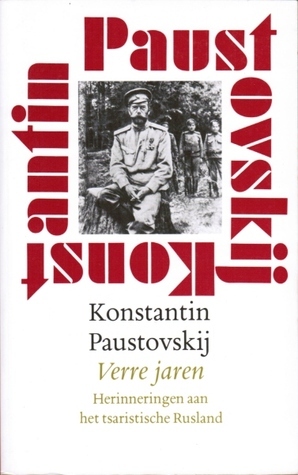
Verre jaren : herinneringen uit het tsaristische Rusland

Rate this book
Verre Jaren is het eerste deel van de herinneringen van Konstantin Paustovskij. Hierin vertelt hij over zijn jeugd in het tsaristische Rusland. Hij beschrijft de klassieke Russische jeugdvakanties op het land, en heeft het over zijn ontelbare familieleden, verwanten en zijn talloze vrienden in het Kiev van zijn jeugd. Kortom, hij schetst in Verre Jaren een ontroerend en sfeervol portret van het behaaglijke burgerlijke milieu waarin zijn leven als kleine jongen zich voltrok.
Paustovskij die behalve schrijver ook arbeider, matroos, journalist, soldaat en vooral avonturier was, is wereldberoemd geworden door zijn vermogen de schoonheid van de natuur te verbeelden. Zijn bovendien zo lyrische waarneming van de werkelijkheid maakt hem tot de uniekste en vooral ook meest exotische verschijning in de moderne Russische literatuur.

343 pages, Paperback

First published January 1, 1946

17 people are currently reading
225 people want to read

About the author

Konstantin Paustovsky

322 books119 followers
Konstantin Georgiyevich Paustovsky was a Russian Soviet writer nominated for the Nobel Prize for literature in 1965.

Ratings & Reviews

What do you think?
Rate this book

Friends & Following

Create a free account to discover what your friends think of this book!

Community Reviews

5 stars
147 (59%)
4 stars
81 (32%)
3 stars
19 (7%)
2 stars
0 (0%)
1 star
1 (<1%)
Displaying 1 - 29 of 29 reviews
Profile Image for Vit Babenco.
1,781 reviews5,776 followers
May 19, 2020
Konstantin is seventeen years old – it is his last year at school – and he hurries to see his dying father. And he starts to recall his Childhood and Schooldays, his parents, grandparents, other close relatives and friends.
The garden acted upon my imagination with extraordinary force. It must have been there that I first conceived my passion for travel. I used to imagine a far-away country which I felt certain that I would some day visit. It was an undulating plain filled with grasses and flowers as far as the eye could reach. The towns and villages were submerged in the vegetation, and the coaches of the express trains which crossed this region had thick layers of pollen clinging to their sides.

The entire world is seen with the new eyes… And everything that happens, happens first time: the first awareness of beauty, first book, first love, first written story…
My childhood was nearly over – and it’s too bad that only the grown-ups know how nice it was to be a child. In childhood, everything was different. Everything was more vivid – the sun brighter, the smell of the fields sharper, the thunder louder, the rain more abundant and the grass taller. And our hearts were bigger, our griefs more poignant, and our country – that soil of our birth which is the greatest gift we have in life, to tend, care for and protect with our whole being – was more enigmatic.

Childhood isn’t a rehearsal of life, childhood is the roots of life.
Profile Image for Caroline.
910 reviews310 followers
May 8, 2017
This is the first in the six volumes of memoirs written by the Ukrainian novelist Konstantin Paustovsky, although in a larger sense he seems to have considered himself Russian. It is a phenomenal work of memory and interpretation, helping the reader to understand both the man and the times. But the focus is always on the man. To grasp many of references you need to bring some understanding of late tsarist Russia with you (e.g. the 1905 uprising), as well as the outline of the various groups agitating for change and then battling each other after the Tsar abdicated in February 2017.

But this first volume is very personal; the story of a youth who really has very little idea of the political situation going on around him. Right off the bat Paustovsky sets up one of his effective structures: the opening scene finds the narrator traveling to his father’s deathbed in poor, rural Ukraine. The boy is clearly middle class, enrolled in a the finest gymnasium in Kiev, but living on is own at sixteen. After a harrowing ride through storm water sloshing over a causeway to reach his father in time, Konstantin has a few words with the dying man, and we sense there is a tragic story with his father at fault. But what happened?

Paustovsky then pulls back to start with the happy Russian family, and to limn in bit by bit it’s unique unhappy course. We find that we are in the company of a supremely sensitive and loving soul. The physical descriptions of forest, sea, and storm are tactile; so beautiful and so concrete at the same time. You absolutely feel what it was like to walk through a storm or listen to spring.

You also go out on the streets with the seven year old Konstantin during the 1905 uprising in Kiev, the first of countless times he seems destined to be crushed, shot, drowned, frozen, smallpoxed, starved, or otherwise killed off in the three volumes I've read so far. As a child in 1905, he sees only the physical uproar, and the grownups in his household trying to stave off the pogroms undertaken by thug parties. This attitude has filtered to the children: a few years later the non-Jewish boys taking their final examinations at the gymnasium all agree to get less than perfect marks so that the Jews in their class will win all the gold medals and not be blocked from university on sham excuses. Alas, WWI makes this a futile sacrifice.

To me the most powerful passages were the descriptions of his teachers of the gymnasium. Most of these erudite men were the equivalent of university professors, totally committed to their subjects and their students (of course there were the usual weak instructors, who suffered at the hands of schoolboys). Paustovsky reproduces their lectures on the nobility of language and literature, and the boys' responsibility to live their best lives. These scholars no doubt could see something like WWI looming, and felt that the tension over the failing tsarist system had to end in violence. So they were speaking to boys they knew would be in for very hard times, exhorting them to hold on to their humanity. One says:

But I want to challenge you to become generous-minded people. Heine said that there are more fools on this earth than there are people. He was, of course, exaggerating. But what does this mean, really? It means that everyday we meet people whose existence brings no hapiness or usefulness to themselves or to those around them. Always be afrid of being useless. Whoever you are, remember the wise counsel; let no day pass without having written something. Work! For what is talent, after all? It’s work, work, work. Love your work, and may you always be sorry to put it down.


It is also interesting to see the book written very much in the fifties to mid-sixties. After Kruschev denounced Stalin, but before the temporary thaw had released some gems. Paustovsky cites his schoolmates at the gymnasium who later became famous or at least impressed him. Among them was Mikhail Bulgakov, who Paustovsky says was ‘as quick as a bird’ and

full of tricks, jokes, and mystification. He transformed school customs we had learned by heart into a world of improbable events and persons. Any colorless supervisor like Shponka, once he had been involved in Bulgakov’s imagination, grew to the dimensions of a Tartarin de Tarascon. He would begin to live a second, mysterious life, no longer as Shponka with a puffy, alcoholic nose, but as the hero of uproarious, miraculous happenings. By the tricks he thought up, Bulgakov moved the people around him from their real world out to the very edge of another world of almost fantastic exaggeration.
.

The footnote gives his details as A F Bulgakov (actually Mikhail's father’s initials) and both the footnote and Paustovsky give his major work as the play The Days of the Turbins. In 1965, when this was published, The Master and Margarita was just on the verge of being published for the first time, decades after Bulgakov wrote it. So no one knew that he had written something that would incarnate Paustovsky’s portrait of him.

But there are also long passages set in southern and rural Ukraine during vacations, where we meet the extended family and come to know a geography we will revisit in later volumes. At the end of this volume there is a masterful set piece of a long- threatening and finally unleashed monster storm that breaks a drought. And indeed, WWI is about to interrupt Konstantin’s world.

And the storm came at last...The sky seemed filled with smoke. Enormous black puffs moved behind it, like petrified cotton. These were the storm clouds seen through the smoke. Dead silence stood all around us. The frogs and the birds grew silent, fish stopped splashing. Even the leaves stopped quivering, as if frightened by the storm...At twilight the smoke disappeared, and a great cloud as dead as night itself filled half the sky. There were lightning flashes, but no thunder. A dull moon rose in the east. It moved all alone toward the big cloud, abondoned by everything else--not one star was to be seen around it. Each flash of lightning made the moon turn pale....Moving yellow whirlwinds began to be seen in the cloud. its edge drooped down to the earth. Lightning ran and danced in the black caverns of the sky.


And then in the vibrant, moist aftermath of the storm he frees himself from the pain of being jilted by a girl, in words that exemplify his positive, embracing view of life:

And I almost forgot that I had just lived through my first betrayal. My only wish was to show Lyuba that I was not in the slightest disappointed by her, and that my life was full of such interesting things that to suffer through any foolish love affairs, with sighs and veiled confessions, would be simply funny.
"And in the long run isn’t this true?” I thought. “How is my feeling for Lyuba better than this sunshine?” It was already falling through the greenery onto the dark water. “How is it better than the wonderful smell of these unmowed fields? How is it better than even that green beetle sliding hurriedly along the planked wall of the bathhouse?”
It was easy to find consolation. Obviously, because everything around me was so full of wonder and beauty.


Note: Joseph Barnes won the PEN translation award for his work on Paustovsky’s memoirs.
Profile Image for Bas.
348 reviews5 followers
October 17, 2023
Lyrisch maar beknopt beschreven jeugdherinneringen van Paustovski uit Kiev, de bossen bij Brjansk en de kust van de Zwarte Zee. Hierin komt mooi de sfeer en cultuur van het Rusland van voor de Eerste Wereldoorlog naar voren. Interessant ook om andere schrijvers zijdelings voorbij te zien komen (Tsjechov, Tolstoj, Lermontov). De vertaling van Wim Hartog is schitterend. Ik begrijp dat Paustovski al veel liefhebbers heeft in Nederland en ik sluit me graag daarbij aan. De volgende vijf delen staan al op mij te wachten in de boekenkast.

"Mijn kindertijd was bijna voorbij. Het is erg jammer dat we pas als we volwassen worden de bekoring van deze tijd beginnen te begrijpen. Als kind was alles zo anders. We bekeken de wereld met klare en zuivere ogen, alles leek zoveel stralender. De zon scheen feller, de velden waren geuriger, de donder rolde luider, de regen viel veel dichter en het gras was hoger. En ruimer was het hart van de mensen, bitterder het verdriet en duizendmaal raadselachtiger de aarde, onze geboortegrond, het mooiste geschenk dat wij voor het leven meekrijgen. Haar moeten wij bebouwen, behoeden en beschermen met alle krachten die wij in ons hebben." (p.98)

Okt 2023: Herlezen voor de humanistische leesclub, het was weer een feestje.
Profile Image for Daniel.
Author 2 books53 followers
January 4, 2016
I found Paustovsky's six volume Story of a Life in my sister's house in rural Nova Scotia during Christmas break. My brother-in-law said he had inherited the books from a minister who, I think, had died. He didn't want them and let me take all six. Today I finished the first volume. Paustovsky's narrative reads like a story and his impressions of his early life in Kiev are vivid and moving. I'm taking the second volume with me back to Milwaukee. I hope I get around to reading the third before the fall. Judging from the number of times Paustovsky's books have been added to shelves on Goodreads, it seems like he is unknown.
Profile Image for kika de wit.
28 reviews1 follower
July 17, 2025
Anekdote alla paustovskij:
De verzamelwoede omtrent Arbeiderspers en privé domein edities heb ik geërfd van mijn vader. Nadat zijn werkgever Paustovskij aanraadde, schafte hij dan ook snel een deel van P’s herinneringen aan, zijn tweede werk. Sindsdien staan deze boeken hoog op mijn vaders verlanglijst en mag hij zich bij elke verjaardag aan een nieuw deel verwachten. Vanzelfsprekend was Verre jaren het vierde deel dat ik in huis haalde voor zijn zesenvijftigste verjaardag. Nu besloot meneer toch niet dat mijn giften te lang op zich lieten wachten en weliswaar twee dagen voor zijn verjaardag zelf Verre jaren aan te schaffen! Nu goed, geen cadeau dit jaar voor hem maar wel een voor mezelf. Nu kon ik op mijn gemak ook aan P’s herinneringen beginnen. Al snel waanden we ons in de wereld van de Russische geplogendheden, een wereld waarmee mijn vader al beter bekend was dan ik. Dit feit weerhield mij er echter niet van Paustovskij’s levenswerk te verorberen. Zijn lyrische maar toch toegankelijke schrijfstijl maakten van dit boek heerlijk tijdverdrijf. Zin om nog dieper in de Russische geschiedenis te duiken!
106 reviews
October 14, 2021
Fantastisch weemoedig en zeer interessante blik op de (vind ik persoonlijk) zeer fascinerende begin 20e eeuw
Profile Image for Saskia.
317 reviews6 followers
January 19, 2015
Gelezen voor de leesclub, voorstel van de Russische Aleksej. Leest vlot als een verzameling korte verhalen die samen de jeugdherinneringen vormen van de schrijver aan zijn familie en zijn tijd op het gymnasium in Kiev. Paustovski is wel een echte romanticus, vooral in zijn gedetailleerde natuurbeschrijvingen en het tragische lot van veel personages. Dat is voor mij als moderne lezer wel wat veel van het goede en wel even wennen. Maar Paustovski doet het met verve.

Wel mist het boek wat urgentie en diepgang voor mij. Vandaar toch niet meer dan 3 sterren. Wat is het meer dan jeugdherinneringen? Wat maakt het tot literatuur? Natuurlijk doet de schrijver duidelijk iets met de chronologie, hij begint met de dood van zijn vader (Konstantin is 17), en gaat dan terug naar de kinderjaren. Aan het eind van het boek komt hij weer aan bij de dood van zijn vader en daarna volgt nog een korte tijd. Daarmee wil hij die gebeurtenis extra nadruk geven. Maar waarom precies? Is het het einde van de jeugd, waarin hij beseft dat hij nu de verantwoordelijkheid zelf moet nemen? Zoiets dachten we met de hele club.
Verder heb ik ook de indruk dat de grote schrijver de werkelijkheid weleens in zijn eigen voordeel naar zijn hand zet: hielpen ze echt joden bij de pogroms, herinnert hij zich Boelgakov als vechtersbaas, durfden ze de tsaar zo belachelijk te maken... Nou ja, dat mag natuurlijk ook. Maar in de hele leesclub was ik de enige die daar vraagtekens bij zette, iedereen las het als zuivere herinneringen. Hoe is het mogelijk dat je zulke gedetailleerde herinneringen hebt? Ha ha.
Profile Image for Katrien Vermeersch.
65 reviews2 followers
March 30, 2025
Het eerste deel van ‘Verhaal van een Leven’, de zesdelige autobiografie van Konstantin Paustovskij (1892–1968), is een zeer mooi geschreven terugblik op zijn jeugd in het Tsaristische Rusland. Hij weet heel goed zijn omgeving tot leven te brengen, zoals wanneer hij beschrijft hoe de natuur verstilt vlak voor een onweer – een detail dat hij met een poëtische precisie vangt.
Het boek is opgebouwd uit korte hoofdstukken, elk gewijd aan een herinnering uit zijn jeugd. Dit maakt het enerzijds toegankelijk, maar anderzijds zorgde dat er ook voor dat je als lezer het boek gemakkelijk aan de kant kon leggen waardoor mijn affiniteit met het boek afnam naarmate de tijd vorderde. De vertelstijl vroeg om geduld, en het werd soms eerder een opgave dan een genot om verder te lezen.
Toch blijft Paustovskij een opmerkelijk schrijver, wiens stijl en observatievermogen bewonderenswaardig zijn. Ondanks mijn wisselende betrokkenheid bij dit boek, ben ik zeker geïnteresseerd om meer van zijn werk te ontdekken.
Profile Image for Trounin.
1,897 reviews46 followers
October 11, 2017
Что толку стремиться к спокойствию, если оно отягощает своей пустотой? Человеку постоянно желается быть счастливым и довольным жизнью. А поживи он в бурное время, когда общество действительно разделено на людей, мысли которых разнились не по одному вопросу, а по множеству? Например, захвати он в воспоминаниях начало XX века, как то было с Константином Паустовским. Что тогда? Бурление событий, столкновение интересов, твёрдый настрой на осуществление задуманного — завтрашний день требовал быть реализованным сегодня. Будучи юным, Паустовский оставался невольным созерцателем тогда происходившего. Однако, оно глубоко запало ему в душу, поэтому, достигнув должной зрелости, он решил пересмотреть прежде с ним происходившее.

(c) Trounin
Profile Image for Jacques.
488 reviews9 followers
May 2, 2021
Konstantin Paustovski vertelt in het eerste deel van zijn zesdelige autobiografie de sociale en politieke geschiedenis van Rusland en Polen voor het uitbreken van W.O.-I. Verre jaren gaat over Kiev, Paustovski's jeugd, zijn opleiding, zijn familie en familieproblemen. Over de tsarentijd en de politiek in de Sovjet Unie. Rustig, uitgebreid, gedocumenteerd, poëtisch en met een grenzeloze verbeelding geschreven (1946).
'Konstantin Paustovski is voorbijgegaan. Zijn werk zal hem op den duur wel volgen. Maar de zon zal nog eeuwen ondergaan in de schittering die hij heeft beschreven' (Vrij Nederland).
Profile Image for François.
392 reviews
July 21, 2022
Paustovsky is een fantastische verteller. In dit eerste deel van zijn Memoireskomen zijn jeugdjaren (1892 tot zowat 1910) aan bod. Hij beschrijft het leven in het cultureel rijke Kiev (Kijev in het boek) en op het achterlijke platteland. Ook de eerste opstanden tegen tsaar Nikolaas II (1905) komen aan bod.
Oekraïne maakte toen deel uit van het Russische tsarenrijk. In de huidige optiek kijk ik toch op van de organische verbondenheid die er bestond tussen Oekraïne en het zuiden van Rusland. Er werd bijvoorbeeld vlot naar Moskou gereisd, ook om er te studeren.
Zeker vandaag een bijzonder boeiend boek.
This entire review has been hidden because of spoilers.
Profile Image for Els.
482 reviews
October 19, 2017
Een prachtige sfeer wordt er getekend in het boek. Alle zintuigen van de schrijver stonden open tijdens zijn jeugd: kleuren, geuren, geluiden, sferen. Hij weet het allemaal heel mooi te beschrijven. Hij had, ondanks soms forse tegenslagen, een gelukkige jeugd. De beschrijvingen van zijn leraren, zijn familieleden en overige personen zijn heel karakteristiek. Het is het eerste deel van een 6-delige biografie. Ik ga zeker beginnen aan het volgende deel.
Profile Image for Stef Smulders.
Author 77 books119 followers
April 24, 2017
Although I quit at 70% this is a good book. Well written, very evocative, about an interesting period of history. It is just that, being a memoir, in each chapter a new setting with new characters is introduced which becomes a bit exhausting after a while. Reading it in your native tongue would make it easier to digest. Will continue another time.
Profile Image for Piet.
161 reviews4 followers
May 20, 2024
Wat een prachtig boek. Heldere observaties. Een geraffineerd spel met melancholie zonder dat het sentimenteel wordt. De verliefdheid op Ljooeba die onbeantwoord blijft en waar de schrijver zich overheen zet, terwijl je tussen de regels door merkt: de pijn is er wel degelijk. Het hoofdstuk over een onweersnacht: meesterlijk. De toon is gezet: de andere delen wil ik ook lezen, en zo snel mogelijk!
Profile Image for Jan Peter Rebel.
36 reviews1 follower
June 17, 2025
Dit boekt transporteert je terug naar de tijd waarin je alles voor het eerst ontdekte. Ik moest een traantje wegpinken bij de laatste bladzijde omdat ik het zo jammer vond dat ik het uit was. Gelukkig staan de overige 5 delen op me te wachten in de boekenkast. Al ben ik bang dat die magie van de jeugdigheid in de overige boeken langzaamaan zal verdwijnen.
Profile Image for Wilco.
336 reviews2 followers
August 15, 2021
Indringend verslag van de schrijvers eigen jeugd. Het leven wordt lyrisch en tegelijk melancholisch beschreven, dit leest heel prettig. Literatuur van wereldklasse. Geeft goed tijdsbeeld van Rusland en het gymnasium waar hij op zat. De serie heeft nog 5 delen, verheug me er nu al op!
Profile Image for Max Volovik.
27 reviews4 followers
December 29, 2021
Абсолютный шедевр русской литературы. Поэтичные документальные рассказы из юной жизни писателя, довольно взвешенные, учитывая советский период, когда они были опубликованы. Но главное тут сама интонация, нет ничего лишнего, грустная правда, иногда лирические рассказы удачно перебивают драму.
Profile Image for Els.
2 reviews
October 21, 2021
Gedetailleerde beschrijvingen. Heel mooi begin. Filmisch.
Profile Image for Wouter.
10 reviews
February 29, 2024
SO naar Jan dat ik dit prachtige boek van hem mocht lenen!
8 reviews2 followers
January 23, 2025
Paustovsky kan echt als geen ander de natuur beschrijven en het leukst aan dit boek vind ik de landschappen maar ook de periode en plek die hij beschrijft.
Profile Image for Sven Deroose.
143 reviews
February 10, 2021
Tot en met zijn gymnasiumtijd. Al snel stond hij er alleen voor, dit door een keuze die zijn vader maakt. Of wel heb ik het gemist, maar volgens me geen enkel verwijt naar de man toe. Konstantin heeft zijn leven in eigen handen genomen... Topdeeltje!
Profile Image for Anastasiia.
94 reviews1 follower
February 1, 2022
Удивительно захватывающее ч��ение оказалось
Displaying 1 - 29 of 29 reviews

Can't find what you're looking for?

Get help and learn more about the design.