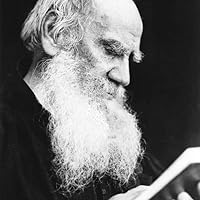
This book presents Hartshorne's philosophical theology briefly, simply, and vividly.
Throughout the centuries some of the world's most brilliant philosophers and theologians have held and perpetuated six beliefs that give the word God a meaning untrue to its import in sacred writings or in active religious
God is absolutely perfect and therefore unchangeable, 2.omnipotence, 3.omniscience, 4.God's unsympathetic goodness, 5.immortality as a career after death, and 6.revelation as infalliable.
Charles Hartshorne deals with these six theological mistakes from the standpoint of his process theology.
Hartshorne says, "The book is unacademic in so far as I am capable of being that." Only a master like Hartshorne could present such sophisticated ideas so simply. This book offers an option for religious belief not heretofore available to lay people.
If I believed in God, it would be Hartshorne's God.
The book dispels common Christian fallacies on the nature of God through the use of Christian principles. This book is easy to read, challenging to grasp, and enlightening to understand.
Neo-classical (Process) theology for non-specialists. A good introduction for those coming from Classical theology or Theistic Personalism. I would have liked Dr. Hartshorne to have dealt with other views of God to round out his approach - Pantheism, Panentheism, Impersonalism, etc, but that would have made this book quite a bit longer and Hartshorne was famously opposed to books longer than 200 pages!
A bit out of date at this point (particularly in references to current scientific understandings of matter and evolution) but still some good wrestling with questions of theism.
THE “PROCESS” PHILOSOPHER SEES GOD AS THE “WORLD SOUL”
Charles Hartshorne (1897–2000) was an American philosopher who taught philosophy at the University of Chicago, Emory University, and lastly the University of Texas. He is perhaps best remembered for his development of Alfred North Whitehead's process philosophy into a form of theology.
He wrote in the Preface to this 1984 book, “The occasion which led to the writing of this book was somewhat sudden and quite concrete. It was the near-coincidence of two conversations, each with an intelligent, educated lady… who was troubled by what she felt were absurdities in the idea of God… I was made more aware than ever before of a large number of people … who, not trained but seriously interested philosophically and theologically, know little or nothing about some important but relatively recent changes in the philosophy of religion. The objections that the two… make to a traditional and still widely accepted form of theology (which I call ‘classical theism’) have been felt also by a number of penetrating, technically trained philosophers and theologians… and these writers… have been working out… a revised form of theism which some call ‘process theology’ and I call ‘neoclassical theism.’ … This book is an attempt to present and defend the revised idea of God as simply and forcefully as I can.”
He adds, “I am not a fundamentalist in religion… But I definitely believe in God, in divine love as the key to existence, in love for God as (ideally) the all-in-all of our motivation, and in love for fellow creatures as valuable and important… In other words I accept what Jesus said was ‘the Law and the Prophets,’ that is, the gist of religion. If that makes me religious I think I am as religious as anybody. But it does not cause me to look down upon pious Jews… or upon Unitarians… or members of many other religious groups.”
In the first chapter, he states, “I develop at length my arguments against the six mistakes [about God], which together form what I call classic theism … and in favor of what I sometimes call the new theism, sometimes process theology, sometimes neoclassical theism---which is my version of a general point of view that has had a great many proponents in recent times. FIRST MISTAKE: God Is Absolutely Perfect and Therefore Unchangeable… SECOND MISTAKE: Omnipotence… THIRD MISTAKE: Omniscience… FOURTH MISTAKE: God’s Unsympathetic Goodness… FIFTH MISTAKE: Immortality as a Career after Death… SIXTH MISTAKE: Revelation as infallible.” (Pg. 2-5)
He observes, “Those who stand deep in the classical tradition are likely to object to the new theology that it fails to acknowledge ‘the sovereignty of God.’ To them we may reply, ‘Are we to worship the Heavenly Father of Jesus… OR to worship a heavenly king, that is, a cosmic despot?’ These are incompatible ideals; candid thinkers should choose and not pretend to be faithful to both… Our diminished awe of kings and emperors makes it easier for us than for our ancestors to look elsewhere for our model of the divine nature. ‘Divine sovereignty’ sounds to some of us like a confession, an admission that it is sheer power, not unstinted love that one most admires.” (Pg. 14)
He clarifies, “Our rejection of omnipotence will be attacked by the charge, ‘So you dare to limit the power of God?’ Not so, I impose no such limit if this means, as it seems to imply, that God’s power fails to measure up to some genuine ideal. All I have said is that omnipotence as usually conceived is a false or indeed absurd ideal, which in truth LIMITS God, denies to him any world worth talking about: a world of living, that is to say, significantly decision-making, agents. It is the TRADITION which did indeed terribly limit divine power, the power to foster creativity even in the least of the creatures.” (Pg. 17-18)
He states, “The only livable doctrine of divine power is that it influences all that happens but determines nothing in its concrete particularity. ‘Knowing’ afterwards exactly what God has willed to happen is useless. We can, I believe, know the GENERAL PRINCIPLE of God’s purpose. It is the beauty of the world … a beauty of which every creature enjoys its own glimpses and to which it makes its unique contributions, but each created stage of which only God enjoys adequately, everlastingly, and as a whole, once it has been created.” (Pg. 25)
He argues, "As the Socinians said… future events, events that have not yet happened, are not there to be known, and the claim to know them could only be false. God does not already or eternally know what we do tomorrow, for, until we decide, there are no such entities as our tomorrow’s decisions." (Pg. 39)
He asserts, “That we can learn about God from a book is one proposition, that we can learn to be infallible about God from a book, or from anything else, is a very different proposition. From an infallible God to an infallible book (to an infallible reader of the book?) is a gigantic step. For many of us it is a step from rational faith to idolatry. No book in a human language written by human hands, translated by human brains into another language, can literally be divine, ‘the word of God.’ What we know is that it is the word of human beings about God. The beings may be divinely inspired but they are still human… In general, claims of infallibility made for the Bible seem stronger than any made in the Bible.” (Pg. 41)
He suggests, “God’s cosmic body is a society of individuals, not a single individual. The world as an integrated individual is not a ‘world’ as this term is normally and properly used, but ‘God.’ God, the World Soul, is the INDIVIDUAL INTEGRITY of ‘the world,’ which otherwise is just the myriad creatures. As each of us is the supercellular individual of the cellular society called a human body, so God is the super-creaturely individual of the inclusive creaturely society. Simply outside of this super-society and super-individual, there is nothing.” (Pg. 59)
He says, “one reason for my hesitation to accept any of the recent (or old) theories of the incarnation of God in Jesus of Nazareth (some of the best of these theories being formulated by careful readers of my writings) is that any such theory at least strongly suggests the idea of deity as highly spiritualized masculinity. It is a constant temptation to male chauvinism, and a temptation in historical fact not altogether resolutely resisted, to put it mildly.” (Pg. 60)
He argues, “The world consists of individuals, but the totality of individuals as a physical or spatial whole is God’s body, the Soul of which is God. So there is no eternal, worldly individual, rival to God. Simply, eternally God has some creaturely individuals or other---indeed, taking the divine past into account, an infinity of them, but a growing infinity… So, in a sense, even God evolves, but in a decidedly transcendent or divine sense.” (Pg. 94)
He notes, “The central question of religion cannot be, ‘What about heaven and hell?’ but must be, ‘What about God, cosmic mind and love, exalted in principle above all else, the only indestructible, all-inclusive, yet individual, being?’ (Pg. 118) He adds, “Our consciousness… will still be there in God. It will be such consciousness as we had before dying, but all of it will be imperishable in God. If we are now aware of ourselves as contributing to the divine consciousness, that very awareness of us will not perish but ‘live forevermore’… What will not be there are new, additional states of awareness belonging to us, other than those we had before dying.” (Pg. 121)
In the last chapter, he admits, “I am in no position to say what would have happened to my religious development had my parents and several teachers at school not been Christians well trained in relatively orthodox ways. And the parables of Jesus seem to me full of wisdom; incidents like the washing of the disciples’ feet, or the forgiveness from the cross, seem full of symbolic power to convey religious insight.” (Pg. 125)
This book is full of insights into Hartshorne’s positions on religion, and will be of great interest to those studying Process Philosophy/Theology, Open Theism, or contemporary religious thought.
Hartshorne #2: Similar to the first book I reviewed, Hartshorne: A New World View, this book is an overview of his philosophy of religion, but here the presentation is more systematic and is willing to dive deeper at times. The heart of the book is really the first chapter, which outlines several missteps made by classical theism (hence the title). More interesting is Hartshorne's response to these mistakes later in the chapter. He positions his views as offering a middle ground between classical theism and, to oversimplify a bit, atheism or the complete lack of whatever attribute he is discussing. To borrow the title from another one of his books, Hartshorne advocates for "wisdom as moderation" in how to conceive of God, and his "neoclassical theism" does just that.
Though chapter one is the most vital, I would mainly recommend this book for chapters 2 and 4. The third chapter on evolution and God is not bad necessarily, it just didn't make a big impression on me and I am concerned that given the subject matter Hartshorne's views might be out of date, as this book was published in 1984.* Chapter two discusses how Hartshorne conceives the God/world relationship by turning to the "mind-body analogy" which he gets from Plato ("world soul/body") among others. This is necessary reading to understand Hartshorne's project and for me was the best part of the book.
Chapter 4 is about ethics and orbits around an understanding of love wherein the "two great commandments" of love of God and love of self and other are thoroughly intertwined. Those interrelationships are teased out alongside more pondering of fundamental questions like how God, the world, and humans relate (in the light of love), and specific ethical issues like nuclear war.
Despite its small size it appears to suffer from some unnecessary baggage. While the third chapter contains good insights it doesn't strike me as vital to the book. Without it you have a summary to his positions (chapter 1), his ethics (chapter 4), and helpful conceptual background to both (chapter 2). Chapter 3 feels forced into the book. The other problem is that abortion is discussed too extensively. This is an important issue and I commend Hartshorne for discussing it, but given his stated goal of writing an accessible text about his views on God, it is discussed too much. It is also worth noting that on a couple occasions he decries "one-issue fanatics in politics." To be clear, he certainly discusses other ethical issues and thus avoids falling into this trap, but at times he gets a little too close for comfort.
Even with these criticisms this a very good book for understanding Hartshorne. You should read it.
*To be fair, some of his discussion surrounding the big bang as the book closes also feels out of date, but this makes such a small contribution to chapter 4, whereas science and religion are front and center in chapter 3.
What a wonderful little book. Written in 1984, at the age of 87, Hartshorne’s ideas remain remarkably pertinent to issues facing theological reflection today. I highly recommend this book and wish I had stumbled upon it earlier.
This book arose from two conversations with people who told Hartshorne of their problems with religion. He realized that what they couldn’t accept were aspects of traditional belief that he and other process theologians also rejected. He felt the need to write an accessible book to acquaint a broader audience with his answer to classic theism.
The result is in part successful. When it is not, it could have been remedied by letting the manuscript sit, then returning to it as reader/editor rather than as author. Hartshorne admits that this book, unlike every other he had produced, was written in five weeks. He seems to be proud of that.
Despite Hartshorne’s intention to produce an accessible book, however, the writing is at times difficult to follow. Not in the same way that Whitehead, in Process and Reality, is, with his precise terminology. In Hartshorne’s case, the writing seems at times slapdash and poorly organized. He often argues by a series of negatively formulated statements, rather than setting out plainly what he is arguing for. The book is also marred by his animus toward creation scientists and pro-lifers. Fair targets, but, like the many negative formulations, these remarks get in the way of clearly setting out what he is arguing for.
The best part, to me, is the first, lengthiest chapter, outlining six common mistakes about God. About omnipotence, Hartshorne doesn’t reject it as much as redefine it: “The only liveable doctrine of divine power is that it influences all that happens but determines nothing in its concrete particularity.”
How are we to think of God if not in the traditional terms of unchanging, impassive, all-knowing, and all-powerful? Interestingly, when Hartshorne challenges the notion that to say God is perfect means he is unchanging, he does so not in terms of knowledge or ethics, but in terms of aesthetics.
God’s relationship to the world is understood as analogous to the human mind and body. Each of us, as a conscious individual, is a single reality, but each cell within us is an individual. “Similarly, God’s cosmic body is a society of individuals.” Hartshorne argues for an updated version of Plato’s concept of World Soul. In his terms, God is a “dual transcendence,” both physical and spiritual. “[T]he divine body . . . is all-surpassing and all-inclusive of the creaturely bodies, which are to God as cells to a super-cellular organism.”
Also good is the final chapter, on the enduring validity of what Jesus pointed to as the two great commandments.
Hartshorne is generous in crediting those who have influenced his thinking. Some of Hartshorne’s intellectual touchstones, such as Lequier and Fechner, were unknown to me. He also partially rehabilitates the Socinians, who redefined the concept of God’s omniscience, especially regarding the future.
The picture Hartshorne paints is of a theology compatible with current natural science. It is no problem for him to picture God creating through evolution: God makes creatures who make themselves. Whether quantum mechanics or cosmology, this is all part of how the creation unfolds. It almost fits too well; that is, as the science changes (as it will), then the concept of God must, too.
This book was more philosophy than theology. I loved Hartshorne's basic theory that "Divine Love is the meaning of life." He talks a lot about God being truly pro-life, meaning that God is constantly creating, with us and through us, therefore not Omnipotent or omniscient. I think I understood a lot more of this book when I was in grad school, but a lot of it went over my head on the second reading!
Really, really, really interesting and provocative discussion of big "theological mistakes." Although I don't agree with much of where Hartshorne ends up, one NEEDS to engage with his philosophy/theology (and/or what other people in the process school are up to) in our day and age.
At times, a short and brilliant critique of classical theology with thoughtful, process alternatives, such as his discussion of omnipotence. At other points, a old white liberal's unfocused ethical and theological rants.
Very uneven. At times there are moments of brilliance, but at others moments of sloppy thinking and writing, with a heavy dose of arrogance. I had higher hopes.
It's a slim book with a lot packed into it. Hartshorne takes on a series of theological "mistakes" that he attributes to the medieval scholastics. In general, they mainly stem from attempts to meld Christian theology with Greek -- and particularly Platonic -- philosophy. Thus, as he points out, we get a concept of God as so perfect that God can never change, or even be affected by our actions in any way. A God who cannot respond to us, as this would imply a change prompted by our prayers, deeds, etc. A God who can only love us in a completely impartial way, like the sun shining on everyone.
Further, Hartshorne discusses the concept of the afterlife as a continuing "career" after death; he finds this also absurd. In what way would you still be you after, say, 100,000 years of continued post-death experience? Either you can continue to grow and change after death, in which case you would soon bear little or no semblance to the kind of being you now are, or you remain the same after death, in which case you can hardly be said to "live".
Although at times his ideas were difficult to understand, his religious philosophy caused me to pause and think about what he calls traditional orthodoxy. His views about God are eye-opening; while he condemns fundamentalists and creationists and pro-lifers alike, he believes in a God of love. And a God who does not control or decide events but rather gives creatures freedom, lets chance work its changes, and allows for a broad and encompassing faith. When he decried the idea of God as a male by asking what His penis might be like, I couldn't help but cheer him on!
Not nearly done, but I am thrilled with it so far. The author is a theist, but tackles the subject matter honestly and intelligently. Where I would normally think that discussions about how God operates(/"thinks") are irrelevant (because, to me, there is no mind of God because there is no God), Hartshorne comes at the subject from a more philosophical perspective, and challenges believers to be more intellectually honest with themselves.
I don't really believe that there is one individual in the way that we think of the word that is an almighty God. This is still well thought out philosophy, and I think anyone who believes in God, writes about it, but still does not bash gay people and saving the environment needs all the good publicity I can give these days.