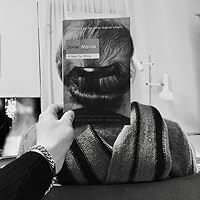
Poetry. "Mairead Byrne's poems are moving microcosms in which a keen power of observation and playful imagination fuse with the minutiae of daily life to create small missives of quirky and insightful documentation. Her source material includes everything from the weather to credit card bills to news reports to human body parts to animal pelts and all of these seemingly disparate details amass into a kind of living, breathing envelope that holds the marrow of existence itself in all its harsh reality, weird surreality, absurdity, fragility, and occasional beauty. Often funny and sometimes sobering, Byrne's work exposes the difficult-to-reconcile distractions, detritus, and rubble that surround us from all sides, but also culls glowing artifacts from such debris"--Juliet Cook.
Just when I begin to suspect that I have stumbled upon every author who is willing to experiment with the definition of literature or embrace language at its most elementary and beautiful or try to express something significant without any particular significance, I somehow come across (or in this case, I win) a book or a writer that puts that suspicion to rest. I do not know what happened to Mairéad Byrne's poetry blog (whatever did happen, I can't access it for the life of me without a computer crash), but I am so glad that she was able to preserve most of the work in this anthology. Byrne is not simply willing to tackle poetry in a refreshing avant manner--she is eager to. Each of her poems, be it found or fractal or wild or traditional, provokes the mind and appeals to the heart.
Since everyone else seems to be sharing a few of their favorites, I'll do just the same:
SHE IN THE BIOS OF 21 IRAQI POETS
published published
published published Shelley
published published published published
published published published published published published published published published
published She She She published HASHEM published published published She published she published She published published published
A FRENCH SECRET
Erik Satie
MAHI-MAHI
Caught. Cooked onshore. Eaten.
Better than a William Carlos Williams poem.
RAINBOW
nice white kids clean up green margins in black neighborhoods
saturday morning on chalkstone yellow bus grimy already black
children's faces staring through windows like moons,
sponges, eager to soak up a joy barely there—
cherry blossoms for a week in spring gold drenchings of leaves— flames—in October
always the incandescent sky whose color cannot be named
on the bridges, overpasses republicans & democrats— scraps—
peer through the wire holding up paper signs— every 10th car honks
maybe & every once in a while the long rolling trumpet of a truck
As I read this I dog-eared my "favorites" until the book was pretty severely dog-eared. The section called "Everyday Lunacy" was by far my favorite. Take for example -
Sign
Fresh Today! Wild fries! Caught and squashed this morning! Giant fries!
That was my favorite until I read Sleep ("Be your own boss!"), which was my favorite until I read Where Did You Grow Up?
Do you mean why did I grow up?
No – where did you grow up?
Do you mean how did I grow up?
No – where did you grow up?
Do you mean when?
No – just where.
Oh.
I don’t know why I connect so much with Mairead Byrne. Maybe it’s her diction, or her voice, or her ability to find something suspiciously normal to be wildly funny.
The prose poems in the section “Everything is unlikely” are similar to those in Talk Poetry, which is one of my favorite contemporary poetry books.
To be sure not everything in the book is surefire, but I am very grateful anyway. I won’t link to specific poems from the book. Instead, here’s the link to the poet’s blog: http://maireadbyrne.blogspot.com/
The Best of (What’s Left of) Heaven, a new release from Publishing Genius, is a collection of poems compiled from Mairéad Byrne’s blog, Heaven. The collection is ordered into thirteen parts and there’s a sense of slow build-up, of climb, climax, and linger.
The opening sections “Calendar” and “Everyday Lunacy” are whimsical and provocative, flirt with the reader. There’s a shift in tone and emotion once we arrive at the third section “Found.” I sat straighter in my chair, fully engaged. Each line from the second poem, “To Skin a Muskrat,” vibrates and the last line hums: “This is nothing like writing poetry.” Overall, the writing throughout “Found” is visceral, exact, and mesmerizing.
The sections “Interviews” and “Numbers” return us to a sense of playfulness, yet for the most part remain thought-provoking and moving:
I’ve got to the middle Whew! I’m middle-aged Whew! I didn’t get killed Whew! I didn’t kill myself Whew! I’m middle-income Whew! I’m alright I’m OK I’m acceptable Whew! Yay!
The section “War” begins with the haunting prose poem “Baghdad.” To my great surprise, from the very first line, I realized that I had met Mairéad Byrne several years ago at a reading in Dublin. There, I had the honor of hearing Byrne perform “Baghdad” and other poems. Byrne’s vibrant, lyrical voice, the relentless pelt of “Baghdad, Baghdad, Baghdad” has stayed with me all this time, as any writing about war should—any worthwhile writing period. The work in “War” is startling and skillful, and left me rightly unsettled and a little stunned:
CROP
I THOUGHTXXXXXXXXXXXXXXXX XXXXXXBECAUSE YOU SAW ME XXXXXXXXSLICED &XXXXXXXXX XXXXXXXXXXTORN OPENXXXXXX XXXXXXXXXXXX&XXXXXXXXXXXX XXXXXTHE SHINING CHILDXXXXX XXXXXXXXXXDRAGGED FROM ME XXXXXXYOU WOULD HAVEXXXXX XXXSTAYED WITH USXXXXXXXXX XXXXXXXXXXFOR LIFEXXXXXXXX XXXXXXXXXXXXXXXXXXXXXXXXX XXXXXXXXXBUT NOT SOXXXXXXX
I also enjoyed the stirring section “Family”:
FRIDAY NIGHT
I’m a miserable person: What have I in life but my two daughters, Wine, & poetry?
OPEN HOUSE
Come into my house. I do not want it anymore.
FIELD TRIP
On the yellow bus with the children— in their seat belts of shout.
From the section titled “Poetry”:
how long does it take to write a poem?
time stands still
The sections “Providence,” and “Dedications” deliver further keen, compassionate, and shocking observations and moments.
“Family,” “Instructions,” and “Everything is Unlikely” tie with “War” as my four favorite sections. Just as we eased into this collection, the tiny section “Everything Else” gently takes us out—a loved one leaving, the sun going down.
I saw so much of myself, of my Irishness, in these poems and white spaces. While there are few surface references to Ireland, she permeates everything. I recognized the Irish obsession with the weather and place, with routine and everydayness. I saw how we use humor as salve, deflector, and to save our sanity. I also witnessed our psychic scars from colonization, brutality, and patriarchy. Our great joy and searing sadness. Strength. Courage. Imagination. Uniqueness.
I heard our gift of the gab and our stubborn silence. Above all, I heard echoes of the great Irish writers that have gone before us and that remain among us. Brendan Behan, Flann O’Brien, and Eavan Boland are just three that will buy Mairéad Byrne a pint in heaven. And if anyone points out that Eavan Boland isn’t in heaven yet, then you haven’t read HEAVEN from this collection. But you should. You should read this collection in its entirety. Then reread it.
I do wonder at the order here. I worry that its initial whimsy and obliqueness might lose readers. More, some of the poems read like lists and scraps, and I found myself glossing over them. Overall, though, it’s an order and a collection that works, and works well.
I remember shaking Mairéad Byrne’s hand that long-ago night in a dim pub in Dublin. I also felt her hand come out through these pages and touch me again. Byrne boasts a down-to-earth voice and style that are devoid of intonation and affectation. There are eight words of Gaeilge in this collection that translate to “an educated heart.” Mairéad Byrne’s generous, educated heart sings from these poems and white open spaces.
Heaven is the premiere travel guide for poets who are curious about found poems, pattern poems, collage. I predict that every few pages you'll go "oh my god I'm allowed to do that?" and journey off to the paint store, the newspaper, a good cuddle, in search of building blocks for your work. In Heaven, Byrne reminds us that there are goodies everywhere and she makes it look easy. She can turn a color into a noun! It's not so easy, but the expedition is fun.
This a great read, the kind of poetry book that makes me keep thinking "I want to share this poem! Even with non-poetry people!" Short, funny poems eventually give way to dense, interesting prose poetry, with some collage stuff in the mix as well. Great, great book.