Farish A Noor visits, lives and interviews students (and others) in 'jihad factory' madrasahs from Patani to Pakistan and from Indonesia to India and comes away dazed and confused. In attempting to make sense of it all, he ends up confronting his own demons and nightmares. He visits locations where most traditional media cannot and will not go, and most of us would like to avoid even in our worst nightmares. Although he writes with his sense of humour firmly in place throughout, that does not obscure the seriousness of the subject. Quite scary.
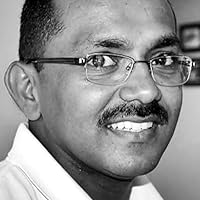
Dr. Farish Ahmad Noor (born 15 May 1967 in Georgetown, Penang, Malaysia) is a Malaysian political scientist and historian and is presently a Senior Fellow at the Nanyang Technological University in Singapore. At the NTU he is part of the research cluster on the contemporary development of trans-national religio-political networks across South and Southeast Asia, where he is studying the phenomenon of Muslim, Christian, Hindu and Buddhist religio-political mobilisation in the public domain.
He was formerly attached to Zentrum Moderner Orient (Centre for Modern Oriental Studies) in Berlin, Germany, Sciences-Po Paris, the Institute for the Study of Muslim Society (ISIMM, Ecole des haute etudes et sciences sociale, EHESS), Paris and the International Institute for the Study of the Muslim World (ISIM), Leiden, Netherlands. Dr. Noor's teaching credits include the Centre for Civilisational Dialogue, University of Malaya, the Institute for Islamic Studies, Free University Berlin, Sunan Kalijaga Islamic University (Jogjakarta), Muhamadiyah University Surakarta and Nanyang Technological University presently. At NTU/RSIS he teaches two courses: (1) History, Society and Politics of Malaysia and (2) Introduction to Discourse Analysis. The first is part of the RSIS area studies curricula (which also covers Indonesia) while the second is a foundational course in Philosophy of Language, Linguistics and Semiotics with a heavy emphasis on Critical Theory as developed by the Essex School of Discourse Analysis.
He received his BA in Philosophy & Literature from the University of Sussex in 1989, before studying for an MA in Philosophy at the same University in 1990, an MA in South-East Asian Studies at the School of Oriental and African Studies in London, before completing his PhD at the University of Essex in 1997 in the field of governance and politics.
Dr Noor also runs a research site www.othermalaysia.org along with Dr Yusseri Yusoff, which looks at the history of Malaysia from an alternative, deconstructive angle and which attempts to demonstrate the constructiveness and contingency behind historical development, particularly of nation-states from the pre-colonial to post-colonial era.
Over the past ten years he has also been researching the phenomenon of transnational and translocal religio-political movements, including missionary movements such as the Tablighi Jama'at and its networks from South to Southeast Asia; as well as the development of religio-politics in South and Southeast Asia, looking at the rise of Muslim, Christian and Hindu political-religious revivalism in particular.
His other interests include antiques and material history, and he has written about the plastic arts of Southeast Asia, focusing on things such as the Indonesian-Malaysian keris to the development of woodcarving and architecture. Farish has also appeared in the semi-documentary film The Big Durian (film), directed by Amir Muhammad.
Farish A Noor mungkin tidak perlu diperkenalkan lagi kepada khalayak di Malaysia. Tokoh pemikir politik dan sosial ini juga dikenali sebagai seorang ahli akademik pengkaji sejarah dan budaya.
Farish A Noor juga merupakan seorang tokoh yang agak kontroversial kerana tulisannya yang kadang-kadang dilihat terlalu berterus-terang. Saya melihat Farish sebagi seorang anak muda yang ingin tahu dan gigih mencari jawaban kepada pertanyaan-pertanyaan yang sering datang dalam hidup. Dalam ketergesaan menulis kadang-kadang pendapatnya menimbulkan kontroversi dan menjemput kritik yang bukan kecil dari khalayak ramai termasuk alim ulamak dan pertubuhan Islam.
Beliau pernah menjadi penulis yang kerap menulis tulisan di akhbar milik parti PAS iaitu Harakah. Saya menjadi antara peminat tulisan beliau yang seakan menjadi jambatan antara golongan Islamis dan pendokong demokrasi untuk mengenali dan mendalami pemikiran yang berbeza. Harapan itu bagaimanapun terbantut apabila tulisan terakhir beliau di Harakah menimbulkan kemarahan pemimpin Pas masa itu sehingga berlakunya rombakan dalam sidang pengarang Harakah, Tulisan Farish bertajuk Memikirkan semula pendekatan PAS itu sekali lagi dianggap terlalu berterus-terang dan tanpa berselindung, mengkritik dan menghentam dasar dan tindakan PAS masa itu.
Buku ini menghimpunkan catatan perjalanan beliau ke tempat-tempat yang orang lain tidak mahu pergi. Farish telah mengembara ke madrasah dan pondok pengajian di Indonesia, selatan Thailand, Pakistan, Mesir, Kashmir dan lain-lain. Dalam rangka membuat kajian akademik beliau telah menziarahi institusi pendidikan Deoband yang sangat terkenal di kalangan pendokong gerakan Islam. Beliau tinggal bersama-sama dengan para penuntut di madarsah tersebut dan mewawancara mereka untuk mendapat gambaran yang jelas dan terus dari sumbernya.
Penulisan Farish yang serius tetapi bersahaja sangat menarik hati saya. Bahasanya yang sedap dan disulam dengan humor membuatkan pembaca terasa seakan dibawa bersama ke tempat-tempat yang beliau lawati. Catatan perjalanan beliau ke Pesantren Mukmin dan mewawancara Ustaz Abu Bakar Bashir sangat menarik kerana memperlihatkan wajah seorang pemimpin Islam yang jarang ditonjolkan di dalam media. Ustaz Abu Bakar Bashir yang sering dikaitkan dengan aktiviti keganasan oleh media barat sebenarnya sangat dihormati dan disanjung oleh masyarakat sekeliling.
Sebahagian dari catatan di dalam buku ini mungkin pernah disiarkan dalam majalah Off The Edge tetapi telah dikemaskini agar relevan untuk dibaca kini. Buku ini termasuk antara buku catatan perjalanan yang terbaik yang pernah saya baca.
This is one of the books which makes me want to meet with the writer and shake his hands. Dr Farish travels as a free man, and writes as a free man. I am overwhelmingly jealous with the wonders of his travels; well probably not all of them. Not many people has the will to scourge this terrible planet in search of himself.
This is like a collection of notes on the road, as you would write during quite journeys on the train or a plane, complete with the poems and illustration. Therefore he does not dwell much into the results and conclusions of his research; well, the places and the people speak for themselves.
Alhamdulillah. Finally, i ended my reading. The title of the book is the main point I bought this book. Due to my high curiosity, now I understood the symbolic meaning behind the chosen title, even though there is no direct discussion about that. I like the way of the author describes his journey to many interesting places throughout this book. Although it is not explained in a very detail, but the reader can enjoy all the places he visited because of his humor descriptions. In addition to him as an academician and historian, he is a very good writer.
Ini ialah catatan kembara – travelog – semasa beliau sedang menyiapkan kajian di beberapa negara seperti Tanzania, Pakistan, India, Indonesia dan selatan Thailand. Turut terselit catatan peribadi dalam kunjungannya ke Sri Lanka dan padang pasir Sahara. Qur’an and Cricket bukan sekadar memjejerkan bangunan atau tempat tumpuan pelancong, sebaliknya mendekati denyut nadi masyarakat setempat dengan analisis sejarah ataupun renungannya yang mendalam.
Teras catatan kembara beliau seputar kajiannya mengenai hubungan madrasah di Asia Selatan dengan Nusantara, sekitar 2003 sewaktu Amerika giat memalu gendang ‘war on terrorism’ pasca peristiwa 11 September. Madrasah dicop sarang atau markas latihan para pengganas, dan beliau masih berani memasuki madrasah-madrasah ini antaranya Darul Uloom di Deoband. Perlu juga disebut beliau berpeluang menemu ramah tokoh yang dikehendaki Amerika dari negara serumpun, Ustaz Abu Bakar Bashir.
Persinggahan di madrasah menyingkap cerita-cerita di luar persepsi kita mengenai pelajar madrasah. Berjubah, berserban, seharian berteleku menghafaz Al-Quran. Di Syed Maudoodi International Islamic Education Institute kelolaan Parti Jamaat-e-Islami sukan merupakan aktiviti wajib bagi setiap penuntutnya. Sesuatu yang mungkin kedengaran aneh bagi pengunjung luar, khususnya dari Barat yang dipekakkan dengan semboyan ‘war on terrorism’. Seaneh tajuk Qur’an and Cricket.
Buku Farish Noor kegemaran saya. Pengamatannya terhadap dunia penuh lucu, kritis, hangat, dan kadang-kala menakutkan. Dalam buku ini Farish mengembara ke madrasah-madrasah sekitar Dunia Islam untuk mencari jejak ekstremisme dalam pendidikan-pendidikan islam pasca 11 September. Kita akan rasakan betapa dekatnya dunia-dunia ini dengan kita; serta peri pentingnya dialog dalam mencantumkan peradaban yang dibangunkan atas weltanschaaung yang berbeza (ya aku senagaja nak kedengaran pretentious di sini).
Buku ini mungkin sudah sedikit lapuk dari segi isinya (cerita-cerita dekad lalu), tetapi ia masih penting untuk kita faham perkembangan dan pertembungan budaya Barat vis a vis Islam yang masih memuncak pada waktu ini, lagi-lagi dengan keancaman ISIS. Kalau ini tak meyakinkan kau pun, bacalah sebab ia kelakar, okey? Jangan malas sangat.
Buku ini memberi inspirasi kepada aku untuk keluar daripada "comfort zone" dan melihat bagaimana keadaan dunia Islam yang sedang ditindas. Di dalam buku ini jugak aku tertarik dgn satu sub-tajuk "The hell of everyday life".
" Hell occurs as leitmotif in all religions. Perhaps it stems from our collective fear of the unknown and the probability for an ultimate reckoning for our misdeeds on this earth. But in almost all of the iconographic and pictorial accounts of hell, one common image stands dominant: humanity is in pain, and each of us is confined to our private suffering. In the images of hell we see, every one of us is locked in an eternal torment that is solitary. Hell is the pain of individual anguish, of the cry that goes unheard= for no-one listens to your plea for help in there. It is the hell of an individualism so selfish that society itself is absent. Hell is the loss of human bonding, of the impossibility of communication. And hell is where we today; in Holland, in Europe, across the world. We no longer communicate. We speak past each other and address only the instrumental fictions and the stereotypes we have created to scare ourselves and anaesthetise our neighbours; where politicians can declare crusades and holy wars against an idea; where a man can be murdered in the street because he is not understood. The way out of hell is love. Love is the recognition of the Other; the acknowledgement that the person before us is a fellow human being whose life is an abundant store of emotion, feelings, memories of hope and loss, tears, smiles, laughter. Love is the prerequisite of communication, even when that communication is difficult and one is not always understood. But love dictates that we need to understand, or at least make the effort to understand; and not to demonise to , scapegoat, to sully, to abuse. Love is the thing that stops the finger as it presses on the trigger; is the thing that stills the hand before it reaches for the knife."
V few writers have actually delved into madrasahs and put down their experiences in such analytical and eloquent form. The more Noor delves, the more questions are raised....
In this travelogue, Dr. Farish writes as an academic, a traveller, and most often and importantly, as a man who is always on the never ending quest of seeking happiness and find meaning.
Going through the pages, one would be surprised with the turn of events, and the humour he has to (and believe me, he can) offer.
He pours out his feelings through words, gets personal, and tells them as if you're his comrade, his friend.
One would get a better idea, and a much clearer picture on how true travelling should be, and trust me the lessons are abundant. Every experience he shared from years of travelling--you won't find them anywhere else.
Every journey made to Madrasahs across the world was described eloquently in this book, although at various points, I became slightly annoyed at the constant reminders of his profession as an “academic, historian, etc”. Despite the fascinating encounters with jihadists, ulama’, journalists, and many more, this book does not really shed light on more pressing questions that I have in mind, such as “Why do Madrasahs have always been linked with poverty, what are the cultural norms that are associated with the very existence of Madrasahs, how do Madrasahs blend in with the society..” But perhaps these were not the aims of this book. Would have given a perfect 5, if these issues were unraveled.
Another fine book by Farish A. Noor. It is obvious that he is in love with his work. His words are profoundly deep, with insight that can only come from years and years of hard traveling. Here, he writes about his travels all around Asia while doing his research. Although he may not have meant to write it as a guide, I think this is one heck of a guide for those who are planning to travel the less traveled road, away from the kitschy tourist traps and the garish neon signs. A good read.
Noor is at his best in the essays on Jogya and Kelantan. Especially memorable for someone who has struggled with the location of home and has waded progressively into Asia's deep pools.
This is a travelogue of Farish, an academic to places he traveled for his academic purpose and to seek meaning. He went to madrasahs around Asia or what were called "Jihad Factory' and other places. As a historian, he also included a few bits of history of places he went which very intriguing for me and made me google more. The stories took place when I was small and it made me want to know more like what about now to that other side of the world. It must have changed because it's already a decade. The world is changing.
It took me two weeks to finish this book but I glad I read until the end. There are abundant lessons shared in this book. The stories are just refreshing and full of charms.
In a style that is witty, intelligent and refreshingly frank, this author manages to capture the emotions and thoughts of the voices of those who have been silenced (at least in the first half of the book). I wish he had written MORE. I mean, come on, he has spent several weeks in some of the most dangerous places on earth. Have pity on us cowardly, poor, deprived souls who would never be able to step foot on these places and who have to depend on stories by lucky, restless academics to get a glimpse of what it's like there.
I want to know more about the boys in Deoband, for example. What are their hopes, fears and dreams? How comparable is the education system in there? Where are the boys now? Do the madrasahs sufficiently prepare the boys for the real world or are they destined to a narrow future? Ditto for all the other madrasahs that the author has gone into. Maybe I am reading the wrong book? Is there another book or article or publication that I should be reading? (The author did mention that his travels were on the pretext of some academic research or other). Can someone tell me because to be honest, some of this author's books are not that easy to find and I do not want to waste money spending on books that do not have what I am looking for.
The second part of the book is still written in the same style but is more of a collection of random stories penned by the writer with no specific objective that I can discern except to pour out his personal inner struggles to anyone who cares to listen. I would recommend reading them as separate, individual stories that the author has accumulated instead of one cohesive narrative with a common historical, political or social theme because to me, there was none.
This book and author has a lot of potential. I feel, however, that there are two books inside that should have been separated. One, a book that gives a voice to the marginalised and silenced people he has met. Two, a book of his personal journey - his innermost thoughts and struggles - one that I believe a lot of other people would also appreciate because what he goes through will strike a chord in many of us who are as confused, depressed and frustrated with this world. Instead, this book is a mishmash of both without giving justice to either theme, leaving the reader frustrated and dissatisfied.
I wish I could give this book more stars. I really, really do. What the author has gone through couldn't have been easy. And he has a certain writing style that just captures the heart of readers. But this book does not do justice to him or what he has gone through. Maybe he should get a better editor. (I find some of the grammatical and typo errors irritating as well).
Having said that, I would love to read anything that this author writes as long as he keeps to the same wit, frankness and simplicity that he uses in this book. As the author himself says, "Yet the places you will visit in this book are real; the temples were not generated by geeks in computer labs; the tastes were not artificially enhanced with additives; and the smells not rendered sweeter by perfume." And that, I think, makes this book better than some of the horrendous fiction out there.
Buku “qur’an and cricket” merupakan satu buku travelog yang mempunyai kelainan tersendiri. Ini merupakan buku karya Farish A. Noor yang pertama saya baca.
Seperti tajuk kecil yang ada pada muka hadapan buku tersebut, “Travels through the madrasahs of Asia and other stories”, kebanyakan penceritaan di dalam travelog ini adalah mengenai penceritaan pengalaman Dr. Farish berada di madrasah2 di dunia Islam.
Madrasah2 yang dilawati Dr. Farish adalah sekitar di negara India-Pakistan, Indonesia dan juga Pattani. Sepanjang pengembaraan dan pemerhatiannya di madrasah2 tersebut, dapat dilihat beberapa kelompok golongan Islam yang disalahfahami. Apa yang kita faham dan dapati daripada media-massa mengenai penghasilan puak2 ekstremis di madrasah2 bukanlah tepat 100%. Dr. Farish mendapatkan penerangan jujur secara langsung daripada tempat yang dikatakan ramai dengan puak pelampau. Ustaz Abu Bakar Bashir (Indonesia) yang memimpin Jemaah Islamiah yang dikatakan pengganas, sebenarnya bersama2 murid2 madrasahnya banyak membantu penduduk marhaen dengan membina kemudahan asas seperti sistem perparitan. Gerombolan tentera pemberontak yang dikatakan wujud di Patani, Selatan Thai, sebenarnya hanyalah beberapa kelompok penduduk kampung yang bertindak ganas sebagai tindakbalas kepada ketidakadilan kerajaan Thailand. Konflik yang disangkakan berbentuk keagamaan sebenarnya juga berpunca daripada ketidakadilan sosio-ekonomi.
Seterusnya, Farish juga membawa pembaca berkongsi pengembaraannya untuk mencari “Diri” di beberapa tempat yang menarik. Pembaca dibawa menghayati kesepian dan cuaca melampau di Gurun Sahara. Pembaca turut dibawa mengembara ke tempat2 menarik seperti Vietnam, Sri Lanka dan juga India.
Penulisan Farish yang santai menyebabkan pembaca mudah memahami dan menghayati isi-hatinya. Gaya penyampaiannya yang agak berterus-terang adakalanya membuatkan pembaca geli-hati dengan ayat2nya yang sinis lagi tajam. Contohnya, sewaktu di Patani, beliau bercerita, “Tidak jauh daripadaku, kenalanku Ustaz Meng sedang bersembang bersama kawan sekampungnya, dan aku terdengar kata2nya yang cuba meyakinkan kawan2nya untuk tidak risau dengan kehadiran orang baru ini. “Ya, rupanya seperti Arab tapi dia dari Jerman, dan sekarang dia kerja di Indonesia, tapi dia tinggal di Singapura, dan dia ada rumah flat di KL,” Ustaz Meng meyakinkan mereka, yang sebenarnya menambahkan lagi kekeliruan. Ia tak mengambil masa yang lama untuk kekeliruan itu bertambah parah, dan pada hari ke-2, penduduk kampung memanggilku sebagai ‘Ustaz Arab’. Terbaik, pada waktu pendatang-asing ditangkap oleh pihak polis di sepanjang selatan Thai, aku pula digelar ‘Ustaz Arab’.” Begitulah, sedikit terjemahan bebas penulis daripada Bahasa Inggeris.
Kalau anda peminat bahan bacaan berbentuk pengembaraan, buah-tangan Farish A. Noor ini jangan dilepaskan. Kekuatan penulisan beliau terletak pada 2 perkara, pertama: pengalaman turun-padang ke tempat2 yang “panas” dan duduk bersama2 dengan penduduk setempat yang beliau lakukan jarang2 dibuat oleh ahli akademik, kedua: gaya-bahasanya yang bersahaja dan santai memudahkan anda untuk menghayati pengembaraannya dan terhibur dengan keletahnya.
A splendid read. A travelogue that mainly focuses on the author's experience of being an outsider observing the many facades of Muslim life. Mostly set against the background of the traditional madrasahs of Central and South Asia, it explores the unseen world behind these closed doors, one that many Muslims, myself included, have never encountered before. These stories show the diversity and variety of Muslim life as well as the similar if not singular problem they face, a struggle for their identity and to assert themselves as who they are and not who others (outsiders, governments, media) dub them to be. As these travels are set in the hotspots of the world where being Muslim has become almost synonymous with being a terrorist/jihadist according to the media, it might be surprising for some to read on the true complexities of these places that the author deftly highlights and reveals to be more than just a foregone conclusion.
Reading this book is a breeze especially with the amusing and engaging anecdotes that are interspersed with a good deal of history and political analysis. My favourites from this book are the the entries titled, "Vale of Tears", "Forgotten Nation" which deals with Pakistan-administered Kashmir after the horrifying earthquake as well as the ones that are set in Patani. Also there is a small paragraph on Hell and Love in the Amsterdam story that I really loved. One of the things that I disliked was that as the author tries to lay bare his thoughts and feelings before the reader, it came across, at least to me, somewhat contrived and melodramatic.
Apart from that, this is a book that a could read over as it inspires the traveller inside of me to take the road less travelled by and meet new people and share their stories and memories and do it all over again and again. They say, life is a journey, and this book is proof of that.
a beautifully written book from Malaysia's own political scientist and historian. great attempts at understanding the psyche of jihadists and offering alternative solutions in tackling the all out War On Terror. although mostly an impartial portrayal of his travels and experiences within the heart of fundamental islamist countries, there is however a hint of american foreign policy critique - just too bad! all in all - highly recommended to understand how the seeds of islamic terrorism grew from various parties
Bagi seorang yang mempunyai impian untuk mengembara ke setiap pelusuk dunia satu hari nanti, sudah tentulah buku sebegini sangat menarik minat saya. Tambahan pula, gaya pengembaraan Farish juga cocok dengan apa yang saya impikan selama ini. Iaitu berkeliaran di tempat-tempat marhaen dan bukan di kawasan elit yang sering dilakukan orang. Buku ini sangat menarik dengan gaya bahasa yang tidak membosankan, bersama catatan pengembaraan yang hebat kerana tidak ditambah-tambah. Tahniah!
Farish Noor is hands down my favourite Malaysian intellectual. This book is more of a laid back travelogue than a serious discourse on religion. His views may be controversial for some, but to me, he presents a rational and balanced opinions about the places that he travels to, from the madrasahs in Pakistan, pesantren in Indonesia, to the highly volatile Southern Thailand. Overall, a highly recommended read.
Catatan-catatan peribadi dan kembara yang jujur dan lihai, pada saya. Dalam mengupas isu semasa mengenai keganasan di peringkat antarabangsa khususnya, penulis tak segan menampilkan soft spot serta mengakui kelemahan-kelemahannya. Seni mentertawakan diri sendiri - malang, tak ramai yang menguasainya.
A travel book detailing the author's (sometimes hellish) visits to some very out-of-the-way places, this is a book Americans really ought to read. I loved most of it. A couple of the pieces dragged a bit, and there were passages in Malay and Indonesian that I couldn't follow, but these are small complaints. It's a fascinating and sometimes wrenching book. Highly recommended.
Don't let the title fool you - it's such a super fun read! The author makes use of his wry sense of humour to not poke fun at the issues but rather to educate and reveal a closed world (of madrasahs & pesentrens) marred by misconceptions and false information.
The writer has a remarkable ability to make the reader relate to the situation. Uniquely relevant to the modern day context on the role that religion plays in the lives of people living in Asia. Very little about cricket though! Good read.
This books is about lives and interviews students(locals) in 'jihad factory' madrasahs from Patani to Pakistan. The book is an amazing read. Thumbs up.