At last recovered in this enriching annotated edition, this important but neglected work of American modernism offers a unique poetic encounter with the Jewish communities in New York’s Lower East Side.
Long forgotten on account of her gender and left-wing politics, Lola Ridge is finally being rediscovered and read alongside such celebrated contemporaries as Hart Crane, William Carlos Williams, and Marianne Moore—all of whom knew her and admired her work. In her time Ridge was considered one of America’s leading poets, but after her death in 1941 she and her work effectively disappeared for the next seventy-five years. Her book The Ghetto and Other Poems , is a key work of American modernism, yet it has long, and unjustly, been neglected. When it was first published in 1918—in an abbreviated version in The New Republic, then in full by B. W. Huebsch five months later— The Ghetto and Other Poems was a literary sensation. The poet Alfred Kreymbourg, in a Poetry Magazine review, praised “The Ghetto” for its “sheer passion, deadly accuracy of versatile images, beauty, richness, and incisiveness of epithet, unfolding of adventures, portraiture of emotion and thought, pageantry of pushcarts—the whole lifting, falling, stumbling, mounting to a broad, symphonic rhythm.” Louis Untermeyer, writing in The New York Evening Post , found “The Ghetto” “at once personal in its piercing sympathy and epical in its sweep. It is studded with images that are surprising and yet never strained or irrelevant; it glows with a color that is barbaric, exotic, and as local as Grand Street.”
The long title poem is a detailed and sympathetic account of life in the Jewish Ghetto of New York’s Lower East Side, with particular emphasis on the struggles and resilience of women. The subsequent section, “Manhattan Lights,” delves further into city life and immigrant experience, illuminating life in the Bowery. Other poems stem from Ridge’s lifelong support of the American labor movement, and from her own experience as an immigrant. This critical edition seeks to recover the attention The Ghetto, and Other Poems, and in particular the title poem, lost after Ridge’s death. The poems in the volume are as aesthetically strong as they are historically revealing. Their language combines strength and directness with startling metaphors, and their form embraces both panoramic sweep and lyrical intensity.
Expertly edited and annotated by Lawrence Kramer, this first modern edition to reproduce the full 1918 publication of The Ghetto and Other Stories offers all the background and context needed for a rich, informed reading of Lola Ridge’s masterpiece.
This collection was originally published in 1918, and, therefore, the original edition is public domain and can be acquired via Project Gutenberg or other such sites. However, this review is for the new Fordham University Press edition, the value-added of which is primarily to be found in the annotations -- as well as in the inclusion of an abridged version of the titular poem that appeared in The New Republic. (i.e. There are two versions of “The Ghetto,” in this edition, one in an appendix.) The annotations definitely add benefit for the average poetry reader because, being over a hundred years old, many of the poet’s allusions will not be self-evident. That said, if you’re reading the poetry purely as artistic language and don’t really care about the author’s allusions or intended messages, the annotations might not have much value for you.
I was captivated by Ridge’s poems. She wrote a great deal of poetry of dissent and protest, and – as with standup comedy – it’s no simple matter to take on such subject matter and still produce an appealing product. [That’s part of the reason why the annotations can be valuable, because the metaphors and allusions may not be clear for a reader who can only access a literal reading of the poems.]
If you’re interested in American poetry, and particularly that of social objection, this collection is worth reading.
Strikingly ambivalent poems of Gilded Age New York, or slightly later--of luminous skyscrapers, dazzling in their sensory effects, which are only too clearly debased temples of Mammon. This is a poetry of moral dereliction, an affect legible not only in its descriptions of down-and-outs (which are often lightly notated and oblique) but, further, in a collagist manner of brusque dislocation. Different registers of Modernism, an externalising or estranging pseudo-Brechtian Marxism and Surrealism are all part of Ridge's manner or vocabulary. She left an infant son in Australia to pursue a literary and society career in New York, though persons and intimate interpersonal relations can only be glimpsed in the verse dimly.
CONTENTS: The Ghetto Manhattan Broadway Flotsam Spring Bowery Afternoon Promenade The Fog Faces Debris Dedication The Song of Iron Frank Little at Calvary Spires The Legion of Iron Fuel A Toast "The Everlasting Return," Palestine The Song To the Others Babel The Fiddler Dawn Wind North Wind The Destroyer Lullaby The Foundling The Woman with Jewels Submerged Art and Life Brooklyn Bridge Dreams The Fire A Memory The Edge The Garden Under-Song A Worn Rose Iron Wine Dispossessed The Star The Tidings
A decent but inconsistent collection of poems. Stylistically I quite like Ridge and I find her easy and relaxing to read. Quite enjoyable too. But her poems here tended to lack depth and at times seemed a bit superficial. She often describes the scenery rather than her own emotions. And whilst this is a talent in itself, it’s not what I look for in poetry.
I enjoyed the socially conscious and anti-racist/left-wing nature of some of the poems, particularly the note at the end of ‘lullaby’ about that disgraceful incident of white women throwing a living black child into a fire.
Such a brilliant presentation of the duality between the extremely rich and the extremely poor citizens of a proto-capitalist city. Lola Ridge navigates the reader vividly through the streets of Manhattan, one poem dedicated to the lights and the glamour of Manhattan, and the other depicting the homeless people living as outcasts in the city. Beautiful, vivid, powerful, haunting.
Groundbreaking, innovative modernist poetry that has been ignored for far too long. I hope more people start rediscovering Lola Ridge and her startlingly contemporary voice.
One of the problems I have with the general tendency of various web & POS sites allowing ratings by any & all is that frequently books, in particular, are read & rated completely out of their context & that readers are often swayed by star ratings without proceeding much beyond that quick initial look. The idea that a woman would rate this book two stars astounds me. Anarchist, poet & painter Lola Ridge wrote at the cutting edge of the modernist movement. She is often compared to Charles Reznikoff, who was but 14 when she published her first poems & 24 when she published her first book, so if there was direct influence, he was probably influenced by her. In 1918, when she published this text, Italian Futurism was less than a decade old; Russian Futurism was barely getting off the ground; the Imagists had been publishing for only a few years, Williams was still producing iambic sonnets & rhyme (as well as some narrative poems), & Mina Loy had barely begun to publish in US periodicals. This was cutting edge modernism. Ridges poems are gritty, beautiful, realistic & written primarily in a narrative style (There are a few formal poems here). They are occasionally a bit didactic, but not overpowering & often, as with "The Ghetto," much more descriptive than prescriptive. Some of her poems: "Manhattan," & "Broadway," for example, show a bit of the futurist style that defined the period, but without the joyous bombast, the industrial machine worship or the proliferation of exclamation marks. Her style was very much her own. This is a book (& a poet) that should be read.
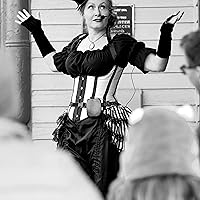
This is my first encounter with Lola Ridge. I came across a photograph of her somewhere I can't remember, thought she looked fascinating so Googled her. I'm not sure if I have started in the right place with her work though, because I could not engage with this collection, no matter how I tried. I feel I'm lacking knowledge of the history of New York city and Lola Ridge herself. I am out the loop and need to do some research in order to understand. I wanted to like her poems containing nature more than I did, so much so I read a few of them a handful of times, but still I was left feeling detached. I'm left standing in the cold looking in at Lola Ridge warm by a cosy fire wanting her to invite me in.
poetessa anarchica, visionaria, viaggiatrice, sensibile. tutto può succeder nei versi di lola ridge e questa sua raccolta è ambientata a new york con le luci di manhattan. le parate di brooklyn, personaggi che sembrano quasi fantasmi in una lunga sfilata verso il paradiso o l'inferno contemporaneamente. non ci è dato sapere non ci è dato scegliere.
ebook gratuito, è un peccato niente sia stato tradotto in italiano di questa grandissima poetessa.
This collection of early poems by Lola Ridge is not up to the quality of Sun-Up, but the title poem and several others hows the promise of Ridge's later work. I am not sure why she gets such little recognition, except that her revolutionary leftism is objectionable to many.