

What do you think?
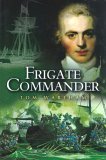
Frigate Commander
Frigate Commander is based on the private journal of Lieutenant - and then Captain - Graham Moore, a naval officer serving during the Revolutionary and Napoleonic Wars. Moore’s journal gives a unique and detailed account of what life was like for a serving naval officer. In particular it reveals the problems an officer had in managing the crew of a frigate, maintaining discipline and turning his ship into an efficient man of war.
Moore was one of the navy’s ‘star captain’, serving continuously as a frigate commander between 1793 and 1804. His early career took him to Newfoundland, and then, as a captain, he served with Sir William Sidney Smith’s squadron operating on the north coast of France. He was present during the Naval Mutiny at Spithead in 1797, and helped to destroy the French fleet off Ireland in 1798. His most famous action occurred in September 1804, when his squadron engaged and captured a Spanish frigate squadron carrying a fortune in treasure. The following year his frigate, HMS Indefatigable, was involved in the opening of the Trafalgar campaign.
Moore was one of the navy’s ‘star captain’, serving continuously as a frigate commander between 1793 and 1804. His early career took him to Newfoundland, and then, as a captain, he served with Sir William Sidney Smith’s squadron operating on the north coast of France. He was present during the Naval Mutiny at Spithead in 1797, and helped to destroy the French fleet off Ireland in 1798. His most famous action occurred in September 1804, when his squadron engaged and captured a Spanish frigate squadron carrying a fortune in treasure. The following year his frigate, HMS Indefatigable, was involved in the opening of the Trafalgar campaign.
304 pages, Hardcover
First published September 1, 2004
About the author
Tom Wareham
11 books2 followersAKA Richard Thomas (The Wapping Conspiracy) - now reissued under Tom Wareham's name.
Ratings & Reviews
Friends & Following
Create a free account to discover what your friends think of this book!
Community Reviews
Displaying 1 - 6 of 6 reviews

November 12, 2014
You can read all you want about the history of the Royal Navy during the Napoleonic era (and I do), but no matter how astute and evocative an historian’s narrative is, it can never compete with the words of the men who actually took part in the events of the day. When Wareham published his very well received Star Captains a few years ago -- a study of the exploits of that small group of the most outstanding frigate captains and the mostly single-ship actions in which they took part -- the principal criticism he heard was that he hadn’t gone into enough depth on any one of them. This engrossing and extremely enjoyable volume redresses that by presenting the career of Lieut., then Capt., Graham Moore, who served in Newfoundland, then in the Brest blockade under Sidney Smith, then was present at the Spithead mutiny, then took part in the destruction of the French fleet off Ireland in 1798. Most famously, his squadron captured a Spanish treasure squadron in 1804, and he also was involved in the Trafalgar campaign. But what makes all this so fascinating is that more than half the words in the book are Moore’s own, extracted at length from his thirty-seven volume (!) personal journal, now housed at Cambridge. Moore was a thoughtful and astute officer, learning from both the good and bad commanders under whom he served, and arriving at his own ideas and conclusions in managing a ship and especially its crew. Moreover, much of what he says contradicts the clichés about the Royal Navy of the period. He also carefully recorded many aspects of his social life, the balls and dinners he attended, and also discussed the way “interest” worked in furthering a young officer’s career. Finally, Moore’s father was a well-known Glasgow physician and his grandfather a minister, but while Moore was well educated, his style and vocabulary seem much more modern than Georgian; he reads almost like Patrick O’Brian. This is a must-read for any student of the period.

August 20, 2007
Readers of O'Brian and Stockwin always marvel at the authenticity of the works; they get the feeling that they are there in the early 19th century, standing by their heroes. Reading Wareham's "Frigate Commander" lets us know how the masters achieved their fine touch. The language, customs, and views come from primary source material and Wareham's book is that indeed. Graham Moore's journal entries are amplified by Wareham's interpretations, which seem never to be intrusive or overly explanatory.
Most of us who read in the Wooden Ships and Iron Men era must digest an entire series of novels to see a character's career unfold. Graham Moore's career, through the efforts of Tom Wareham, is encompased between the covers of one book.
If you like ships and the Age of Sail, and if you like primary source material, you will really enjoy "Frigate Commander."
Most of us who read in the Wooden Ships and Iron Men era must digest an entire series of novels to see a character's career unfold. Graham Moore's career, through the efforts of Tom Wareham, is encompased between the covers of one book.
If you like ships and the Age of Sail, and if you like primary source material, you will really enjoy "Frigate Commander."

May 13, 2013
Delightful account, relying primarily on Graham Moore's diaries, showing that this sensitive, contemplative man was an effective frigate captain. The book focuses primarily on Moore's life *as* a frigate captain (fair enough, given the title). Still, it would have been lovely to have more detail about Moore's later career. The "Long Decline" chapter is actually a very quick denouement.
I'm not sure if it's a feature or a bug to read the accounts of ship-to-ship actions primarily as one huge block of quoted text. (It could be my personal failing; as a lawyer, I see block quotes and my brain turns off. Huge block quote=skip and find out who won in the end. It works for legal reading, too.)
Even so, Moore was a skilled and wry diarist and the author does a great job of weaving Moore's diary with his own commentary in every other part of the book.
I'm not sure if it's a feature or a bug to read the accounts of ship-to-ship actions primarily as one huge block of quoted text. (It could be my personal failing; as a lawyer, I see block quotes and my brain turns off. Huge block quote=skip and find out who won in the end. It works for legal reading, too.)
Even so, Moore was a skilled and wry diarist and the author does a great job of weaving Moore's diary with his own commentary in every other part of the book.
April 27, 2020
Very Good
This is required reading because it centers around Moore’s personal journal which you don’t find often for this time period and this particular war. I do think the bios on Ed Pellew, Commander, and Thomas Cochrane, Cochrane, are more enjoyable.
This is required reading because it centers around Moore’s personal journal which you don’t find often for this time period and this particular war. I do think the bios on Ed Pellew, Commander, and Thomas Cochrane, Cochrane, are more enjoyable.
December 22, 2020
Good read, but a little bit dull at times.
January 7, 2017
Picked up a copy to pass time at work. It was hard getting into but once I did it was OK. I was expecting more personal writing and not just excerpts.
Displaying 1 - 6 of 6 reviews