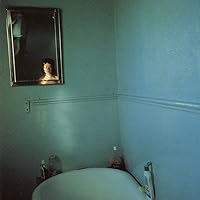
Deborah was a lively 16-year-old and part of a close-knit family when she fell victim to sleeping sickness. Twenty-nine years later, having been watched over throughout by the same doctor, she comes to life and gradually tries to adjust to the world around her.
Harold Pinter was a British playwright, screenwriter, director and actor. A Nobel Prize winner, Pinter was one of the most influential modern British dramatists with a writing career that spanned more than 50 years. His best-known plays include The Birthday Party (1957), The Homecoming (1964) and Betrayal (1978), each of which he adapted for the screen. His screenplay adaptations of others' works include The Servant (1963), The Go-Between (1971), The French Lieutenant's Woman (1981), The Trial (1993) and Sleuth (2007). He also directed or acted in radio, stage, television and film productions of his own and others' works.
I read - and listened - to this short play because the book And How Are You, Dr. Sacks?: A Biographical Memoir of Oliver Sacks I've been reading said it was based on Awakenings by Oliver Sacks, just as the film of the same name starring Robin Williams and Robert de Niro was. The book Awakenings was marvellous, so was the film, but I couldn't relate to the play at all.
It was an unusual choice of subject for Pinter who usually wrote from ideas he had formulated rather than being inspired by a book, and I don't think it works. It's about the awakening after 29 years from the deep "sleep" of encephalitis lethargica (with the drug L-Dopa) of which there was an epidemic in the 1920s.
How she is awoken, her first words and perceptions and confrontation with a sister and brother-in-law (who is her doctor) just struck me as not having any feeling behind it. The woman doesn't really understand what is going on (naturally) but ends by inventing her own reality which the others have partly tried to explain no longer exists and that 29 years have passed. But then they do an about-face and feed into her fantasy about her upcoming birthday party, like the little girl she thinks she still is.
What I did like was her own description of being locked away in a coma that she could rarely rouse herself from. She described it as being alone in a vast enclosed space, halls with mirrors rather than walls that endlessly reflected each other, and empty and cold. A kind of Alaska. She refused to look at herself in a mirror. How though, could she avoid it? She ends by saying, "I think I have things in proportion now." And slips back back into herself, locked away unable to communicate, but still, distantly, present.
This is certainly a curiosity. Untypically for Pinter this play exudes a lot of empathy and is profoundly sad. Even better when you know the movie "Awakenings" (1990).
This play has grown in my estimation since I saw it on stage with Dorothy Tutin in 1985. The extremity of the premise seems to have allowed Pinter to ground the dialog more realistically than is usual in his work. I can believe this story would unfold in this way. It find it emotionally unengaging, but with writing this brilliant I am happy to endure that.
I struggle with Pinter: he's a hard read and not a specially easy watch as far as I'm concerned, but I've usually found him rewarding.
The reward in this one is in the last line. The fact that I found myself so moved by it, must mean that the build-up to it had been effective. Reminds me of the last word in Racine's 'Berenice' (if that's not too 'pseudo' a comment), which I find stuns me.
A physician named Oliver Sacks had penned a brilliant tome called ‘Awakenings’. This tome was based on his personal experiences in the Mount Carmel Hospital in New York where he had been working. As a medic he had observed for abot four decades, an enigmatic disease called “encephalitis lethargic”. This disorder had swept a large part of Europe and the United states in the 1920s. What would happen was that patients suffering from this type of disease would be almost entirely cut off from the world of consciousness. Later, the discovery of a wonder-drug abruptly opened up the possibility of these patients returning to a fully conscious and active life.
Pinter’s play is an ingenious recreation of such a case of an awakening. The case has been wholly invented by Pinter on the basis of his reading of Oliver Sacks’ book. The case dealt with by Pinter is thus exclusively fictitious, and its setting too has been transferred from America to England.
As the plot describes the protagonist’s slow and excruciating realization that she has lost almost 30 years of her life, the themes convey very profound insights about the nature of time and the self without the use of extravagant language and without resorting to any areas of uncertainty.
Powerful themes such as memory and the nature of reality pervade the entire play. And the artistic manner in which the playwright delicately captures the girlish manners of the teenager’s unmoving self and its plodding changeover to resigned adulthood is both scary and awash with pathos.
“Your mind has not been damaged. It was merely suspended, it took up a temporary habitation... in a kind of Alaska.” Top veces que mencionan el titulo en el texto. Andrés Corchero interpretando el rol de “alma” ate this up. La puesta en escena de Ivan Benet tremenda… esos espejos!!! esas flores proyectadas, esos ramos, esos floreros… (Realmente al texto le daría un 3.5/4 sobre 5, pero es que después de verla representada resulta difícil que te choque)
Lazy beginning of the year, too much happening, got a few of Pinter’s plays… having seen “The Betrayal” and really enjoying it, I thought why not! You have been in a coma for 20 odd years since age 14…
في شتاء 1917 اجتاح اوروبا مرض غريب وبائي ، ظهر في أشكال متعددة ، : الهذيان ، الجنون ، النوم ، الأرق ، الشلل . و أطلق عليه مرض النوم ، و أصيب به حوالي خمسة ملايين شخص و توفي أكثر من ثلثهم . كان أسوأ المصابين يسقطون في هوة من النوم _كما أهل الكهف _و لكنهم علي وعي بما حولهم و لا يتحركون أو يتكلمون ، حتي ابتكار الدواء ( دوبا )
كأنها ألاسكا مستوحاة من رواية كتاب أوليفر ساكس : " الذين استيقظوا " عن مرض النوم .
يقيم بنتر مرة أخري ، نظامًا خاصًا ، متخذًا من الغموض السمة الغالبة اختار بنتر آلاسكا كنموذج للبرودة و التجمد _ كما مرض النوم _و لكن في ألاسكا توجد حياة فصلية ، حيث تعود الحيوانات للحياة في فصل الربيع . الحقيقة تظل كامنة في أعماق البطلة " ديبورا " التي عند شفائها من المرض لم تزل الحقيقة عندها ثابتة لم تتغير .
كما في مسرحيته الأرض الحرام : " لا إنك في عزلة تامة . إنها لا تتحرك و لا تتقدم في الزمن أبدًا ، بل تظل إلي الأبد صامتة ، يكسوها الجليد . "
لكن ديبورا تقع في فخ الحقيقة ، حقيقتها التي احتفظت بها ، و الحقيقة التي باتت حولها. و كيف أصبحت منعزلة بفرض من الذاكرة لأنها غير مهيئة للارتباط بالواقع الجديد .
A very brief little 3 handed play based, roughly, on the events of the book Awakenings by Oliver Sacks. One of those plays I think that need reading and rereading because it is so brief and so packed with meaning.