

What do you think?

The Intimate Ape: Orangutans and the Secret Life of a Vanishing Species
Kusasi is a three-hundred-pound male who could rip your arms and legs off like daisy petals if he wanted. Princess was taught sign language by a researcher and had a limited ability to combine vocabulary. . ..
For centuries the shaggy red orangutan lived in peaceful seclusion in the jungles of Southeast Asia and kept the ancient secrets about its quiet, contemplative nature. But that time has come to an end, as one of the earth's most intelligent creatures has, sadly, also become one if its vanishing species.
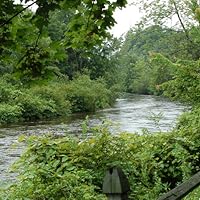
"I went up a muddy brown river called the Sekonyer into the jungles of southern Kalimantan, on the island of Borneo, to see orangutans as they really are and to know them the way they deserve to be known. . ."
In The Intimate Ape, journalist Shawn Thompson brings together a global assemblage of primatologists, conservationists, and volunteers to reveal the intricate life of these majestic primates. As he travels through the steamy rainforests of Sumatra and the jungle river valleys of Borneo, visiting nature preserves and observing conservation programs, Thompson describes the emotional and intellectual lives of orangutans and recognizes the people who have committed their lives to understand, protect, and ultimately rescue this powerful yet sensitive relation of humanity.
"An extraordinary book that adds to our understanding of the animal world." --From the Foreword by Jeffrey Moussaieff Masson
After 17 years as a reporter, photographer, and editor at newspapers in Ontario, Shawn Thompson became a full-time assistant professor in the journalism department at Thompson Rivers University, in British Columbia, Canada. He has traveled the world to find orangutans and interview orangutan scientists, including trips to Sumatra and Borneo (the only places in the world where orangutans are found in the wild), Java, the Philippines, Australia, the Netherlands, and the United States. He lives in the small city of Kamloops, in the mountainous interior of British Columbia. This is his sixth book.
For centuries the shaggy red orangutan lived in peaceful seclusion in the jungles of Southeast Asia and kept the ancient secrets about its quiet, contemplative nature. But that time has come to an end, as one of the earth's most intelligent creatures has, sadly, also become one if its vanishing species.
"I went up a muddy brown river called the Sekonyer into the jungles of southern Kalimantan, on the island of Borneo, to see orangutans as they really are and to know them the way they deserve to be known. . ."
In The Intimate Ape, journalist Shawn Thompson brings together a global assemblage of primatologists, conservationists, and volunteers to reveal the intricate life of these majestic primates. As he travels through the steamy rainforests of Sumatra and the jungle river valleys of Borneo, visiting nature preserves and observing conservation programs, Thompson describes the emotional and intellectual lives of orangutans and recognizes the people who have committed their lives to understand, protect, and ultimately rescue this powerful yet sensitive relation of humanity.
"An extraordinary book that adds to our understanding of the animal world." --From the Foreword by Jeffrey Moussaieff Masson
After 17 years as a reporter, photographer, and editor at newspapers in Ontario, Shawn Thompson became a full-time assistant professor in the journalism department at Thompson Rivers University, in British Columbia, Canada. He has traveled the world to find orangutans and interview orangutan scientists, including trips to Sumatra and Borneo (the only places in the world where orangutans are found in the wild), Java, the Philippines, Australia, the Netherlands, and the United States. He lives in the small city of Kamloops, in the mountainous interior of British Columbia. This is his sixth book.
- GenresAnimalsNonfiction
320 pages, Paperback
First published January 1, 2010
Ratings & Reviews
Friends & Following
Create a free account to discover what your friends think of this book!
Community Reviews
Displaying 1 - 13 of 13 reviews

January 29, 2010
This is a LibraryThing Early Reviewer book.
It would have been nice if this actually lived up to its subtitle: Orangutans and the Secret Life of a Vanishing Species. The reader learns very little about the "secret life" of orangutans; instead, nearly all the orangutans described in the book are those that reside in zoos or are being rehabilitated and have had extensive contact with humans.
This doesn't make the orangutans described any less fascinating, when Thompson actually spends time describing them instead of dwelling on his own reactions and pontificating on how much human beings have destroyed in this world. Much of the book is also spent describing the experiences of individuals who have studied orangutans, which is interesting, but again, is not exactly in keeping with the way the book was billed.
Thompson's writing style also got on my nerves really badly. Just one example of the typical style: "They are an interesting pair. He, very much the man. Tall, handsome, rugged. She, very much the woman. Smart, beautiful, rugged. Together, very much the couple." Phrasing like this shows up repeatedly, and made grind my teeth together.
Thompson also struck me as taking what must have been intensely frustrating liberties; at one point, he brings a French horn player all the way from Canada to Camp Leakey in Borneo, apparently (if he did, it is not mentioned) without securing the permission of those who work and run the camp, because he wants to see how the orangutans react to the music. The overall impression is of someone who has good intentions but is not approaching his subject with very much organization or intellectual rigor.
I was disappointed that I didn't like this book better, because I really wanted to learn more about orangutans (both in the wild and in captivity), what their lives are like, the ways they learn. This was not the right book for that.
It would have been nice if this actually lived up to its subtitle: Orangutans and the Secret Life of a Vanishing Species. The reader learns very little about the "secret life" of orangutans; instead, nearly all the orangutans described in the book are those that reside in zoos or are being rehabilitated and have had extensive contact with humans.
This doesn't make the orangutans described any less fascinating, when Thompson actually spends time describing them instead of dwelling on his own reactions and pontificating on how much human beings have destroyed in this world. Much of the book is also spent describing the experiences of individuals who have studied orangutans, which is interesting, but again, is not exactly in keeping with the way the book was billed.
Thompson's writing style also got on my nerves really badly. Just one example of the typical style: "They are an interesting pair. He, very much the man. Tall, handsome, rugged. She, very much the woman. Smart, beautiful, rugged. Together, very much the couple." Phrasing like this shows up repeatedly, and made grind my teeth together.
Thompson also struck me as taking what must have been intensely frustrating liberties; at one point, he brings a French horn player all the way from Canada to Camp Leakey in Borneo, apparently (if he did, it is not mentioned) without securing the permission of those who work and run the camp, because he wants to see how the orangutans react to the music. The overall impression is of someone who has good intentions but is not approaching his subject with very much organization or intellectual rigor.
I was disappointed that I didn't like this book better, because I really wanted to learn more about orangutans (both in the wild and in captivity), what their lives are like, the ways they learn. This was not the right book for that.

July 20, 2010
I wish GoodReads had an "abandoned" button. Or in this case, a "hurled into the corner at speed for being entirely unreadable" button.
I found the author's style so annoying, clunky and fragmented that I gave up very early on. There may indeed be something of worth here, but I haven't the fortitude to wade through the clanking prose to find it.
I found the author's style so annoying, clunky and fragmented that I gave up very early on. There may indeed be something of worth here, but I haven't the fortitude to wade through the clanking prose to find it.

August 17, 2010
i learned far too much about the author and the private lives of the researchers and not enough about the lives of the orangs and especially about those of them in the wild rather than rescue centres or zoos .
in fact the researchers sound a rather unpleasant lot but perhaps years in the jungle will turn anyone a bit funny .
the style made my teeth grate as well and seems aimed at the Reader's Digest audience .
of course there is the usual blather about vanishing species and how we are destroying the world which is all very worthy but nothing new and the author is unbearably smug and made me want slap him .
there is a chapter when the author describes bringing a french horn player up river into the jungle which leads to a lot of romantic rubbish about animals and music . i am surprised the orangs did not chase him away or mangle the bloody instrument .
i like primates and they are fascinating but for all their sharing 99% of our DNA there is too much anthropomorphism in books such as this and TV nature programmes . it is Big Brother for animal lovers .
on second thoughts i am going to give the book a 2 star rating
cheap production values as well .
in fact the researchers sound a rather unpleasant lot but perhaps years in the jungle will turn anyone a bit funny .
the style made my teeth grate as well and seems aimed at the Reader's Digest audience .
of course there is the usual blather about vanishing species and how we are destroying the world which is all very worthy but nothing new and the author is unbearably smug and made me want slap him .
there is a chapter when the author describes bringing a french horn player up river into the jungle which leads to a lot of romantic rubbish about animals and music . i am surprised the orangs did not chase him away or mangle the bloody instrument .
i like primates and they are fascinating but for all their sharing 99% of our DNA there is too much anthropomorphism in books such as this and TV nature programmes . it is Big Brother for animal lovers .
on second thoughts i am going to give the book a 2 star rating
cheap production values as well .

October 31, 2014
I read that a lot of people who reviewed the book were disappointed. The reason of their disappointment being that the book is as much about orangutans as about the people who study them. As well as it is not enough about the lives of the truly wild ones.
For the later reason I would say that it must be pretty hard to just talk about what we know of the wild ones: they must be the toughest great apes to study in the wild due to their semi-solitary and nomadic nature. I still think that this book gives great insights about the species.
I actually also enjoyed meeting with the researchers through the author's eyes. It resonated somehow with my vision of who they are and what they share: an incredible determination and an unmatched appreciation of living in the present...
Maybe I should add that if people want to read more scientific literature about orangutans, the work of Anne Russon, Carel van Shaik (to name a few) are very good references.
For the later reason I would say that it must be pretty hard to just talk about what we know of the wild ones: they must be the toughest great apes to study in the wild due to their semi-solitary and nomadic nature. I still think that this book gives great insights about the species.
I actually also enjoyed meeting with the researchers through the author's eyes. It resonated somehow with my vision of who they are and what they share: an incredible determination and an unmatched appreciation of living in the present...
Maybe I should add that if people want to read more scientific literature about orangutans, the work of Anne Russon, Carel van Shaik (to name a few) are very good references.

June 3, 2017
it got a little repetitive and didn't always follow a logical order. but overall I really enjoyed the look into this world from a non scientific perspective. I also enjoyed the comparisons nonhuman learning.
July 31, 2020
Clunky writing. The author annoyed me in the first five pages, and never really improved.

November 19, 2013
I didn't like this book as much as I thought I would, given my love of orangutans. I can't even really pinpoint why, but there were a couple of things. In the first instance, the subject matter wasn't what I'd expected - for the most part, rather than covering orangutans in themselves, the book was about the people who work with them - their histories, experiences and perspectives on the animal. This may have been interesting in itself but I also found the book struggled with structure and tone. There was nothing really moving the book along, each chapter was a sort of stand-alone mini-biography of a particular person, with material seemingly introduced sometimes on multiple occasions without reference to previous - it felt like the chapters may have been moved around at some point without cleaning up these links. The tone also swung between novel-like prose to straight journalistic reporting on interviews. I would only recommend to those deeply interested in orangutans as that interest is all that kept me reading.

June 10, 2016
"Urgency of environmental protection"
I have always been partial to orangutan over other primates (oter than us, humans) probably due to their human-like faces and facial expressions. I once learned from my Malaysian friend that the name “orangutan” is a Malay word meaning people (orang) of the forest (hutan). “The Intimate Ape” allows me to have a glimpse of the inner world of orangutan, and dedicated scientists and individuals who have tried their best to protect this endangered species. This book reminds us to appreciate and respect the forests and the orangutans, and to see the urgency of environmental protection. Great read.
I have always been partial to orangutan over other primates (oter than us, humans) probably due to their human-like faces and facial expressions. I once learned from my Malaysian friend that the name “orangutan” is a Malay word meaning people (orang) of the forest (hutan). “The Intimate Ape” allows me to have a glimpse of the inner world of orangutan, and dedicated scientists and individuals who have tried their best to protect this endangered species. This book reminds us to appreciate and respect the forests and the orangutans, and to see the urgency of environmental protection. Great read.

February 27, 2010
Based on the subtitle Orangutans and the Secret Life of a Vanishing Species I was expecting to be reading a book about the secret lives of Orangutans. But in imy view the author spent more time writing about the secret lives of the various Orangutan researches he interviewed than on the Orangutans. Granted, these researches did important work and deserve the recognition but I really felt too much time was spent on the inner lives of the researchers.
May 19, 2010
I spent time in Borneo (2 weeks) with Dr. Birute Galdikas and I'm always afraid of reading criticism of her - I forget the name of the book that had that. In any case, the author was pretty even handed and discussed the difference in philosophy in handling of the orangutans between different researchers. By mid-book I was enjoying reading about the efforts on behalf of the orangutans and hope the good work continues

October 2, 2013
This book was barely readable. It was very poorly written and organized with fractured stories throughout the book. It was a struggle to finish and in the end didn't learn much at all about orangutans but instead about the researchers who studied them. I would not recommend this book to others unless you are specifically interested in the researchers themselves.
February 8, 2011
The book at most times seemed to focus more on the people working with the apes than the actually monkey. I suppose the author may have thought there were plenty of other books written solely on the ape. I just haven't read them!

April 4, 2012
This poorly written book has very little to do with apes and more to do with the researchers who study them. Although vaguely interesting on that level, it was an overall disappointment as it was not what I was expecting. Don't recommend it.
Displaying 1 - 13 of 13 reviews