

What do you think?

Captain Brassbound's Conversion
Purchase one of 1st World Library's Classic Books and help support our free internet library of downloadable eBooks. 1st World Library-Literary Society is a non-profit educational organization. Visit us online at www.1stWorldLibrary.ORG - - On the heights overlooking the harbor of Mogador, a seaport on the west coast of Morocco, the missionary, in the coolness of the late afternoon, is following the precept of Voltaire by cultivating his garden. He is an elderly Scotchman, spiritually a little weatherbeaten, as having to navigate his creed in strange waters crowded with other craft but still a convinced son of the Free Church and the North African Mission, with a faithful brown eye, and a peaceful soul. Physically a wiry small-knit man, well tanned, clean shaven, with delicate resolute features and a twinkle of mild humor. He wears the sun helmet and pagri, the neutral-tinted spectacles, and the white canvas Spanish sand shoes of the modern Scotch missionary: but instead of a cheap tourist's suit from Glasgow, a grey flannel shirt with white collar, a green sailor knot tie with a cheap pin in it, he wears a suit of clean white linen, acceptable in color, if not in cut, to the Moorish mind.
136 pages, Paperback
First published February 10, 1900
About the author
George Bernard Shaw
2,496 books4,286 followersGeorge Bernard Shaw stands as one of the most prolific and influential intellectuals of the late nineteenth and early twentieth centuries, a man whose literary output was matched only by his fervent commitment to social reform. Rising from a modest background in Dublin to become a global icon of letters, Shaw redefined the purpose of the stage, transforming it from a place of mere entertainment into a forum for rigorous intellectual debate and moral inquiry. His unique "Shavian" style—characterized by sharp-witted dialogue, paradoxical reasoning, and a relentless assault on Victorian hypocrisy—ensured that his voice resonated far beyond the footlights. As a playwright, critic, and philosopher, he remains a singular figure in history, being one of only two individuals to have been honored with both a Nobel Prize in Literature and an Academy Award. This rare crossover of high-art recognition and mainstream cinematic success speaks to his versatility and the enduring relevance of his narratives. His dramatic work, which includes over sixty plays, often tackled the most pressing issues of his day, from the rigid structures of the British class system to the complexities of gender roles and the ethical dilemmas of capitalism. In masterpieces like Pygmalion, he used the science of phonetics to demonstrate the artificiality of class distinctions, a theme that would later reach millions through the musical adaptation My Fair Lady. In Man and Superman, he delved into the philosophical concepts of the "Life Force" and the evolution of the human spirit, while Major Barbara forced audiences to confront the uncomfortable relationship between religious idealism and the industrial military complex. Beyond his theatrical achievements, Shaw was a foundational force in political thought, serving as a leading light of the Fabian Society. His advocacy for gradual socialist reform, rather than violent revolution, helped shape the trajectory of modern British politics and social welfare. He was instrumental in the creation of the London School of Economics, an institution that continues to influence global policy and economic theory. Shaw was also a formidable critic, whose reviews of music and drama set new standards for the profession, characterized by an uncompromising honesty and a deep knowledge of the arts. His personal lifestyle was as distinctive as his writing; a committed vegetarian, teetotaler, and non-smoker, he lived with a disciplined focus that allowed him to remain productive well into his ninth decade. He was a man of contradictions, often engaging in provocative public discourse that challenged the status quo, even when his views sparked intense controversy. His fascination with the "Superman" archetype and his occasional support for authoritarian figures reflected a complex, often elitist worldview that sought the betterment of humanity through radical intellectual evolution. Despite these complexities, his core mission was always rooted in a profound humanitarianism and a desire to expose the delusions that prevented society from progressing. He believed that the power of the written word could strip away the masks of respectability that hid social injustice, and his plays continue to be staged worldwide because the human foibles he satirized remain as prevalent today as they were during his lifetime. By blending humor with gravity and intellect with accessibility, Shaw created a body of work that serves as both a mirror and a compass for modern civilization. His legacy is not just in the scripts he left behind, but in the very way we think about the intersection of art, politics, and the individual’s responsibility to the collective good. He remains the quintessential public intellectual, a man who never feared to speak his mind or to demand that the world become a more rational and equitable place.
Ratings & Reviews
Friends & Following
Create a free account to discover what your friends think of this book!
Community Reviews
Displaying 1 - 8 of 8 reviews

January 27, 2018
First published in Three Plays for Puritans (1901), this attractive but somewhat forgettable play by George Bernard Shaw, set in Morocco, tells the story of the half-British/ half-Brazilian Captain Brassbound, smuggler and skipper of The Thanksgiving. He seeks revenge against his uncle the judge Sir Henry Hallam, who has dishonored his Brazilian mother and deprived him of his rightful inheritance, by delivering him into the hands of a local sheikh as a Christian, and therefore (according to Islamic law) rightfully a slave. The judge’s sister-in law, Lady Cicely Waynflete, a charming and fearless world traveler, convinces Brassbound he should desist from his revenge, arguing that his fierce justice is as flawed as the British legal system that led to his own disinheritance. Brassbound relents, for he has fallen in love with her. But soon the sheikh arrives, and things get complicated.
The character of Lady Cicely—based on Shaw’s friend the actress Ellen Terry—is the best thing about the play. Although she is naive, always seeing the best in people (even the sheikh who intends to seize her as his “wife”), she is also aware of her own charm and makes full use of it on every occasion, taking charge of everything—and everybody—with a completely natural air of command. Her defense of Brassbound before a United States navy tribunal is the heart of the play:
LADY CICELY. The Sheikh. Sidi el Assif. A noble creature, with such a fine face! He fell in love with me at first sight--
SIR HOWARD (remonstrating). Cicely!
LADY CICELY. He did: you know he did. You told me to tell the exact truth.
CAPTAIN KEARNEY. I can readily believe it, madam. Proceed.
LADY CICELY. Well, that put the poor fellow into a most cruel dilemma. You see, he could claim to carry off Sir Howard, because Sir Howard is a Christian. But as I am only a woman, he had no
claim to me.
CAPTAIN KEARNEY (somewhat sternly, suspecting Lady Cicely of aristocratic atheism). But you are a Christian woman.
LADY CICELY. No: the Arabs don't count women. They don't believe we have any souls...Well, what was he to do? He wasn't in love with Sir Howard; and he WAS in love with me. So he naturally offered to swop Sir Howard for me. Don't you think that was nice of him, Captain Kearney?
CAPTAIN KEARNEY. I should have done the same myself, Lady Waynflete. Proceed.
LADY CICELY. Captain Brassbound, I must say, was nobleness itself, in spite of the quarrel between himself and Sir Howard. He refused to give up either of us, and was on the point of fighting for us
when in came the Cadi with your most amusing and delightful letter, captain, and bundled us all back to Mogador...So here we are. Now, Howard, isn't that the exact truth, every word of it?
SIR HOWARD. It is the truth, Cicely, and nothing but the truth. But the English law requires a witness to tell the WHOLE truth.
LADY CICELY. What nonsense! As if anybody ever knew the whole truth about anything! (Sitting down, much hurt and discouraged.) I'm sorry you wish Captain Kearney to understand that I am an
untruthful witness.
SIR HOWARD. No: but--
LADY CICELY. Very well, then: please don't say things that convey that impression.
CAPTAIN KEARNEY. But Sir Howard told me yesterday that Captain Brassbound threatened to sell him into slavery.
LADY CICELY (springing up again). Did Sir Howard tell you the things he said about Captain Brassbound's mother? (Renewed sensation.) I told you they quarrelled, Captain Kearney. I said
so, didn't I? ...
LADY CICELY. Of course I did. Now, Captain Kearney, do YOU want me--does Sir Howard want me--does ANYBODY want me to go into the details of that shocking family quarrel? Am I to stand here in the absence of any individual of my own sex and repeat the language of two angry men?
CAPTAIN KEARNEY (rising impressively). The United States navy will have no hahnd in offering any violence to the pure instincts of womanhood. Lady Waynflete: I thahnk you for the delicacy with which you have given your evidence. (Lady Cicely beams on him gratefully and sits down triumphant.)

August 21, 2023
This is a play written by George Bernard Shaw in 1900. It explores the relationship between the law, justice, revenge, and forgiveness. It also displays class differences and social divisions through an emphasis on speaking accents. The narrative includes what could be perceived as negative generalizations about Islamic political structures and thus by extension the differences between the Christian Western world and the Islamic world.
The play is all those things mentioned in the above paragraph, however its most notable impression for me is its comedic use of a woman—the only female in the fourteen member cast—who is so attractive that all the male characters want to please her wishes. This woman is totally positive in her opinions and appraisals of other individuals as well as being clueless to danger. Her combination of looks and happy assertiveness successfully stops violent clashes and influences a judicial proceeding to adopt a spirit of forgiveness.
A description of the plot can be read on Wikipedia. Rather than describing it further here I will simply share some of my observations after reading the play.
The author deviated from standard English spelling in the dialog in order to convey differences in speech accents. In the case of the Cockney dialect the spelling is so deviant as to be impossible to understand, at least for me. Generally I was able to infer its approximate meaning by the surrounding context. American accents required some spelling changes as well, but since the author is British he saw no reason to change spellings for the educated British woman.
The play's story takes place in Morocco, but only three of fourteen cast members are Moroccans and they only make brief appearances. Almost all the dialog is among British and American expats. The role of the Moroccans in the play are to serve as sources of potential danger.
The Cockney character plays a role of a fool who is considered by all to be of the lowest social class. In an explanatory note by the author the Cockney character is described as follows:
Speaking of conversion raises the question, in what way was Captain Brassbound converted? The only thing in the play that could be considered conversion was his decision not to cause the death of the judge who had cheated his mother of an estate in the West Indies. His change of heart was caused by a conversation with the sole female character in the play. Near the end of the play it appears he may consider becoming a proper Englishman, but in the end he goes back to being a pirate.
The play is all those things mentioned in the above paragraph, however its most notable impression for me is its comedic use of a woman—the only female in the fourteen member cast—who is so attractive that all the male characters want to please her wishes. This woman is totally positive in her opinions and appraisals of other individuals as well as being clueless to danger. Her combination of looks and happy assertiveness successfully stops violent clashes and influences a judicial proceeding to adopt a spirit of forgiveness.
A description of the plot can be read on Wikipedia. Rather than describing it further here I will simply share some of my observations after reading the play.
The author deviated from standard English spelling in the dialog in order to convey differences in speech accents. In the case of the Cockney dialect the spelling is so deviant as to be impossible to understand, at least for me. Generally I was able to infer its approximate meaning by the surrounding context. American accents required some spelling changes as well, but since the author is British he saw no reason to change spellings for the educated British woman.
The play's story takes place in Morocco, but only three of fourteen cast members are Moroccans and they only make brief appearances. Almost all the dialog is among British and American expats. The role of the Moroccans in the play are to serve as sources of potential danger.
The Cockney character plays a role of a fool who is considered by all to be of the lowest social class. In an explanatory note by the author the Cockney character is described as follows:
... a man who is clearly no barbarian, being in fact a less agreeable product peculiar to modern commercial civilization. ... A Londoner would recognize him at once as an extreme but hardy specimen of the abortion produced by nature in a city slum.The play's narrative is so disparaging against this character as to seem politically incorrect to be in essence laughing at a lower caste member. To spread the insults wider the play's narrative explains later that this Cockney character is the only convert to Christianity achieved by a missionary who's been stationed in Morocco for twenty-five years. The fact that the Cockney character is also a paid employee as gardener for the missionary may have contributed to the conversion.
Speaking of conversion raises the question, in what way was Captain Brassbound converted? The only thing in the play that could be considered conversion was his decision not to cause the death of the judge who had cheated his mother of an estate in the West Indies. His change of heart was caused by a conversation with the sole female character in the play. Near the end of the play it appears he may consider becoming a proper Englishman, but in the end he goes back to being a pirate.

August 13, 2014
The pirate captain comes good
16 August 2014
Some have suggested that maybe that this may not be one of his best plays but I still found it quite enjoyable. It is a shame that, unlike the other two plays that appear n 'Three Plays for Puritans', this one did not make it onto the Hollywood screen, especially since he gives the play the subtitle of 'an adventure'. Sometimes I wonder if it is possible to have a play that is an adventure produced on the stage. I certainly could not imagine ever going to Her Majesty's Theatre to see a production of this:
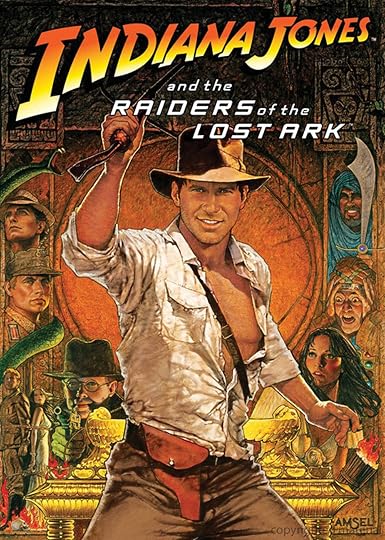
Though I have been to Her Majesty's Theatre (in Adelaide) to see a production of this:

So I guess when it comes to the modern theatre scene anything is certainly possible (and the performance of The Hobbit was actually really good – oh, I have also seen The Wizard of Oz live on stage as well).
Anyway, this play has everything that an adventure could have: an exotic location, a villain, a hero, and a damsel in distress. Actually, I probably cannot suggest that we have the last three things because the play does not actually turn out like the traditional adventure story. The story is about a couple of English aristocrats – a judge (Sir Howard) and his wife (Lady Cecily) - who travel to Morocco on a holiday to visit the interior. Now, I'm not going to suggest that Morocco is the safest of places to visit, but then again it is certainly not one of the most dangerous. However, as Shaw seems to indicate, in his day the interior of Morocco was certainly one place that a well respected English gentleman and his wife would unlikely be going a tour. However, they insist on it and hire the likes of a Captain Brassbound to take them there.
As ends up happening in a lot of these plays, it turns out that there is a connection between Brassbound and Sir Howard (the are related), and Brassbound has a rather nasty bone to pick with him. Brassbound was supposed to inherit a property off of his brother, but that was stolen from him by some rather dubious agent in the West Indies. Also his mother was killed, which turned out to be because of an indirect action of the Sir Howard's. As such Brassbound wants revenge, and by taking them to his castle in the interior he has them where he wants them.
Brassbound's character is interesting because while be portrays a rather hard exterior (he has to since he is a pirate), there is a part of him that shows compassion. This is described (if you can understand what he is saying) by one of his crew members, a certain Drinkwater. He commands the boat, but he commands it fairly. Also, we have this impression that while he may be a leader, he does not see himself as a commander. He is not power hungry, nor does he appear to be greedy. Rather, as it comes to light, it turns out that he just wants revenge, and he selects Sir Howard as the target of the revenge.
It is also interesting how Shaw portrays the Moors. In those days they would have been seen as barbaric savages, and in a way Shaw portrays them as such. The further away from civilisation they go the more savage they become. As is indicated to Sir Howard that despite his high standing unless gold were to be discovered in the interior it would be highly unlikely that the British would send in troops to either rescue, or seek revenge, for his death. It was simply too dangerous, especially for Christian men. It seems that little has changed with regards to the Western opinions of Muslims because, in a way, they are still portrayed as wild, backward, and savage, and it is unfortunate that it is only the bad apples that are portrayed that way. On the otherside though many of them have the same view of us here in the West.
The one thing that I did find really annoying with this play was Shaw's insistence of attempting to put dialect into the text, especially Drinkwater's. However, I suspect that if I were to see this play performed then Drinkwater would be just as difficult to understand on the stage as he is on the printed page. I guess Shaw wanted to ram the point home (and he does discuss his use of dialects at the end of the play).
16 August 2014
Some have suggested that maybe that this may not be one of his best plays but I still found it quite enjoyable. It is a shame that, unlike the other two plays that appear n 'Three Plays for Puritans', this one did not make it onto the Hollywood screen, especially since he gives the play the subtitle of 'an adventure'. Sometimes I wonder if it is possible to have a play that is an adventure produced on the stage. I certainly could not imagine ever going to Her Majesty's Theatre to see a production of this:
Though I have been to Her Majesty's Theatre (in Adelaide) to see a production of this:
So I guess when it comes to the modern theatre scene anything is certainly possible (and the performance of The Hobbit was actually really good – oh, I have also seen The Wizard of Oz live on stage as well).
Anyway, this play has everything that an adventure could have: an exotic location, a villain, a hero, and a damsel in distress. Actually, I probably cannot suggest that we have the last three things because the play does not actually turn out like the traditional adventure story. The story is about a couple of English aristocrats – a judge (Sir Howard) and his wife (Lady Cecily) - who travel to Morocco on a holiday to visit the interior. Now, I'm not going to suggest that Morocco is the safest of places to visit, but then again it is certainly not one of the most dangerous. However, as Shaw seems to indicate, in his day the interior of Morocco was certainly one place that a well respected English gentleman and his wife would unlikely be going a tour. However, they insist on it and hire the likes of a Captain Brassbound to take them there.
As ends up happening in a lot of these plays, it turns out that there is a connection between Brassbound and Sir Howard (the are related), and Brassbound has a rather nasty bone to pick with him. Brassbound was supposed to inherit a property off of his brother, but that was stolen from him by some rather dubious agent in the West Indies. Also his mother was killed, which turned out to be because of an indirect action of the Sir Howard's. As such Brassbound wants revenge, and by taking them to his castle in the interior he has them where he wants them.
Brassbound's character is interesting because while be portrays a rather hard exterior (he has to since he is a pirate), there is a part of him that shows compassion. This is described (if you can understand what he is saying) by one of his crew members, a certain Drinkwater. He commands the boat, but he commands it fairly. Also, we have this impression that while he may be a leader, he does not see himself as a commander. He is not power hungry, nor does he appear to be greedy. Rather, as it comes to light, it turns out that he just wants revenge, and he selects Sir Howard as the target of the revenge.
It is also interesting how Shaw portrays the Moors. In those days they would have been seen as barbaric savages, and in a way Shaw portrays them as such. The further away from civilisation they go the more savage they become. As is indicated to Sir Howard that despite his high standing unless gold were to be discovered in the interior it would be highly unlikely that the British would send in troops to either rescue, or seek revenge, for his death. It was simply too dangerous, especially for Christian men. It seems that little has changed with regards to the Western opinions of Muslims because, in a way, they are still portrayed as wild, backward, and savage, and it is unfortunate that it is only the bad apples that are portrayed that way. On the otherside though many of them have the same view of us here in the West.
The one thing that I did find really annoying with this play was Shaw's insistence of attempting to put dialect into the text, especially Drinkwater's. However, I suspect that if I were to see this play performed then Drinkwater would be just as difficult to understand on the stage as he is on the printed page. I guess Shaw wanted to ram the point home (and he does discuss his use of dialects at the end of the play).
September 18, 2018
There were some interesting elements in "Captain Brassbound's Conversion," and some annoying or mildly offensive elements. The best part for me was the character of Lady Cicely Waynflete, who is able to achieve her ends by charm and a bit of guile. The first character we meet is a Scottish missionary in Morocco, but he is not responsible for the titular conversion. Rather it is Lady Cicely's doing.
The bad parts of the play included extensive use of phonetic dialects in which Shaw attempted to imitate the sound of American, Scottish, and Cockney accents. It was the latter one that really got to me. There were a few sentences I had to give up on without ever understanding what words were intended. And then the treatment of the Moroccan characters is stereotypical in the extreme. For as progressive as he believed himself to be, Shaw seems not to have considered that they could be fully as human and complicated as his white characters.
So "Captain Brassbound's Conversion" is a mixed bag.
The bad parts of the play included extensive use of phonetic dialects in which Shaw attempted to imitate the sound of American, Scottish, and Cockney accents. It was the latter one that really got to me. There were a few sentences I had to give up on without ever understanding what words were intended. And then the treatment of the Moroccan characters is stereotypical in the extreme. For as progressive as he believed himself to be, Shaw seems not to have considered that they could be fully as human and complicated as his white characters.
So "Captain Brassbound's Conversion" is a mixed bag.
December 28, 2023
Loved the characters and Shaw’s use of dialectic changes to convey the speakers origins. I think I am understanding more of his wit now, though more so in Julius Caesar and Cleopatra than in any other so far.

February 18, 2022
Hated the dialect dialogue.
February 5, 2016
For a long time this was a very favourite play and that merely means when you have lived so much more and read as well, other works add to the favourite lists.
It is an amazing play, beginning with what might be - or should be - a common fear in minds of all colonial masters traveling in parts they misruled once; a bandit capturing and kidnapping a small party of travellers and promising to sell the lord of the group to a dreaded ruler for beheading after a few games.
And from this dreadful start, it then proceeds into a delightful play, with one pompous man (the ex colonial ruler sort, naturally) brought down by one of his own party - his sister-in-law, and the bandit outsmarted by her kind and sympathetic but shrewd dealing with the situation, so he comes out looking like a hero who saved them, in fact.
One of the lines - "it becomes clear that an agitated man pacing furiously cannot win against a woman knitting calmly" - of course this is as I remember it after the few decades it has been since I read it yet again for pleasure. He wrote it much better, of course.
Saturday, September 27, 2008.
..............................................................................
..............................................................................
It is an amazing play, beginning with what might be - or should be - a common fear in minds of all colonial masters traveling in parts they misruled once; a bandit capturing and kidnapping a small party of travellers and promising to sell the lord of the group to a dreaded ruler for beheading after a few games.
And from this dreadful start, it then proceeds into a delightful play, with one pompous man (the ex colonial ruler sort, naturally) brought down by one of his own party - his sister-in-law, and the bandit outsmarted by her kind and sympathetic but shrewd dealing with the situation, so he comes out looking like a hero who saved them, in fact.
One of the lines - "it becomes clear that an agitated man pacing furiously cannot win against a woman knitting calmly" - of course this is as I remember it after the few decades it has been since I read it yet again for pleasure. He wrote it much better, of course.
Saturday, September 27, 2008.
..............................................................................
..............................................................................

January 25, 2015
A really enjoyable, if rather ridiculous, play. One of those I just zoomed through because I found it so engaging. Have to say, though, reading the phonetically-written dialects was *really* difficult, though I'm sure it would be helpful if I was actually acting it.
Displaying 1 - 8 of 8 reviews