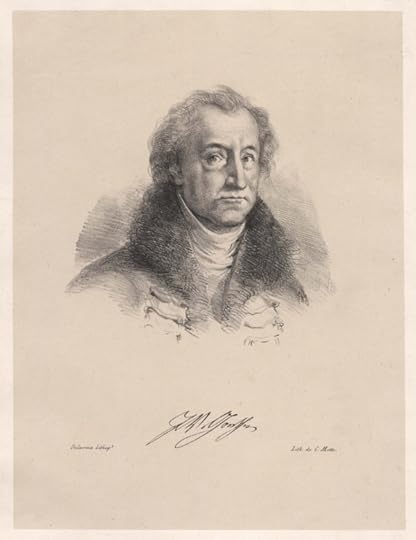
This work has been selected by scholars as being culturally important, and is part of the knowledge base of civilization as we know it. This work was reproduced from the original artifact, and remains as true to the original work as possible. Therefore, you will see the original copyright references, library stamps (as most of these works have been housed in our most important libraries around the world), and other notations in the work. This work is in the public domain in the United States of America, and possibly other nations. Within the United States, you may freely copy and distribute this work, as no entity (individual or corporate) has a copyright on the body of the work. As a reproduction of a historical artifact, this work may contain missing or blurred pages, poor pictures, errant marks, etc. Scholars believe, and we concur, that this work is important enough to be preserved, reproduced, and made generally available to the public. We appreciate your support of the preservation process, and thank you for being an important part of keeping this knowledge alive and relevant.
Born in Quebec but raised in New Brunswick, Frye studied at the University of Toronto and Victoria University. He was ordained to the ministry of the United Church of Canada and studied at Oxford before returning to UofT.
His first book, Fearful Symmetry, was published in 1947 to international acclaim. Until then, the prophetic poetry of William Blake had long been poorly understood, considered by some to be delusional ramblings. Frye found in it a system of metaphor derived from Paradise Lost and the Bible. His study of Blake's poetry was a major contribution. Moreover, Frye outlined an innovative manner of studying literature that was to deeply influence the study of literature in general. He was a major influence on, among others, Harold Bloom and Margaret Atwood.
In 1974-1975 Frye was the Norton professor at Harvard University.
Frye married Helen Kemp, an educator, editor and artist, in 1937. She died in Australia while accompanying Frye on a lecture tour. Two years after her death in 1986 he married Elizabeth Brown. He died in 1991 and was interred in Mount Pleasant Cemetery in Toronto, Ontario. The Northrop Frye Centre at Victoria College at the University of Toronto was named in his honour.
Page 32: Thus, the Frankforters passed a series of prosperous years during my childhood; but scarcely, on the 28th of August, 1756, had I completed my seventh year, than that world-renowned war broke out, which was also to exert great influence upon the next seven years of my life.
Page 71: It now seems necessary to state more circumstantially, and to make intelligible how, under these circumstances, I made my way with more or less ease through the French language, which, however, I had never learned. Here, too, my natural gift was of service to me, enabling me easily to catch the sound of a language, its movement, accent, tone, and all other outward peculiarities. I knew many words from the Latin; Italian suggested still more; and by listening to servants and soldiers, sentries and visitors, I soon picked up so much that, if I could not join in conversation, I could at any rate manage single questions and answers. All this, however, was little compared to the profit I derived from the theatre.
page 78: Thus, after an unquiet Passion-week, the Good-Friday of 1759 arrived. A profound stillness announced the approaching storm. We children were forbidden to quit the house: my father had no quiet, and went out.
page 267: At this time the Lives of the Painters, by D'Argenville, was translated into German; I obtained it quite fresh, and studied it assiduously enough. This seemed to please Oeser, and he procured us an opportunity of seeing many a portfolio out of the great Leipzig collections, and thus introduced us to the history of the art. But even these exercises produced in me an effect different from that which he probably had in mind. The manifold subjects which I saw treated by artists awakened the poetic talent in me, and as one easily makes an engraving for a poem, so did I now make poems to the engravings and drawings, by contriving to present to myself the personages introduced in them, in their previous and subsequent condition, and sometimes to compose a little song which might have suited them; and thus accustomed myself to consider the arts in connexion with each other.
Page 310: Yet this dissipation and dismemberment of my studies was not enough, they were to be once more seriously disturbed; for a remarkable political event set everything in motion, and procured us a tolerable succession of holidays. Marie Antoinette, Archduchess of Austria and Queen of France, was to pass through Strasburg on her road to Paris.
Page 408: Ecclesiastical history was almost better known to me than the history of the world, and that conflict in which the church--the publicly recognised worship of God--finds itself, and always will find itself, in two different directions, had always highly interested me.
Page 420: From his youth upwards, Voltaire's wishes and endeavours had been directed to an active and social life, to politics, to gain on a large scale, to a connexion with the heads of the earth, and a profitable use of this connexion, that he himself might be one of the heads of the earth also. No one has easily made himself so dependent, for the sake of being independent. He even succeeded in subjugating minds; the nation became his own. In vain did his opponents unfold their moderate talents, and their monstrous hate; nothing succeeded in injuring him. The court he could never reconcile to himself, but by way of compensation, foreign kings were his tributaries; Katharine and Frederic the Great, Gustavus of Sweden, Christian of Denmark, Peniotowsky of Poland, Henry of Prussia, Charles of Brunswick, acknowledged themselves his vassals; even popes thought they must coax him by some acts of indulgence.
page 422: Diderot was sufficiently akin to us, as, indeed, in everything, for which the French blame him, he is a true German. But even his point of view was too high, his circle of vision was too extended for us to range ourselves with him, and place ourselves at his side. Nevertheless, his children of nature, whom he continued to bring forward and dignify with great rhetorical art, pleased us very much; his brave poachers and smugglers enchanted us; and this rabble afterwards throve but too well upon the German Parnassus. It was he also, who, like Rousseau, diffused a disgust of social life--a quiet introduction to those monstrous changes of the world, in which everything permanent appeared to sink.
Page 470: The resolution to preserve my internal nature according to its peculiarities, and to let external nature influence me according to its qualities, impelled me to the strange element in which Werther is designed and written. I sought to free myself internally from all that was foreign to me, to regard the external with love, and to allow all beings, from man downwards, as low as they were comprehensible, to act upon me, each after its own kind. Thus arose a wonderful affinity with the single objects of nature, and a hearty concord, a harmony with the whole, so that every change, whether of place and region, or of the times of the day and year, or whatever else could happen, affected me in the deepest manner. The glance of the painter associated itself to that of the poet, the beautiful rural landscape, animated by the pleasant river, increased my love of solitude, and favoured my silent observations as they extended on all sides.
Opening: On the 28th of August, 1749, at mid-day, as the clock struck twelve, I came into the world, at Frankfort-on-the-Maine. My horoscope was propitious: the sun stood in the sign of the Virgin, and had culminated for the day; Jupiter and Venus looked on him with a friendly eye, and Mercury not adversely; while Saturn and Mars kept themselves indifferent; the Moon alone, just full, exerted the power of her reflection all the more, as she had then reached her planetary hour. She opposed herself, therefore, to my birth, which could not be accomplished until this hour was passed.
Well. Goethe's "fiction novels" are romantic, wandering, and have no conclusion - as books of those eras did - but his documentary writing about his early life is really fascinating. Slow to read, because of the elderly style, but I'm actually eager to read the second volume!