"DK Eyewitness Travel Guide: Milan & the Lakes" will lead you straight to the best attractions this region in Italy has to offer. The guide includes unique illustrated cutaways, floor plans, and reconstructions of the city's stunning architecture, along with 3-D aerial views of the key districts to explore on foot. You'll find detailed listings of the best hotels, restaurants, bars, and shops for all budgets in this fully updated guide, plus insider tips on everything from where to find the best markets and nightspots to which attractions appeal most to children.
This "DK Eyewitness Travel Guide"'s in-depth coverage of unforgettable sights is completed by the free pull-out map to Milan, clearly marked with sights from the guidebook and an easy-to-use street index. The map has detailed street views of major areas, plus transportation maps, a chart of walking distances between major attractions, and other information on getting around the city.
"DK Eyewitness Travel Guide: Milan & the Lakes" shows you what other guidebooks only tell you.
The photography wasn't as nice as the other DK guides I've read, but the text seemed more practically useful. I wouldn't opt to go to Milan having only this as a guide, but if that somehow happened unexpectedly I think this would be adequate to plan at least 4 or 5 days worth of sightseeing, and the maps are probably sufficient to get you roughly where you want to go.
Here are some hypothetical daily schedules [disclaimer: I've never been to Milan, so I am only judging from the guide that these sights/locations seem convenient to one another].
Day 1 -- Central Milan Pinacoteca Ambrosiana (Old Masters) Via Torino, Piazza del Duomo see the Cathedral and go to the roof Galleria Vittorio Emanuele II (19th-century shopping arcade) La Scala has a Museo Teatrale and a year-round season Quadrilatero d'Oro has both fancy shopping and smaller museums (including Poldo Pezzoli) Pinacoteca di Brera, an important museum in a lively area with lots of bars. Maybe a good place to end the day.
Day 2 Castello Sforezco (Medieval and Renaissance art, including Michelangelo's Pieta) Museo Arcaeologico (early history of Milan) Da Vinci's Last Supperreserve at least 2 weeks in advance Bar Magenta (Art Nouveau, food) Best churches: Sant'Ambroglio (4th-century), San Lorenzo (diocesan museum), Sant Eustorgio (early frescoes) nearby Navigli district has bars and restaurants
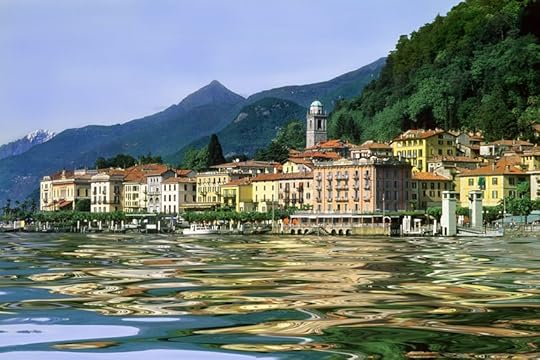
Day 3 -- Lake Como Stroll the lakeside promenade Cattedrale di Santa Maria Assunta Volta science museum Villa Serbelloni in Bellagio (guided tours only) Ferry to Varenna gardens at Villa Cipressi and Villa Monastero hike to ruins of Castello di Vezio ferry to Tremezzo Villa Carlotta (18th-century art)
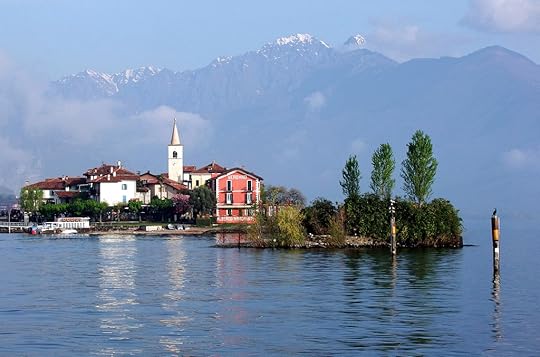
Day 4 -- Lake Maggiore 3 little Borromean islands with gardens, palaces, and exhibits Cable car up Monte Mottarone and hike down (3 hours) or take the cable car back. If going by car, stop at Arona and climb up the inside of the statue of Borromeo
Listed also are several smaller museums and less prime churches et al historic sights, and descriptions of some other neighborhoods beside the main two tourist spots.
In 1976, I flew into the airport at Milan and then took a limousine ride to Bellagio on Lake Como. In the car with me were two ex-Presidents of the American Political Science Association. I recall our terror as the limo driver would pass cars on curves--without being able to see ahead! What an introduction to our small and intensive conference at the Villa Serbelloni (then, run by the Rockefeller Foundation). So, when I saw this book, I simply had to get it to help recall that wonderful week or so on the shores of Lake Como.
The book's purpose is laid out on page 6: "This guide helps you to get the most out of your visit to Milan and the lakes of Northern Italy by providing detailed descriptions of sights, practical information and expert advice." The volume starts out by providing context--a map of Milan, a history of Milan, events throughout the year in Milan. In a relatively few pages, one develops a sense of this historic city.
Then, the coverage of the city, region by region. In the "Historic Centre," we find one of the great cathedrals, Duomo. Several pages portray the area, the cathedral itself, and the attractions of this venue. Of course, there is also discussion of the renowned opera house, La Scala. And so on. Area by area, we get a sense of this city.
Then, the lakes nearby--including Lake Garda, Lake Como, and Lake Maggiore. Since I stayed at a villa on the shores of Lake Como, perhaps a few words are in order about this lake. The lake is in the shape of an inverted Y, with Bellagio at the point where all three arms come together. I recall the glories of walking through the village, of taking part in discussions at the Villa Serbelloni, of taking a boat across the lake to enjoy my first espresso at the village of Cadenabbia. The heights surrounding the lake were most picturesque. The description of the villages and attractions around Lake Como are brief but illustrate its attractions nicely.
On it goes, including a discussion of "Travelers’' Needs," including places to stay, places to eat bars and cafes, entertainment, and the like.
Interested in Milan and the surrounding region? This is a nice resource to guide one's travel in this region.
I was hoping that I’d feel super inspired to visit Milan after I read this, because I’m going there for work in a couple of weeks. Unfortunately, the only attractions that are listed are religious sites and art galleries – I prefer museums and stuff to do with books. That said, it’s a good guide, for the price.