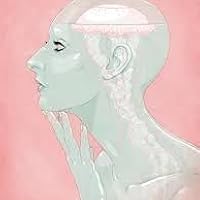
When Steven Grlscz saves a young woman from throwing herself in front of a train he finds himself consumed by a love affair that transforms her from a suicidal, angry anorexic into a happy and beautiful young woman. Then she vanishes without trace.
Across the Thames, on the morning that George Winnicott, former head of the Anti-Terrorist Squad, is to begin his new job in charge of the City of Londonâ s most powerful anti-fraud body, he wakes from a nightmare screaming that he knows the meaning of life. Later that day, a huge bomb explodes in the centre of London.
How are these events linked? What connects modern economics, a new take on the vampire concept, parachuting, pornography, the Leaning Tower of Pisa, financial fraud, terrorism, aliens, artificial intelligence, the meaning of life and the hardest crossword clue in the world?
Thirteen years in the writing, this is a novel that engages with the way the modern world works â and in admitting that contemporary life is complex, impenetrable and often terrifying, it also asserts that there are ways to see the patterns emerging from the chaos.
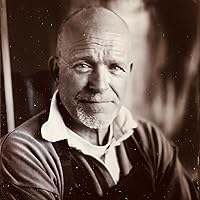
Possibly the only novelist of his generation to be born by the light of a paraffin lamp, Paul Hoffman spent much of his childhood on airfields all around the world watching his father – a pioneer of sports parachuting and European Champion – jumping out of aeroplanes. After a long battle with the English educational system which involved avoiding school whenever possible he was offered a place to read English at New College, Oxford when no other university would interview him. After graduating he worked in over twenty different jobs, including boardman in a betting shop, messenger boy to a City merchant bank and teacher. He was also senior film censor at the British Board of Film Classification.
His first novel, The Wisdom of Crocodiles took thirteen years to write. Among other things it predicted the re-emergence of international terrorism in the 21st Century and the precise nature of the collapse of the world financial system. Part of the novel was made into a film starring Jude Law and Timothy Spall. His second novel, The Golden Age of Censorship, a black comedy based on his experiences as a film censor, was published in 2007. As a screenwriter he has written or co-written three produced films and worked with, among others, Francis Ford Coppola.
Apparently there is no way to add quotes for Paul Hoffman's crazy book except this way:
"What makes the modern man or woman specifically modern is that they have one more life than in the past: to the secret life, the personal life and the public life, we have added the global life. Are the four of you sitting comfortably? Then I'll begin.~Louis Bris"
"Slowly the balance shifted until he was gazing almost continuously into her eyes, with only the occasional dip of his head to drink. He searched her eyes again and marshalled all that he found there: incomprehension, fear, pain, disgust, shaping and ordering them until he could get a clear sight of what would keep him alive. He let his hand slip from her mouth. For the five minutes before she became unconscious he watched her sense of his betrayal of her love deepen and spread like a terrible stain until it coloured everything, even her terror at her approaching death."
"After years of ruinously expensive debugging, the DSS's own computers could now survey how much it was costing the Treasury to support the increasing price of people's inability to put up with whatever it was they used to put up with before the simplification and de-stigmatization of divorce. There was nothing short of fiscal horror that such a humane and apparently straightforward reform of the law should ease the tax-payer into funding an ever-increasing pool of layabout teenage boys and family-deserting, middle-aged men."
"In turn the girls of 'Playboy' were so unattainable, so enigmatic in their secret knowledge of what they knew, so impossible to sully with ordinary lust, that they seemed to belong to another species from the models in 'Groupies' whose reticence extended to the fact that they seemed determined to introduce you to their uterus, liver and lungs. They were like sects, these magazines: there were pornographic Shakers, obscene Adventists, indecent Catholics, smutty Huguenots, debauched Episcopalians and lascivious Copts. There were the same alliances of view, the same disdains, the same tiny but essential disagreements on a point of faith."
"Yes, she thought, yes, I see. The surge in her stomach returned. It was not a surge of desire for Neil, but of the desire to be desired. And it was different from the desire to touch and be touched."
"He stared, horrified, then began to speak. 'I want them to know,' said the woman's voice, determined but slurred like a slow tape recording. 'You are going to have to let me tell them why people are so ...' the voice struggled, searching, '... irregular … jagged … asymmetric … rough … disproportionate … uneven … bumpy … strange.'"
"The trouble with villains in books and films is that they are held to possess the one quality genuinely worth having: clarity. They always know, these monsters, exactly what they want: money, power, sex, revenge. I blame Shakespeare for this rubbish: the origin of evil is confusion. ~ Louis Bris"
Come for the unique take on vampirism and sexual attraction. Slog through the economic theories and the meaning of life itself, if you can!
It's only now that I'm reading Paul Hoffman's "Golden Age Of Censorship" that I remember having read this a couple of years ago (and since seen the film with Jude Law, which is a bit shit). It's a clever and really unusual novel, confusing at times, but well worth persevering with. Very broad in its sweep and maybe a bit too ambitious, but it all hangs together well. Definitely worth a read.
The most singularly bizarre book I’ve ever read - only more so given the paucity of reviews.
If anything I think it might have some of the best turns of phrase and striking lucidity about the human condition I’ve ever read - only the other hand it’s a strange cloud atlas-esque convoluted mess where the characters all know each other but it does no one any good
This feels like a book I read every few years for the rest of my life, or a book I never touch again. We shall see
This novel tries to be too clever for its own good but was intriguing enough to keep me reading to the end. The book consisted of a mis-matched patchwork of story lines that didn't really reach any satisfactory conclusions. The book also defies fitting neatly into any particular genre - which probably sums up my feelings about it - a few clever ideas untidily pulled together
It was an interesting book to begin with, constantly building up to a climax, which unfortunately never happened. I won't spoil anything but Mr Hoffman certainly doesn't like happy endings. I'm toying with the idea of reading his other latest book 'Scorn', but need a mental break as there was a lot to get my head around on this one. If you don't know Paul Hoffman he wrote the 'Left hand of God' trilogy, which has been one of the best sets I've read over the past few years.
Weird and peculiar. A bizarre mix of genres and unconnected fanciful sub-stories. I kept thinking it would come together, but it never did, or I just didn't understand it.
Well! Just finished this rather long diatribe. I could not get the point of the book until about 4 pages from the end, now I know what the book is about I would happily recommend it as the writing is good.
For those who like crosswords answer the clue to E14 and you have the answer to the book, life and everything.