A perennial favourite, "Medicinal Plants of the Pacific West" is a user-friendly guide to over 300 species of plants geographically ranging from Baja California to Alaska.
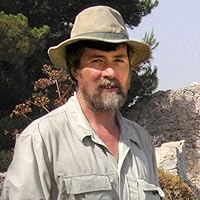
Michael Moore (January 9, 1941 – February 20, 2009) was a medicinal herbalist, author of several reference works on botanical medicine, and founder of the Southwest School of Botanical Medicine (SWSBM). Before he was an herbalist Michael Moore was a musician and a composer. [1] He operated the SWSBM as a residency program for 28 years, first in Albuquerque, New Mexico and later in Bisbee, Arizona For decades, Moore influenced, impacted, taught, reached one way or another more practicing herbalists than any other living herbalist in the United States. His books put the previously unknown materia medica of the southwest into mainstream botanical medicine.
While Moore believed herbs and plants provided a natural way of treating many minor afflictions, he accepted that medical drugs should be used for serious illness.
If you're interested in medicinal herbs, ethnobotany, or even plain ol' save-the-forest-ness, /and/ you're in the Northwest, your bookshelf isn't complete without this guide. Sure, it's got plenty of plants that I won't use unless we see armageddon -- or near-complete habitat restoration -- in my lifetime. But Michael's information is solid; it's backed by Mimi's amazing illustrations; and you can read it like a bedtime storybook, over and over, 'til the info sinks in. Er, IF you're a plant geek, that is.
Since I moved to the West Coast in 1999, I've had to learn a whole new world of horticulture from what I had known in Texas and Arkansas. I love to grow all sorts of perennials, but like to include medicinal ones of all kinds, not just pretty ones. Of course, lavender is one of my favorite plants, so I have several kinds, plus mint, foxglove, ferns, rosemary, thyme, callendula, campanella, roses, sage, lemon balm, and many more. I continuously add more each year. In some cases, I use them for teas or seasonings. In other cases, I just love the plants. This book has been a great help in planning and nurturing the large gardens I have been developing over the past six years in southern Oregon. There is always something useful to learn from this book.
I really appreciate that at the end of the day, this is a forager's book of herbalism. If you prefer to buy your herbs from an apothecary, this isn't really the book for you. If you consider your practice if herbalism as a long-term, mutually beneficial relationship with a group of plants, this is a text you will return to again and again. In this book I have found a trusted companion and mentor, as well as new applications for plants I have been working with (or passing by!) for years. Highly recommended.
I don’t know about this. On the one hand, I’m very grateful that someone like Michael Moore was active in preserving and reviving interest in ethnobotanical uses for western US plants. On the other hand, I am wary of the absolute lack of skepticism or thorough sourcing in this book. Every medical claim made here is anecdotal, ie not supported by any *medical or preclinical* literature (yes, there’s an extensive “sources and further reading” section at the end, but no footnotes to speak of, and most of the sources are ethnobotanical surveys and not practical application testing).
I do like his disclaimer at the beginning that acute pathology is best left to real doctors and that herbs are good for subclinical maladies or general supplementation. This is fine, and it’s about the full extent of credence I’m willing to extend to this variety of herbalism. Making soothing teas or bath soaks or skin creams/ointments from herbs is fine with me and I do it plenty, so that’s the sort of thing I was hoping to glean from this book.
However, I think Michael vastly and quickly outsteps his own disclaimer. He’s scientifically literate enough to list active alkaloids for each plant but then makes wild recommendations, like vaginal douches with berberine?? and trilliums— an often endangered and critically overharvested, slow growing genus— for, uh, uterine fibroids??? With no citations for safety and efficacy of these sorts of things? It’s a misstep, and unfortunately it makes me doubt the credibility of anything in this book, even the safety of the most mundane teas.
This is my favorite medicinal plant book. It has much more detail than any other book I've used, from when to harvest, to which parts are used for what, making medicinals and how to administer. And it also obviously written from experience, not just folk lore or hearsay. This is a book I trust.
This book has become an invaluable resource for my explorations of local plants and their attributes. So full of information. As well as therapeutic action, the text includes info on habitat, ethical harvest and timing, and proper preparation of parts for maximum benefit.
A fantastic reference. I continutally pick up this book as a quick source for botanical identification and uses. Moore's a sassy herbalist with a great sense of breakin down medicinal plants for the layperson. Being that the Pacific West is a new-ish ecosystem to me, I really find this book helpful.
A great guide of plant monographs with clear illustrations dappled with Moore's humour. Lists when and where to harvest, plant characteristics, preparations, actions, uses etc. More on the lines of tinctures, salves and teas as far as preparation of plants. This could also be a good beginner's guide if spending time/living in the Pacific West of the US.
The other Michael Moore! and just as funny for plant nerds! I wish other plant books went into as much scientific detail as this guy does, or that he covered more puget sound natives. Alas. I love it.
A compendius but very readable guide that answers the question, "What can I use that plant for?" This question is not quite as popular as "Can I eat that plant?", and is more controversial, because many of the medical uses are anecdotal, but it's still very interesting.
A great introduction and reference from one of the biggest names in American herbalism. If you're at all interested in herbs (and live on the West Coast) then it's worth having and knowing.
great guide to pacific western herbs! history, collecting, constituents, contraindications, visuals, medicinal uses, preparation and storage all through Micheal Moores weird sense of humor.
Totally useful but took me WAAAYYY longer to read than I thought it would. I was bogged down by the plant descriptions (could have used better pictures & drawings).
I like the book, though I am slightly disappointed that there are errors. On the colored photo section, right before page 25, they mixed up the labels of Yerba Del Lobo and Yerba Santa.