In this beautiful memoir of a Bronx upbringing, Jerome Charyn evokes with extraordinary accuracy an unusual childhood during World War II. Charyn successfully peels back the years of his life to recapture the innate curiosity, sense of wonder, and uncommon reasoning that all young children possess. And he lovingly reproduces one of the most influential figures of his youth -- his mother, The Dark Lady of Belorusse.
Jerome Charyn is an award-winning American author. With more than 50 published works, Charyn has earned a long-standing reputation as an inventive and prolific chronicler of real and imagined American life.
Pulitzer Prize-winning novelist Michael Chabon calls him "one of the most important writers in American literature." New York Newsday hailed Charyn as "a contemporary American Balzac," and the Los Angeles Times described him as "absolutely unique among American writers."
Since the 1964 release of Charyn's first novel, Once Upon a Droshky, he has published thirty novels, three memoirs, eight graphic novels, two books about film, short stories, plays, and works of non-fiction. Two of his memoirs were named New York Times Book of the Year.
Charyn has been a finalist for the PEN/Faulkner Award for Fiction. He received the Rosenthal Award from the American Academy of Arts and Letters and was named Commander of Arts and Letters by the French Minister of Culture. Charyn is Distinguished Professor Emeritus of Film Studies at the American University of Paris.
In addition to writing and teaching, Charyn is a tournament table tennis player, once ranked in the top ten percent of players in France. Noted novelist Don DeLillo called Charyn's book on table tennis, Sizzling Chops & Devilish Spins, "The Sun Also Rises of ping-pong."
Charyn's most recent novel, Jerzy, was described by The New Yorker as a "fictional fantasia" about the life of Jerzy Kosinski, the controversial author of The Painted Bird. In 2010, Charyn wrote The Secret Life of Emily Dickinson, an imagined autobiography of the renowned poet, a book characterized by Joyce Carol Oates as a "fever-dream picaresque."
Charyn lives in New York City. He's currently working with artists Asaf and Tomer Hanuka on an animated television series based on his Isaac Sidel crime novels.
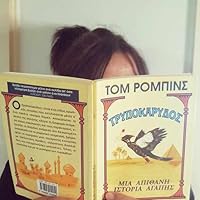
να εδω με ρωτανε τί σκεφτομαι..δεν σκεφτομαι απλα επιθυμω να ειμαι δυνατη και εξυπνη σαν την μελαχρινη κυρια απο τη Λευκορωσια, να εχω αυτο το τσαγανο...ενα βιβλιο για μια ταραγμενη περιοδο της Αμερικης..που ολα ηταν αγρια και αθωα μαζι..που υπηρχαν στιγμες που πιστεψα οτι καποιες περιγραφες μοιαζουν με το τωρα...Ενα ειναι σιγουρο, αν μπορουσα θα ηθελα να γνωρισω το Μωρό που το λενε Τζερομ και να του δωσω ενα φιλι αναμεσα στα ματια και να του πω ποσο ομορφα γραφει! Bravo Mr. Charyn!
After reading The Dark Lady from Belorusse, it’s difficult to say where the author’s life ends and his novels begin. This is Jerome Charyn’s memoir of growing up with an immigrant mother who takes on the corrupt and cacophonous Bronx of the 1940s and bends it to her indomitable will. As he’s done with fictional treatments of historical characters like Emily Dickinson (The Secret Life of Emily Dickinson), George Washington (Johnny One-Eye: A Tale of the American Revolution), and Joe Dimaggio (Joe Dimaggio: The Long Vigil), when writing about his own life he populates it with larger-than-life characters and delicious dialog we could only hope real people really said.
Charyn’s mother earns her “Dark Lady” nickname when one of her many male admirers compares her to a character called that in a Chekhov story. But unlike the tragic heroine of that story, Charyn’s Faigele (as she is known) does not drown herself in despair. As she says when the borough president tells her her factory job will kill her: “Fat chance, Mr. Lions. I survived the tzar, I’l survive a candy factory in the Bronx.”
But this isn’t just the story of a strong woman surviving in a man’s world (is his mother one reason Charyn had such an attraction to Emily Dickinson?). It is also the story of a sickly and persecuted child who learns to be the man he will become at his mother’s knee. Young Jerome is in tow as the beautiful Faigele, whom men compare to Joan Crawford and Greta Garbo, navigates wave after wave of con men, mob bosses, and would-be lovers who threaten to drown her, but always end up helpless under her own tidal force. Through his eyes we see her adapt the courage she learned from her beloved brother hiding from cossacks in the swamps of Belorusse to conquering the strange new world of war-time Bronx, NY.
In a memorable scene Faigele removes the portrait of FDR from the wall of her family’s apartment, a sacrilegious act in solidly-Democrat Bronx of that time. She is angry at Roosevelt whose political machinations she blames for the death of a friend and benefactor. Her husband protests that he is the President of the United States. “Not in my house,” responds Faigele. Mrs. Charyn is fiercely loyal to those she loves, but anyone who crosses her will not be spared her scorn, even if he is the President.
Just as in his novels, Jerome Charyn gives us as much pleasure in his use of language and imagery as in his vivid storytelling. For example, recalling a favorite cafe called “The Bitter Eagles,” Faigele describes her lover and son who have gone into the house painting business together as “bitter eagles…who like to fly near the ceiling.”
The Dark Lady from Belorusse then is a memoir that slides right in amongst Charyn’s novels, a raucous yet moving carnival ride of the human spirit rising above the muck of our communal swamp. In its pages, he reveals to us how an impoverished “bitter eagle” from the Grand Concourse could learn to fly.
It was from my mother that I learned how memory could kill.~~from A Singular Beauty by Jerome Charyn As she walked down the street, people were stopped in their tracks by her Hollywood beauty. Faigele attracted men in power, but it was her strength that allowed her to manipulate them.
A Singular Beauty recalls Jerome Charyn's mother and his childhood in the Bronx.
Faigele and and her brother Mordecai were from Grodno, Belarus. In 1927, Faigele's brother sent her to America, promising to join her later. She never heard from him again. Her deep depression left preschooler 'Baby' Charyn as her caretaker. Only when it was arranged for her to receive a fake letter from her brother did she rejoin the world.
The Bronx kindergarten was closed, so Faigele and 'Baby' Charyn taught themselves to read with Bambi. When Faigele became a poker dealer, Baby came with her into a world of criminals and politicians and his mother's lover.
An evocative and unsettling portrait of an era, a neighborhood, and a family, Baby somehow rising above the dysfunctional and complex family and social impediments, this brief memoir makes a lasting impression. Charyn's memories are embellished with a writer's flare so that his story becomes more than memories shared, taking on a cinematic vividness .
I received a free ebook from the author. My review is fair and unbiased.
Το βιβλίο είναι μια αποκάλυψη, ένα από εκείνα τα "μικρά διαμάντια" που σε κερδίζουν με την ατμόσφαιρα και την αυθεντικότητά τους. Καταφέρνει να σε μεταφέρει στη Νέα Υόρκη μιας άλλης εποχής, κάνοντάς σε να νιώθεις πως περπατάς κι εσύ στους ίδιους δρόμους με τους ήρωές του. Η πλοκή μάς μεταφέρει στην καρδιά του Μπρονξ, εκεί που η επιβίωση είναι τέχνη και η καθημερινότητα μια διαρκής μάχη ανάμεσα στο συναίσθημα και τη σκληρή πραγματικότητα. Το βιβλίο ξετυλίγει την ιστορία ανθρώπων που κουβαλούν στις αποσκευές τους το παρελθόν της μετανάστευσης, προσπαθώντας να ριζώσουν σε μια πόλη που δεν χαρίζεται σε κανέναν. Είναι μια αφήγηση γεμάτη νοσταλγία, ένταση και μια περίεργη, γλυκόπικρη ομορφιά. Η δύναμη του βιβλίου κρύβεται στους χαρακτήρες του, που είναι σμιλευμένοι με τρομερή λεπτομέρεια Η Φέιγκελε μια γυναίκα που εκπέμπει μια δωρική δύναμη, η "κολώνα" που προσπαθεί να κρατήσει τις ισορροπίες μέσα σε έναν κόσμο που καταρρέει. Το παιδί , η ματιά της αθωότητας που προσπαθεί να κατανοήσει τους κανόνες των ενηλίκων, αποτελώντας τον συναισθηματικό συνδετικό κρίκο της ιστορίας. Ο Σαμ ένας χαρακτήρας με βάθος, που παλεύει με τις δικές του σκιές και τις προσδοκίες των άλλων. Ο Μπάνυ και ο Τσικ ,παρόλο που είναι δευτεραγωνιστές, η παρουσία τους είναι καταλυτική. Είναι υπέροχα πλασμένοι, δίνοντας μια επιπλέον στρώση ζωντάνιας και ρεαλισμού στο έργο, αποδεικνύοντας ότι στον Charyn δεν υπάρχουν "μικροί" ρόλοι. Αυτό που κάνει το βιβλίο να ξεχωρίζει είναι η απίστευτη ελαφρότητα της γραφής του. Δεν σε κουράζει ποτέ· αντίθετα, έχεις την εντύπωση πως είσαι εκεί, πως συμμετέχεις ενεργά στις συζητήσεις, πως μυρίζεις τον αέρα της γειτονιάς. Είναι ένα κείμενο που ρέει σαν νερό, γεμάτο εικόνες που μένουν χαραγμένες στο μυαλό του αναγνώστη. Προτείνω το βιβλίο ανεπιφύλακτα σε όσους αγαπούν τις ανθρωποκεντρικές ιστορίες που εστιάζουν στις σχέσεις και την ατμόσφαιρα μιας περασμένης εποχής. Είναι ιδανικό για όποιον αναζητά μια ποιοτική αλλά "αναλάφρη" ανάγνωση, που καταφέρνει να συγκινήσει χωρίς να εκβιάζει το συναίσθημα. ( 4 / 5 )
La verdad es que es un libro bastante bueno, interesante y fácil de leer. Me mantuvo pegada a él de principio a fin y los disfruté. Lo único "malo" es que no me terminó de gustar la forma en que está escrito ya que sentía que había algunos cortes demasiado repentinos o cosas que no se terminaban de explicar. Sin embargo lo recomiendo, es una muy buena historia.
Φοβερή πρόζα και ανασύσταση της εποχής. Μου θύμισε Ντον Ντε Λίλο χωρίς τη φλυαρία. Γιατί κάνεις σοβαρός αναγνώστης δεν μιλάει ποτέ για αυτό το μικρό αριστούργημα κι έπρεπε να το ξετρυπώσω μόνη μου από το σκονισμένο ράφι βιβλιοθήκης θείου, που μας άφησε χρόνους; Προφανώς γιατί τώρα είμαστε απασχολημένοι να υμνούμε το τελευταίο πόνημα κάποιου φασαίου φίλου μας, ε;
pag. 39: “Cuando acabó nuestro luto volvimos al libro, a repetir cuidadosamente las palabras, pues éramos principiantes y sólo podíamos rompernos el corazón en pequeñas dosis.”
Beautiful and evocative. The frenetic surrealism enlivening other Charyn works, such as the "Isaac Quartet", is subdued here in favor of a restrained lyricism. Charyn's control of material is a wonder to behold, joyously goading the reader along, and if you're like me, by the end, you won't want to leave Baby, Faigele, and that vanished world, the Bronx of the 1940s.
One minor quibble: the book was formerly titled "The Dark Lady of Belorusse", and I think the change ought not to have been made. The anodyne "A Singular Beauty" (pace, Vikram Seth!), lacking as it does even a hint of whimsy, does no justice to such a piquant memoir as this.