

What do you think?

The Strange Nation of Rafael Mendes
Focuses on one catastrophic day in the life of businessman Rafael Mendes, weaving together stories of his ancestors and occurrences of the present as Mendes learns how the past informs and shackles the present
309 pages, Hardcover
First published January 1, 1983
About the author
Moacyr Scliar
199 books138 followersMoacyr Jaime Scliar (born March 23, 1937) is a Brazilian writer and physician.
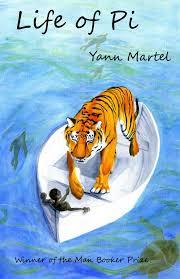
Scliar is best known outside Brazil for his 1981 novel Max and the Cats (Max e os Felinos), the story of a young man who flees Berlin after he comes to the attention of the Nazis for having had an affair with a married woman. Making his way to Brazil, his ship sinks, and he finds himself alone in a dinghy with a jaguar who had been travelling in the hold.[1] The story of the jaguar and the boy was picked up by Yann Martel for his own book Life of Pi, winner of the 2002 Man Booker Prize, in which Pi is trapped in a lifeboat with a tiger
Scliar is best known outside Brazil for his 1981 novel Max and the Cats (Max e os Felinos), the story of a young man who flees Berlin after he comes to the attention of the Nazis for having had an affair with a married woman. Making his way to Brazil, his ship sinks, and he finds himself alone in a dinghy with a jaguar who had been travelling in the hold.[1] The story of the jaguar and the boy was picked up by Yann Martel for his own book Life of Pi, winner of the 2002 Man Booker Prize, in which Pi is trapped in a lifeboat with a tiger
Ratings & Reviews
Friends & Following
Create a free account to discover what your friends think of this book!
Community Reviews
Displaying 1 - 6 of 6 reviews

April 27, 2016
What is Pi’s tiger doing in this book review? (See the end of the review.)
Translated from the Portuguese, The Strange Nation of Rafael Mendes is really a blend of three components. First we have the modern story set in Brazil. Mendes, our main character, is a high-end financier in Sao Paulo who finds his life going down the tubes. He is second-in-command at a big Sao Paulo investment firm that is facing bankruptcy and a criminal investigation. At home his daughter is smoking pot, staying out all night, joining a cult. His wife is dysfunctional because of the daughter’s doings. His elderly mother is losing it too.
Suddenly a box of his deceased father’s notebooks arrive at the door. His father had died before Mendes knew him and his mother would never talk of him. So his father is a blank in the main character’s life. The notebooks were written by his father over many years and consist of his father’s investigations into his genealogy supplemented with fable and allegory. Reading them makes up the bulk of the novel.
It turns out that the Catholic main character is descended from (variously called) crypto-Jews or New Christians. They were Sephardic Jews from Portugal (“The Nation” of the title) who were forced to convert to Catholicism and still forced out of Hispania, ending up in the New World. His family (Mendes) was descended from Maimonides, an 11th century Sephardic Jew and a doctor who influenced Arabic as well as Western science and medicine. Along the way Mendes’ ancestors included Columbus’ cartographer, and various scientists, doctors, dentists, dreamers, social reformers and hucksters.
A third story takes up much of the notebooks. Mendes father was a doctor and one of his classmates was Jewish and the first woman admitted to medical school in Brazil. Let’s call her crazy brilliant. But the dirty tricks, discouragement and outright harassment she faced were appalling. Along the way Mendes learns the real reason why his father left his family behind and went to fight and die in the Spanish Civil War.
All in all, this is a good book that tells quite a tale even though it barely hangs together as a novel because of the three loosely-connected components. Scliar was a Jewish Brazilian physician and author who had an interesting connection to Martel’s The Life of Pi. Here’s the story about a novel of Scliar’s published two decades before Martel’s book (this is from the NYT’s obituary for Scliar in 2011):
“Max and the Cats,” about a Jewish youth who flees Nazi Germany on a ship carrying wild animals to a Brazilian zoo and, after a shipwreck, ends up sharing a lifeboat with a jaguar, achieved fame twice over. Critically praised on its publication in 1981, it touched off a literary storm in 2002 when the Canadian writer Yann Martel won the Man Booker Prize for “Life of Pi,” about an Indian youth trapped on a boat with a tiger. Mr. Martel’s admission that he borrowed the idea led to an impassioned debate among writers and critics on the nature of literary invention and the ownership of words and images. “In a certain way I feel flattered that another writer considered my idea to be so good, but on the other hand, he used that idea without consulting me or even informing me,” Mr. Scliar told The New York Times. “An idea is intellectual property.”
Translated from the Portuguese, The Strange Nation of Rafael Mendes is really a blend of three components. First we have the modern story set in Brazil. Mendes, our main character, is a high-end financier in Sao Paulo who finds his life going down the tubes. He is second-in-command at a big Sao Paulo investment firm that is facing bankruptcy and a criminal investigation. At home his daughter is smoking pot, staying out all night, joining a cult. His wife is dysfunctional because of the daughter’s doings. His elderly mother is losing it too.
Suddenly a box of his deceased father’s notebooks arrive at the door. His father had died before Mendes knew him and his mother would never talk of him. So his father is a blank in the main character’s life. The notebooks were written by his father over many years and consist of his father’s investigations into his genealogy supplemented with fable and allegory. Reading them makes up the bulk of the novel.
It turns out that the Catholic main character is descended from (variously called) crypto-Jews or New Christians. They were Sephardic Jews from Portugal (“The Nation” of the title) who were forced to convert to Catholicism and still forced out of Hispania, ending up in the New World. His family (Mendes) was descended from Maimonides, an 11th century Sephardic Jew and a doctor who influenced Arabic as well as Western science and medicine. Along the way Mendes’ ancestors included Columbus’ cartographer, and various scientists, doctors, dentists, dreamers, social reformers and hucksters.
A third story takes up much of the notebooks. Mendes father was a doctor and one of his classmates was Jewish and the first woman admitted to medical school in Brazil. Let’s call her crazy brilliant. But the dirty tricks, discouragement and outright harassment she faced were appalling. Along the way Mendes learns the real reason why his father left his family behind and went to fight and die in the Spanish Civil War.
All in all, this is a good book that tells quite a tale even though it barely hangs together as a novel because of the three loosely-connected components. Scliar was a Jewish Brazilian physician and author who had an interesting connection to Martel’s The Life of Pi. Here’s the story about a novel of Scliar’s published two decades before Martel’s book (this is from the NYT’s obituary for Scliar in 2011):
“Max and the Cats,” about a Jewish youth who flees Nazi Germany on a ship carrying wild animals to a Brazilian zoo and, after a shipwreck, ends up sharing a lifeboat with a jaguar, achieved fame twice over. Critically praised on its publication in 1981, it touched off a literary storm in 2002 when the Canadian writer Yann Martel won the Man Booker Prize for “Life of Pi,” about an Indian youth trapped on a boat with a tiger. Mr. Martel’s admission that he borrowed the idea led to an impassioned debate among writers and critics on the nature of literary invention and the ownership of words and images. “In a certain way I feel flattered that another writer considered my idea to be so good, but on the other hand, he used that idea without consulting me or even informing me,” Mr. Scliar told The New York Times. “An idea is intellectual property.”

April 8, 2020
As usual with this author, I feel on my first reading of this title that I am this close to understanding what he is saying, and then the ideas dissolve and I am lost.
Basically it is the story of Rafael Mendes. Many many Rafaels and how their lives were lived. Each one, from father to son down through the ages, seemed to live through the same sort of challenges, but did any of them actually face them the way they perhaps should have?
And the current Rafael, the one who starts the ball rolling? How will he handle the biggest challenge of his life? Will he improve on his ancestors or will he strike out and be unique, perhaps even breaking the chain?
The book is a bit repetitive because each Rafael down through the centuries hooks up with a friend and then gets into pretty much the same troubling situations as the previous Rafaels went through.
Like I said, I know I am missing plenty here, and Someday I plan to re-read this book. Someday when real life is a bit calmer and I can focus properly.
Basically it is the story of Rafael Mendes. Many many Rafaels and how their lives were lived. Each one, from father to son down through the ages, seemed to live through the same sort of challenges, but did any of them actually face them the way they perhaps should have?
And the current Rafael, the one who starts the ball rolling? How will he handle the biggest challenge of his life? Will he improve on his ancestors or will he strike out and be unique, perhaps even breaking the chain?
The book is a bit repetitive because each Rafael down through the centuries hooks up with a friend and then gets into pretty much the same troubling situations as the previous Rafaels went through.
Like I said, I know I am missing plenty here, and Someday I plan to re-read this book. Someday when real life is a bit calmer and I can focus properly.

September 6, 2025
1/10
Nope, I just don’t get it. Maybe it’s the translation, maybe it’s me, but nothing about this book works for me. It is 3 stories in one book: a few days in the life of the current Rafael Mendes, whose personal life is a mess & who works at a financial company about to go under because of corruption & embezzlement; the repetitive tales (histories? fables? fantasies?) of Rafael’s supposed ancestors, starting with the Biblical Jonah; and the current Rafael’s father’s story (he’s a physician). All of them are bleak, filled with poor decision-making, religious confusion, romantic missteps, violence, & betrayals. The writing is awkward (could be the translation), with lots of “telling” & not enough “showing”. There are interesting snippets of history but it’s hard to know how much of that is even accurate—there’s not enough context to be able to tell. I finished it because I’m a completist; I kept hoping it would come together, have a resolution, make a statement—something! But nope, it didn’t, at least, not for me.
Nope, I just don’t get it. Maybe it’s the translation, maybe it’s me, but nothing about this book works for me. It is 3 stories in one book: a few days in the life of the current Rafael Mendes, whose personal life is a mess & who works at a financial company about to go under because of corruption & embezzlement; the repetitive tales (histories? fables? fantasies?) of Rafael’s supposed ancestors, starting with the Biblical Jonah; and the current Rafael’s father’s story (he’s a physician). All of them are bleak, filled with poor decision-making, religious confusion, romantic missteps, violence, & betrayals. The writing is awkward (could be the translation), with lots of “telling” & not enough “showing”. There are interesting snippets of history but it’s hard to know how much of that is even accurate—there’s not enough context to be able to tell. I finished it because I’m a completist; I kept hoping it would come together, have a resolution, make a statement—something! But nope, it didn’t, at least, not for me.

April 22, 2007
written in the magical realism tradition

July 11, 2022
An interesting read that explores the past lives of a descendant of Jonah (of the whale). I enjoyed the genealogies, which gave glimpses into the political and cultural times of each Mendes. I especially appreciated the inherited memories. Women are somewhat sparse in this book, which is just as well, as those who appear were either "bitchy", "slutty" or live in a constant state of hysteria.

April 27, 2016
I thoroughly enjoyed The Strange Nation of Rafael Mendes, but it was extremely slow getting started. I am not interested in the problems of contemporary businessmen, which is what protagonist Rafael and his business associate Boris are, but my interest awakened as soon as Rafael began to delve into his fascinating genealogy. He was descended from Jonah of the biblical Jonah and the Whale. So what really happened in the belly of that whale? Read this book, and find out. Also, take a walk through Jewish history from that point forward with all of the Rafaels and other ancestors (like Maimonedes) who came before our protagonist. The Strange Nation of Rafael Mendes is an example of magic realism, which when done well, uncovers the intricate weave of history, myth, folklore, and yes, sometimes magic. In these pages, we learn of the resiliance of a people and how knowledge of those lives changes our protagonist's life from that point on. I loved this book, but not quite as much as The Centaur in the Garden, the first book I read by Moacyr Scliar. It is definitely worth reading, though.
Displaying 1 - 6 of 6 reviews