Michel Tournier, one of France's most acclaimed contemporary men of letters, received teh Prix Goncourt for his novel The Ogre and the Grand Prix du Roman from the Academie Francaise for his novel Friday. As a fabulist, his stature equals that of Gunter Grass, Gabriel Garcia Marquez, Italo Calvino, Milan Kundera, and John Barth. As an iconoclast in contemporary cultural criticism, he has been likened to Roland Barthes.The Wind Spirit is a literary/intellectual autobiography of extraorinary grace and intelligence, and yet the play of the author's ideas - and of his wicked wit - gives the book a depth and resonane that transcend the boudaries of the genre. Although the six essays that make up the book are ostensibly structured around the author's childhood, education, and the creation of his major works of fiction, they branch out to gice us fascinating glimpses of life in Frnace before and during World War II, of the frenetic bustle of postwar Europe, and of famous personalities such as Jean-Paul Sartre. Equally compelling are Tournier's fresh and controversial views on the topics of sexuality, education, and the uneasy relationship between French and German thought.For those unfamiliar with Tournier, The Wind Spirit provides and ideal introduction to one of Europe's foremost literary figures and to a brilliant body of work. Those who know and admire the author's novels will find here both a source of keen pleasure and an indispensable account of Tournier's creative development.
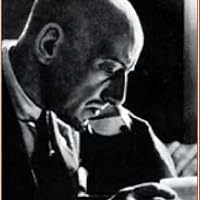
His works are highly considered and have won important awards such as the Grand Prix du roman de l'Académie française in 1967 for Vendredi ou les limbes du Pacifique. and the Prix Goncourt for Le Roi des aulnes in 1970. His works dwell on the fantastic, his inspirations including traditional German culture, Catholicism, and the philosophies of Gaston Bachelard. He lived in Choisel and was a member of the Académie Goncourt. His autobiography has been translated and published as The Wind Spirit (Beacon Press, 1988).
The British literary critic/famous husband John Bayley, in his fantastic study of desire, "The Characters of Love," talks about the genius of the French language being "confident": when Proust says something about human nature, the language he uses leaves us little doubt that he has grasped all the subtleties of his argument, even if they're ambiguous ones (compare this to Melville in Moby Dick, where English seems to be a surface whose value lies not just in its probity but in its ability to contain large, undulating, but mostly unevoked depths, like a gigantic water balloon or one of those "mirror mirror" spheres in which cartoon witches like to prognosticate. In English, we do not fully understand ourselves (and maybe this makes it, strangely, a MORE accurate language in the end?)).
Clear, confident, and childlike: Michel Tournier is all these (very French) things. At the same time he is a hybrid. The Wind Spirit, which is really more of an intellectual memoir than a straight autobiography, devotes dozens upon dozens of pages to Germany, and the influence that intimacy with German life and thought have had on his writing. This sounds boring, but it isn't; for when it comes to using ideas, Tournier reminds me more of Dostoevsky and Gombrowicz than, say, Sartre. Ideas are motive forces, toys, shapes, colored glasses. You look through them more for the delight of looking than because the landscape revealed to you renders all other possible landscapes obsolete. So this book is less a bunker or trophy room and more a Swiss Family Robinson-style treehouse, in which the delightful breeze of intellectual invention powers a singing, tinkling Rube Goldberg machine of windmills, sails, pulleys, and wheels.
Also very useful, because it shows an author trying to explain his own processes of creation. Tournier's take is biological/philosophical, fresh, mysterious. He seems to have figured it all out. If you, like me, are somewhat suspicious of this kind of confidence, The Wind Spirit may be a rousing tonic. Legitimate travel being bracing and good for the soul.
Je me prends souvent à éprouver une antipathie certaine pour les auteurs qui s'essaient à l'autobiographie et Tournier ne fait pas exception. Sa minoration de la souffrance éprouvée par deux jeunes filles violées par des soldats allemands pendant la guerre (tellement moins forte que celle qu'il avait éprouvée lors de l'ablation de ses amygdales/végétations/dunnodon't care) m'a révoltée. C'est ce que je retiens du livre et peut-être ne lirai je plus un Tournier comme avant (même si j'ai adoré Vendredi ou les limbes du Pacifique et Gaspard, Melchior et Balthazard).
"Noi ci nascondiamo il nulla che ci circonda, ma a volte esso perfora la tela dipinta della nostra vita come uno scoglio la superficie del mare." (La dimensione mitologica, p. 142)
"La bellezza è la cosa più diffusa al mondo, ma il nostro sguardo assoggettato alle esigenze quotidiane non la vede. C'è bisogno dell'intervento del pittore, dello scultore, dell'architetto per strappare il velo grigio gettato sul mondo dalla nostra stanchezza." (Le sventure di Sophia, p. 214)
"De tak van de oude egelantier buigt onder het gewicht van een grasmus door op de grond. In de schaduw van de cosmos valt de egel in slaap, gebald als een dikke, harige vuist. Nog helemaal vochtig van haar nachtelijke jacht komt de poes met stemmige pasjes naar me toe. Het heden vereeuwigt zich en kijkt, in goddelijke zorgeloosheid, vooruit noch achterom."
J'allais mettre trois étoiles a ce livre, l'ayant trouvé sec par passages, malgré sa pertinence, mais le dernier essai sur le roman "les problèmes de Sophie" est tellement poétique et riche qu'il se gagne une étoile à lui seul. Tournier décrit avec perspicacité et exactitude les contraintes de la création artistique et intellectuelle, la solitude exigée par ces médiums et leurs rapprochements philosophiques avec l'absolu: vraiment, d'une beauté délectable pour les yeux.
Un grand intérêt de lire plusieurs oeuvres du même auteur d'y retrouver des thèmes récurrents. J'ai un faible pour le roi des aulnes et suis moins convaincu par les météores déjà lu précédemment.