Jump to ratings and reviews
Rate this book

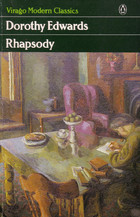
Rhapsody

Rate this book
Original collection of ten short stories.

Extremely controlled studies of constrained desire, loneliness, and incomplete relationships, these tales fostered Edwards' development of a nonrealist world of imagery and symbolism in her own language. The ten stories of Rhapsody are utterly distinctive in voice and sensibility. At least three of the Rhapsody stories—"A Country House," "Days," and the brilliant, enigmatic "A Garland of Earth"—are small masterpieces sure to by enjoyed by a whole new generation.

233 pages, Paperback

First published January 1, 1927

57 people want to read

About the author

Dorothy Edwards

5 books8 followers
Dorothy Edwards (18 August 1903 – 6 January 1934), was a Welsh novelist of the early 20th century.

Edwards was from Ogmore Vale in South Wales. She was educated at Howell's School for girls in Llandaff and at Cardiff University. She was politically active, working for socialist and Welsh nationalist causes, but wrote in English. She was also a talented amateur singer. On 6 January 1934 she threw herself in front of a train near Caerphilly railway station. She left a suicide note stating: "I am killing myself because I have never sincerely loved any human being all my life. I have accepted kindness and friendship and even love without gratitude, and given nothing in return."

Edwards wrote a short story, "The Conquered," which was included in A View Across The Valley (an anthology re-claiming female Welsh nature writers).

(from Wikipedia)

Ratings & Reviews

What do you think?
Rate this book

Friends & Following

Create a free account to discover what your friends think of this book!

Community Reviews

5 stars
3 (12%)
4 stars
7 (28%)
3 stars
9 (36%)
2 stars
3 (12%)
1 star
3 (12%)
Displaying 1 - 9 of 9 reviews
Profile Image for JimZ.
1,308 reviews788 followers
August 22, 2022
I read Winter Sonata and I did not like it. I complained that nothing happened in the book. Well, this was published a year before that, and this is even worse, which is hard to do. In each of the 10 stories that make upon this collection absolutely nothing happens. This was truly punishing to read. I cannot recommend this book. It’s amazing that such writers as Virginia Woolf and Arnold Bennett liked the output of this writer. Having said all this, it's just my (honest) opinion. The two reviewers below very much liked it.

Note:
• It's sad that this writer committed suicide when she was 31.
• Elaine Morgan wrote the Introduction to the collection of short stories. It was more interesting than any of the 10 stories.
The stories in the order in which they appeared in the book:
1. Rhapsody — 2 stars
2. A Country House — 1.5 stars [It just ended...it was like watching, or reading about, paint drying.]
3. The Conquered — 1 star [Why does anybody like her stories?]
4. Treachery in a Forest — 1 star [What is the treachery? Beats the hell out of me...]
5. Cultivated People — 1 star [I’m flummoxed...how boring these stories are...]
6. Summer-Time — 1 star [I really want to finish this...to be over with it.]
7. Sweet Grapes — 2 stars
8. A Garland of Earth — 1 star [there is one sentence in this story in which a male character is said to have acid-stained fingers. That doesn’t make sense to me...if fingers are stained with acid, the man wouldn’t have fingers anymore.]
9. A Throne in Heaven — 1 star (here’s a sentence using a simile that is too much: “...they all looked at him, like a procession of tall, wicked nuns pushing out their golden, worldly tongues.]
10. Days — 1 star

Reviews:
https://www.walesartsreview.org/rhaps...
• In this review, HeavenAli does say that this may not be everyone’s cup of tea, ‘especially those who like an obvious plot’. Yep. That’s me....https://heavenali.wordpress.com/2018/...
Profile Image for Ali.
1,241 reviews397 followers
April 2, 2018
Dorothy Edwards was a welsh writer – associated with some of the Bloomsbury group – who I suspect is little read now. Her writing is carefully restrained. In Rhapsody we have ten beautiful tales of loneliness and desire, stories with little plot – but so much pared back emotion. Aside from this collection of stories – she published only one novel Winter Sonata a year later (which I may have read many moons ago, but no longer own, sadly). Her life appears to have been quite unhappy, and in 1934 at the age of thirty-one, she threw herself under a train. The note she left behind read:

“I am killing myself because I have never sincerely loved any human being all my life. I have accepted kindness and friendship, and even love, without gratitude and given nothing in return.”

How truly sad. This sadness certainly seeps into her writing, in a number of ways, particularly in the relationships which so often never find fulfilment.

It is perhaps odd that these stories don’t reflect the world that Dorothy Edwards herself lived in. Here we have the polite, ordered world of the English country house – worlds that are often disrupted by an outsider, a visitor usually. These are characters who unlike Edwards’ family, had no money worries, their money was unearned, and they live deep in the English countryside of Dorothy Edwards imagination. Her narrators are male, which I admit threw me in the first story Rhapsody. I’m so used to women writers of about this period writing from a female perspective that I simply assumed the first-person narrator of the title story was woman, a couple of pages in I became a tad confused and had to do a rapid reassessment.

Full review: https://heavenali.wordpress.com/2018/...
Profile Image for Alex.
47 reviews1 follower
December 17, 2008
oh lordy....this wasn't a good idea. Dorothy Edwards, committed suicide in 1934, age 31, by throwing herself under/at a train near Cardiff. At the time a newspaper wrote that "Wales has lost one of her most promising writers of the younger school." She had a note in her pocket which said, "I am killing myself because I have never sincerely loved any human being all my life. I have accepted kindness and friendship, and even love, without gratitude and given nothing in return."
She was a short story writer, and Rhapsody is a collection of her work - the stories are as bleak as her suicide note...the language is precise, considered, stark - characters are isolated, unable to connect with each other - it was all too much for me, after the first story I was turning each page with a feeling of dread, and after three stories had to give up.
Poor lady, what a sad story.
Profile Image for Michelle.
547 reviews14 followers
February 3, 2026
I would love for someone who really loves these stories to explain them. I don't usually have trouble getting the point, but these are either very subtle or not very significant.

Rhapsody: Man waits for invalid wife to die so that he can replace her with the governess. He is obsessed with music, and his wife was a pianist; he advertised for a music teacher who could teach other subjects, so the governess is a pianist and singer as well. Initially he is worried about the time because he has lent his pocket watch to his son. Is this supposed to indicate the importance of time? But what is the significance of the narrator's later lending his knife to their son?
A Country House: Man has electric light installed at his country house where he keeps his young wife isolated from people her age. There is some major sexual tension between the electrician and the wife (whom he basically says he groomed from childhood). She likes wildflowers and Chopin; he likes lawns and quiet. He overhears their wistful but totally appropriate conversation and then intimidatingly presides over dinner in complete silence. Then the electrician leaves.
The Conquered: I think I understood this one. Man meets charming Welsh cousin but decides she is too happy for him so plants an almond tree and leaves.
Treachery in a Forest: Man meets artist couple on holiday and plays piano duet with wife. He invites them to tea, but they unexpectedly leave early. What is the significance of the brown eggs he brings them? What is the treachery?
Cultivated People: Man invites German lady to join music club and gets rejected by her. People start to think she plays too often at the club.
Summer-Time: I think I understood this one, too. Man flirts with girl who is too young for him and then realizes his female friend is laughing at him so leaves the country to avoid engagements with her.
Sweet Grapes: Man rents part of house to get away from it all, but young woman living there follows him around dewy-eyed. She tries to get him to stay but he leaves. What are the sweet grapes? As opposed to the sour grapes in Aesop?
A Garland of Earth: Man visits son of old schoolfellow and goes botanizing with the daughter, whom a coworker calls a scientific genius. This is the first story where the main character doesn't leave or isn't left, but darned if I know what the point is. Or how a garland of earth figures into it.
A Throne in Heaven: Orphan boy who aspires to be a poet visits friend of his father and plays with the daughter, who is supposedly ill but doesn't act ill. He leaves to go back to school.
Days: Man returns with wife to where he grew up, which is where his novels are all set. A fan (and friend/composer) comes to stay and wants to see the places in the novels. He carves his name in a bench but everyone else's is in pairs and the only person he can think to pair with his name is the heroine in the novel. He and the wife both say they are lonely. Then he leaves.
Profile Image for Rita.
1,703 reviews
July 4, 2009
1927. Thank goodness for the re-issues in the Virago Modern Classics series.
I had never heard of Dorothy Edwards. As the intro says, who knows what brilliant books we missed out on because she did not live beyond age 31!

These short stories are deceptively simple, describing homely scenes so that you feel you are there without there being anything extraordinary about it.

Wiki:

Dorothy Edwards (1903 – 6 January 1934), was a Welsh novelist of the early 20th century.
Edwards was from Ogmore Vale in South Wales. She was educated at Howell's School for girls in Llandaff and at Cardiff University. She was politically active, working for socialist and Welsh nationalist causes, but wrote in English. She was also a talented amateur singer. On 6 January 1934 she threw herself in front of a train near Caerphilly railway station. She left a suicide note stating: "I am killing myself because I have never sincerely loved any human being all my life. I have accepted kindness and friendship and even love without gratitude, and given nothing in return."
Profile Image for Carrie.
368 reviews5 followers
May 24, 2023
Hmm, where to start... This author has a very small oeuvre, and she committed suicide in her early 30s. The stories in this collection move from completely banal to slightly intriguing as her experience grew, so perhaps her future work would have been notable. The themes are repetitive (vague and glancing unrequited crushes by men on married women, or vice versa) and the writing in most of them unremarkable and without any plot whatsoever. Nothing happens, which isn't bad when the prose is lovely, but here...not so much. Two of the later stories, one involving two children and one a misfit love triangle that could have been expanded into a novel, have some beautiful passages on nature and weather. It makes me sad that she struggled in life, particularly because the editor notes she was trying very hard to find independence as a single woman with no money and a dependent mother.
Profile Image for Bethany Everett.
89 reviews
May 24, 2025
I've been collecting my own newer editions of Virago Modern Classics for a couple of years and recently stumbled upon someone's collection of original issues at a used bookstore (probably about 30 or so). This is my first out of that stack. This set of short stories was published by a young author whose suicide note read: "I am killing myself because I have never sincerely loved any human being all my life." The cold remove of the author permeates these stories- my particular favorite, The Conquered, about a young man who realizes the woman he is infatuated with is too happy for him to ever be with... I mean, who among us hasn't been turned off by the audacity of happiness in 2025.
Profile Image for JimZ.
1,308 reviews788 followers
February 7, 2023
I read this in August of last year and forgot to post my review! Egads!

I read Winter Sonata and I did not like it. I complained that nothing happened in the book. Well, this was published a year before that, and this is even worse, which is hard to do. In each of the 10 stories that make upon this collection absolutely nothing happens. This was truly punishing to read. I cannot recommend this book. It’s amazing that such writers as Virginia Woolf and Arnold Bennett liked the output of this writer.
Note:
• It's sad that this writer committed suicide when she was 31.
• Elaine Morgan wrote the Introduction to the collection of short stories. It was more interesting than any of the 10 stories.
The stories in the order in which they appeared in the book:
1. Rhapsody — 2 stars
2. A Country House — 1.5 stars [It just ended...it was like watching, or reading about, paint drying.]
3. The Conquered — 1 star [Why does anybody like her stories?]
4. Treachery in a Forest — 1 star [What is the treachery? Beats the hell out of me...]
5. Cultivated People — 1 star [I’m flummoxed...how boring these stories are...]
6. Summer-Time — 1 star [I really want to finish this...to be over with it.]
7. Sweet Grapes — 2 stars
8. A Garland of Earth — 1 star [there is one sentence in this story in which a male character is said to have acid-stained fingers. That doesn’t make sense to me...if fingers are stained with acid, the man wouldn’t have fingers anymore.]
9. A Throne in Heaven — 1 star (here’s a sentence using a simile that is too much: “...they all looked at him, like a procession of tall, wicked nuns pushing out their golden, worldly tongues.]
10. Days — 1 star
Reviews:
https://www.walesartsreview.org/rhaps...
• In this review, HeavenAli does say that this may not be everyone’s cup of tea, ‘especially those who like an obvious plot’. Yep. That’s me....https://heavenali.wordpress.com/2018/...
https://katemacdonald.net/2015/05/08/...
Profile Image for Marieke.
194 reviews46 followers
December 10, 2025
The stories in this collection are about upper class society; all from the point of view of a male character who goes to woe a young woman. They’re about holidays in the country, big country houses, strolls through the gardens, classical music and young love.
Though, love, love, love, I search between the lines and find none. Yes it is written in the lines, but truthfully these stories were utterly devoid of love. And that could make sense if the sentiment she wrote in her suicide note was how she truly felt. The love in the stories is all about customs, about societal expectations, not about the fluttering of the heart and the irrepressible, crashing nature of passion. And perhaps, without love or passion in any form, literature falls flat.
Because that’s what it did for me. These stories represent what the upper class men of the beginning of the 20th century wanted to read about (themselves), and I think even that it does quite poorly. Or, perhaps just very factually, functionally. There is no soul in these words. No individual to be found anywhere behind the sentences. Therefore, the stories tasted bland, and it was a struggle to not give up on the book a quarter in.
Displaying 1 - 9 of 9 reviews

Can't find what you're looking for?

Get help and learn more about the design.