

What do you think?

Mister Skylight
"Skoog’s first full-length collection captures and presents the truth of the our under-analyzed, overlooked, often fragile existences on earth."—Dave Jarecki "Skoog’s use of language is disorientating, vivid and surprising, all the things I love about great poetry."—Nathan Moore "Ed Skoog purposefully blindfolds us, spins us around and dares us to find a target. He wants us to be unbalanced in our interaction with the work; he wants our experience to be unsettling, for the writing to 'arrive like a hostage, an ear, a finger in the mail' (from 'Party at the Dump')."—Carolee Sherwood The Stranger writes, "Ed Skoog's poetry is so ambitious it takes my breath away.. he knows how to braid pop culture into small personal melancholies and into large generosities." X. J. Kennedy writes, "This is the damnedest book. I love it like crazy. Skoog is a dazzling new talent who not only promises, but achieves." The phrase “Mister Skylight” is an emergency signal to alert a ship’s crew, but not its passengers, of an emergency. This debut collection is alert to disasters—the flooding of New Orleans and the wildfires of California—and also to the hope of rescue. Interior dramas of the self are played out in a clash of poetic traditions, exuberant imagery, and wild metaphor. Ed Skoog, who worked for years in the basement of a museum in New Orleans, developed personal connections to objects and paintings. “Working on an exhibition about the building trades was important to this book,” he writes. “Spending weeks listening to the oral histories of plasterers, steeplejacks, and carpenters connected me to my own family’s stories.” Marked by uncommonly intense and considered use of language, Skoog demonstrates a rich attention to form and allusive narrative as he attends to the details of contemporary politics, culture, place, and relationships. . . . Not to be the one who left is to live in an alarm.
The unstraightened bed. But don’t I always bring bright souvenirs from our travels,
a feather, a coin, a bee? Astonishing in my palm. Minutes past your touch, what our bodies were
is disappearing like a ship caught in polar ice. Ed Skoog was born in Topeka, Kansas, in 1971. He earned degrees from Kansas State University and the University of Montana. His poems have been published in many magazines, including Poetry , American Poetry Review , and The Paris Review . He lives in Seattle.
The unstraightened bed. But don’t I always bring bright souvenirs from our travels,
a feather, a coin, a bee? Astonishing in my palm. Minutes past your touch, what our bodies were
is disappearing like a ship caught in polar ice. Ed Skoog was born in Topeka, Kansas, in 1971. He earned degrees from Kansas State University and the University of Montana. His poems have been published in many magazines, including Poetry , American Poetry Review , and The Paris Review . He lives in Seattle.
- GenresPoetry
120 pages, Paperback
First published September 1, 2009
Ratings & Reviews
Friends & Following
Create a free account to discover what your friends think of this book!
Community Reviews
Displaying 1 - 9 of 9 reviews
September 29, 2009
I hadn’t read Ed Skoog before putting my hand up to review Mister Skylight, but I subscribe to the Dive-In School of poetry and this volume came with three good omens.
1) Ed Skoog. You can’t do much better than to be a poet with a name like Skoog. Half a verb, half a Seussian entity.
2) The title. Even before I knew what the phrase 'Mister Skylight' meant, I loved it. When I found out what it meant, I loved it more. For those who don’t know, it’s the code used to alert a ship’s crew of an encroaching calamity without clueing in the passengers. Mister Skylight is a character in this book, one who, when you tell him your disturbing dream, doubles your prescription. This title is an apt metaphor for a country that often feels it’s being left in the dark.
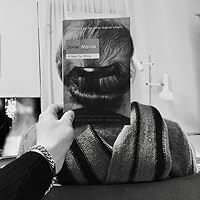
3) The cover photograph. Great impact. But as much as I like the perch, looking either into or out of devastation, I found Skoog’s poems much less lonely than the cover shot would suggest, because the poet keeps “building things where the obscure forest used to be,” that forest being memory.
Even if written in thoughtful solitude, Skoog’s poems are quickly peopled, and thinged, as in the beginning of Canzioniere of Late July:
"Almonds drop and temple the soil. / Carrots grow longways into earth. / The Mississippi carries clouds of soil / in gigantic purling. Winds erode soil, / making it savage to live above dirt, / always shifting. Listen as whispering soil / becomes a tropical opera of soil..."
The speaker in Skoog’s poems seem to gravitate towards company and/or activity. If it sometimes turns surreal, it’s more Bruegel than Magritte.
Take The Carolers, in which a gang of Christmas carolers tempt the speaker from his doorway to join their revelry. Although tempted, he hangs back, but experiences in a kind of dream the carolers’ night as if he’d gone along when they climbed through his Ford “pulling ‘I Saw Three Ships’ through the car like a rope.”
That’s why I’ve dubbed these “meditative action poems” – there’s always something happening, and the poet participates or just observes, but lets you know what it was like to be there, to breathe there, to experience and think through.
While there is a lot of “happening,” there are quieter moments, too, as well as focused dreams and still, surreal images. One of the most tactile and pleasing comes at the beginning of Season Finale:
"My last look around the house / took so long that the vine / climbing the rosebush climbed / into my eyes. . ."
While I’m generally partial to shorter poems, in Mister Skylight, Skoog shows his strengths and riches in the long poems and sequences – Canzioniere of Late July, Mister Skylight and Memory Loss, a gorgeous poem in which, once again, experience and reflection send the speaker back out into the arms of the world.
That quest for company, to share experience, surely contributes to the sense of hope that finally glows in these poems, but also the poet’s disposition, his “version” of what he sees. In the last segment of the poem Mister Skylight, garbage men hang from the moving truck, throwing in cat litter, electronic appliances, bubble wrap, diapers, and finally –
"the sheet music to “Clair de lune,” / cuttings from a holly, oyster shells / on top, round mirrors of the dawn."
One of my favorite poems in the book is the first one, a preface called During the War. This is a list-like poem of what the speaker was up to during whichever war we’re on, and it sets the reader up for the narratives to come, all the characters and places, the American landscape.
"I lived in two houses, one apartment, / took notes on a cocktail napkin / and a record store receipt my salary / almost covered. / I abandoned my longing / to be more serious, and grew out my hair..."
The notes on that napkin are what you will be served in this book, serious poetry, rooted in places, characters, a culture and time.
As a matter of taste, I'd give it a 3+/4-, but since that's not possible, I go with 4 stars here.
1) Ed Skoog. You can’t do much better than to be a poet with a name like Skoog. Half a verb, half a Seussian entity.
2) The title. Even before I knew what the phrase 'Mister Skylight' meant, I loved it. When I found out what it meant, I loved it more. For those who don’t know, it’s the code used to alert a ship’s crew of an encroaching calamity without clueing in the passengers. Mister Skylight is a character in this book, one who, when you tell him your disturbing dream, doubles your prescription. This title is an apt metaphor for a country that often feels it’s being left in the dark.
3) The cover photograph. Great impact. But as much as I like the perch, looking either into or out of devastation, I found Skoog’s poems much less lonely than the cover shot would suggest, because the poet keeps “building things where the obscure forest used to be,” that forest being memory.
Even if written in thoughtful solitude, Skoog’s poems are quickly peopled, and thinged, as in the beginning of Canzioniere of Late July:
"Almonds drop and temple the soil. / Carrots grow longways into earth. / The Mississippi carries clouds of soil / in gigantic purling. Winds erode soil, / making it savage to live above dirt, / always shifting. Listen as whispering soil / becomes a tropical opera of soil..."
The speaker in Skoog’s poems seem to gravitate towards company and/or activity. If it sometimes turns surreal, it’s more Bruegel than Magritte.
Take The Carolers, in which a gang of Christmas carolers tempt the speaker from his doorway to join their revelry. Although tempted, he hangs back, but experiences in a kind of dream the carolers’ night as if he’d gone along when they climbed through his Ford “pulling ‘I Saw Three Ships’ through the car like a rope.”
That’s why I’ve dubbed these “meditative action poems” – there’s always something happening, and the poet participates or just observes, but lets you know what it was like to be there, to breathe there, to experience and think through.
While there is a lot of “happening,” there are quieter moments, too, as well as focused dreams and still, surreal images. One of the most tactile and pleasing comes at the beginning of Season Finale:
"My last look around the house / took so long that the vine / climbing the rosebush climbed / into my eyes. . ."
While I’m generally partial to shorter poems, in Mister Skylight, Skoog shows his strengths and riches in the long poems and sequences – Canzioniere of Late July, Mister Skylight and Memory Loss, a gorgeous poem in which, once again, experience and reflection send the speaker back out into the arms of the world.
That quest for company, to share experience, surely contributes to the sense of hope that finally glows in these poems, but also the poet’s disposition, his “version” of what he sees. In the last segment of the poem Mister Skylight, garbage men hang from the moving truck, throwing in cat litter, electronic appliances, bubble wrap, diapers, and finally –
"the sheet music to “Clair de lune,” / cuttings from a holly, oyster shells / on top, round mirrors of the dawn."
One of my favorite poems in the book is the first one, a preface called During the War. This is a list-like poem of what the speaker was up to during whichever war we’re on, and it sets the reader up for the narratives to come, all the characters and places, the American landscape.
"I lived in two houses, one apartment, / took notes on a cocktail napkin / and a record store receipt my salary / almost covered. / I abandoned my longing / to be more serious, and grew out my hair..."
The notes on that napkin are what you will be served in this book, serious poetry, rooted in places, characters, a culture and time.
As a matter of taste, I'd give it a 3+/4-, but since that's not possible, I go with 4 stars here.

December 27, 2009
Oh, my, what a book. Something about Skoog’s treatment of disaster powerfully speaks to me. We get a sense of expeditions doomed before they begin – bleak, beautiful images of skeleton coasts, “pig-like hands that hold up sails,” a surreal litany of disease and death-dealing.
Skoog comes at tragedy from an oblique angle; indeed, disaster is less the theme than the backdrop of his work here. Nor is he particularly concerned with survival or rescue (“I, too, am tired of miraculous recoveries”). This is about the limits of witness, the fragility of calamity’s claim to our attention. All this ruin – hurricane, flood, death, disease – and already, we’re moving on: “Soon this attention will be over and I’ll return to car, / wheel baby across the difficult tracks, / the ice in my soda barely melted.”
Despite the governing theme, there are moments of stillness, respite, and whimsy (like the “candied” red sedan, whose hood “glistens like licked cinnamon”). But such moments seem to emerge in spite of “exile and years of night;” “rage shame guilt or scold.” However hopeful the mood, the specter of Mister Skylight* is always lurking in the corners.
I love the “placeness” of Skoog’s work, the stark specificity of people and towns, the proprietary nouns of local climates and geographies. And he mixes with this strong descriptive language slant commentary that guides our readings: “My disarray is so local” and, “I’m sorry if this is ruining anything.”
For the most part, I prefer Skoog’s shorter poems to his longer ones (with the exception of the titular poem cycle, which left me, frankly, agog). Some of the longer poems feel unwieldy and distracted, even forced in their opacity, somehow. Then again, perhaps they will reward repeated readings. I guess I'll find out; I am happily putting this on my "to re-read" shelf.
*Mister Skylight is a code word used to alert a ship’s crew to disaster without alarming the passengers.
Skoog comes at tragedy from an oblique angle; indeed, disaster is less the theme than the backdrop of his work here. Nor is he particularly concerned with survival or rescue (“I, too, am tired of miraculous recoveries”). This is about the limits of witness, the fragility of calamity’s claim to our attention. All this ruin – hurricane, flood, death, disease – and already, we’re moving on: “Soon this attention will be over and I’ll return to car, / wheel baby across the difficult tracks, / the ice in my soda barely melted.”
Despite the governing theme, there are moments of stillness, respite, and whimsy (like the “candied” red sedan, whose hood “glistens like licked cinnamon”). But such moments seem to emerge in spite of “exile and years of night;” “rage shame guilt or scold.” However hopeful the mood, the specter of Mister Skylight* is always lurking in the corners.
I love the “placeness” of Skoog’s work, the stark specificity of people and towns, the proprietary nouns of local climates and geographies. And he mixes with this strong descriptive language slant commentary that guides our readings: “My disarray is so local” and, “I’m sorry if this is ruining anything.”
For the most part, I prefer Skoog’s shorter poems to his longer ones (with the exception of the titular poem cycle, which left me, frankly, agog). Some of the longer poems feel unwieldy and distracted, even forced in their opacity, somehow. Then again, perhaps they will reward repeated readings. I guess I'll find out; I am happily putting this on my "to re-read" shelf.
*Mister Skylight is a code word used to alert a ship’s crew to disaster without alarming the passengers.

August 24, 2009
Ed Skoog’s journey from Topeka, through Kansas, through all of the other places that have informed his work, culminates into the sailor’s cry—Mister Skylight—which is used as code to alert the crew of a ship that the ship is in trouble without worrying the unsuspecting passengers. Skoog’s time in New Orleans, with the witness of Hurricane Katrina, must have spurred this fitting collection of poems that deal with our troubled times. The poems feel narrative (maybe America’s narrative?) but are lyrical in the way they tell our story of being in the midst of denial, of hard times, and of the hope we have.

June 10, 2010
I am not normally a poetry person. But met the author in college and thought it interesting that he now is a real life poet! Very fun. Am enjoying the poetry so far.

July 2, 2020
This book was a Best of the Best for July 2020, as selected by Stevo's Book Reviews on the Internet and Stevo's Novel Ideas. Find more reviews and recommendations by searching for me on Google.

February 15, 2021
lyrically disorienting - love the cataloging/object-based imagery/grounding to the collection - interesting approach to navigating the disasters and hoping for rescue

September 19, 2012
This is a very tough book for me to "review" -- I wanted to give it 2 stars for my personal response to it overall, but I am afraid of turning any readers off to trying it, because Skoog is clearly immensely talented. It's just that these poems, on the whole, read more like academic poetry to me, full of attention-getting vocabulary, packed with images that don't seem to cohere, long meandering thoughts and complex structures. What I like: how he ends poems (I loved most of the poem endings even when I didn't get into the poems themselves), his NOLA references (heartbreaking), his sense of humor. It comes through even when you don't quite understand what he's trying to say. But in this book, I can honestly say I really enjoyed only the first 3 poems! I was so encouraged by the entrance that I sat and read all the way through, only to emerge feeling disoriented, confused, and frustrated (and stupid). This is the sort of poetry I just don't "get". So, emotionally, this didn't speak to me, but technically, I can see that it's brilliant. If you like complex and intelligent poetry that doesn't reveal itself on first or second reads and doesn't follow along willingly, you will enjoy this. It's got a musical sensibility, too. But if you like your poetry more "accessible", this book is not for you.

September 2, 2010
This volume didn't connect for me as much as I'd hoped. He's an interesting observer, such as in : "Outside Long Beach Airport,/ pigeons have shat white the loudspeaker/ deplaning locals roll suitcases by,/ / and always someone wears a pink/ comboy hat, or a fur from another climate./ Beside the boy with interlocking skulls// raining on his hoodie, the house sparrow/ goes for crumbs of stale bagel./ The pilot's gold epaulets catch on the cab door." I'm not sure what's missing for me... He is clever with word choice and cadence, but there is an emotional distance, I think, that doesn't work for the way that I approach the reading of poetry. Or something like that...

November 29, 2016
Lots of Imagery but tough for me to follow. No detectable pattern to grouping of units of meaning. No framework for me to drape my interpretation over.
Displaying 1 - 9 of 9 reviews