

What do you think?

Smart Pop
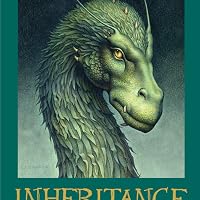
Secrets of the Dragon Riders: Your Favorite Authors on Christopher Paolini's Inheritance Cycle: Completely Unauthorized
Millions of readers adore Christopher Paolini's Inheritance its earnest hero, its breathtaking battles and, of course, its awe-inspiring dragon Saphira. But there's so much more to the series than meets the eye—and Secrets of the Dragon Riders, edited by today's second hottest dragon-writer James A. Owen, shows readers what they're missing.
Why might Roran be the real hero of the Inheritance Cycle? What does Paolini's writing have in common with role-play games and modern action films? Are teenage writers judged more harshly than their adult counterparts? The YA authors in Secrets of the Dragon Riders—some of them no older than Paolini when he wrote Eragon—each take on a different aspect of the series to engage and entertain Paolini fans.
Why might Roran be the real hero of the Inheritance Cycle? What does Paolini's writing have in common with role-play games and modern action films? Are teenage writers judged more harshly than their adult counterparts? The YA authors in Secrets of the Dragon Riders—some of them no older than Paolini when he wrote Eragon—each take on a different aspect of the series to engage and entertain Paolini fans.
192 pages, Paperback
First published June 1, 2008
Ratings & Reviews
Friends & Following
Create a free account to discover what your friends think of this book!
Community Reviews
Displaying 1 - 9 of 9 reviews

January 9, 2012
J.A.O. misses the point.
Bad writing is when the writer has the character climbing the unscaleable mountain, seeing through the impenetrable fog and such. That and the Paolini's unholy love of adjectives. Make, at least, the first book jarring to read.
I don't care how old he is or that he got a contract. I suspect that is probably an issue to other authors but not to this reader.
Paolini needed a good editor. Why the publisher did not have an editor clean up the book is beyond me.
I think J.A.O. misses the point.
I don't know Star Wars well enough to see the similarity. Sure, the book is another of hundred of LOTR imitations but that is all to the good. We can't keep reading LOTR over and over again. Fact is Eragon is probably better plotted than LOTR.
I hope this was good therapy for J.A.O. but I am sorry I bought the book.
Bad writing is when the writer has the character climbing the unscaleable mountain, seeing through the impenetrable fog and such. That and the Paolini's unholy love of adjectives. Make, at least, the first book jarring to read.
I don't care how old he is or that he got a contract. I suspect that is probably an issue to other authors but not to this reader.
Paolini needed a good editor. Why the publisher did not have an editor clean up the book is beyond me.
I think J.A.O. misses the point.
I don't know Star Wars well enough to see the similarity. Sure, the book is another of hundred of LOTR imitations but that is all to the good. We can't keep reading LOTR over and over again. Fact is Eragon is probably better plotted than LOTR.
I hope this was good therapy for J.A.O. but I am sorry I bought the book.
February 2, 2009
Well, since I have an essay in the book, I think I should say it's brilliant. Probably the best essay in there is in truth "Ten Things to Hate about Christopher Paolini" by Jeremy Owen, but there are many good ones. Ian Irvine has a great one, and so did that guy that wrote that Perceval essay...whatever his name is. ;)
If you like The Inheritance Cycle, this is a great companion piece.
If you like The Inheritance Cycle, this is a great companion piece.
April 11, 2018
4 1/2 stars

May 5, 2013
I *meant* to re-read this soon after “Inheritance” but A) this book was hiding on my shelf, and B), I think it would have been better if I had read it after “Eldest,” as this one came out after that. As a result, many of the essays within talk about predictions and hopes for the final two books in the series.
And this book is… okay? I remember not liking every essay, and I remember the gist of some of them, but re-reading it now, welp. There are some interesting insights, but overall there’s a lot of… uh, look, I’m pretty sure that plenty of these authors (despite the tagline of this and other books in this line being “From your favorite authors!” I’d only heard of a couple of them) don’t know what they’re talking about? Part of that is because this was the halfway point in the series, so in the hiatus we’re all coming up with our own things, but sometimes they branch off-topic and it doesn’t work for me.
The essay on elves and fairies was interesting, but it went on too long and I think it tried way too hard to connect every little bit of fairy lore the author knew about to the elves in Paolini’s work, which doesn’t necessarily fit. Another essay tries to fit Freudian psychology and Jungian archetypes into the series, and look, I get that you’re following a proud literary tradition, but in actual psychology those were considered outdated for decades before this book came out.
There are also weird, blistering hot takes like the author who argued in “Eldest =/= Wisest” that the dragons Glaedr and Saphira definitely should have hooked up, when the text makes it clear that Saphira’s affection for Glaedr (her several-centuries-older TEACHER) is a childish crush that isn’t reciprocated. That’s not even getting into the none-“Inheritance” related ones. One is by a child author who, in a defense of Paolini’s youth not being a problem for his literary life, explains how children are discriminated against because they can’t vote or hold jobs (????). One of the authors has a quote by Mao Zedong of all people (?!?!?), which is something an editor should have caught.
This book is nowhere near as bad as another in the same vein, “The Ultimate Unauthorized Eragon Guide” which seemed confused about the Plot of the books, and used the book as an excuse to talk about random mythology and folklore, but it’s not great, and now that the series is finished it seems incredibly obsolete. It’s not useless, but it’s a book that only functions as a way to see where the fandom was, and the conversation surrounding Paolini at the time. There are only a couple of essays I’d feel confident in passing on (Jeremy Owen’s, I realized, had phrases that stuck with me long after I’d forgotten where they were from), but overall… yeah, even hardcore fans can skip this.
And this book is… okay? I remember not liking every essay, and I remember the gist of some of them, but re-reading it now, welp. There are some interesting insights, but overall there’s a lot of… uh, look, I’m pretty sure that plenty of these authors (despite the tagline of this and other books in this line being “From your favorite authors!” I’d only heard of a couple of them) don’t know what they’re talking about? Part of that is because this was the halfway point in the series, so in the hiatus we’re all coming up with our own things, but sometimes they branch off-topic and it doesn’t work for me.
The essay on elves and fairies was interesting, but it went on too long and I think it tried way too hard to connect every little bit of fairy lore the author knew about to the elves in Paolini’s work, which doesn’t necessarily fit. Another essay tries to fit Freudian psychology and Jungian archetypes into the series, and look, I get that you’re following a proud literary tradition, but in actual psychology those were considered outdated for decades before this book came out.
There are also weird, blistering hot takes like the author who argued in “Eldest =/= Wisest” that the dragons Glaedr and Saphira definitely should have hooked up, when the text makes it clear that Saphira’s affection for Glaedr (her several-centuries-older TEACHER) is a childish crush that isn’t reciprocated. That’s not even getting into the none-“Inheritance” related ones. One is by a child author who, in a defense of Paolini’s youth not being a problem for his literary life, explains how children are discriminated against because they can’t vote or hold jobs (????). One of the authors has a quote by Mao Zedong of all people (?!?!?), which is something an editor should have caught.
This book is nowhere near as bad as another in the same vein, “The Ultimate Unauthorized Eragon Guide” which seemed confused about the Plot of the books, and used the book as an excuse to talk about random mythology and folklore, but it’s not great, and now that the series is finished it seems incredibly obsolete. It’s not useless, but it’s a book that only functions as a way to see where the fandom was, and the conversation surrounding Paolini at the time. There are only a couple of essays I’d feel confident in passing on (Jeremy Owen’s, I realized, had phrases that stuck with me long after I’d forgotten where they were from), but overall… yeah, even hardcore fans can skip this.

September 12, 2008
Reviewed by Candace Cunard for TeensReadToo.com
What with all of the hype surrounding Christopher Paolini�s INHERITANCE CYCLE, it�s no surprise that a companion book like this has come along. With a range of contributors who vary from the almost recognizable to the moderately obscure, the title�s promise that these are �your favorite authors� might be slightly inaccurate. However, they prove you don�t have to be well-known to have something to say.
I found the majority of the essays entertaining, and a smaller segment of them were actually thought-provoking. The topics covered by the essays include explorations of Paolini�s own background and how it has affected the way that his stories are received, with many essays touching upon the topic of Paolini�s relative youth and either defending him or making excuses.
However, by far my favorite of the essays were those that ignored Paolini�s age and simply talked about the world he�d created, placing it within a cultural and historical context and trying to show the ways in which he was and is innovative in children�s fantasy, as well as the ways in which he does draw heavily upon those who came before him.
When I received this book, I was worried that the tenor of the essays would be entirely congratulatory. I have read ERAGON and ELDEST, but let�s just say I�ll be looking for BRISINGR at the library rather than the bookstore. One of the things I disliked the most about his work is its excessive borrowing from its fantasy predecessors, to the point where the books read like a patchwork quilt of Tolkein, McCaffrey, and Campbell.
The essays in this book did not shy away from admitting this, and from acknowledging some of Paolini�s other weaknesses. But they also countered weaknesses with strengths wherever possible. Jeremy Owen�s essay �It�s in His Character� discusses Owen�s own attachment to Roran during Eldest, and how Roran�s strength of character comes in part from a perception of Eragon�s weakness at that time. When Roran is fighting battles and making decisions, Eragon spends page after page training with the elves. Many readers have complained that ELDEST is a slower read than ERAGON, and Owen agrees with this, but his essay points out that within a narrative where ground gained is measured in inches, Roran�s daring stands out even further, making him into a fantastic character.
There are many more essays in this book worth reading, and even a few worth loving. I would recommend it to all fans of children�s fantasy, since many of the essays discuss or allude to the giants who have come before Paolini, explaining the context for this saga.
What with all of the hype surrounding Christopher Paolini�s INHERITANCE CYCLE, it�s no surprise that a companion book like this has come along. With a range of contributors who vary from the almost recognizable to the moderately obscure, the title�s promise that these are �your favorite authors� might be slightly inaccurate. However, they prove you don�t have to be well-known to have something to say.
I found the majority of the essays entertaining, and a smaller segment of them were actually thought-provoking. The topics covered by the essays include explorations of Paolini�s own background and how it has affected the way that his stories are received, with many essays touching upon the topic of Paolini�s relative youth and either defending him or making excuses.
However, by far my favorite of the essays were those that ignored Paolini�s age and simply talked about the world he�d created, placing it within a cultural and historical context and trying to show the ways in which he was and is innovative in children�s fantasy, as well as the ways in which he does draw heavily upon those who came before him.
When I received this book, I was worried that the tenor of the essays would be entirely congratulatory. I have read ERAGON and ELDEST, but let�s just say I�ll be looking for BRISINGR at the library rather than the bookstore. One of the things I disliked the most about his work is its excessive borrowing from its fantasy predecessors, to the point where the books read like a patchwork quilt of Tolkein, McCaffrey, and Campbell.
The essays in this book did not shy away from admitting this, and from acknowledging some of Paolini�s other weaknesses. But they also countered weaknesses with strengths wherever possible. Jeremy Owen�s essay �It�s in His Character� discusses Owen�s own attachment to Roran during Eldest, and how Roran�s strength of character comes in part from a perception of Eragon�s weakness at that time. When Roran is fighting battles and making decisions, Eragon spends page after page training with the elves. Many readers have complained that ELDEST is a slower read than ERAGON, and Owen agrees with this, but his essay points out that within a narrative where ground gained is measured in inches, Roran�s daring stands out even further, making him into a fantastic character.
There are many more essays in this book worth reading, and even a few worth loving. I would recommend it to all fans of children�s fantasy, since many of the essays discuss or allude to the giants who have come before Paolini, explaining the context for this saga.

June 27, 2011
Interesting book that makes agood deal of valid points about the fact that there are no new stories, just new ways of packaging it.

November 13, 2011
Not too bad but not really worth buying..

April 1, 2012
I Love dragons
Read
January 5, 2013A great incite on the inheritance cycle though i don't agree with some things that's my problem
Displaying 1 - 9 of 9 reviews