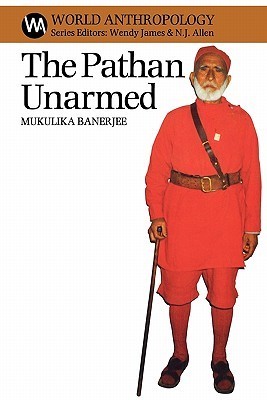
Examines the rise in the inter-war years of a Gandhian influenced non-violent movement in the North West Frontier.
The Pukhtun (Pathan) of the North West Frontier are regarded as a warrior people. Yet in the inter-war years there arose a Muslim movement, the Khudai Khidmatgar (Servants of God), which adopted military forms of organizations and dress, but which also drew its inspiration from Gandhian principles of non-violent action and was dedicated to an Indian nationalism rather than communal separatism.
Virtually erased from the national historiography of post-partition Pakistan, where they now reside, the aging veterans of the movement are still highly respected by younger Pukhtun.
This is an account of rank and file members of the Khudai Khidmatgar, describing why they joined, what they did, and how they perceived the ethics and aims of the movement. It attempts to answer the questions of how notoriously violent Pukhtun were converted to an ethic of non-violence. It finds the answer rooted in the transformation of older social structures, Islamic revisionism and the redefinition of the traditional code of honour.
A wonderful anthropological study of the an era in Pathan history when they fervently believed in non-violence as an effective policy to fight the British. Unbelievable but true when you consider the warlike and aggressive image of the Pathan presented today.....
A feuding bunch of Pathans from the NW border of undivided India lead a 17-year long non-violent struggle for autonomy, independence and self-reliance. Badshah Khan and his Khudai Khidmatgars may have had a bittersweet end to their movement, but they could celebrate their moral victory for their unwavering belief in non-violence in the face of unimaginable atrocities.
The book is a commendable and significant effort in collecting and preserving oral history and brings a forgotten movement to life and offers a brilliant anthropological account of its people and their way of life.
One of my favorite books ever. It's changed how I understand my own place in the world and inspired me to go into ethnographic writing on Pukhtuns too — although in my case, I want to side-step men as much as possible and get to the women (whom we barely get four pages on here). The prose is immaculate, the content fascinating and the analytical threads would have met with Goldilocks' approval — neither too presumptive nor too vague.
An example of extractivist research doing a disservice to the community it investigates. “Notoriously violent” Pakhtuns who become non-violent inspired by Ghandi’s movement. It is clear what the ideology is behind these sweeping claims. Depicting Pakhtuns as notorious warriors is a narrative originally pushed by the British to justify their failure to colonise Afghanistan… I haven’t finished the book, but I think I’m done.