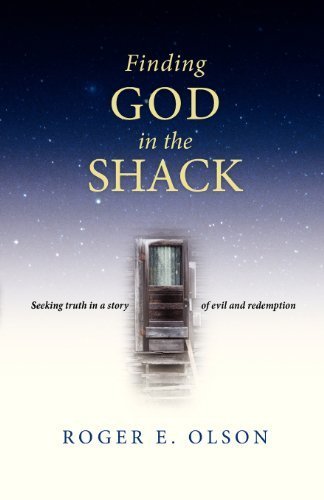
Theological and Cerebral and Fair for the Most Part
Roger E. Olson is a strong voice and well qualified to address the theological issues of The Shack. I read his book using the Kindle and it's possible that my next comments are not as true for the paperback edition of the book, but up front I think it would have helped the book for Dr. Olson's theological position and background to have been better highlighted to put his comments and observations in better perspective. In order to address that, I did a little digging on the net and I found that he is well qualified and has impressive credentials. As a point of interest, although I don't believe we ever crossed paths, he was actually an instructor at Oral Roberts University at the same time I attended there as an undergraduate.
Roger E. Olson is currently a Professor of Theology at Baylor University. He has a very strong educational background and appears to come primarily from a Baptist bent in his education and experience but is also not a dogmatic reformed theologian. He has a very strong body of written work in both Theological Journals as well as popular theology. His accolades include awards from Christianity Today and also an honor from a graduating class designating him as a favorite professor.
While the personal information was helpful to me to put his book in perspective, I think it's very important for a critic (pro or con) of a book like The Shack to self-reveal these positions as otherwise what is patterned as a critique can come across as an "ex cathedra" pronouncement from on high. I think this element could have been a little stronger on the part of Olson and the publisher, and again to be fair, it may be that some of the elements were not as evident in the Kindle edition as in the paperbook. I personally felt it could have been a little more self-evident within the text itself.
In the same vein, several of the comments in the book by Olson lead me to believe that he didn't do a lot of research into knowing more about the author, William P. Young. Most of that information is reasonably accessible on the web and could have been obtained quite easily.
That said, I also have to disclose a personal bias toward any who would approach The Shack from a primarily theological perspective. The Shack clearly is theological in many regards. However, it is clearly, intentionally not a systematic theology nor is it intended to serve as a primer for those seeking that approach. The Shack is in fact to my observation something of a reaction against that sort of approach and in large part has an agenda to restore a strong relational element to a walk with Christ.
That also said, what Olson does in this book is valuable as a response to those vocal, often almost hysterical critics of The Shack who either lack the imagination to understand metaphor and parable or who understand all too well the theological positions promoted within The Shack and simply find it unpalatable and respond with inflated charges of heresy.
Olson to be sure does far more in this book than deal with things dryly and theologically. I was personally impressed with the openness he displayed in relating some of his personal story, especially as it related to his father. Olson clearly understands and sees the personal elements here and opens himself even as he engages with the concepts and thoughts presented.
In terms of approach, Olson identifies the major themes of the book and approaches. By doing so he provides some reassurance, for those who either on their own, or because of their exposure to the diatribes of others, that the conclusions of "heresy" are grossly overstated. By the same token, however, Olson does have a tendency to camp on specific passages of the book and not take the book on a higher level where the comments directed to a particular theme are weighed against each other and taken as a whole. That's an understandable thing coming from a theologian who is afterall examining the theology of the book, but it fails to see the book in its proper context, in my opinion.
An example of this would be Olson's comments with regard to the ecclessiology of The Shack. Olson almost seems to assume that systematic approach to the book that he does toward Scripture and draws several conclusions based upon, in my opinion, the evidence of absence and then proceeds to chastise the book for it's lack of focus on the organized church. The fact is, the purpose and the context of The Shack is based upon the personal walk and restoration of the author, William Paul Young, and ties to counselling and personal restoration.
All these elements considered, I do recommend the book and give Olson credit for a calm and helpful approach. His certainly has a far more reasoned and fair approach than some others.
3 Stars.
Bart Breen