

What do you think?
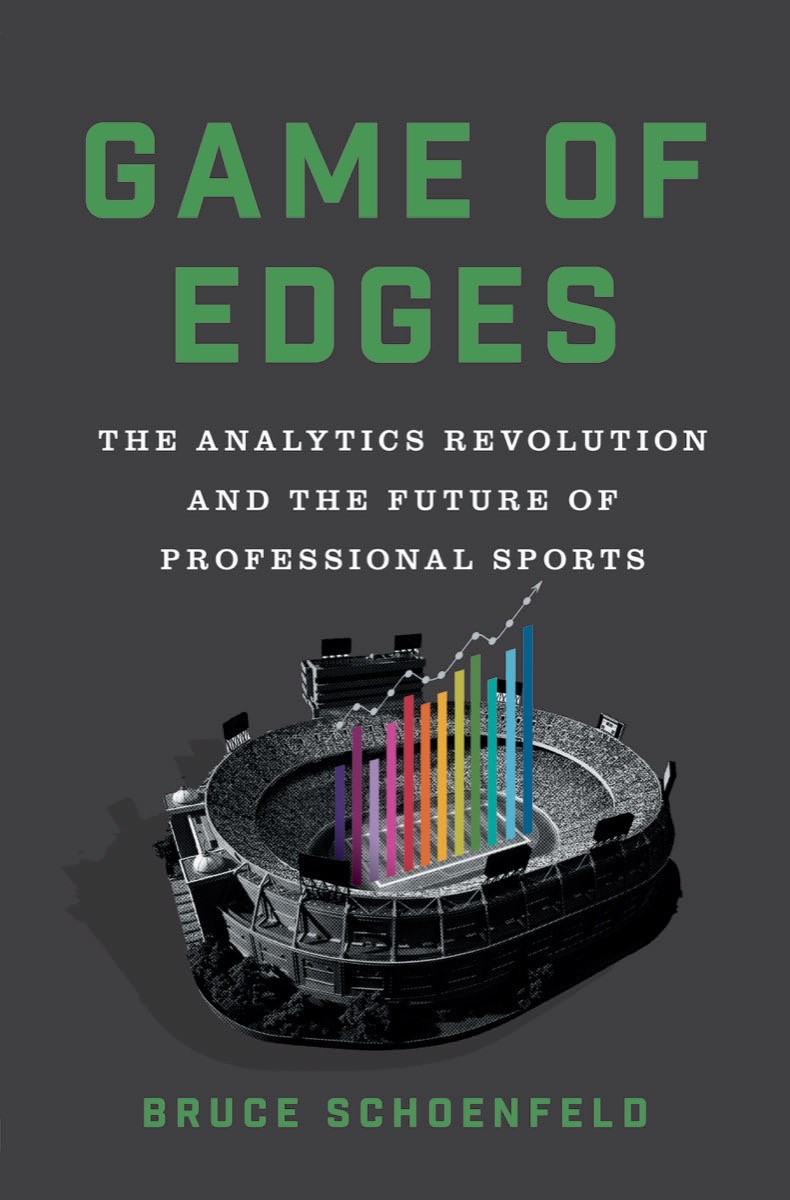
Game of Edges: The Analytics Revolution and the Future of Professional Sports
The story of how a new generation of tech-savvy franchise owners is reshaping every aspect of professional sports. In the last two decades, innovation, data analysis, and technology have driven a tectonic shift in the sports business. Game of Edges is the story of how sports franchises evolved, on and off the field, from raggedly run small businesses into some of the most systematically productive companies around. In today’s game, everyone from the owners to the marketing staff are using information―data―to give their team an edge. For analysts, an edge is their currency. Figuring out that bunting hurts your offense? That’s an edge. So is discovering metrics that can predict the career arc of your free agent shooting guard. Or combing through a decade of ticket-buying data to target persuadable fans. These small, incremental steps move a sports franchise from merely ordinary to the leading edge . Franchises today are more than just sports; they integrate a whole suite of other businesses―television and digital content, gambling and real estate, fashion and apparel, entertainment, catering and concessions, and much more. But an optimized franchise has no room for error. Teams must do what the numbers say, reducing the element of chance, limiting those random moments of athletic heroism that make sports thrilling to watch. Optimization also means the franchise’s main goal isn’t championships anymore; it’s keeping you, the viewer, engaged with the product. Drawing on extensive interviews with franchise owners, general managers, executives, and players, Bruce Schoenfeld introduces dynamic leaders who are radically reimagining the operations of these decades-old teams―and producing mind-boggling valuations. He joins the architects of the Golden State Warriors dynasty for an exclusive reception before tip-off. He stands among the faithful at Anfield, watching Liverpool’s analytics guru size up a prized midfielder. And he watches the president of the Chicago Cubs break ground on a new DraftKings gambling parlor at Wrigley Field, not ten miles from the site of the original Black Sox betting scandal. Essential reading for anyone interested in sports, business, or technology, Game of Edges explores a world where winning the game is only the beginning.
272 pages, Hardcover
Published June 6, 2023
Ratings & Reviews
Friends & Following
Create a free account to discover what your friends think of this book!
Community Reviews
Displaying 1 - 30 of 75 reviews

August 12, 2023
a quick but great read! this is all written post moneyball revolution in baseball (2003) so all the players and things happening are actually relevant to me and things u might know, especially because most things schoenfield is talking about are 2018-2022. this is mostly about business analytics instead of data analytics, but it’s still super interesting and i def enjoyed.

August 26, 2024
Much of the content I was already familiar with due to my education. However, if you’re a sports fan whatsoever and interested in the business of the industry, this book is a perfect overview. The author is a journalist so he writes in a style which captures and holds your attention.
October 2, 2023
1/10. This book ain't it, man.
July 12, 2024
As it went on the examples got worse and were less backed by data, more just observations about what owners were doing with their team to success or failure. It conveniently left out metrics to gauge success when it came to narratives that any above-average follower of the sport in question would know were unsuccessful.
One example of this was the discussion about the Utah Jazz owner getting their team and brand more involved with social justice causes to become a more desirable location for players, and how the owner strongly believes the dynamic of small market teams being at a disadvantage is starting to fade in comparison to major markets like New York, Boston, and LA. But it left out that it’s still known in NBA circles that Utah is one of the least desirable places for players to play, in large part because of the demographic of the fans & how players are treated by them, and while it mentions the Donovan Mitchell trade, it doesn’t mention that the reason he was traded was because he tried to force his way to a larger market team (he tried to force his way to New York specifically, either the Nets or Knicks, but was unsuccessful and later traded to Cleveland).
The point being made is that successful teams are getting their with data & analytics, and money is a secondary factor. But half the stories in here are mainly successful due to money exclusively (Golden State Warriors, Manchester City) and another a quarter of them aren’t very successful at all Utah Jazz, Atlanta Dream).
Even in one of the ones where there’s some real analytics-backed success, when discussing how Darryl Morey builds NBA teams as a General Manager, there is an objective lie. The author talks about how there are certain things that can’t be predicted or accounted for in analytics, like when your clear best player has a complete mental breakdown, and refers to Ben Simmons as the 76ers clear best player before his meltdown vs the Atlanta Hawks in the NBA Playoffs. Anyone who follows basketball knows he was never close to being better than Joel Embiid.
While this may seem like nothing to a non-NBA fan, it kinda just set an exclamation point to my opinion of the book. If you’re someone who is new to sports and wants to learn more about the types of things team owners are thinking about, it’s right for you. If you’re someone with any sort of sports business understanding at all, you’re better off picking up something else.
One example of this was the discussion about the Utah Jazz owner getting their team and brand more involved with social justice causes to become a more desirable location for players, and how the owner strongly believes the dynamic of small market teams being at a disadvantage is starting to fade in comparison to major markets like New York, Boston, and LA. But it left out that it’s still known in NBA circles that Utah is one of the least desirable places for players to play, in large part because of the demographic of the fans & how players are treated by them, and while it mentions the Donovan Mitchell trade, it doesn’t mention that the reason he was traded was because he tried to force his way to a larger market team (he tried to force his way to New York specifically, either the Nets or Knicks, but was unsuccessful and later traded to Cleveland).
The point being made is that successful teams are getting their with data & analytics, and money is a secondary factor. But half the stories in here are mainly successful due to money exclusively (Golden State Warriors, Manchester City) and another a quarter of them aren’t very successful at all Utah Jazz, Atlanta Dream).
Even in one of the ones where there’s some real analytics-backed success, when discussing how Darryl Morey builds NBA teams as a General Manager, there is an objective lie. The author talks about how there are certain things that can’t be predicted or accounted for in analytics, like when your clear best player has a complete mental breakdown, and refers to Ben Simmons as the 76ers clear best player before his meltdown vs the Atlanta Hawks in the NBA Playoffs. Anyone who follows basketball knows he was never close to being better than Joel Embiid.
While this may seem like nothing to a non-NBA fan, it kinda just set an exclamation point to my opinion of the book. If you’re someone who is new to sports and wants to learn more about the types of things team owners are thinking about, it’s right for you. If you’re someone with any sort of sports business understanding at all, you’re better off picking up something else.

June 7, 2023
(4/5 stars) This book was so fascinating! My brother-in-law is a huge MLB guy and I think he would LOVE this book. The transition from using your money to buy a team for fun to using your team as an investment to make money has led to increased reliance on data analytics and statistics to make decisions on who to buy, who to draft, how to play, how to price your tickets, how to target potential new season ticket holders, when to schedule games, and so much more. I'd recommend this for fans of any professional sports, but especially MLB and Premier League soccer fans.
Thanks to NetGalley and the publisher for an advance copy of this book in exchange for an honest review. This book is out now!
Thanks to NetGalley and the publisher for an advance copy of this book in exchange for an honest review. This book is out now!
March 31, 2024
We should all be thankful for the billionaires who invest in owning our favorite sports teams. This book will make sure you know some of their names, how much money they made, and how they bring the invasive analytics and dynamic pricing to extracting maximum value from business analytics. The author uncritically quotes an investor in Draft Kings that "gambling has saved sports."
It's sort of interesting to hear the history of things like the Sloan Analytics conference and Statcast. But nothing very deep or particularly insightful.
It's sort of interesting to hear the history of things like the Sloan Analytics conference and Statcast. But nothing very deep or particularly insightful.

Read
September 22, 2024A little yappy to fill the pages I guess could’ve told the stories in half the pages. Not a bad compliment to the moneyball universe though.

June 15, 2026
Rather than focusing mainly on how analytics shape in-game strategy or roster construction, Bruce Schoenfeld’s Game of Edges is more interested in how analytics guide the business decisions of modern sports franchises. The book sometimes reads like a series of anecdotes, and some sections revisit familiar stories about topics like Moneyball and Moreyball. Still, Schoenfeld does a good job bringing together several examples of how analytics have shaped professional sports in the early 2020s.
His discussion of Red Sox owner John Henry’s purchase of Liverpool FC, and the club’s use of analytics, was especially interesting. It also highlighted some of the limits of analytics. Henry supported a European Super League, which would have reduced the variance of future earnings by locking in revenue for top clubs, but fans pushed back hard against the idea. In a different way, fans have also sometimes resisted teams that seem too analytically focused, such as the Houston Astros.
The book does not provide heavy technical detail about the specific analytics used to optimize sports businesses. What I appreciated, though, was the broader picture: Schoenfeld shows how analytics now reach far beyond player evaluation and game strategy, influencing ownership, revenue, branding, fan experience, and the overall structure of professional sports.
His discussion of Red Sox owner John Henry’s purchase of Liverpool FC, and the club’s use of analytics, was especially interesting. It also highlighted some of the limits of analytics. Henry supported a European Super League, which would have reduced the variance of future earnings by locking in revenue for top clubs, but fans pushed back hard against the idea. In a different way, fans have also sometimes resisted teams that seem too analytically focused, such as the Houston Astros.
The book does not provide heavy technical detail about the specific analytics used to optimize sports businesses. What I appreciated, though, was the broader picture: Schoenfeld shows how analytics now reach far beyond player evaluation and game strategy, influencing ownership, revenue, branding, fan experience, and the overall structure of professional sports.
March 20, 2023
Fans of professional sports are certainly aware that analytics are now an important part of their favorite sports, no matter which one(s) they prefer. While many do see the change in the games on the field due to the use of data, they may not be aware that the same type of analysis is used by many team owner for the business side as well. This book by Bruce Schoenfeld does a good job of explaining this use of data both on and off the field.
I found the discussions on the business aspect of analytics most fascinating. Items that are mentioned cover mainly Major League Baseball and the English Premier League but they are certainly applicable to most professional sports franchises. It is especially interesting to read about the Premier League franchises who used data to determine how they may be able to sell more merchandise, for one example. Another excellent example of this was how John Henry, the owner of baseball’s Boston Red Sox, arrived at the decision to buy the Liverpool Premier League team.
For teams in the United States, one of the more interesting concepts on the business side of analytics was something that anyone who has attended a professional sports event in the past few years can see – the many options outside of the game itself to bring fans (and their money) to the area. The Red Sox are one example given – Henry was looking to open Red-Sox themed pubs around Boston but was discouraged from doing so by then-Commissioner Bud Selig. The reason was that this might also be something the rival of the Red Sox would do, the New York Yankees, and help them bring in more money and therefore more wins. The other interesting business analytics example was also in baseball. The owner of the Chicago Cubs looked to partner with Draft Kings to open a gambling parlor at Wrigley Field to bring that aspect (growing in leaps and bounds) to their business model as well. Both of these stories made for great reading.
Analytics that affect the games also are included in this book, but it wasn’t as compelling as the sections on the business side. The best of this writing was actually about an “anti-analytics” manager, Ned Yost of the Kansas City Royals. Schoenfeld does a nice job of explaining how he had success with the team during the 2014 and 2015 seasons (in the latter, the Royals were champions). There is also some good discussion of the 2020 World Series between two teams who do embrace analytics, the Los Angeles Dodgers and Tampa Bay Rays. The most compelling discussion here was about the Rays’ decision to pull their starting pitcher, Blake Snell, early in the decisive sixth game. But overall, while good, this isn’t quite as good as the business side of this discussion on the use of data analytics in sports. It is a book recommended for any fan of any professional sport.
I wish to thank W. W. Norton & Company for providing a copy of the book via NetGalley in exchange for an honest review. The views expressed are strictly mine.
https://sportsbookguy.blogspot.com/20...
I found the discussions on the business aspect of analytics most fascinating. Items that are mentioned cover mainly Major League Baseball and the English Premier League but they are certainly applicable to most professional sports franchises. It is especially interesting to read about the Premier League franchises who used data to determine how they may be able to sell more merchandise, for one example. Another excellent example of this was how John Henry, the owner of baseball’s Boston Red Sox, arrived at the decision to buy the Liverpool Premier League team.
For teams in the United States, one of the more interesting concepts on the business side of analytics was something that anyone who has attended a professional sports event in the past few years can see – the many options outside of the game itself to bring fans (and their money) to the area. The Red Sox are one example given – Henry was looking to open Red-Sox themed pubs around Boston but was discouraged from doing so by then-Commissioner Bud Selig. The reason was that this might also be something the rival of the Red Sox would do, the New York Yankees, and help them bring in more money and therefore more wins. The other interesting business analytics example was also in baseball. The owner of the Chicago Cubs looked to partner with Draft Kings to open a gambling parlor at Wrigley Field to bring that aspect (growing in leaps and bounds) to their business model as well. Both of these stories made for great reading.
Analytics that affect the games also are included in this book, but it wasn’t as compelling as the sections on the business side. The best of this writing was actually about an “anti-analytics” manager, Ned Yost of the Kansas City Royals. Schoenfeld does a nice job of explaining how he had success with the team during the 2014 and 2015 seasons (in the latter, the Royals were champions). There is also some good discussion of the 2020 World Series between two teams who do embrace analytics, the Los Angeles Dodgers and Tampa Bay Rays. The most compelling discussion here was about the Rays’ decision to pull their starting pitcher, Blake Snell, early in the decisive sixth game. But overall, while good, this isn’t quite as good as the business side of this discussion on the use of data analytics in sports. It is a book recommended for any fan of any professional sport.
I wish to thank W. W. Norton & Company for providing a copy of the book via NetGalley in exchange for an honest review. The views expressed are strictly mine.
https://sportsbookguy.blogspot.com/20...
March 3, 2024
Would give it 3.5 if I could. Some useless chapters in here that don't speak to the analytics revolution. With that said, the boom finished strong, with likely it's strongest chapter.

September 13, 2023
How to Choose a Bookmaker: A Beginner's Guide
So how do you choose a bookmaker? What criteria should you focus on? We look at several factors that are decisive when choosing a bookmaker. We also have a full guide on this page that will guide you to the best online bookmakers and their bonuses and offers. If you want to learn more, on this page we offer everything you need to choose the best place for your online sports betting via a mobile device.
There is no unanimous "best" bookmaker determined by our ratings because everyone is looking for something different. Some people are interested in the fun element of the experience, others are interested in the presence of bonuses, and still others will be willing to accept some disadvantages for the sake of higher odds. The criteria mentioned here will be more important to some than others, so their order can be considered arbitrary.
How to find out which bookmakers are popular? You can always read reviews on this site. The disadvantage of this method is that negative people tend to write more often and more deeply, which can (sometimes significantly) distort the objectivity of the overall experience. However, if the same things are repeated across multiple reviews, you can start to see a trend and then get an idea of the company's main strengths and weaknesses.
It is possible to read complaints against bookmakers on their social media sites such as Twitter, Facebook, etc. It is important not to pay too much attention to the existence of the complaints themselves (no company can ever be perfect), but to whether the bookmakers are ready to listen to them and correct the problem.
Traditionally, reliability is considered one of the main criteria for choosing a bookmaker, but this criterion is subjective: someone can play on the same site for years without problems, and someone can play with the same bookmaker and have problems almost immediately . The first thing you should look for in a bookmaker is one that pays out all honest winnings without any problems and adheres to its own betting rules. They are considered reliable.
Note! Each bookmaker has a slightly different betting system and displays odds, bets and confirmation bets in a slightly different way. It is important that you thoroughly familiarize yourself with the work of the bookmakers you use...
The quality of the coefficients
The size of the odds is important to all players, both beginners and experienced, it is the most important factor in determining whether a bet will be profitable. Betting on the highest possible odds will increase your winnings and this is the key to betting. Maximize your winnings (choose high odds) and limit your losses (choose winning bets instead of losing ones). The overall quality of the bookmaker's odds depends on the size of the bookmaker's margin (circled below). The lower this margin, the higher and more attractive the odds are for the player. And vice versa.
Which bookmakers have the highest odds? The best way to learn from your own experience is to compare the prices of different bookmakers for the same event yourself. Of course, this process takes time and effort. In addition, it is worth bearing in mind that when betting, bookmakers adjust the size of the margin (and, accordingly, the size of the odds) for different matches and different sports. On this website it is possible to use the "Odds Ranking" of bookmakers. We took real quotes from the ranks of each company and calculated each bookmaker's average margin so you don't have to and the differences were clear. At the same time, you can see which bookmakers offer the best odds for football, which for tennis, ice hockey or basketball, even for MMA, cricket and golf.
Note! The wider the range of bookmakers, the more likely there is an error in the odds. Some punters try to take advantage of this and place bets on knowingly incorrect quotes, but it is likely that if these are discovered, the bookies will only pay out winnings of 1 per the industry standard smell (ie return the bet). These errors are called "tangible errors" and the bookmaker has the right to do so.
So how do you choose a bookmaker? What criteria should you focus on? We look at several factors that are decisive when choosing a bookmaker. We also have a full guide on this page that will guide you to the best online bookmakers and their bonuses and offers. If you want to learn more, on this page we offer everything you need to choose the best place for your online sports betting via a mobile device.
There is no unanimous "best" bookmaker determined by our ratings because everyone is looking for something different. Some people are interested in the fun element of the experience, others are interested in the presence of bonuses, and still others will be willing to accept some disadvantages for the sake of higher odds. The criteria mentioned here will be more important to some than others, so their order can be considered arbitrary.
How to find out which bookmakers are popular? You can always read reviews on this site. The disadvantage of this method is that negative people tend to write more often and more deeply, which can (sometimes significantly) distort the objectivity of the overall experience. However, if the same things are repeated across multiple reviews, you can start to see a trend and then get an idea of the company's main strengths and weaknesses.
It is possible to read complaints against bookmakers on their social media sites such as Twitter, Facebook, etc. It is important not to pay too much attention to the existence of the complaints themselves (no company can ever be perfect), but to whether the bookmakers are ready to listen to them and correct the problem.
Traditionally, reliability is considered one of the main criteria for choosing a bookmaker, but this criterion is subjective: someone can play on the same site for years without problems, and someone can play with the same bookmaker and have problems almost immediately . The first thing you should look for in a bookmaker is one that pays out all honest winnings without any problems and adheres to its own betting rules. They are considered reliable.
Note! Each bookmaker has a slightly different betting system and displays odds, bets and confirmation bets in a slightly different way. It is important that you thoroughly familiarize yourself with the work of the bookmakers you use...
The quality of the coefficients
The size of the odds is important to all players, both beginners and experienced, it is the most important factor in determining whether a bet will be profitable. Betting on the highest possible odds will increase your winnings and this is the key to betting. Maximize your winnings (choose high odds) and limit your losses (choose winning bets instead of losing ones). The overall quality of the bookmaker's odds depends on the size of the bookmaker's margin (circled below). The lower this margin, the higher and more attractive the odds are for the player. And vice versa.
Which bookmakers have the highest odds? The best way to learn from your own experience is to compare the prices of different bookmakers for the same event yourself. Of course, this process takes time and effort. In addition, it is worth bearing in mind that when betting, bookmakers adjust the size of the margin (and, accordingly, the size of the odds) for different matches and different sports. On this website it is possible to use the "Odds Ranking" of bookmakers. We took real quotes from the ranks of each company and calculated each bookmaker's average margin so you don't have to and the differences were clear. At the same time, you can see which bookmakers offer the best odds for football, which for tennis, ice hockey or basketball, even for MMA, cricket and golf.
Note! The wider the range of bookmakers, the more likely there is an error in the odds. Some punters try to take advantage of this and place bets on knowingly incorrect quotes, but it is likely that if these are discovered, the bookies will only pay out winnings of 1 per the industry standard smell (ie return the bet). These errors are called "tangible errors" and the bookmaker has the right to do so.
This entire review has been hidden because of spoilers.

June 5, 2023
Game of Edges
Bruce Schoenfeld
RB Media, Recorded Books
Publication Date: June 6 2023
272 Pages
Game of Edges profiles analytical uses in professional sports through a behind the scenes view into how sports franchises are run today. The book largely focuses on the business side of analytics versus the more widely covered on-the-field side. If you closely follow professional sports, especially Major League Baseball, some of the information will be familiar to you (Billy Beane and the Athletics, Theo Epstein, the Rays and Kevin Cash/Andrew Friedman) though there was enough new content that the book was definitely still enjoyable. I particularly enjoyed the chapters on the NBA, Premier League soccer, and a chapter on the traditional, anti-analytical Ned Yost.
There were 2 chapters in the middle of the book that were light on analytics and were more observational about the changing landscape in professional sports. The first is on the social justice stances that are now prevalent throughout sports and the second on the legalization and implementation of sports betting. I point this out because these two chapters stuck out as quite different from the rest of the book, but they were interesting nonetheless.
Through interviews with various front office figures in sports, the book provides loads of insightful entertainment. For those who enjoy reading business, current affairs with a focus on sports I would highly recommend this book. The audio version is narrated by the author, which is usually a plus and that holds true here.
4.5/5
Thank you to Netgalley, RB Media, Recorded Books for access to a review audio copy of the book in exchange for an honest review.
Bruce Schoenfeld
RB Media, Recorded Books
Publication Date: June 6 2023
272 Pages
Game of Edges profiles analytical uses in professional sports through a behind the scenes view into how sports franchises are run today. The book largely focuses on the business side of analytics versus the more widely covered on-the-field side. If you closely follow professional sports, especially Major League Baseball, some of the information will be familiar to you (Billy Beane and the Athletics, Theo Epstein, the Rays and Kevin Cash/Andrew Friedman) though there was enough new content that the book was definitely still enjoyable. I particularly enjoyed the chapters on the NBA, Premier League soccer, and a chapter on the traditional, anti-analytical Ned Yost.
There were 2 chapters in the middle of the book that were light on analytics and were more observational about the changing landscape in professional sports. The first is on the social justice stances that are now prevalent throughout sports and the second on the legalization and implementation of sports betting. I point this out because these two chapters stuck out as quite different from the rest of the book, but they were interesting nonetheless.
Through interviews with various front office figures in sports, the book provides loads of insightful entertainment. For those who enjoy reading business, current affairs with a focus on sports I would highly recommend this book. The audio version is narrated by the author, which is usually a plus and that holds true here.
4.5/5
Thank you to Netgalley, RB Media, Recorded Books for access to a review audio copy of the book in exchange for an honest review.

September 4, 2024
Post-Moneyball overview of advanced analytics’ impact on professional sports
Takeaways:
— Moneyball not only changed on-field play, it also coincided with a new wave of capitalization and optimization of sports franchises as a whole. What once served as trophy assets for moderately successful individual businessmen have now evolved into growth vehicles for billionaire ownership groups. The last chapter about “City Football Group” made this point really well, outlining how the company aligned a constellation of local football clubs into a global unit that’s far more valuable as a set than as individual pieces
— Shifts in staff followed: the type of person that would have worked for McKinsey or Bain & Company or even as a particle physicist (…), now has a home at the Red Sox or Liverpool FC. Tectonic shift in professional culture
— Some of the optimal in-game strategies began eroding the entertainment value of the product, particularly MLB. Some of the beneficiaries of these boring-but-effective strategies eventually began testing new rules to reverse their effects (e.g. Theo Epstein)
—Particularly interesting chapter about Ned Yost, former manager of the KC Royals who still found success in the mid-2010s despite strong anti-analytical leanings and confounding game decisions
Critiques:
— In the attempt to connect a lot of threads together, the book wanders. There are tangential chapters on social justice and gambling that don’t really bring much to the core thesis
— Writing style I think intended for a broad audience and therefore stays out of the analytical weeds. Which kind of leaves everybody unsatisfied…not nerdy enough for the nerds and not sporty enough for the nuts
Audiobook
Takeaways:
— Moneyball not only changed on-field play, it also coincided with a new wave of capitalization and optimization of sports franchises as a whole. What once served as trophy assets for moderately successful individual businessmen have now evolved into growth vehicles for billionaire ownership groups. The last chapter about “City Football Group” made this point really well, outlining how the company aligned a constellation of local football clubs into a global unit that’s far more valuable as a set than as individual pieces
— Shifts in staff followed: the type of person that would have worked for McKinsey or Bain & Company or even as a particle physicist (…), now has a home at the Red Sox or Liverpool FC. Tectonic shift in professional culture
— Some of the optimal in-game strategies began eroding the entertainment value of the product, particularly MLB. Some of the beneficiaries of these boring-but-effective strategies eventually began testing new rules to reverse their effects (e.g. Theo Epstein)
—Particularly interesting chapter about Ned Yost, former manager of the KC Royals who still found success in the mid-2010s despite strong anti-analytical leanings and confounding game decisions
Critiques:
— In the attempt to connect a lot of threads together, the book wanders. There are tangential chapters on social justice and gambling that don’t really bring much to the core thesis
— Writing style I think intended for a broad audience and therefore stays out of the analytical weeds. Which kind of leaves everybody unsatisfied…not nerdy enough for the nerds and not sporty enough for the nuts
Audiobook

July 25, 2023
This was a pretty enjoyable book for those with an interest in sports and business. It goes beyond the Moneyball genre by focusing mainly on the changing business of pro sports, the impact that has had on team ownership and administration, and then in turn on field/court effects. The basic narrative here is that sports have evolved from a modest industry featuring old industry leaders to a big money industry with owners who have made their money in the Internet and finance, exploiting edges - leading to increased operation of sports franchises in this manner. Some of the best portrayals in the book are of the executives and analytics directors and the way that they've improved the business of sports - like Ryan Smith investing in diverse representation as a good business idea, and the Red Sox analytics director turned CFO Tim Zue applying modern business practices (analyzing customer data for insights to improve business performance) to an analog industry.
I think the book didn't do a great job of exploring WHY the business of sports has grown the way it has (organic growth of media markets, successful competition with other entertainment media, easy money?). At times it retrod familiar Moneyball style ground with stories of analytics applied to on field performance, and fell a bit flat. It also began to address the question of whether the growth of analytics is good for sports (particularly baseball and basketball) but copped out a little too easily (quoting Daryl Morey to the effect of 'it isn't my problem'). The treatment of legalized sports gambling was new and interesting.
I think the book didn't do a great job of exploring WHY the business of sports has grown the way it has (organic growth of media markets, successful competition with other entertainment media, easy money?). At times it retrod familiar Moneyball style ground with stories of analytics applied to on field performance, and fell a bit flat. It also began to address the question of whether the growth of analytics is good for sports (particularly baseball and basketball) but copped out a little too easily (quoting Daryl Morey to the effect of 'it isn't my problem'). The treatment of legalized sports gambling was new and interesting.

August 18, 2023
The last 10-or-so years have seen number-crunching and optimization take sporting pastimes by storm. In "Game of Edges", author Bruce Schoenfeld examines some reasons why this happened and what some of the consequences have been.
If you are a casual sports-watcher, there will be a lot of interesting information for you to chew over here. Schoenfeld mainly touches on the realms of baseball, basketball, and soccer to illustrate the how and why of the analytics takeover. In some ways, "Game of Edges" is essentially a book about how the venture capitalist mindset invaded sports ownership and sped up that inevitable revolution.
However, for more "everyday" fans of those sports, not much of this information/analysis will be new. Analytics in baseball got so out of hand that the sport has already corrected for them! So, "Game of Edges" can sometimes seem like a book that came out a few years too late to make a huge impact on anything.
Overall, I'd give this book 3.5 stars if able. Despite not being introduced to many new concepts within its pages, "Game of Edges" did fascinated me with its coverage of team ownership and all the other information will be solid for those new to it. So, I can round up rather than down.
If you are a casual sports-watcher, there will be a lot of interesting information for you to chew over here. Schoenfeld mainly touches on the realms of baseball, basketball, and soccer to illustrate the how and why of the analytics takeover. In some ways, "Game of Edges" is essentially a book about how the venture capitalist mindset invaded sports ownership and sped up that inevitable revolution.
However, for more "everyday" fans of those sports, not much of this information/analysis will be new. Analytics in baseball got so out of hand that the sport has already corrected for them! So, "Game of Edges" can sometimes seem like a book that came out a few years too late to make a huge impact on anything.
Overall, I'd give this book 3.5 stars if able. Despite not being introduced to many new concepts within its pages, "Game of Edges" did fascinated me with its coverage of team ownership and all the other information will be solid for those new to it. So, I can round up rather than down.
August 1, 2023
If you want a summary of how sports ownership has evolved in the last 15 years, Game of Edges is that book. In some ways, it's a spiritual successor to Moneyball as it surveys the sports landscape affected by that seminal tome. Like Moneyball, Game of Edges is less about numbers and more about business decisions.
After reading a book like this that has obvious import as a contemporary chronicle, I find myself thinking about whether or not it will be worth revisiting in 10 years. I think it will, because Bruce Schoenfield has the loosely linear narrative fold on itself a bit at the end. The collection of stories here are roughly in chronological order, and throughout the reader can see one action building on top of another.
As sports enterprises learn from business about how to operate efficiently, the relationship between fans and their teams becomes more precarious. Go too far into the business side, and you risk fans becoming mere customers. But you don't see many walking around with Walmart logos on their shirts.
After reading a book like this that has obvious import as a contemporary chronicle, I find myself thinking about whether or not it will be worth revisiting in 10 years. I think it will, because Bruce Schoenfield has the loosely linear narrative fold on itself a bit at the end. The collection of stories here are roughly in chronological order, and throughout the reader can see one action building on top of another.
As sports enterprises learn from business about how to operate efficiently, the relationship between fans and their teams becomes more precarious. Go too far into the business side, and you risk fans becoming mere customers. But you don't see many walking around with Walmart logos on their shirts.

April 1, 2023
This book was a blast: Well-written and informative with a clever conceit: What if we applied Moneyball principles on the field to the business putting people on the field. I especially appreciated the difficult dilemma of optimizing for wins vs creating a fun night at the park as well as the reason you didn't want to treat fans like customers (because customers don't come back after a poor experience, but fans do). These discussions made me think of how half the problems companies have is with optimizing offices, running lean and being just on time: they've cut costs to so deeply to maximize profit, they made their companies as unattractive to work at, unable to stay the course, and doomed by any schock to the system. Hopefully someone can figure out how to measure fun and put it in a spreadsheet. (And all hail the pitch clock!)
Thanks, NetGalley, for the early look so I can tell many friends before it comes out.
Now to read MVP MACHINE.
Thanks, NetGalley, for the early look so I can tell many friends before it comes out.
Now to read MVP MACHINE.
August 1, 2023
It is an excellent read with phenomenal insight into the changing landscape of sports due to statistical analysis. This book is written more like a story or series of newspaper articles with tons of quotes from board level members of various sports franchises and clubs across all of the major sports.
Any sports fan could pick this up and be fascinated about how the competition and business side of sports have evolved in such a short period of time. It provides a history of the early adopters to the laggards when it comes to the major sports and the statistical revolution of the last two decades.
This book does not provide highly technical data or statistics that are used by certain sports teams to gain competitive edges. Some are sprinkled in, but this book rather tells the story of people and franchises that have changed dramatically.
Whether or not you like the new corporatized version of sports we have today, knowing how it got here so quickly is must. This book explains that.
Any sports fan could pick this up and be fascinated about how the competition and business side of sports have evolved in such a short period of time. It provides a history of the early adopters to the laggards when it comes to the major sports and the statistical revolution of the last two decades.
This book does not provide highly technical data or statistics that are used by certain sports teams to gain competitive edges. Some are sprinkled in, but this book rather tells the story of people and franchises that have changed dramatically.
Whether or not you like the new corporatized version of sports we have today, knowing how it got here so quickly is must. This book explains that.
November 22, 2024
Good book that focuses on how sports and sports franchises have evolved in the post-Moneyball era. It covers professional sports around the globe rather than zeroing in on any one sport/league.
Appreciate that the book focuses on areas outside of the field of play and touches on interesting aspects of how fans’ relationships with teams have evolved in this new era of team ownership. The book includes interesting anecdotes about franchises across the globe using each as an example for the specific focus of each chapter. The book transitions well between topics and links back to a central theme.
I feel the author is a little too complimentary in many aspects of the book. In some cases it feels as if he is in awe of the “genius” of some of the of the ownership groups and ignores any shortcomings of their business decisions while heaping praise for anything that appears to have worked out.
Appreciate that the book focuses on areas outside of the field of play and touches on interesting aspects of how fans’ relationships with teams have evolved in this new era of team ownership. The book includes interesting anecdotes about franchises across the globe using each as an example for the specific focus of each chapter. The book transitions well between topics and links back to a central theme.
I feel the author is a little too complimentary in many aspects of the book. In some cases it feels as if he is in awe of the “genius” of some of the of the ownership groups and ignores any shortcomings of their business decisions while heaping praise for anything that appears to have worked out.
October 29, 2023
If you’re a sports fan and have wondered why your favorite sport has changed, this book will help. It will also explain some of the business decisions that both sports and business metrics and statistics convinced managers and business to change things. This book is heavy on the “what’s” but light on the “hows” of sports and business statistics. That’s understandable because the models and algorithms are proprietary and unique to teams and businesses. But I’d sure like to know what some of those are. One of the keys to all of this is the age-old problem of collecting data. The author explains some of the techniques and companies that collect, cleanse, and standardize the data as well as sell it. If you’re a sports fan you’ll enjoy this book. If you’re a business person, you should consider reading this book, possibly helping you develop new insights for your business.
January 15, 2024
A very mediocre book -- it is primarily a book about the business of professional sports as opposed to the use of data analytics for on-the-field analysis. Schoenfeld gushes over the techno-corporate approach to obtaining customers rather than serving fans. He makes occasional reference to downsides of this approach, but quickly dismisses them and goes on to praise ownership strategy to just see sports teams as investments with a better return on investment than real estate or the stock market.
In the sport I know well (soccer) his analyses are primarily accurate but sometimes naive. Examples include predicting that soccer plays will someday be scripted like American football plays and that there has been not been any tactical innovation in the game over its history.
In the sport I know well (soccer) his analyses are primarily accurate but sometimes naive. Examples include predicting that soccer plays will someday be scripted like American football plays and that there has been not been any tactical innovation in the game over its history.

August 23, 2026
This book was okay. A lot of information I already knew so it wasn’t super intriguing. It also never got super specific as to how analytics were being used, speaking much more generally which I thought was not very compelling. The ending kind of served as a warning about the future of sports, which I generally agree with, in which everything has become so optimized and efficient that it loses a lot of its entertainment value. It’s all about winning games and trophies and not really about how you get there or the highs and lows along the way. Maybe to some people the win or the title is all that matters, but I love the stories and drama. It’s about the journey AND the destination. Not one or the other.

August 20, 2023
I kind of wavered between a 3 and 4 star rating for this one. It's a great primer for someone who isn't familiar with some of the work that Billy Beane, Daryl Morey and others have done. It touches on analytics and sports (and perhaps more effectively, sports business), and how that relationship has evolved over the last couple decades.
It is hinted at later in the book, but it will be interesting to see the degree to which our favorite sports morph into something less appealing (eg - swinging to hit a home run each time while also striking out a ton) and whether that garners rule changes from the leagues.
It is hinted at later in the book, but it will be interesting to see the degree to which our favorite sports morph into something less appealing (eg - swinging to hit a home run each time while also striking out a ton) and whether that garners rule changes from the leagues.

October 8, 2023
I was fairly familiar with the growth of analytics in baseball (hello Moneyball), as well as a little later in basketball, but this book does a decent job of showing the growth of data collection and analysis and its usage in multiple sports - soccer, hockey, football, etc. - as well as in multiple areas of the sports business - ticketing pricing, seating, marketing, food vendors, etc. I think what one ultimately comes away from when reading this, as a sports fan, is that professional sports is, more than anything else now, big business. Whether that is good or bad for the sport being played, and for fans, is a question I think each fan will have to answer for themselves.

May 27, 2024
Loved this book! It was a great source to learn more about how analytics has grown throughout more than just baseball since “Moneyball” and also on the business side of sports, instead of just the game between the lines. The sources that Shoenfeld uses to tell the story of analytics are known names throughout the sports industry so it becomes an even greater story as you learn who has been using analytics and for how long and how analytics has helped their particular organization. Definitely recommend this book if you are looking to learn more about analytics in sports, from baseball to basketball to international soccer.

October 5, 2023
A very insightful discussion of the evolution of sports data accumulation, analysis, and implementation in how to build a team’s potential for success. Beginning with a simple look at obvious parameters, the whole process of “analytics” has come to be a pervasive factor in how teams play the game, how they acquire or dispose of players, and how to either cater to or ignore their local fan base. Once you read this you may never look at a baseball, football, soccer, or even ice hockey without some degree of nostalgia for the traditional way of play.

October 12, 2024
It's fascinating because this book heralds analytics right till the end and then it feels like a funeral for modern sports because the data will make them downright unwatchable (and I think most sports fans have anecdotal evidence of their favorite team doing things that are ugly for the sake of analytics.) It's well written and a good overview of the advances being made in sports, a survey more than anything deeper, which is a good place to start. Heavy on the business side, which lends it to feeling empty at times.

October 25, 2024
Schoenfeld does a decent job of giving an overview of the analytics revolution in sorts. A couple of red flags tarred my experience reading this because I could not trust his objectivity.
First, he states that the Astros illegally stole signs from the Dodgers in the 2017 World Series, which was never proven. Second, and perhaps most significant, he bemoans the lifetime ban of Pete Rose by saying that he admitted to betting on several sports. He fails to mention that he BET ON HIS OWN TEAM WHILE PLAYING AND MANAGING. This makes me wonder what other tales he spun.
First, he states that the Astros illegally stole signs from the Dodgers in the 2017 World Series, which was never proven. Second, and perhaps most significant, he bemoans the lifetime ban of Pete Rose by saying that he admitted to betting on several sports. He fails to mention that he BET ON HIS OWN TEAM WHILE PLAYING AND MANAGING. This makes me wonder what other tales he spun.
June 22, 2023
Kind of surprised at how awful and shallow Schoenfeld’s Game of Edges is. Basically a brief survey of some recent events related (however tangentially) to “analytics” in sports. Very much not worth anyone’s time despite being so thin.
Morey and NBA politics feature prominently, however for some reason the NBAs relationship and dependence on China is never mentioned. A very weird and glaring omission given a whole chapter on pro basketballs (celebrated) entry into political activism.
Morey and NBA politics feature prominently, however for some reason the NBAs relationship and dependence on China is never mentioned. A very weird and glaring omission given a whole chapter on pro basketballs (celebrated) entry into political activism.
November 30, 2023
10/10! Randomly picked this book up in a bookstore because I like sports & I like analytics. If that's true of you, you'll love this book! I learned a lot and it was written in such an easy to read manner. The author jumps around between Soccer, Hockey, Baseball, and Basketball, and you never stop learning new things. Better yet, the book was published in 2023 so there's so much relevant / updated information. Fort Worth friends, LMK if you want to borrow my copy!
Displaying 1 - 30 of 75 reviews