Jump to ratings and reviews
Rate this book

The Philosophy of Popular Culture

The Philosophy of Stanley Kubrick

Rate this book
In the course of fifty years, director Stanley Kubrick produced some of the most haunting and indelible images on film. His films touch on a wide range of topics rife with questions about human life, behavior, and emotions: love and sex, war, crime, madness, social conditioning, and technology. Within this great variety of subject matter, Kubrick examines different sides of reality and unifies them into a rich philosophical vision that is similar to existentialism. Perhaps more than any other philosophical concept, existentialism—the belief that philosophical truth has meaning only if it is chosen by the individual—has come down from the ivory tower to influence popular culture at large. In virtually all of Kubrick's films, the protagonist finds himself or herself in opposition to a hard and uncaring world, whether the conflict arises in the natural world or in human institutions. Kubrick's war films (Fear and Desire, Paths of Glory, Dr. Strangelove, and Full Metal Jacket) examine how humans deal with their worst fears—especially the fear of death—when facing the absurdity of war. Full Metal Jacket portrays a world of physical and moral change, with an environment in continual flux in which attempting to impose order can be dangerous. The film explores the tragic consequences of an unbending moral code in a constantly changing universe. Essays in the volume examine Kubrick's interest in morality and fate, revealing a Stoic philosophy at the center of many of his films. Several of the contributors find his oeuvre to be characterized by skepticism, irony, and unfettered hedonism. In such films as A Clockwork Orange and 2001: A Space Odyssey, Kubrick confronts the notion that we will struggle against our own scientific and technological innovations. Kubrick's films about the future posit that an active form of nihilism will allow humans to accept the emptiness of the world and push beyond it to form a free and creative view of humanity. Taken together, the essays in The Philosophy of Stanley Kubrick are an engaging look at the director's stark vision of a constantly changing moral and physical universe. They promise to add depth and complexity to the interpretation of Kubrick's signature films.

288 pages, Hardcover

First published May 4, 2007

18 people are currently reading
253 people want to read

About the author

Jerold J. Abrams

5 books5 followers
Associate Professor of Philosophy at Creighton University

Ratings & Reviews

What do you think?
Rate this book

Friends & Following

Create a free account to discover what your friends think of this book!

Community Reviews

5 stars
29 (22%)
4 stars
51 (39%)
3 stars
37 (28%)
2 stars
8 (6%)
1 star
5 (3%)
Displaying 1 - 9 of 9 reviews
Profile Image for Owlseyes .
1,805 reviews306 followers
October 24, 2023

Roughly speaking this book is about the 17 movies of Kubrick under philosophical analysis across 5 units: "at war", "in love", "meaning of life", "in History", "of the Future". The editor, though, has found a common thread binding together those movies: the Self. Thus, the proper divisions of the book are "The Subject at war"; "The Subject in love"... etc.

Why so? In the Introduction, Jerold Abrams unveils the connecting principle: "In virtually all of Kubrick's films, in one form or another, one finds the subject (the Self) in opposition to a hard and uncaring external world, whether the nature world or a world of man-made institutions". Therefore, in the editor's view, an existentialist stance, much like Kierkegaard's.


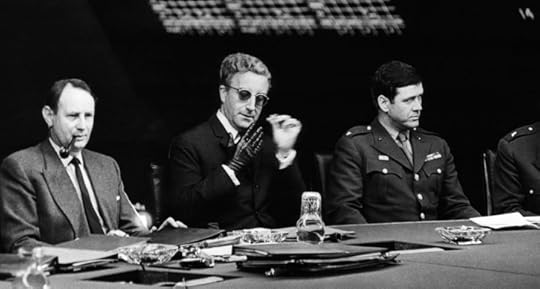
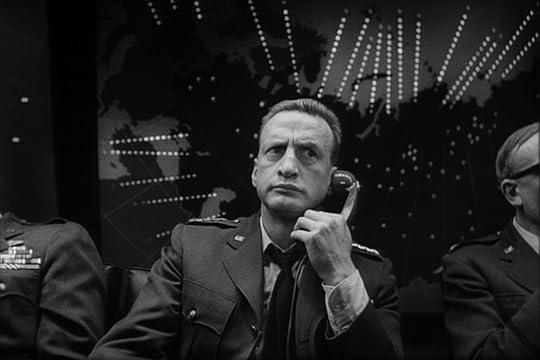
The kick-start essay is by Elisabeth Cooke. She takes and develops the view on the Absurdism (much like the one of Camus: "life is meaningless") in these 2 Kubrick's movies: Fear and Desire and Dr Strangelove.


"There's something inherently wrong with the human personality. There's an evil side to it. One of the things that horror stories can do is to show us the archetypes of the unconscious; we can see the dark side without having to confront it directly" Stanley Kubrick
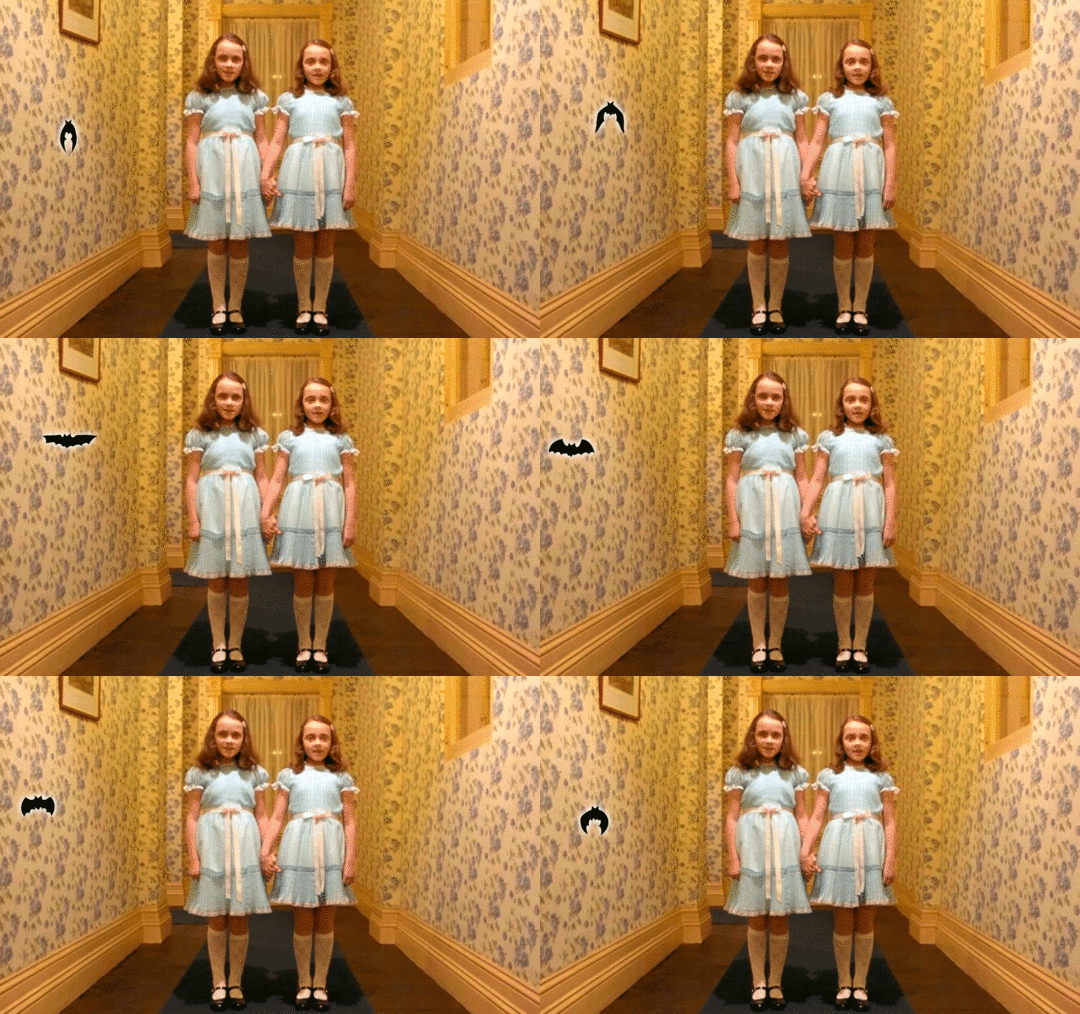
Truly a "ghost" story, The Shinning provoked dissatisfaction on the author (Stephen King) of the novel upon which the film was based; there are differences between the end of the movie and the end of the novel.
Barton Palmer writes that Kubrick "delved deeply in Freud and Bruno Bethelheim" to write down the screenplay. He assures the reader, despite those above mentioned differences, the "ontological enigma" of the hotel remains as we get to know that the main setting of the story (the Overlook hotel) was built on a Indian burial ground. Jack, the aspiring writer, is slipping progressively into madness; his son Danny possesses psychic powers...and there are "malevolent spirits" and "ghostly traces" around; so goes the story. Palmer sees in the film a "return to the present", away from nostalgia. Pity, Palmer doesn't develop any idea about room 237....or any of the Apollo's missions to the moon.


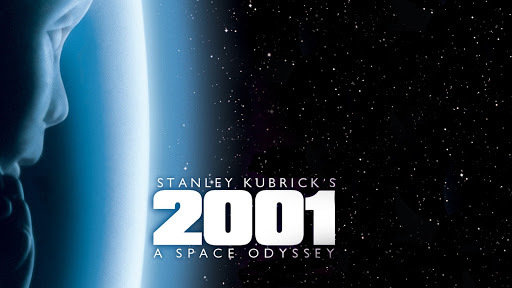
The last essay, by Abrams himself, focus on 2001: A Space Odyssey. It's obviously a Nietzshean reading of the movie, one which admits the evolution of man as well as the age of nihilism and, much into the future, the birth of the star-child*. Yet, puzzling to Abrams: Kubrick clearly suggests that the "driving force" of progress had been enacted by aliens. What would Nietzsche say about that? How much smaller would man have become? No more super, or overman?


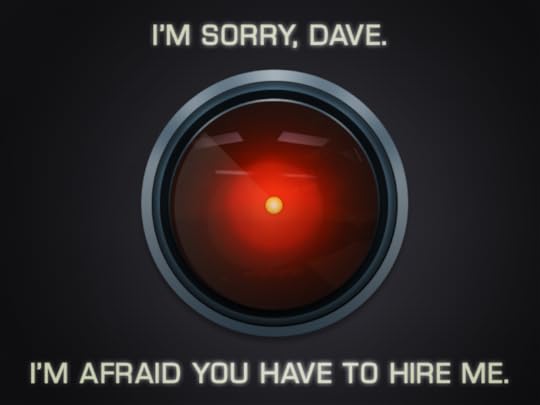
Prior to the Abrams essay, there's one by Jason Eberl, still on the topic of "Subject of the Future". I would say it's a bold article. It starts with this daring tittle "Please Make Me a Real Boy, The Prayer of the Artificially Intelligent". Daring, because when using the word "prayer" it implies higher qualities in the mechanized consciousness: be it of Hal (in 2001) or David (in the A.I. movie). And it goes further. After comparing (the "diabolical") Hal to (the "sympathetic") David, Eberl posits that they both can be considered PERSONS, as they both have "self-reflectivity" and "rationality"; plus, due to the nature of their "responses". Sure, (I am so glad about that), Eberl discards approaching the "soul" question. [Maybe he would enter a cul-de-sac, just in case he started thinking about David's soul...].

True, I agree with Eberl; both movies depict the "human struggle against AI"...and "David is the model of what AI can potentially become". A Real nightmare; created by man, I would add.


* Or, as Hans Moravec calls it, "the mind children".


UPDATE

(In French)

https://www.radiofrance.fr/francecult...

UPDATE

This is interesting as well: Spielberg announces Kubrick’s Napoleon TV series + Kubrick’s own comments on his Napoleon project
https://www.youtube.com/watch?v=skTCH...


http://www.tasteofcinema.com/2016/7-s...
Profile Image for Jonathan Gill.
26 reviews5 followers
July 24, 2014
3 stars might be generous. The book has an essay on every Kubrick film, each by a different philosophy professor. Many of these essays have little connection to the actual Kubrick film; they're more often using some aspect of a Kubrick movie as an excuse to launch into whom they did their graduate philosophy project on.

But a few of the essays are excellent, hence my rating. The Barry Lyndon one in particular really enhances the experience of the film.
Profile Image for Shady(i).
134 reviews28 followers
July 19, 2019
بهترین کتابی‌ست که راجع به سینمای کوبریک ترجمه شده.
Profile Image for Jacco...
166 reviews
June 30, 2013
Great way of enjoying films and philosophy. The book's essays on Kubrick's films offer a wide array of angles, ranging from placing a particular film in its time (for instance, The Shining), to expounding the philosophy that grounds a film. (2001:)
Excellent reading, makes me a better philosopher ánd film aficionado!
87 reviews1 follower
February 21, 2019
Un libro de blancos y negros. El libro es una recopilación de ensayos que relacionan las películas de Stanley Kubrick con corrientes y autores filosóficos.
Lo bueno: la brillantez de algunos ensayos, no solo por la idea detrás de los mismos, sino también por la acertada interpretación de estos respecto a la intención real del director en la obra. En ese sentido, son varios los ensayos que puedo calificar como excelentes. Lo malo: como cada ensayo lo escribe un autor distinto, la diferencia de nivel es muy notoria. Tanto que mi interés por el libro ha ido fluctuando entre la apatía y el entusiasmo según el momento. Por otro lado, el libro carece de un hilo conductor claro y a veces tienes la sensación de estar leyendo apartados totalmente inconexos con lo leído anteriormente.
Profile Image for Mohsen Abootalebi.
112 reviews31 followers
October 3, 2022
تلاشی ناامید کننده برای پرده برداشتن از حقیقت درون کارهای یک مرد بزرگ.
1 review
June 4, 2016
A good book for film making reading. Also, one should also read Kubrik's Total Cinema.
236 reviews19 followers
Read
October 23, 2018
Essays about various Kubrick films, as examined by philosophers. I enjoyed the documentary 'Return to the Source: Philosophy of 'The Matrix'" a great deal and have moved on to this series, which offers books about a variety of directors.

Few of Kubrick's works are available free online, ('The Killing' is on TubiTv), they can be rented for free from libraries, or found easily for about $5 on google, should you be interested in watching the films after reading the essays.

This is not my favorite kind of film analysis, I cannot envision film projects coming together out of a passion for kierkegaard or nietzsche. Something else compels the creation of 'art' (?) or the construction of a product - but it is an interesting way to read philosophy and to ponder the great questions of the twentieth century.

Examining a directors' oeuvre as a whole and from a philosophical stance has provided me with a new depth in appreciating their films. I'm not sure I know anyone who would not benefit from reading about '2001: A Space Odyssey' before watching it.

Unlike some film analysis, these are very readable, not dense cold communications texts of barthes and mccluhan, paragraphs of coded sentences, that seem written deliberately to alienate the moviegoers(and readers) who retain the ability to be moved by the magic of the lumiere brothers.

I have read a lot recently about art evolving into an inside joke. How the language of academia and criticism have become a closed box unwelcome to the uninitiated.

This raises questions of film's purpose, in a medium whose summer blockbusters are designed for computer game playing nonEnglish speaking worldwide box office mass sales. Whose themes, plots and character development are butchered for those huge box office numbers.

Movies can be an art form that contains the power to move individuals on a tiny human scale, evoking laughter amongst strangers sitting in a dark theater, or provoking tears. Film is also an art form that can ripple like electricity through masses, causing desire in a suburb that stirs societal change.

*

Dedicated to the memory of Anthony Bourdain, who met one of hollywood's great cinematographers in his native Hungary, and talked about seeing movies that caused him to question how he had been living his life up until that moment, walking, disoriented, out of the theatre into the faded lesser world of every day life. "life changing movies"
(that show is available on netflix)

Displaying 1 - 9 of 9 reviews

Can't find what you're looking for?

Get help and learn more about the design.