
What do you think?
Rate this book


256 pages, Paperback
First published July 12, 2022


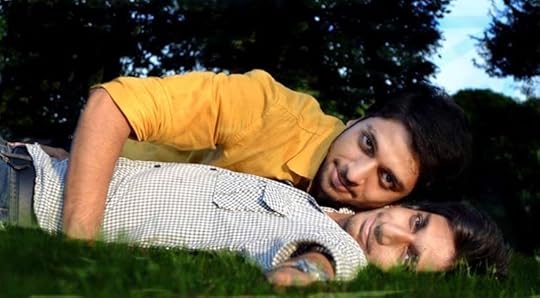
“It seemed to [Fahad] that […] he couldn’t remember a moment when he hadn’t thought of Abad, memories of the place shimmering through every memory since he’d left: the beaten brass of its fields, its sky silvered like a platter, its searing breeze. But to remember what wasn’t his, to remember something he didn’t have and could never have again, it was a different remembering, it was remembering loss, loss that recurred endlessly…”
Fahad braced his back against his seat, an arm against the door, his heels against the mat in the seat well, twisting his head out of the sunlight through the window. The dampness in the copse, the sweet smell of the mulch, the dew that glittered at the points of leaves like the whites of eyes in the dark, a breeze tickling the hairs on the back of his neck, the ice cream sundaes at that hotel swirled with bright colour, crimson and purple and yellow, studded with shards of ice sharp as glass, and the inevitability of Ali, who was the logic that ordered everything before him and the only possible outcome.
I had been writing a lot of short fiction. I shifted to writing the novel as part of a PhD [GY-GR comment - at the UEA], and my supervisor kept reading the chapters and telling me that they felt like short stories. Her argument, which I still don’t know I completely agree with, is that the energy of a sentence in a short story is different to the energy of a sentence in a novel – that, somehow, the sense of imminent foreclosure in a short story feeds down even to the level of a sentence. I thought, why don’t I separate the novel into parts so they feel like novellas? It also engaged with the way I wanted to tell the story. I wanted to show these men at very different stages of power in their lives.
In the student’s story, a girl was raped in a field by an itinerant worker.The group discussed in detail how the student had choreographed the scene, and Fahad found himself remembering Abad again— the water thick as mud, the grey rocky earth, the dust that clouded up around you as you walked so that you appeared from it as if conjured by a sandstorm— but each thought shimmered both with warning and with poetry, luring him nearer like the dashing rocks of the Symplegades. What if, he wondered, for a terrible moment, he’d written nothing in so long because he hadn’t written this, because he’d written always so far away from himself, as though tossing a grenade?
Abad is just an idea, he told himself, whether the land is in your name or not. If you sell it, you can think of it still, as you have all these years. Return to it, even if only in your head, and it will be as much yours as anything has ever been. But have you really thought of it at all? It seemed to him that he had, he had, that he couldn’t remember a moment when he hadn’t thought of Abad, memories of the place shimmering through every memory since he’d left: the beaten brass of its fields, its sky silvered like a platter, its searing breeze. But to remember what wasn’t his, to remember something he didn’t have and could never have again, it was a different remembering, it was remembering loss, loss that recurred endlessly and now the thought prompted him to remember loss after loss: that last idyllic summer at Oxford, Mike, a cobbled hillside in Crete, their sweet old brandy- coated cocker Booze, Alex at the very start, the little girl they hadn’t adopted, everything he thought he’d be and have.


