In the summer of 1965, the Los Angeles neighborhood of Watts exploded in a race riot that spanned six days, claimed thirty-four lives, and brought America's struggle with racial oppression into harrowing relief. For Johnny Otis, "Godfather of Rhythm and Blues," the events of that summer would inspire one of the most compelling books to ever explore that fateful August in Watts. Originally published in 1968, Listen to the Lambs grew from a letter Otis wrote to an expatriate friend during the days following the riots. Otis moves back and forth between Watts and his own childhood to reveal an alternative history of the riots. Equal parts memoir, social history, and racial manifesto, Listen to the Lambs is a moving witness of collective turmoil and a people for whom the long-promised American Dream was nowhere to be found.
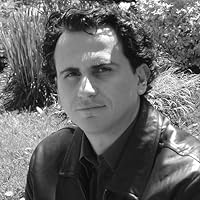
Johnny Otis (born Ioannis Alexandres Veliotes) was an American musician, bandleader, composer, arranger, vocalist, talent scout, disc jockey, record producer, television show host, visual artist, preacher and civil rights activist.
This is an excellent book, not so much because it's well-written (because, frankly, it could have been edited to be more fluid/coherent) but because its author, Johnny Otis - who's known as a drummer, bandleader, recording artist and DJ - is actually a piercingly insightful social commentator and critic. Amidst the many stories of his life, Otis offers myriad observations about our society, about the relations between the races and about the culture of the 1960s and its upheavals. All of this adds up to an enjoyable (if a bit meandering) experience.
Otis is a truly unique person: born Greek-American, he nonetheless identified and chose to live as Negro in the 1940s and beyond. This makes his observations that much more trenchant, as his is a chosen suffering. His empathy for his "fellow" Negroes is palpable, especially since he understands both sides of the issue. Along the way of sharing his experiences, he also offers assessments of people and society that are often just stunningly revealing and moving. And he is supposed to be "only" a musician. In truth, he is actually one of the most underappreciated social critics of the 1960s.
The book is not perfect, as its chapters vary widely in content and interest. Yet its strengths more than make up for this minor flaw. It's a small price to pay for some of the most insightful commentary on race in the mid-20th century, the riots of the 1960s, the experience and mindset of the poor and oppressed urban Negroes of that period, etc.
Accordingly, I recommend this book highly. It will appeal greatly to fans of jazz and rhythm and blues music, modern American history, (urban) sociology, critical race analysis, etc. It will also appeal to anyone interested in empathetic and piercingly insightful social commentary and an (urban) insider experience of the 1960s.
A compelling and prophetic memoir. Written in 1968, ostensibly as a reflection on the Watts riots of 1965, it could have been written much more recently. Recommended to anyone with an interest in race issues in the US or elsewhere.
I was 10 years old, living in Inglewood (a city surrounded by Los Angeles) when the Watts riots occurred. Inglewood was very White and I am White. I’ve been reading various books about the history of the times I grew up in written by Black authors in order to get a different perspective on the events than I got from White media, White authors and my White fiends and family. This book is mostly a memoir of Johnny Otis relating his experiences with racism in his travels as a musician and as a resident of Watts. Otis also gives some analysis, acknowledging that he speaks only for himself, of the background, causes, and potential outcomes from the riots. The book is interesting but didn’t offer a lot of new information of the type I was looking for. Still I recommend it for fans of Otis and for some of the quotes and first hand accounts from people in the community of Watts.
Despite being written nearly 60 years ago, this part-memoir part-political statement on the issue of race in this country sadly still resonates today. Take Otis’ description of the Watts riots and put it in Minneapolis after George Floyd’s murder in 2020 and it is still accurate. Have we really done anything to change the systemic racism and blatant bigotry in our country?
Great read about how underground music cuts across culture and brings class and race into play. Johnny Otis was born into a Greek immigrant family that settled in Cali. He was obsessed with blues and jazz. In Listen to the Lambs, he recalls playing with his band in LA and he also describes road trips across the country. Recounts run-ins with Jim Crow, his background and his engagement with African-American culture, and also gives an on-the-ground look at zoot suits and later the LA riots. Most telling, he makes sharp analyses of the class and race problems he and his fellow musicians were hemmed in by, the very one they wanted to overturn.
Johnny Otis provides a somewhat unique perspective of the riots in Watts. This is a particularly eye-opening piece for anyone who hasn't studied racism in America during this time period. There were more than a few instances of Otis recounting stories that didn't fit too well with the narrative towards the end, but the overall message was strong. His predictions towards the end of the book are particularly fascinating since we can see where he was right and where he was very, very wrong. I would recommend this specific edition in case you end up reading this since the foreword provides some solid background for who Johnny Otis was and why his opinion should be even remotely relevant.
Written in response to the Watts riots, this book contains some first-hand accounts of the riots, but mainly consists of Johnny Otis reflecting on earlier episodes in his life. Most of these anecdotes tie into his views on race relations in the US. He pulls no punches analyzing these relations and the causes of the Vietnam War, and gives a bleak prognosis for the future of blacks in the US.