Come along on an informative, whirlwind tour of urban species—from intelligent crows to backyard lichens—and discover that you are surrounded by wild nature, even in your own backyard.
When biologist Hanna Bjørgaas spots a fairy cup lichen in Antarctica, she is surprised to recognize it from her own backyard in Oslo. When she returns home, she embarks on a journey into urban nature, visiting city parks, cemeteries, and concrete rooftops to investigate the species that live in urban spaces. Along the way, she meets corvids, songbirds, ants, pigeons, bats, sparrows, fungi, and linden trees—and the experts who study their surprising abilities to survive, and thrive, in the city.
As Bjørgaas discovers, urban nature—and its unique mixture of species that have never lived together before in Earth’s history—is valuable. More than half of the world’s human population lives in densely populated areas—and plants and animals have followed us into cities. Secret Life of the City invites us to pay more attention to the sounds, sights, and smells of urban nature right outside our door.
A treasure trove of fascinating flora and fauna, this wonderful book offers a plea to save our city plants, animals, and fungi before we lose them, too.
Bjørgaas takes the reader on a fascinating journey to examine how a variety of organisms have adapted to and even thrive in cities. I like that these are examples from Norway (where the author lives), instead of the usual UK/USA stuff. Bjørgaas has a gentle, easy-going, accessible writing style. I found the book interesting, but a bit superficial for my taste (I wanted more!). But, this is still a lovely reading experience that encourages the reader to slow down a bit and take a closer look at what's around them.
Other Recommended Book: ~Darwin Comes to Town by Menno Schilthuizen
This was a fascinating and accessible exploration of the city's effects on nature. Some fun anecdotes included birds in the 90s frequently incorporating the Nokia ringtone into their birdsongs, ants perpetuating a toxic relationship with aphids, and the ability for crows to remember the face of their enemy and pass this info down for generations.
"It began with a yellow-orange spot. I was standing opposite the penguin colony, on a rocky outcrop jutting up from the snow a few hundred yards above the shore. I looked a bit like a penguin myself..."
Secret Life of the City was a nice change of pace from many of the books I typically read. I was in the mood for an easy-going, light-hearted book, and this one fit that bill nicely.
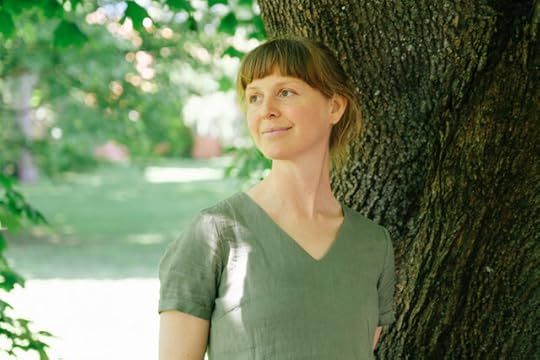
Author Hanna Bjørgaas is a biologist who has worked as a guide in the Arctic and Antarctic, led field courses in Norway, and worked with architects and artists to help communicate the joy of nature to others. She has written articles on popular science and contributed to conferences on ecology and farming.
Hanna Bjørgaas:
As mentioned above, the author worked as a tour guide in Antarctica. She drops the quote above about an orange lichen that thrives there. She's got an easy-going writing style that was pretty relaxo, IMHO. The book also didn't drag, and I felt that it had a decent flow.
After the intro, she talks about the intelligence of crows early on, which then segues into the first chapter about corvid intelligence. She mentions some really fascinating research about crow's ability to recognize faces, and even pass on culturally those that posed a danger to them. Some great writing here.
Some more of the urban life she talks about in the book includes: • Ants and aphids • Seagulls • The Linden tree • Composting; soil organisms • Fungal hyphae; mushrooms • Bats • Lichen • Birds; sparrows
********************
I wasn't sure what to expect from Secret Life of the City. I am happy to report that I enjoyed this book. It was very well-researched, put together, and presented. It would make a great lazy Sunday afternoon read. I would recommend it to anyone reading this review. 4.5 stars.
“It took a voyage to Antarctica, to the ultimate alien landscape, for me to understand how alien I was to the common orange lichen and the seagulls, to the nature around me in what was after all the place I called home.”
I thoroughly enjoyed this book! It is definitely a well written introduction to nature in cities and people that are new to the subject can easily follow along. I found the information to be really interesting and written in a very engaging manner. I loved hearing how the author was basically falling back in love with nature over this year. It is split into many different chapters including pne of birds in cities (mainly crows) and the soil and it's organisms. These were my two favourite chapters but I enjoyed them all.
Overall, a brilliant nature book. I would definitely recommend it and although it isn't incredibly detailed, there is enough information and science to really hold your attention. A great read for nature lovers!
This book might teach you one or two things about the nature around you in the city. But even if you already know these matters, it will definitely help you be more aware and considerate of the city's wildlife. A book that left me with a wholesome feeling of calm, satisfaction, and appreciation.
I‘m so glad I read this book. It wasn’t the most ground-breaking, but it functioned as a beautiful and thoughtful reminder for myself why I am fascinated by „urban nature,“ a reminder to look around more and appreciate (and protect) what lives shoulder-to-shoulder with us. I also learned a couple of new things, which is always nice (though sometimes also tragic), and was reminded of others that I hadn’t thought about in this context. Overall, I would highly recommend - especially to those people that live in a city!
A cute little book about how various species thrive (and suffer) in urban areas. Nature books like these have since forced me to take a little more time when I’m outdoors to notice my surroundings and, even though I’ve been an animal and nature lover my whole life, gain even more empathy and understanding for the earth around me. In particular, I will be paying more attention to the trees, birds, soil, and fungi that I encounter more or less every day. Informative and enjoyable. I recommend.
Secret life turns inward to our human habitats to reinvestigate the creatures and organisms we "control" or take for granted. After realizing her excursion to antarctica felt awkwardly structured and artificial, the author becomes enamored with a lichen species that she comes to realize actually thrives at home in her own city. With this small revelation she decides to start looking for "the wild" within the urban. Crows get their own chapter, as do songbirds (did you know urban songbirds start singing a few hours earlier and that their cries are louder and a higher pitch to be better heard?), gulls, ants, bats, and organisms.
Her main thesis is that the animals that live in the city evolved to be close to humans and have literally evolved to be less afraid of us so you can actually really see them in their element in a way you never can in the wilderness. And that there's an intimacy to becoming familiar with the lives that provides intrinsic value. That nature, essentially, is everywhere we look for it and not simply an abstracted and distant experience mostly seen on trips and television.
A lighter book, with an easy but pleasant writing style. It has a lot of personal anecdote and is mostly more nature writing than science, although there's a decent amount of that as well. Very enjoyable.
I’d say this is a cute read, I was honestly a bit disappointed because I was expecting more of it (in the sense of information to study) but the book is not meant for that, so I can’t really review it badly because of me expecting something else.
That being said, the important part about it is that the reader goes out to their city and do the same thing as Hanna! It is beautiful to see how someone is able to gather this many information about a city’s nature just out of curiosity! Cities kill curiosity for nature and this book is all about bringing it back!
This is a very accessible read for people wishing to learn more about urban nature. The author is based in Oslo but the nature she writes about centres on familiar species to most of us because they are species that have thrived in urban settings. I felt that I had encountered a lot of the information in other books that came before this one, texts that delve a lot deeper into the fascinating world of plants and animals ('An Immense World' is one that comes to mind), so a lot of what she highlighted was not new. In her book, some of these areas are briefly touched on: different light spectrums in bird vision, examples of intelligence and recognition in crows and communication among trees, just to name a few.
One of the areas I hadn't read much about, which is probably why I enjoyed this chapter the most, was 'Stories from the Underground' which focused on all the living things in soil. This topic is pretty unfamiliar to me and so I could appreciate the author's practical approach to writing about it.
I was surprised at a few things given she is a biologist. For starters, feeding bread to birds is a no-no, especially shorebirds like ducks. Bread is so bad for them because it fills them up with non-nutritious foods and can lead to angel wing. Just about every animal she focused on in the book was one that she was pretty averse to: crows, ants, worms, bats — which made me wonder if she even liked nature at all. She squishes an ant between her fingers, which was off-putting. Maybe it would have been more fitting to title the book something like 'Animals I Used to Abhor, But Now Like'? There were other instances in the book where I had a hard time imagining she was actually a biologist and this made me feel a bit distanced from her as the author.
Listened to this audiobook and I enjoyed the podcast-like setup.
I'm definitely in awe of nature's resilience. We usually gravitate to undisturbed places when we think of nature. However, the urban jungle is also another form of ecosystem that is as distinct and fascinating as the others.
It is very interesting how a lot of animals in the city were able to adapt and thrive despite the influence of humans. This was one of the topics in our Animal Behavior class when I was still an undergrad and it still mesmerizes me. One of my favorites was the crow's behavior and adaptations. I have always been amazed by their memory and intelligence. I couldn't love them more.
This is a cute little book about animals and plants that have adjusted to city life. I found her chapter of crows to be especially interesting, mainly because crows are intelligent. For example, crows know how to deceive other birds (by pretending to have found food and distracting them from where food really is) and how know to tell humans part. The seagull chapter shows how seagulls have migrated from coastal areas with declining food supplies to cities where their ability to scavenge keeps them well fed and where flat roofs are ideal nesting areas for gulls. I was less fascinated by the chapters on plants, maybe because I just don't find them as interesting.
This is a light & cozy nature read all about urban wildlife: crows, gulls, ants, lichens, and more. Each chapter focuses on Bjørgaas's miniature quests to learn more about the flora & fauna that she encounters everyday in the city. It's an inviting book that proves you don't have to go on a safari to experience the natural world, and hints at the fact that such a world - unadulterated nature, safe from human influence - is a myth. Despite its length, this book is packed with science and animal facts, but the telling is so welcoming, I hardly noticed how much I was learning.
It was fun and interesting to experience the authors experiences exploring and becoming more familiar with the wild life that lives among us. Her writing style is very approachable and she shared so much knowledge but in ways that were easy to take in.
A lot of the facts I've learned from other sources, but I had never really thought of them all together as part of ecosystem so seeing them in this way was really enlightening and has inspired me to look for wild life experiences of my own.
I found this book informative and fascinating as it talks about nature in the city and each part helped me to discover something more in the world around me even if it talks about Scandinavian. Beautiful illustration. Highly recommended. Many thanks to the publisher for this arc, all opinions are mine
"The Secret Life of the City" looks at nature from an empathetic, intellectual, and scientific standpoint. It is an interesting read and is very well written. The author provides fascinating snippets of information relating to what creatures you might find in an urban environment and ecosystems too from what is found in the soil to what is found in the sky.
I really enjoyed reading the Secret Life of the City. It opened up a lot of reminders for me about all of the nature that lives in cities with us and how many interesting things there are to see if you just stop and pay attention to where you are. It highlighted a lot of problems that need to be addressed but it also gave me a sense of hope.
There was so much interesting information about the organisms all around us, but it wasn’t presented like a text book. The author did a great job balancing the appreciation for the nature in urban settings, while also reminding us not to neglect the nature in parts of the world that we cannot see.
A nice little book that makes you want to pay closer attention to the flora and fauna of your own neighborhood. I was particularly interested in how gulls and sparrows have learned to live in cities since we have managed to make a mess of the natural world.
𝑇ℎ𝑜𝑢𝑔ℎ𝑡𝑠: a beautiful book about discovering nature that is right in your own city/town. You don’t have to travel far away to discover incredible creatures! From crows, gulls, fungi, and plants, I was enchanted with the author’s experience as she learned about the nature around her. She had traveled to exotic locations to observe nature but realized she didn’t know about the nature that lived around her.
Her observations are fun and playful, I particularly enjoyed her time studying crows and ravens. “𝚃𝚑𝚎 𝚊𝚋𝚒𝚕𝚒𝚝𝚢 𝚘𝚏 𝚋𝚒𝚛𝚍𝚜 𝚒𝚗 𝚝𝚑𝚎 𝚌𝚛𝚘𝚠 𝚏𝚊𝚖𝚒𝚕𝚢 𝚝𝚘 𝚞𝚗𝚍𝚎𝚛𝚜𝚝𝚊𝚗𝚍 𝚝𝚑𝚎 𝚖𝚒𝚍𝚜𝚎𝚝 𝚘𝚏 𝚘𝚝𝚑𝚎𝚛 𝚋𝚒𝚛𝚍𝚜 - 𝚠𝚑𝚊𝚝 𝚝𝚑𝚎𝚢 𝚝𝚑𝚒𝚗𝚔 𝚊𝚗𝚍 𝚞𝚗𝚍𝚎𝚛𝚜𝚝𝚊𝚗𝚍 - 𝚒𝚜 𝚊 𝚖𝚎𝚗𝚝𝚊𝚕 𝚝𝚘𝚘𝚔 𝚝𝚑𝚊𝚝 𝚏𝚎𝚠 𝚊𝚗𝚒𝚖𝚊𝚕𝚜 𝚙𝚘𝚜𝚜𝚎𝚜𝚜... 𝚆𝚑𝚊𝚝 𝚘𝚝𝚑𝚎𝚛 𝚜𝚎𝚌𝚛𝚎𝚝𝚜 𝚒𝚜 𝚝𝚑𝚒𝚜 𝚐𝚎𝚗𝚞𝚜 𝚑𝚒𝚍𝚒𝚗𝚐“?
I felt so at peace reading this book and it made me look a lot closer at the animals lurking around my own house.
* gifted - thank you to the author and @greystonebooks for sending me this wonderful book!