Deborah, under suspicion, returns alone to the scene where a gaudy diva was murdered—to the house on the rooftop of a Chicago apartment building. “She reached the roof and emerged at the opening of the parapet wall. Flat, black, and dirty. Chimneys, incinerators, ventilators. The house itself, dark and dingy and passive. Nothing moved. . . . No sound except, away below, the murmur of a passing automobile. . . . Quite suddenly she realized that if she had removed the threat of the police she had also removed their protection.” In a few moments she will face sheer dizzying horror.
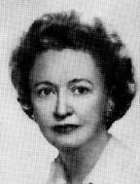
Mignon Good (1899-1996) was born in Lincoln, Nebraska. She studied at Nebraska Wesleyan University from 1917 to 1920. In 1923 she married Alanson C. Eberhart, a civil engineer. After working as a freelance journalist, she decided to become a full-time writer. In 1929 her first crime novel was published featuring 'Sarah Keate', a nurse and 'Lance O'Leary', a police detective. This couple appeared in another four novels. In the Forties, she and her husband divorced. She married John Hazen Perry in 1946 but two years later she divorced him and remarried her first husband. Over the next forty years she wrote a novel nearly every year. In 1971 she won the Grand Master award from the Mystery Writers of America. She also wrote many short stories featuring banker/amateur sleuth James Wickwire (who could be considered a precursor to Emma Lathen's John Putnam Thatcher) and mystery writer/amateur sleuth Susan Dare.
This book kept my interest throughout. I like to read Mignon’s books in order to leave these crazy times for a bit. I find Mignon’s books restful. She has a set formula but I like it . I would like Kindle to get the rest of her books.
Major characters: Mary Monroe, opera singer, roof August Tighe & Pigeon, 3rd floor Deborah Cavert, 2nd floor, & Annie, her cook Juliet Cavert, Deborah's aunt Gibbs and Chloe Riddle, 2nd floor Anthony Wyatt and Francis Maly, 1st floor Alfred & Dolly Brocksley, 1st floor Juanito Murphy, janitor Lieutenant Waggon, police detective
Building/apartment diagram: Roof: Mary Monroe 3rd floor: #5 vacant #6 August Tighe & Pigeon 2nd floor: #3 Deborah & Juliet Calvert #4 Gibbs & Chloe Riddle 1st floor: #1 Anthony Wyatt & Francis Maly #2 Alfred & Dolly Brocksley
Locale: Chicago
Synopsis: Deborah Calvert enters the vestibule of her apartment building to encounter Mary Monroe, a woman she does not recognize. Mary says she has misplaced her keys, and Deborah lets her in. Mary invites her up to her apartment for tea. It turns out her "apartment" is really a separate building on the roof, accessible only by fire escape - from the 2nd or 3rd floors, or from the ground*. The house is set back from all the walls, so is not visible from the ground.
Deborah and Mary go the 3rd floor, exit to the fire escape, and climb to the rooftop house, and have tea. Mary offers to sing for Deborah, if Deborah will accompany her on the grand piano. While doing so, an interior door in the house opens, a hand with a gun emerges, and shoots Mary. Deborah tries to call the police, but the phone is dead. The house intercom rings, and a man says he will be right up. It turns out to be first-floor tenant Anthony Wyatt, who tells Deborah to return to her apartment, and he will notify police.
It becomes evident (from lack of police response) that Wyatt did not call the police, and the body is not "discovered" until much later. Wyatt and Deborah are both afraid of being accused, and conspire to silence and pretend they were not present. Wyatt goes so far as to propose a marriage, so they would be unable to testify against each other.** Deborah accepts the idea, and upon leaving the apartment, discovers the body of Alfred Brocksley in the hallway.
Suspicion mounts against a couple of shady characters: August Tighe and his tough guy "secretary" (actually bodyguard) Pigeon. They occupy the apartment directly below the rooftop house.
Review: The closed world of the apartment house and its tenants (most with secrets) spying on each other reminded me of Cornell Woolrich's short story Rear Window and the subsequent Alfred Hitchcock film of the same title.
This one was a puzzler. Especially the character of Anthony Wyatt: I could never figure out if he was the good guy who be Deborah's ally and love interest, or a bad guy just using her for his own purposes. When we meet him, he is holding a gun and being menacing. He was just a mystery throughout - until the very last page. I thought I had the killer ID'd about halfway through, but ... I was wrong.
The character of Francis Maly definitely gave off gay vibes with his styled hair and stated affections for Anthony, even down to the ambiguous pronunciation of his name (Francis/Frances) - pretty bold for 1934. This misled me into discounting roommate Anthony as the eventual love interest for Deborah.
The reader would do well to keep the layout of the apartment house handy, as the locations of the apartments are central to the plot.
But the biggest mystery of all ... how did Mary Monroe get her grand piano up the fire escape in the first place?
*The fire escape exit doors on the 2nd and 3rd floors are spring-locked one-way in the usual manner, persons can only exit to the fire escape, but not enter the building from the outside.
**This is a common misconception. In reality, the provision that a husband may not be compelled to testify against a wife, and vice versa, known as spousal privilege; only applies to testimony about communications or events that occured during the marriage. Thus, each can be compelled to testify against the other concerning communications or events which occurred prior to (or even after a dissolution of) the marriage. Source: Legal Information Institute. So entering into a marriage just to avoid this sort of predicament would not work, but it makes a good plot element. Erle Stanley Gardner always got it right, but then again, he was a lawyer! He used it a number of times to trip up witnesses.
For a similar rooftop adventure, try The Bungalow on the Roof by Achmed Abdullah (Mystery League, 1931).
Innocuous and naive, the book attempts with any means to provide thrills and suspense. It only manages to stay on the surface of the average crime story. Everything here is misleading which usually is a blessing but in this case is always for worse. After reading the few lines about the opening of the story at the back of the cover, your imagination is carried away through dreaming of atmosphere, plots, shocks and horrors worthy of 'Gaslight', 'The Spiral Staircase', etc. For every element that tries to bring something sinister into the story, there's always an idea that drags any hint of genuine twist down to the boring ground. Wth magnificent premises too early in the century to be fully appreciated by the author, the story should have been written 30 or 40 years later for the right sinister developments.
This one caught the same nerve that the Campion stories pluck; the odd setting, the strange atmosphere, the violently alive characters, the fraught interactions. The setting of the house on the roof is an organic part of the story, not just an odd plot point.
of all the Eberhart stories I've read, this was my favorite.