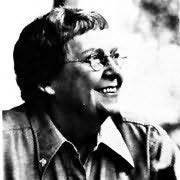
Here, for the first time outside the pages of a small Island newspaper called Georgia’s Coastal Illustrated , Eugenia shares with her worldwide reading public, some of what life was like during the first years in which she and her best friend and fellow writer, Joyce Blackburn, were becoming Islanders. “These short pieces,” Genie says, “include my observations day by day of what it was like, at last, to be at home on St. Simons . We were learning how to be neighbors, after so many years of complex life in the huge northern city of Chicago; learning how to care deeply for people with whom, at first glance, we had little in common. We were understanding what it really meant to have come home .” Eugenia Price, called by many St. Simons’ own “beloved invader,” tells you here about those early years as they were being lived. Her St. Simons Memoir , cherished by thousands, was written from memory and notes in old desk calendars, but At Home on St. Simons illuminates some of the experiences which most changed her—as they occurred. More than fourteen million people have read Eugenia Price’s books which have been translated into fifteen languages. Much of the magic these millions remember so vividly years after the reading, began in the simple, sad, joyous, and absorbing events related to this singular volume. Never before published is a brand new opening chapter, in which Ms. Price attempts to explain—almost as to herself—why, in the face of such drastic change on the once provincial little coastal island, she is still–at home on St. Simons. Her readers do not have to see the Island firsthand, to recognize their own response to her sense of place.
Eugenia Price was born in Charleston, WV, June 22, 1916, to Walter (a dentist) and Anna Price. At the age of ten, she decided she wanted to be a writer and entered a poem in her school's literary magazine. She was raised as a member of the Methodist Church, but had left the church behind by the time she graduated from high school, at the age of 15, in 1932. She decided to leave writing behind to follow in her father's footsteps and pursue a career in dentistry. She attended Ohio University for three years, declaring herself an atheist during this time. In 1935, she became a student at Northwestern Dental School, the only woman admitted that year. She studied dentistry for two years, but writing continued to draw her. In 1939, she was hired to work on the NBC radio serial In Care of Aggie Horn. She continued as one of the writers for the show until 1942. She left NBC, going to work for the Proctor and Gamble show Joyce Jordan, M.D. from 1944-1946. In 1945 she founded her own television and radio production company, Eugenia Price Productions, developing other serials for Proctor and Gamble.
In 1949 Eugenia Price underwent a profound life change, giving up her college atheism to embrace Christianity. She considered a career change, but accepted a position with WGN Radio as writer, producer, and director for Unshackled, another radio serial. The popularity of the show led her to a lecturing career throughout the United States and Canada for several years.
Price began yet another career in the early 1950s when she was approached by one of the owners of Zondervan publishing. The 1953 publication of Discoveries Made from Living My New Life, a chronicle of her newfound faith and the experiences that led her to it, launched Eugenia Price into a new career as an inspirational writer. Other inspirational books followed, addresses issues of importance to women and children and other self-help concerns and urging readers away from advances in psychology and analysis and toward a life based on Biblical tenants. Many of her inspirational books are still in print, a testimony to the comfort and empathy many readers found in her works.
Eugenia Price gained a much wider audience though when she began publishing historical romances set in the American South. These novels were praised as "compelling sagas that blend personal stories of love and tragedy. . . with the dramatic events of a region's history." Her first historical romance, The Beloved Invader, was inspired her visit to Saint Simons Island, Georgia and based on one of the island's nineteenth-century inhabitants. The Beloved Invader was published in 1965 and followed by two other romances, New Moon Rising (1969) and Lighthouse (1971), to form the St. Simons Trilogy.
Her historical romances made Price a frequent member of the best-seller lists and brought her millions of readers. Although she continued to write and to publish inspirational works, it was her romances that brought her the greatest attention.
Eugenia Price died May 28, 1996, in Brunswick, Georgia of congestive heart failure and is buried in the Christ Church cemetery, Frederica, GA. Many of her books remain in print and have translated into 17 languages, charming readers of all ages and nationalities. Her manuscripts are housed at Boston University.
My sister and I visited St. Simons Island after reading the Eugenia Price books based on the island. We even went to Easter Service in the little church. A great book and wonderful place.
Eugenia Price shares several essays on what life is like on St. Simons Island, and how it has changed since she moved there in 1965. A slim but satisfying volume.
I had read this author's life story, so was interested in these columns written about her life after she moved from Chicago to this quaint island off George coast.
A good, if somewhat dated, intro to the history, ecology, and culture of St. Simons Island through the eyes of its most famous chronicler. The island is now much more developed, but the pre-Sun Belt culture is still alive in many parts of the island, particularly on the north end where the full-time residents stay and a semi-unspoiled barrier island ecosystem still exists. As an outsider who discovered St. Simons later in life after "marrying into" my wife's family here, I can relate to a lot of Price's feelings about the island and it's people. This is a collection of columns in Coastal Illustrated rather than a stand-alone book, so some of the themes can get repetitive, but since it's such a short read, that's a mild complaint. If you live on or frequently travel to St. Simons, this book will help you understand what St. Simons was and sometimes still is.
Pleasant listening, and of particular interest as I have read the author's novels in the past. I have also visited St. Simon's Island now and then, so could envision the places she mentions. Ironic that her writing about this quiet, charming place actually brought more tourists!
The author describes St Simon's and why she fell in love with the island. A very good read makes me want to visit St Simon's cause I have never been their!!!!!