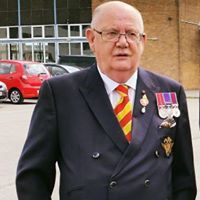
In May 1982, Captain Roger Field, The Blues and Royals, attached to HQ 5th Infantry Brigade, sailed on the Queen Elizabeth 2 as part of the second wave to liberate the Falkland Islands. Surprised by what he saw at Brigade HQ he started writing a diary.
His journey took him to Fitzroy as the Argentinean aircraft struck the landing ships Sir Galahad and Sir Tristram. A chance meeting led to him joining the Commanding Officer of 2 Para for the Battle of Wireless Ridge. When the Paras lost the commander of one of their four The Blues and Royals armoured cars part way through the battle Roger took command of that Scimitar. He fought the rest of the battle from the turret. Next day his Scimitar was at the very tip of the spear as 2 Para and The Blues and Royals led the victorious charge into Port Stanley; Max Hastings hanging onto the back of his vehicle.
‘Revisionist’ in places and always refreshingly candid, this account is unique as it describes the War from the viewpoint of a staff officer, infanteer and armoured vehicle commander. A gripping read.
Soldier Roger Field led his tank crew into Port Stanley during the Falklands War of 1982. This is an interesting first-hand account of the little-known armored advance during the conflict.
For my generation the Falklands War marked a turning point in British history. The prevailing narrative seemed to be that Britain was destined to become a second-tier player on the world stage and that the country no longer had the ability to project its power far beyond its shores. By invading the Falkland Islands, the Argentinian junta headed by President Leopoldo Galtieri created a cause célèbre which was to have profound implications for Britain, domestically and internationally. The retaking of the Falkland Islands by the British armed forces was a magnificent feat of arms and the spirit of resurgent national pride that ensued was personified by the British Prime Minister, Margaret Thatcher, who received a massive boost in public support, enabling her to lead a programme of transformational change - albeit not without controversy. This book, however, is not about the big picture - it is a frank and visceral account of the actual fighting.
In May 1982 the author of this book was a Captain with the Blues and Royals, attached to HQ 5th Infantry Brigade. Appalled by what he observed at Brigade HQ during the voyage down to the Falklands Islands on board the converted liner, QE2, the author started to write a diary. It is this diary along with the author's first-hand recollections which form the basis of this book. Time has not softened the author's low regard for the 5th Brigade leadership. Brigadier Tony Wilson passed away in 2019 and whilst this reviewer has not mined other sources, it is perhaps telling that Wilson was the only senior British Officer not to receive any honorific recognition of his service during the conflict. As the battle for the Falklands unfolded a chance meeting with the Commanding Officer of 2 Para created an opportunity for the author to take command of one of four Scimitar AFVs during the assault on Wireless Ridge. His admiration for the men who fought their way across the hills in front of Stanley could not be greater and stands in contrast to his contempt for those whose poor planning had led to losses and mistakes - including the disaster that befell the men of the Welsh Guards at Bluff Cove.
Forty years have passed since the Falklands War ended, and with the passage of time - and the release of hitherto confidential documents - it is now possible for historians to examine the conflict with a degree of impartiality. Clearly, the result was not a foregone conclusion. One can critically examine the strategy and tactics which were used but as is so often the case, it was the morale, professionalism and offensive spirit of those 'at the sharp end' that was the decisive factor. It is often beholden on the veterans to articulate this and Roger Field's candid memoir will go some way to reminding us that it is the reaction of a man under fire that can often make a difference, even if there are major shortcomings in the planning that preceded the action. The author ended the war 'at the tip of the spear' as 2 Para and the Blues and Royals led the victorious charge into the capital of the islands, Stanley. If you want to know how the Falklands War on the ground felt, in its raw intensity, then this is the book for you.
I have just finished reading a delightful and surprisingly insightful text, provided to me in the form of an ARC by its publishers, Pen and Sword, entitled "Scimitar Into Stanley: One Soldier's Falklands War" by Roger Field. The author was a young officer in the British expeditionary force sent to repel the Argentinian invaders in the Falklands War. The book is based largely on the author's notes, taken during his service in the war. As this genre of literature goes, and largely because of the author's insights into the context of this war and his role in it, examined both contemporaneously through his "diary" and through his long life since then, it is a remarkably candid and well informed look at his experiences and how they fit into a specific time and place as well as what he has made of them since that time. The key here is both the importance of this conflict to the United Kingdom and the sardonic and often enormously amusing point of view of the young officer and the man he has become. I found his elucidation of British military traditions in the deep shadows of a lost empire both funny and often poignant. Further, while the text is no traditional military history of the Falklands campaign, and if that is what you are looking for this is not the place to start, it is, nonetheless, enormously and rather startlingly enlightening in its discussion of one mans experience of a very unique military campaign. Although Field goes to some lengths not to make too much of his own role in this bit of history as theater, it is worth keeping in mind that his role in these events and contribution to the British victory is significant indeed. He was very well placed in events on the ground to chronicle the efforts of the various components of the British military as a kind of inside observer of their struggle, and this, as much as anything else, gives the text its uniquely prescient importance as an historical document. It is a quick read, and one very situated in the late twentieth century, but the author's humanity shines through on every page, and it truly is a delight.
Roger Field may have made his career as a lawyer, but the man definitely has a gift for writing as well. In "Scimitar into Stanley", he has produced one of the best war memoirs I've read, combining an ability to describe confusing situations very clearly and effectively with wit, humour and a clear throughline of humanism.
Field served first as a radio watch officer, then a liaison officer between British paratroopers and Scimitar armoured cars, and finally as an armoured car commander during the short but eventful Falklands War. In the book he recounts the full story from the moment the Falklands were invaded, through the confusion and terror of the war, to his difficulty in transitioning back to a peacetime society, difficulty in relating to civilians, his struggles with post-traumatic stress and his disillusion with the army after all his experiences.
The aspect that really lifts "Scimitar into Stanley" above most other war memoirs I've read is the raw honesty. It appears that writing the book was a cathartic experience for Field himself, allowing him to finally honestly and openly explore and expunge some of the demons he'd carried with him for 40 years. He explores the confusing and scary realization that he actually quite enjoyed the experience of war, and even the act of killing. He discusses openly the pain of losing friends, the shame of trying to deal with his trauma in a society and peer group that was anything but receptive or accepting of anyone having it. He does this all in clear and understandable language that all feels very true and real.
It's a wonderful book, and wholeheartedly recommended to anyone, and definitely to everyone who ever served, because even those who went through a peacetime military service will definitely recognize the frustration and institutional insanity of modern military life.
A well done account of the war in the Falklands. It was interesting to read of the events that occurred. The story was well told and held my attention. A definite must read for those who enjoy this type of story.
Thank you to #NetGalley for the ARC in exchange for my honest review.
This account simply confirms what many in 5 brigade all ready knew, but also combines the story of one officers war, it makes for good reading and confirms that sometimes there is more than one enemy but the British spirit will shine through.
Mr. Jones has written a very enjoyable collection of short stories set in the Lovecraftian style and mythos. This was very enjoyable for fans of Lovecraft.