Recounts the role of the United States in World War II at sea, from encounters in the Atlantic before the country entered the war to the surrender of Japan
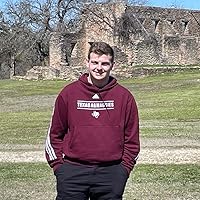
Samuel Eliot Morison, son of John H. and Emily Marshall (Eliot) Morison, was born in Boston, Massachusetts, on 9 July 1887. He attended Noble’s School at Boston, and St. Paul’s at Concord, New Hampshire, before entering Harvard University, from which he was graduated with a Bachelor of Arts Degree in 1908. He studied at the Ecole Libre des Sciences Politiques, Paris, France, in 1908-1909, and returned to Harvard for postgraduate work, receiving the degree of Doctor of Philosophy in 1912. Thereafter he became Instructor, first at the University of California in Berkeley, and in 1915 at Harvard. Except for three years (1922-1925) when he was Harmsworth Professor of American History at Oxford, England, and his periods of active duty during both World Wars, he remained continuously at Harvard University as lecturer and professor until his retirement in 1955.
He had World War I service as a private in the US Army, but not overseas. As he had done some preliminary studies on Finland for Colonel House’s Inquiry, he was detailed from the Army in January 1919 and attached to the Russian Division of the American Commission to Negotiate Peace, at Paris, his specialty being Finland and the Baltic States. He served as the American Delegate on the Baltic Commission of the Peace Conference until 17 June 1919, and shortly after returned to the United States. He became a full Professor at Harvard in 1925, and was appointed to the Jonathan Trumbull Chair in 1940. He also taught American History at Johns Hopkins University in 1941-1942.
Living up to his sea-going background – he has sailed in small boats and coastal craft all his life. In 1939-1940, he organized and commanded the Harvard Columbus Expedition which retraced the voyages of Columbus in sailing ships, barkentine Capitana and ketch Mary Otis. After crossing the Atlantic under sail to Spain and back, and examining all the shores visited by Columbus in the Caribbean, he wrote Admiral of the Ocean Sea, an outstanding biography of Columbus, which won a Pulitzer Prize in 1943. He also wrote a shorter biography, Christopher Columbus, Mariner. With Maurico Obregon of Bogota, he surveyed and photographed the shores of the Caribbean by air and published an illustrated book The Caribbean as Columbus Saw It (1964).
Shortly after the United States entered World War II, Dr. Morison proposed to his friend President Roosevelt, to write the operational history of the US Navy from the inside, by taking part in operations and writing them up afterwards. The idea appealed to the President and Secretary of the Navy Frank Knox, and on 5 May 1942, Dr. Morison was commissioned Lieutenant Commander, US Naval Reserve, and was called at once to active duty. He subsequently advanced to the rank of Captain on 15 December 1945. His transfer to the Honorary Retired List of the Naval Reserve became effective on 1 August 1951, when he was promoted to Rear Admiral on the basis of combat awards.
In July-August 1942 he sailed with Commander Destroyer Squadron Thirteen (Captain John B. Heffernan, USN), on USS Buck, flagship, on convoy duty in the Atlantic. In October of that year, on USS Brooklyn with Captain Francis D. Denebrink, he participated in Operation TORCH (Allied landings in North and Northwestern Africa - 8 November 1942). In March 1943, while attached to Pacific Fleet Forces, he visited Noumea, Guadalcanal, Australia, and on Washington made a cruise with Vice Admiral W. A. Lee, Jr., USN. He also patrolled around Papua in motor torpedo boats, made three trips up “the Slot” on Honolulu, flagship of Commander Cruisers, Pacific Fleet (Rear Admiral W.W. Ainsworth, USN), and took part in the Battle of Kolombangara before returning to the mainland. Again in the Pacific War Area in September 1943, he participated in the Gilbert Islands operation on board USS Baltimore, under command of Captain Walter C. Calhoun, USN. For the remainder of the Winter he worked at Pearl Harbor, and in the Spring
There’s a great line from the movie Gettysburg that goes “You certainly do have a talent for trivializing the momentous and complicating the obvious.” That’s this entire book. I know that this series was meant to be an official history and not a flowing, sweeping narrative, but I can’t help feeling like the first could have been achieved along with the second.
The first 75% of this book is one of the most boring things I have ever read in my life. I usually fly through books but, I kid you not, there were times where I could only read one or two pages before having to put this book back down again, it was that eye-wateringly boring. I was hoping this series would be the equivalent of Shelby Foote’s The Civil War: A Narrative (while that trilogy is riddled with errors, it is one of the most entertaining sets of history books out there). Instead, this feels like a dry recitation of a bunch of after-action reports.
So much time is spent on discussing the specifics of every landing and every submarine and every destroyer escort that the book really gets bogged down. On the other hand, the Battle of the Philippine Sea, the greatest naval-air engagement in history, only gets about 47 pages here while Morison just goes on and on about each individual island around New Guinea. It often feels like more of a reference book than a true history. There are occasionally some good anecdotes thrown in but they are few and far between. And truly I have to ask: what the hell is the point of going on and on and on about ships changing course and their exact heading if there are maps that list all of this information provided in the book?
There are no personages to relate to in Morison’s history; this book is entirely event driven. Someone’s name might be related to an action but you get little beyond hearing about how great or brilliant Spruance or MacArthur were. History disconnected from humanity is not, in my view, history at all. He includes mini-bios in the footnotes , that’s how little space is given to the decision makers that actually brought about the events described herein.
There are also parts of this book that have aged very poorly. Any of the sections talking about native islanders feel very paternalistic and kind of uncomfortable from a modern perspective. It’s not that Morison comes off as hateful, it’s more like he’s one of those people who would have called Obama “well spoken” or “articulate.” You might argue that this was written in the 1950s and to expect a modern treatment of minorities is unfair. Take just one example to the contrary however: Bruce Catton was publishing books at the same time Morison was and his descriptions of minorities, while perhaps using some outdated vernacular, is oozing with humanity.
In short, it was a mistake to pick this one up. The information is solid but there really is no reason to read this unless you're using it as a source in your own work. Morison’s one volume summation of his history, The Two Ocean War is far more readable, entertaining, and informative than this jumbled mess. Unfortunately I made the mistake of also buying his recitation of the Battle of Leyte so I’ll have to read that at some point too. Ian Toll’s The Conquering Tide also does a much better job at covering this period. World War II was the most brutal war in human history and the men who bravely fought and died to bring freedom to the Pacific deserve a more thoughtful, elegiac narrative than this.
This is another in the History of United States Naval Operations in World War II books and, as such, it's well done, interesting, and absolutely crammed with details.
The first thing I really like is that it has the names of Japanese planes and what the U.S. forces called them.
The book starts out talking about the Pacific Strategy for 1944. By this time in the war, the Japanese forces were giving way, and the march to Japan had begun. The Marianas were picked to attack as being on the inner perimeter of the Japanese defense zone. The Japanese much earlier had figured they would take a bunch of countries, then establish a defense perimeter around that area and just hold on. It didn't work, as the U.S. first attacked and took the outer perimeter area, and now was on the move to attack the inner perimeter area.
The U.S. plans for this stage including taking or neutralizing Hollandia, Truk, Caroline islands, Saipan, Tinian, Guam, and Mindanao.
The next section deals with submarine patrols, which is an area which doesn't always get as much attention or credit as it should. In 1943, for example, subs took out 12 Japanese warships and sunk 296 ships carrying supplies and/or troops. The destruction of the merchant shipping dealt a very serious blow to Japan.
The next section deals with New Guinea, Hollandia, and other areas, and then continues with various other specific battles.
Something the book points out that is very interesting is how severely the Japanese suffered from a fuel shortage, largely brought on by the effectiveness of U.S. submarines and planes. They no longer had enough fuel for extensive naval maneuvers, even though, over and over and over, they kept planning on a "decisive battle" to once and for all destroy the U.S. naval forces.
Another catch-phrase they kept using was "The fate of the Empire rests on this battle." It got to the point where almost every battle was being referred to that way. The Japanese would say it, lose the battle, the U.S. would attack somewhere near to Japan, and the phrase would be used again.
The book also goes into the Marianas Turkey Shoot, a battle where U.S. planes pretty much annihilated the Japanese planes. It was divided into various raids; the first Japanese raid losing 42 out of 69 attacking planes (61%). Raid II saw 97 of 128 destroyed (76%). Raid III saw the Japanese lose only 7 planes out of 47 (15%). Some of the planes had returned to their carriers with getting into any fights, though. Raid IV saw 73 of 82 Japanese planes show down, or an astonishing 89%. In the three Raids that saw regular battle, the Japanese lost an average of 75% of their attacking forces. That pretty much ended any actual Japanese air offensive capability. The next form of attack that hurt the U.S. would not happen until the kamikaze raids.
There's a very significant point the book makes:
"Heavy losses do not depress the Japanese as they do most other people-so glorious are the rewards for dead warriors."
The book then moves on to the taking of Guam, Saipan, and Tinian, the island from which the Enola Gay launched to drop the first atomic bomb on Japan