Speculations about the effects of politics on economic life have a long and vital tradition, but few efforts have been made to determine the precise relationship between them. Edward Tufte, a political scientist who covered the 1976 Presidential election for Newsweek , seeks to do just that. His sharp analyses and astute observations lead to an eye-opening view of the impact of political life on the national economy of America and other capitalist democracies.
The analysis demonstrates how politicians, political parties, and voters decide who gets what, when, and how in the economic arena. A nation's politics, it is argued, shape the most important aspects of economic life--inflation, unemployment, income redistribution, the growth of government, and the extent of central economic control. Both statistical data and case studies (based on interviews and Presidential documents) are brought to bear on four topics. They 1) the political manipulation of the economy in election years, 2) the new international electoral-economic cycle, 3) the decisive role of political leaders and parties in shaping macroeconomic outcomes, and 4) the response of the electorate to changing economic conditions. Finally, the book clarifies a central question in political How can national economic policy be conducted in both a democratic and a competent fashion?
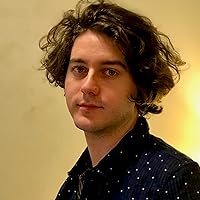
Edward Rolf Tufte (born 1942 in Kansas City, Missouri to Virginia and Edward E. Tufte), a professor emeritus of statistics, graphic design, and political economy at Yale University has been described by The New York Times as "the Leonardo da Vinci of Data". He is an expert in the presentation of informational graphics such as charts and diagrams, and is a fellow of the American Statistical Association. Tufte has held fellowships from the Guggenheim Foundation and the Center for Advanced Studies in Behavioral Sciences.
Tufte currently resides in Cheshire, Connecticut. He periodically travels around the United States to offer one-day workshops on data presentation and information graphics.
Note: Some books by this author have been published under the name Edward Tufte.
The premise of this book is stated early on (Page ix): ". . .I seek to show how certain political variables determine macroeconomic outcomes in a systematic and predictable way. In particular, I provide evidence demonstrating the role of elections and political parties in deciding who gets what, when, and how in the political arena." He notes that the state of the economy has an effect on elections. He also provides some evidence that the party in power will work to "juice up" the economy in an election year. One story: Richard Nixon sending a personal note to all retirees about his administration having increased Social Security payments (coincidentally, the note arrived just before a presidential election, in October of 1972). A golden oldie that still has relevance today. . . .
There are a lot of funny asides, especially about Tricky Dick, between the painstaking proofs of (and in depth explanations of the mechanisms involved with) something of a fairly simple and maybe obvious point, namely, that incumbents sort of bribe voters around election time both with direct payments and with indirect economic stimulation. Not being an in depth statistician, I’m not sure how wobbly the proof is but I do know there are necessarily many small sample sizes and even among those not everything fits the arguments put forth (leaving aside Eisenhower as Tufte unabashedly does). Aside from the main argument, the book does accomplish many good descriptions and summaries of basic (and sometimes not so basic) political and economic (& political economic) ideas, so it is a good thing to read for those less familiar with the general topics, but I doubt many readers of this won’t be familiar. Tufte did subsequently make a name for himself outside of political science, so you never know, though. Speaking of which, there are some good (& pretty) graphs and tables but for me many of them are superfluous when accompanying the text which gets the message across well enough for me. By the end, Tufte somewhat surprisingly comes out on the side not necessarily for bribing voters (or a “strong electoral economic cycle”) but fairly against strong reforms to eliminate this, pointing out that these would make the governing of the economy less democratic and also essentially asking what’s so bad about redistributing wealth to the poorer voters every four years?
Odds and ends:
-Trump was far from the first president to send the populace money and letters with his signature saying he sent them money. Nixon had a pretty funny notice announcing a substantial raise in social security payments.
-Great still applicable quote from FDR in one of the many fun footnotes: “The tears, the crocodile tears, tears for the working man and laboring woman, now being shed in this campaign come from the same Republican leaders who had their chance to prove their love for labor in 1932–and missed it. Back in 1932, they raised their hands in horror at the thought of fixing a minimum wage or maximum hours for labor; they never gave one thought to such things as pensions for old age or insurance for the unemployed. And in 1940, eight years later, what a different tune is played by them: it is a tune played against a sounding board of Election Day. It is a tune with overtones which whisper: ‘Votes, votes, votes, votes.’ This tune is, of course, only a rehash of the tune of 1936, a little louder. In that election year the affection of these Republican leaders for the laboring man also rose to a high pitch. But after Election Day…”
-Some economic advisors to the President reached out to Tufte personally denying they were politically motivated, which he mentions in some footnotes, but disproves.
-“Sleazy” is tossed around to a humorous degree - “Transfers in the 1972 campaign were administered with high political spirit, and part of the flow of federal money came under the heavy-handed influence of the White House “Responsiveness Program.” The aims and methods of that sleazy program have been captured in some 1,200 pages of memoranda put into the exhibits of the Senate Watergate Committee. Although the documents must be heavily discounted for braggadocio, they do catalogue (much like Don Giovanni’s Leporello) the range of policy instruments available, at least to those willing to go all out.”
“The operating assumption made by those who undertook and secretly pursued these mistaken policies was, I believe, absolutely correct: sleazier efforts at manipulating economic policy for short-run advantage cannot survive public scrutiny.”
-“The extremes of 1972 were special because Richard Nixon was special.”
-“[Differences between the Republican and Democratic Party platforms of 1976] extended to typographic style and how best to misquote Thomas Jefferson.”
- I wonder how influential this (and the other contemporary and future political science work covering the same topic) has been on public policy. I know I hadn’t heard of the formal political or electoral economic cycle before reading this, but I’d bet it’s more discussed among politicians even if they aren’t familiar with the academic work studying it. I know the fortunate blunder at the end of 2020 when McConnell didn’t send more stimulus checks to the public before the election (or even before the Georgia run-off) almost certainly cost the Republicans a lot of votes, when even Trump could see checks were the obvious move. So it seems there are exceptions, as the book notes about Eisenhower and Ford.
"President [Kennedy]...now agreed...on the need for a complete military withdrawal from Vietnam. 'But I can't do that until 1965, after I'm reelected,' Kennedy told Mansfield . . . 'In 1965, I'll be damned everywhere as a Communist appeaser. But I don't care. If I tried to pull out completely now, we would have another Joe McCarthy red scare on our hands, but I can do it after I'm reelected. So we had better make damned sure that I am reelected.'"
-Kenneth O'Donnell, quoted by Edward Tufte, Political Control of the Economy