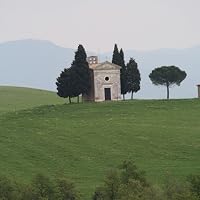
At once a marvelous visual record, a valuable introduction to the poet's work, and a stimulating companion for those who already know and love it, Images of Ireland, with the superb photographs of Alain Le Garsmeur, makes Yeats' Ireland come to life. The photos accompany a succession of key extracts from the poet's verses, plays, essays, and memoirs--passages that evoke the landscape he loved. Includes a brief chronology of Yeats' life. 44 color photographs, 53 duotones.
William Butler Yeats was an Irish poet and dramatist, and one of the foremost figures of 20th century literature. A pillar of both the Irish and British literary establishments, in his later years Yeats served as an Irish Senator for two terms. He was a driving force behind the Irish Literary Revival, and along with Lady Gregory and Edward Martyn founded the Abbey Theatre, serving as its chief during its early years. In 1923 he was awarded the Nobel Prize in Literature for what the Nobel Committee described as "inspired poetry, which in a highly artistic form gives expression to the spirit of a whole nation." He was the first Irishman so honored. Yeats is generally considered one of the few writers who completed their greatest works after being awarded the Nobel Prize; such works include The Tower (1928) and The Winding Stair and Other Poems (1929).
Yeats was born and educated in Dublin but spent his childhood in County Sligo. He studied poetry in his youth, and from an early age was fascinated by both Irish legends and the occult. Those topics feature in the first phase of his work, which lasted roughly until the turn of the century. His earliest volume of verse was published in 1889, and those slow paced and lyrical poems display debts to Edmund Spenser and Percy Bysshe Shelley, as well as to the Pre-Raphaelite poets. From 1900, Yeats' poetry grew more physical and realistic. He largely renounced the transcendental beliefs of his youth, though he remained preoccupied with physical and spiritual masks, as well as with cyclical theories of life. --from Wikipedia
The photos were beyond amazing and they clearly matched Yeats' poems. I really took my time appreciating these photos and it almost felt like they were speaking to me in a sense. Ireland is beautiful! My favorites were the black and white photos of places he used to visit. I also fell in love with the photos of abandoned houses and churches that played a huge role in his life. I always have a soft spot for these.
I was really excited to read this book and this is also my first time reading a brief biography of a Nobel prize winner. I would say he lived an interesting life. However, I failed to connect with most of the poems as it is my first time reading about Ireland, its culture, and traditions, let alone in the 20th century. Also, this book is published in 1991, I find that amazing too. I had fun!
"...We spent an hour upon the sunny shore and I said, 'I would like to live here always and perhaps someday I will.' I was always discovering places where I would like to spend my whole life." from Reveries over Childhood and Youth. This is my favorite excerpt and it is referring to Lambay Island in Dublin.
I really enjoyed the prose and poetry of W.B. Yeats included this book alongside beautiful pictures of different places in Ireland that inspired the great Irishman's work. It brought to my mind many rich memoires made in Dublin, and other places on the Emerald Isle.
Beautiful book given to me by the Enterprise Ireland folks when they finished the program I put together for them at Stanford. Gorgeous images of many of the places I visited paired with his poetry.
Found this in a Used-Book Store in Cork City, Ireland. The following week, I happened to come upon the church where he is buried in Drumcliffe, County Sligo. Beautiful introduction to the writer and his country. Fine editing in pairing images with text.