Jump to ratings and reviews
Rate this book

Shreela Ray: On the Life and Work of an American Master

Rate this book
This volume examines the poetry, life, and legacy of Shreela Ray, an Indian American poet of extraordinary ability.

299 pages, Paperback

Published January 1, 2021

1 person is currently reading
19 people want to read

About the author

Shreela Ray

4 books
Shreela Ray (1942-1994) came to the U.S. from India in 1960 and attended graduate school at the Iowa Writers' Workshop and SUNY-Buffalo. Her poems appeared in many journals, including The Nation and The Dalhousie Review.

Source https://www.pshares.org/authors/shree....

Ratings & Reviews

What do you think?
Rate this book

Friends & Following

Create a free account to discover what your friends think of this book!

Community Reviews

5 stars
6 (46%)
4 stars
5 (38%)
3 stars
2 (15%)
2 stars
0 (0%)
1 star
0 (0%)
Displaying 1 - 4 of 4 reviews
Profile Image for Cheryl.
531 reviews865 followers
Read
January 23, 2022
Tell me what is green and earth and rain,
what is mud and sky but do not tell me with words.


When I read Shreela Ray I am transitioned in lines, through history and storytelling, transported to places and feelings I never knew. I feel landscapes and earth; I reach for the sea, for a faraway homeland that eludes me, just as it did the poet. And just when I feel like I know which direction she is headed within a poem, I am once again in another place, another emotional setting. I am one with her aloneness, one with her state of flux.

I will write this story for you
on a tortoise shell comb,
where the song becomes
something old and slow and hidden
in the carapace of your tiny
mortality.
(from "Poem for Gawain")

I came across the Unsung Masters Series through an email newsletter. I am often intrigued by the works of obscure writers, particularly women of color, and this series includes "poets you never heard of introduced by poets you love." Kazim Ali does a splendid job of discovering and elevating Shreela Ray's work. Her husband and sons were contacted. Boxes were dusted off and hundreds of unpublished poems reviewed. Her letters to friends are included. She lives again on the page, this "woman of color, a poet writing in a complex context of a global literary heritage that may not have been easily understood by the American poetry readership at the time."

Shreela Ray, born in India in 1942, was mentored by well-known faculty like Frost, and supported by "such giants as Kinnell, Auden and Berryman." Her book of poems, Night Conversations with None Other, was nominated for the National Book Award, but deemed ineligible once they learned she was not an American citizen. She was political, outspoken about Palestinian liberation, and this won her no favors in a world not yet ready for her devotion to such issues. At some point, her publisher refused to respond to her requests and the letter itself is paining.

There is something terrifyingly Kafkaesque about this. My health is completely shot, my will and energy low. I am cut off from work and travel, and have no legal or political clout...


Despite being blackballed and disrespected, Ray maintained grace and dignity that shows in her unpublished poems. They appear autobiographical, some resembling flash nonfiction. Ray struggled with a disease called sarcoidosis, a disease that made it difficult for her return to India. This left her in a state of exile. Her words embody beauty and despair. An allusion to death skirts both poem and prose. I was moved by her unfeigned letters to friends, the amalgam of heartbreak and hope, of culpability and empathy.

When I die...take some of my poems, and translate them into Oriya and give them to the people in Paradeep and Cutack and rent a car perhaps and read them through the streets down to the river.


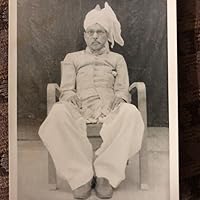
She strove to be a voice for the voiceless. She wanted to be heard and acknowledged. This collection, her family and fellow artists, have made her wish reality.
Profile Image for Jenna.
Author 12 books369 followers
October 18, 2021
a woman even as I am,
malformed, with the bones of a minnow
and an elephant's memory

-Shreela Ray

The fourth book I've read in the wonderful "Unsung Masters" series (the others were Francis Jammes, Catherine Breese Davis, and Wendy Battin), this volume centers on a relatively early, pioneering Asian American poet (1942-1994), who was known to Auden, Frost, Berryman, etc. My favorite poems were:

"Kamala": I love this poem's eclectic energy, which carries it from its ballad-like opening lines ("Where are you going Kamala / little lotus, dark lotus, / so early in the morning?") through its lively evocation of a modern street in India, with its general store that sells the newest Georgette Heyer romance novels (how can anyone not love a poem with a Heyer reference?), a turbulent energy that allows the poem to magically occupy two places at once, to accompany Kamala on her walk to the post office and at the same time be oceans away waiting for her letter to arrive.

"Kafka 2": Here, the speaker reminisces about Berryman and other "elder brothers" and "sisters" in the poetic art, who gave her bleak counsels like "Ours is a task / of infinite loneliness. It's bad / enough for a man, even worse for a woman" and "Go home go home before / this country destroys you."

"The way we are": This poem recounts an incident of racism experienced in Arkansas: "Enter Charlene: / 'The family would prefer you don't come / to Church. Please understand the way / things are in small towns.'"

"No Man's Land": I like how, through its authoritative voice and vivid images ("Wormy apples bounce / onto the road"), this poem miraculously succeeds in achieving universality despite being peppered with stubbornly private allusions the poet declines to explain (e.g., "I...meet the wary disciple and scholar / who credit me with more villainies / than can be handled in a year" -- who are these two unpleasant acquaintances who so annoyed the speaker on the day in question? does it matter?).

"The Road to Puri": An emotionally naked love poem on being an Asian American woman in a relationship with a white American man ("Tonight / I want to sleep with a man / raised on dahl and rice.... // [But] I see you, my Yankee / on your knees... / scattering bonemeal for tulips, / your Dutch hands sifting the coarse dirt,... / my one rose in the enemy dust....").

"Main Street": A surreal, fantastical imagining of what would have happened if the speaker had put Indian bridal crowns in the mail, bringing out the magic in an incident a non-poet might have thought mundane ("Imagine it.... / meteors of sequins, tinsel comets plunging / into the Mediterranean. / And on the savannahs / working men would stop / and unafraid / stare at the sky....").

"Wisteria": The now-adult speaker is reminded by a wisteria tree of a movie starring Waheeda Rehman that fueled her romantic fantasies as a teen ("But dear God, / that was an ancient movie. / I'm in the USA.... / I'm some kind of believer, // but no girl.")

"Snow Buddha" and "A Visit to a Church": These beautiful, moving poems boldly contrast a daughter's love for her frail old mother with her vocal lack of love for the insincere "mavericks" and oppressors of the world. Finding the artifice of a church unfulfilling, the speaker elects to "tiptoe out to where the wind // is fresh of my mother's hands."
Profile Image for AT.
108 reviews1 follower
August 25, 2025
"It is public knowledge./And will be, again..." what an incredible gift to be let into the world of this exceptional writer. thank you to everyone who had a hand in preserving and publishing her work, and all the essayists who contributed to this volume!
Displaying 1 - 4 of 4 reviews

Can't find what you're looking for?

Get help and learn more about the design.