Jump to ratings and reviews
Rate this book

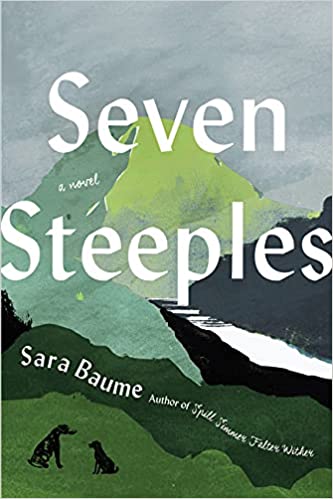
Seven Steeples

Rate this book
A stunning, powerful new novel about a couple that pushes against traditional expectations, moving with their dogs to the Irish countryside where they embed themselves in nature and make attempts to disappear from society.

It is the winter following the summer they met. A couple, Bell and Sigh, move into a remote house in the Irish countryside with their dogs. Both solitary with misanthropic tendencies, they leave the conventional lives stretched out before them to build another--one embedded in ritual, and away from the friends and family from whom they've drifted.

They arrive at their new home on a clear January day and look up to appraise the view. A mountain gently and unspectacularly ascends from the Atlantic, "as if it had accumulated stature over centuries. As if, over centuries, it had steadily flattened itself upwards." They make a promise to climb the mountain, but--over the course of the next seven years--it remains unclimbed. We move through the seasons with Bell and Sigh as they come to understand more about the small world around them, and as their interest in the wider world recedes.

Seven Steeples is a beautiful and profound meditation on the nature of love and the resilience of nature. Through Bell and Sigh, and the life they create for themselves, Sara Baume explores what it means to escape the traditional paths laid out before us--and what it means to evolve in devotion to another person, and to the landscape.

181 pages, Hardcover

First published January 1, 2022

254 people are currently reading
9225 people want to read

About the author

Sara Baume

14 books450 followers
Sara Baume is an Irish novelist.
Her father is of English descent while her mother is of Irish descent. As her parents travelled around in a caravan, Sara Baume was born "on the road to Wigan Pier". When she was 4, they moved to County Cork, Ireland. She studied fine art at Dun Laoghaire College of Art and Design and creative writing at Trinity College, Dublin from where she was awarded her MPhil. She has received a Literary Fellowship from the Lannan Foundation in Santa Fe, New Mexico.
Her books are published by Tramp Press in Ireland and Heinemann in Britain.
In 2015, she participated in the International Writing Program's Fall Residency at the University of Iowa, in Iowa City, IA.

Ratings & Reviews

What do you think?
Rate this book

Friends & Following

Create a free account to discover what your friends think of this book!

Community Reviews

5 stars
516 (18%)
4 stars
929 (34%)
3 stars
866 (31%)
2 stars
312 (11%)
1 star
108 (3%)
Displaying 1 - 30 of 556 reviews
Profile Image for Angela M .
1,456 reviews2,116 followers
March 7, 2022
This is one of my favorite kinds of books, quiet and introspective, beautifully written. A young couple move from Dublin to a secluded place in the countryside seeking a world of their own away from the rest of the world, from other people. Two people living as one hermit’s life. This is certainly an interesting proposition as the two live with bare essentials in a house by a mountain surrounded by the beauty of nature. This was a unique read and while it is a quiet one without much happening, I was captivated by the place and a curiosity about what would happen to them over the years.

Yet, something was lacking for me - an emotional connection to the characters . Perhaps because the lack of dialogue and conversation in this third person narrative. Perhaps because I didn’t find a real emotional connection between them until the very last page. Maybe that distance I felt was the intent of the story and they achieved what they were looking for.

I received an advanced copy of this book from HarperCollins through Edelweiss.
Profile Image for Fran .
805 reviews933 followers
April 26, 2022
**Publication Day**

They met against the backdrop of friends, at the foot of a low mountain, outside Dublin's city limits. They were "...curious to see what would happen when two solitary misanthropes tried to live together...On the day they moved in together-the idea, they might one day...climb the outcrop they looked over and that overlooked them..." "The house was not new to the mountain. It has sat up on its subjacent elevation for seven decades-a drab, roofed box girdled by countryside." In a van loaded with two dogs and scant possessions, Bell and Sigh left extended family and unsatisfying jobs to embrace a quiet life in the Irish countryside. They would live secluded lives depending upon welfare checks and dwindling savings. Did life turn them this way? Bell and Sigh, a desperately awkward couple.

"Their skill sets, in the beginning, were dissimilar. In the beginning, Bell took charge of the worry...black ice...power surges...worried about failing to sufficiently worry...Sigh intervened to take charge of the worry and Bell delegated herself responsibility for the daily slippage of domestic surfaces instead...". Their lives were filled with shared rituals including daily walks with or without dogs, repetitive meals and weekly shopping trips especially for "coffee, kibble, porridge, whisky."

Every evening [when] they walked, Bell and Sigh described to each other the weather, scenery and character of their route...small changes and seasonal changes as well. Every year, for seven years, they realized that the mountain remained unclimbed. Every year, for seven years, their run-down house further deteriorated with the window panes shivering and the heater ceasing. Seen from atop the mountain climbed in year eight, their crumbling existence could be viewed from afar.

"Seven Steeples" by Sara Baume is a beautifully written tome of two lonely misfits who decide to abandon city life for the quietude of a minimalistic existence. The sights and sounds of the natural world and the descriptions of the mountain "awaiting the couple" are exquisitely penned by Baume. Highly recommended.

Thank you Mariner Books and Net Galley for the ARC in exchange for an honest review.
Profile Image for Melissa ~ Bantering Books.
367 reviews2,268 followers
September 21, 2023
How can a book be about nothing, yet also everything? And how can a book about nothing, yet also everything, be so riveting?

I have no clue. All I know is, Sara Baume pulls it off in Seven Steeples, a novel that has little plot, no dialogue, and seems more about the natural world surrounding the two main characters than it is about the characters themselves.

Bell and Sigh move to the Irish countryside to escape society, cutting all ties with family and friends. They rarely leave the house except to wander the land with their dogs and buy the bare essentials; they have no goals other than to climb the mountain they view from their house.

It takes them seven years to do this – to climb the mountain – and as Baume tells the story of their lives over the course of these seven years, we see them live in squalor. The house deteriorates, while their belongings both accumulate and decline. Mice and insects and plants invade their home, about which Bell and Sigh could care less, because they're content in their lives and their clutter.

Again, how Baume glued me to the pages is beyond me, since Seven Steeples isn’t about a whole lot of anything. But I read it with intensity and focus, pausing often to contemplate Baume’s gorgeous phrasing and her meaning. It’s a book that can’t be rushed, which I credit to her ability to convey such complexity with her words.

What’s also interesting is how she instills in the reader a certain aloofness to Bell and Sigh, much of which mirrors their own aloofness towards the outside world. But because of this I never felt I really knew them, seeing as Baume focuses more on their environment, describing in beautiful detail the changes over time to the land and their house without ever dissecting their relationship.

As I made my way to the end, however, I realized this thinking was wrong, and that I did, in fact, know Bell and Sigh. Baume made sure of it, she just did it in a roundabout way. And it then became clear that I didn’t so much read a book about a couple living off the grid as I did a book about two people who love so deeply they meld into one being, in want of nothing but each other.
Profile Image for Sujoya - theoverbookedbibliophile.
789 reviews3,512 followers
April 26, 2022
Happy Publication Day(U.S.)! April 26, 2022

4.5⭐️

Simon and Isabel, “Sigh” and “Bell”, two “solitary misanthropes” move into a home at the base of a mountain in the Irish countryside with their dogs Voss and Pip. Having quit their respective jobs and given up their “autonomous lives” they live on their social welfare checks and dwindling savings - a conscious decision they have taken neither out of any compulsion nor out of any particularly overwhelming discontent with their “autonomous"existence.

“A refuge, a cult, a church of two; this was their experiment.”

As the narrative progresses we see Bell and Sigh withdraw from their friends and attachments with the outside world and settle into a routine – once-weekly trip in their van to buy provisions, evening walks, same seven-day menus, minimal interaction with their neighbor who is a farmer. Everything they own and gradually acquire is old and second–hand. The author describes in much detail, the seasonal changes of the flora and fauna of the terrain, the litter on the streets they walk on, and the insects and the rodents in their home. The sights, sounds and smells of the house and its surroundings are described in meticulous detail as are the feelings and reactions that they evoke in our protagonists. As the seasons change and the months and years pass by we see Bel and Sigh immersed in their own world, their individualities and distinct personalities seem to fade and as they become attuned to one another it is almost as if their identities merge into one.

“And they talked about how small their life had become, almost nothing about how unlikely it seemed that some society other than that of their rooms still existed, out there.”

They are not particularly industrious in cultivating the attached land and depend upon their weekly trips to purchase their necessities. Neither do they show much interest in maintaining their home and do not seem to be bothered with the deterioration of the condition of their home and their belongings accepting the squalor that gradually sets it. At the beginning of each chapter, the author mentions that a year has passed and they are yet to climb the mountain. Only after eight years pass do they climb the mountain and take in the view - the seven standing stones, the seven schools and the seven steeples and reflect on their life together in its totality and its simplicity.

Sara Baume's Seven Steeples is a quiet yet immersive and contemplative novel that is unlike anything I have ever read. The narrative is slow-paced, repetitive and with not much movement - just as the lives of the characters. The prose is beautiful and the imagery is vivid and stunning in its detail. There is a reverence with which the author describes how Bell and Sigh observe and interpret the world around them. What is unique is that there is almost no dialogue (direct speech) in the narrative. At 180 pages, this might look like a quick read but is not so. This is a meditative yet intense read that requires a good amount of time and intent. I did experience a few moments of disquiet in the course of reading this book. I couldn't help but think that while most of us yearn for and enjoy moments of solitude in our busy lives, how would we feel if solitude became a way of life – to what extent can one distance oneself from the world we are accustomed to and for how long? How do we interpret, in the post-pandemic world, the concept of solitude and isolation? I could not help but ponder over our experiences during the pandemic and compare that with the conscious and deliberate decision to distance themselves taken by Bell and Sigh and the eight years of their lives the narrative takes us through. The impersonal and somewhat emotionally detached tone of the narrative succeeds in establishing a distance with the reader – congruent to the distance that the Sigh and Bell aspired to achieve from the world outside by creating a world of their own – “post-family, post-doctrine, post-consumerism”.

I won a copy of this book in a Goodreads Giveaway. I thank the author and publisher for the opportunity to read and review this beautiful novel. All opinions expressed here are my own.
Profile Image for Alwynne.
940 reviews1,598 followers
February 12, 2022
There’s a wonderful intimacy and grace to Sara Baume’s story of a couple who together sculpt an unexpected life for themselves in the Irish countryside. There’s no plot as such, instead Baume follows two self-declared, solitary misanthropes, Bell and Sigh who meet and decide to live together. They leave their homes and their precarious, dead-end jobs in Dublin, discard their past connections, and with their dogs the quiet, diffident Pip and irascible, unpredictable Voss, move to an isolated house in the shadow of a mountain. Baume’s novella follows them over seven years as they gradually establish shared rituals and rhythms, their daily walks, their limited repertoire of meals, time spent with the dogs. Theirs is a deliberately pared-back existence, cut off from visitors and tourists, their house with its crumbling, increasingly eccentric interior gradually forms its own kind of ecosystem; and reflects their desire simply to be, immersed in their surroundings and in each other. But this is no smug, predictable, picturesque rural idyll or polished depiction of city people experiencing the joys of going back to nature. There’s a keen sense of entropy, of the underlying violence, and mess of rural life, the intrusion of holiday crowds, the litter that’s strewn across the landscape, the slaughter of farm animals, rot and dead creatures by the side of every road. But there’s also an awareness of the minutiae of the turning of the seasons which carry their own forms of beauty along with them; the shifting sounds and smells; cycles of consumption and waste and the passing of time. It’s a quiet, subtle, painstakingly drawn piece in which each word counts. The layout of the text itself closely resembles a form of concrete poetry at times, a reminder that the visual is often as significant as the verbal here. A beguiling, meditative yet sometimes uneasy and challenging piece which I will definitely revisit.

Thanks to Edelweiss and publisher Mariner Books for an ARC

Rating: 4.5
Profile Image for David.
301 reviews1,436 followers
June 2, 2022
This is a gorgeous work by Sara Baume that builds from a quirky little tale to a quietly forceful conclusion. The prose is excellent throughout - and the final chapters are pitch perfect without a word out of place. Others have noted the lack of access Baume gives readers to Bell and Sigh's interior life, which is true to an extent, but by the end of the work we know them intimately. This is a book that may be better suited for those who appreciate voice and style over plot or characters. At one level, this can be read as an indictment of the millennial generation's tendency to disengage - or at least those of a certain race and class with the luxury to do so - to live on their own terms and outside the norms of an established community. There are other themes running throughout, some below the surface, in this subtle work.
Profile Image for Gumble's Yard - Golden Reviewer.
2,189 reviews1,794 followers
April 30, 2023
The author was recently selected for the decennial Granta Best of Young British Novelists list (2023 edition).

This novel (her latest) was shortlisted for the 2022 A Post Irish Book Awards Novel of The Year and the 2022 Goldsmith’s Prize.

I have read and very much enjoyed Sara Baume’s two previous novels – her debut “Spill Simmer Falter Wither” and the Goldsmith’s shortlisted “A Line Made by Walking”

Both were books which drew on autobiographical elements (the latter particularly), both involve people who have deliberately distanced themselves from society in a rural setting, both draw heavily on the natural world – and this her third novel draws on very similar ideas, while also sharing with her debut the centrality of a dog (here dogs) as a key character.

The basic, ostensible plot of the book is of a couple (strictly Isabel and Simon but referred to other than once as) Bell and Sigh, who against the advice of their friends move into together into a remote and run-down country cottage with their two dogs – the “spry and devious” terrier Voss and the “hulking and dull witted” lurcher Pip; their move being something of an experiment “to see what would happen when two solitary misanthropes tried to live together”

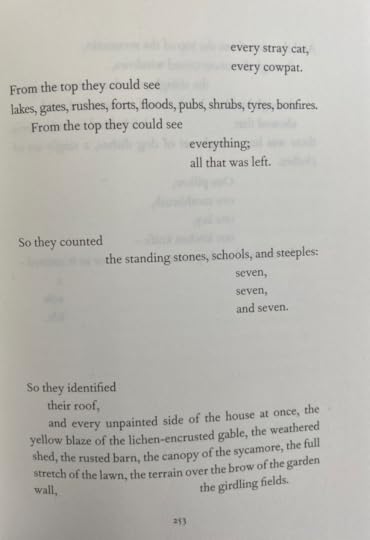
Their cottage has sat for seven decades at the foot of a mountain, from which you can see “seven standing stones, seven schools and seven steeples” – and the book itself is set over seven years, each marking a year of their occupancy of the house – one designed to be transitory but which becomes increasingly permanent.

The chapters are I believe best interpreted as written by the mountain itself as it looks over and observes:

Bell and Sigh’s quotidian life together in all its minutiae or ritual and habit;

Bell and Sigh’s convergence - initially we are told very deliberately of differences between them or different positions that they take, but over time we can see, and it is signalled, that they are increasingly blending not just their possessions, but their clothes and even their attitudes, speech and quirks;

Pip and Voss – often with their behaviour interpreted by Bell and Sigh;

The house and its contents and their gradual but steady decline, deterioration and degeneration;

The local flora and fauna (from the insects in the house, to the trees and plants in the garden and hedgerows, to the mountainside and coast, to the nearby fields of bullocks and donkeys, to the roads and puddles and at one stage a dead robin which of course is immediately reminiscent of the opening of “A Line Made by Walking”);

Bell and Sigh’s gradual disassociation from their past lives – deliberately losing touch with and any social obligations to their previous friends and family, and from the society around them – other than daily interactions with the nearby farmer, necessary ones with their landlord, weekly shopping trips to town and the radio and television programmes they listen to and watch. Rather brilliantly I felt the book somehow inverts the dystopian genre – showing two people living away from society but not due to societal collapse (the ostensible implication is that society is functioning perfectly fine without them – albeit Bell and Sigh do sometimes imagine its dissolution – “And how they talked about how small their life had become, almost nothing, about how unlikely it seemed that some society other than that of their rooms still existed out there”) but due to their own deliberate choice

And much more besides.

Note that the book, with its seasonal observations of nature is very reminiscent of Jon Mc Gregor’s brilliant “Reservoir 13” - although less rhythmically repetitive than collectively progressive as here the four seasons are covered over the seven years (while McGregor repeats the four seasons each year).

But where it more significantly differs is in that while McGregor’s book also observes the workings of a whole community, this book is, in human terms, largely limited to Sigh and Bell - and their increasingly insular existence. It is also rather accidentally an analogy for lockdown life.

Each chapter starts with an observation that Bell and Sigh have still not got around to climbing the mountain and ends with a lyrical and figurative reference to an eye.

And in the last chapter Bell and Sigh finally climb the mountain and we are left with a closing few lines which I think, rather brilliantly, can either be taken as simply an observation on the increasing melding of their lives (the author’s intention) or as causing us to question the entire premise of the novel.

Overall this is another brilliant and beautiful book by Baume and I would even venture that it is her strongest novel to date.

My thanks to the publisher for an ARC via Edelweiss
Profile Image for Robin.
575 reviews3,653 followers
June 6, 2022
Literary fiction goes off-grid

This novella features two characters, Bell and Sigh, who decide to opt out of society by moving into a very remote, dilapidated house in the Irish countryside.

The characters don't miss their lives (or their families or friends) for a moment, but on the other hand, it's hard to say they "thrive" in this new hermitage existence, when what we witness is best described as seven years of entropy. The house becomes more and more dishevelled. They eat the same seven meals each week. They repeat the same conversations. The insect and rodent populations gradually flourish under their roof (uggggggghhhh). They lose their memories of what came before this life. They lose their individuality, too.

If you're thinking, "hmm, that doesn't sound too interesting, Robin," I wouldn't blame you. If not for the absolutely gorgeous writing, this work wouldn't have much going for it. The beautiful writing offers certain aesthetic pleasures, a divine grace. I kept thinking, wow, this is stylish, this could be called poetic prose, how wonderful... if only she had injected some plot, I would be in heaven!

Instead, each chapter details a year of life for Bell and Sigh, and by that I mean the state of their van, or the knobs that have fallen off the stove, or the weather (lots and lots of weather), or the day to day habits of their dogs. There's a lot of focus on inanimate objects and/or natural surroundings.

The enigmatic ending provides quite a talking point, and the potential for multiple interpretations. For me it sort of stands the whole thing on its head. If I interpret it one way, it doesn't ring as psychologically true. If I interpret it the other way, it causes me to question the whole communication of the story from the beginning.

While Sara Baume is undeniably talented, I have to say (and it seems I'm in the minority, going by the reviews I've seen) this form that relies on style rather than substance or any kind of forward lean, plot, or character development, doesn't quite hit a satisfying note for me. Turns out I don't like to be that off-grid in my reading life.

This was lovely, though:

Last thing at night, they switched off the last light. And the blackened house vanished into the blackened hill. And the blackened hill vanished into the blackened mountain. And the blackened mountain vanished into the blackened sky.

ADDENDUM:

The always brilliant David Vann's review said it better than I could:
https://www.nytimes.com/2022/04/26/bo...
Profile Image for Cheri.
2,041 reviews2,966 followers
March 2, 2022

There’s a quietly subtle intensity to this story, one that builds over time. A quiet that is formed by the landscape surrounding this couple who leave Dublin soon after they meet, to live together in the shadow of the mountain. It isn’t as much of a romantic spark that brings them together, but a recognition of their common dislike of noise, busy-ness, and all that comes with living in a city. They met in the summer, and by the time winter came around, they had found a place, left their jobs, family and friends for the peace and quiet found outside of the city. A place of relative solitude.

Their small mountain that overlooks their isolated, somewhat ramshackle home, and watches over all. A mountain that they decide they will climb, someday.

Bell and Sigh brought very little with them, just what they needed and that could fit in a van, along with their dogs Pip and Voss. Over time, old friends reach out, while Bell and Sigh retreat from their old life. They are content to get by on the minimum, and when the minimum they’d had crumbles along with the house, they make do without until they can find a replacement. They live a very minimalistic life, but there are very few complaints. They become attached to this quiet life, and make ‘friends’ with a few people nearby. A farmer who shares milk from his cows is one they feel comfortable with, neither feeling the need for more than a neighbor helping out another neighbor relationship, a neighborly relationship more than friends.

Every year for seven decades the mountain had watched over this place, this home. It continues to watch over them in the years that follow.

There’s such a sense of this place - a place out of time, and these two people who also, at times, seem out of time. There’s so much quiet beauty in the way this is shared, in the everyday moments, and an otherworldly aura to this, at times. They keep so much to themselves, and seem unphased as bit by bit, piece by piece, their surroundings begin to crumble, turn to dust.

This is not a story for those who are seeking action, it is a quietly subdued, subtly beguiling story that transports you to another place, another way of life and offers an appreciation of choosing a path less traveled.


Pub Date: 26 Apr 2022

Many thanks for the ARC provided by Mariner Books / HarperCollins
Profile Image for Henk.
1,195 reviews301 followers
October 11, 2022
Shortlisted for the Goldsmith prize 2022
Entropy, post-consumerism and the kind of eccentric frugality I associate with my grandparents come together on a windswept mountain
And they talked, about how small their life had become, almost nothing

I can very well see this as an arthouse movie, heavily focussing on the environment and on the eyes hiding therein (or at least suggested). And with an uncanny eye for decay and nasty things like ticks. And piss, cause that word was sprinkled into Seven Steeples with abandon.

In the novel format the descriptions felt rather repetitive and I lacked the interior of the two main characters, about whom I can only infer that much, besides an obsession with isolation and chronic procrastination, from the disrepair of the house they dwell in.

Nature is uncaring, unknowable, changeable and slightly menacing, as observed by the author.
In general the observant eye of Sara Baume is keen, we have snarky sentences like:
Rarely cleaner, only temporarily neater - about the main characters cleaning their house, I felt kind of called out.
As is the observation of how Bell and Sigh (or Isabelle and Simon) cling to stuff that really should be done away with:
Items that were not quite rubbish but not quite useful

I feel the horror (or at least something of a more clear resolution) could have turned up a bit more in this novel. The rhythm of the author her words definitely comes across well in the audiobook, but overall I was left a bit untouched, like the mountain central to the book, by the characters and with the below adagium in mind I am off to other books:
There would always be a new place, or an old place that changed
Profile Image for Elyse Walters.
4,010 reviews11.9k followers
December 3, 2022
….this beautiful story reminded me of things I value in my own life with Paul…..
…..the beauty of our home, our oasis yard, nature, and most….our love together.
Profile Image for Paula K .
440 reviews405 followers
June 4, 2023
Goldsmiths Prize nominee 2022
Dylan Thomas Prize nominee 2023

A beautifully written book about a couple that move to a cottage on the outskirts of the Irish countryside. Together with their two dogs, they disappear into nature’s surroundings and disengage from human interaction over a period of seven years.

Gorgeous prose from a gifted Irish author.

5 out of 5 stars
Profile Image for Paul Fulcher.
Author 2 books1,953 followers
November 24, 2022
Shortlisted for the 2022 Goldsmiths Prize and shortlisted for the An Post Irish Book Awards Novel of the Year

Seven Steeples is the latest novel from Sara Baume, one of the UK and Ireland's finest writers and this novel should, if justice is served, feature on many prize lists. Her previous books and links to my reviews are below.

And it is published by Tramp Press, four times (in 6 years) longlisted for the UK's most important book prize, The Republic of Consciousness Prize for innovative writing from small presses, and whose books have won and been featured in many other prizes:

Tramp Press was launched by Lisa Coen and Sarah Davis-Goff in 2014 to find, nurture and publish exceptional literary talent. Tramp is based in Ireland and publishes internationally.
...
People who love books will always want excellent writing. We want to help them get their hands on it.
Seven Steeples tells the story of Bell and Sigh, who meet on a mountain hike, and move in together into a rundown rented rural property, nestling underneath another mountain, one from which you can see seven standing stones, seven schools and seven steeples. They proceed to cut themselves off from their past, their family and friends, even the local community as far as they can:

Gradually they had lost touch with the friends of friends they'd met on the day they climbed the low, pointy mountain, as well as the ones they'd had for years — the ones who would have advised, had advice been sought, that Bell and Sigh should not move in together — because they were each too solitary, with a spike of misanthropy.

But Bell and Sigh were curious to see what would happen when two solitary misanthropes tried to live together.


A refuge, a cult, a church of two; this was their experiment.


The novel was seemingly inspired by Baume's own move, with her partner, to a remote country location, but also how she realised how much of the changing world could be observed on the daily walk she took with their dogs alongside the same road, which was both an unchanging background but which also changed so much over the seasons and years.

Bell and Sigh spend seven full years in the house during the course of the novel, and each chapter takes us through one of those years, with a prologue from the first part year and a epilogue in January of the 8th. Each chapter begins similarly (this from the 7th chapter):

The mountain remained, unclimbed,
for the first seven years that they lived there


I love how the first comma adds to the meaning of the sentence, and the mountain itself remains something of a brooding, watching, presence throughout, with several chapter closing with ominous references to eyes appearing or opening.

And at the core of every ground web, there was
an entrance, an absence,
an eye.


There are shades here of Reservoir 13, with the passing of the years, the annual cycle of both nature and their lives, observed in particular in their walks, and with the device of the 'sevens.' But Seven Steeples is less formally constructed, and Baume employs an effective device of focusing on different parts of the year (a couple of months at a time) in each chapter, so that the chapters on the first years focus on late winter and spring, and, moving through the seasons, the chapters on the later years on late autumn and winter.

Covid-19 passes a dim shadow over the latter part of the novel, Bell and Sigh already essentially living in lockdown, too cut-off from the outside world to really notice the epidemic other than by its impact e.g. on the tourists and second-home owners. Although the novel has some slightly heavy-handed prescient (but only by the characters, the author knows what is coming) comments in the pre-Covid years about Bell and Sigh avoiding colds and flu in all their years in the house, as they rarely come into contact with anyone.

Baume writes very effectively about nature, but the book's strength lies actually in its portrayal of the increase in entropy and squalor of Bell and Sigh's life, including the intrusion of pests and bugs, as they don't so much make-do and mend as make-do, as when action is required and they can't agree: they settled it, as had become their habit, by doing nothing. Indeed there is a conscious decision to live in personalised squalor ... if everything they owned was old and shoddy, even ugly, certainly nearing the end of its useful life, then they would better be able to bear its loss.

This is the sort of novel that reminds me of why I prefer modern life in lively crowded cities to the traditional countryside, although I am not sure if that was the author's intention. And not a novel to promote pet ownership either, the presence of two dogs living in the house adds to the squalor, Bell and Sigh anthropomorphising their acts:

During the first year, they had developed a habit of narrating the dogs, of putting words to their grunts and whines and woofs, providing a voice-over for their probable thoughts.

Voss had a deep, husky voice like a mafioso. He was most likely to be self-declaring. Pip had a high, soft voice like Scarlett O'Hara. She was most likely to apologise.


The prose hovers, very effectively, between conventional and prose poetry, the page layout adding to the impression of the words, for example this from close to the novel's end:

description

As the novel progresses, so do the pronouns, from Bell and Sigh, to he and she and then to they.

The novel's end is clearly a talking point, but not really fair to talk too much about in a review. I will say it wasn't one of those Keyser Soze or Momento moments, but rather suggesting something that the novel had been hinting at all along, rather than a 'reveal' (if it even is one) that sends the reader back to page 1 as to what they may have missed.

But it is an ending that makes one question whether Bell and Sigh are really exhibiting misantrophy or whether it is in fact society which has rejected them, for not fitting in a defined role.


Fascinating and a novel open to wide interpretation, from which different readers will take different things, which is a rare achievement:

Bibliography:

Spill Simmer Falter Wither, Tramp Press, 2015 (novel)
https://www.goodreads.com/review/show...

A Line Made by Walking, Tramp Press, 2017 (novel)
https://www.goodreads.com/review/show...

handiwork, Tramp Press, 2020 (memoir)
https://www.goodreads.com/review/show...

Seven Steeples, Tramp Press, 2022 (novel)
https://www.goodreads.com/review/show...
Profile Image for Linda.
1,652 reviews1,703 followers
April 25, 2022
"We must be willing to let go of the life we've planned, so as to have the life that is waiting for us." (Joseph Campbell)

Bell and Sigh took to the Irish countryside for a reprieve from city life and all its clatter and noise. At best, it would be a temporary break to set their new relationship on wheels headed in the right direction.....to bask in the ebb and the flow of love in its early stages.

So this budding couple packed up all their wordly goods in an old red van with two rescue dogs, Pip and Voss. They approached the seventy year old cottage with eyes wide open. It was in much need of repair and the outer buildings looked non too stable to say the least. The interior was small and cramped and there appeared to be more of a draft inside than out. But when they stepped outdoors, once again, their eyes lifted upwards. There beyond them was the sight of a jaw-dropping mountain that seemed to bow in welcoming them. It would be a challenge over the years to climb it and partake in the panorama of its breathtaking views.

Sara Baume invites us into the lives of these two very adventurous people. They've taken on a pull away from the familiar to the draw of the unknown. We'll experience "a church of two" as they settle into their arc of differences and then into the strength of their drive to remain. Bell is a worrier with superstitious rituals and Sigh is the one with superior patience. And their love for their two dogs with contrary personalities just adds to the unexpected depth of this little novel.

Seven Steeples is filled with the richness of the mundane of everyday life. When you shift from the demands of city life, your focus becomes that of the ever-changing whims of Nature. Both Bell and Sigh see more and experience more than they ever have before in life. And there they find a rhythm and a syncopation in Nature and in their small cottage as they rise each morning. "There was always so much to be thought about, to be decided upon." Beautifully rendered by Sara Baume. A little novella to be savored.

I received a copy of this book through NetGalley for an honest review. My thanks to HarperCollins Publishers and to Sara Baume for the opportunity.
Profile Image for Hugh.
1,293 reviews49 followers
April 14, 2022
I couldn't resist taking a break from the Women's Prize to read this one, Sara Baume's first novel since the brilliant A Line Made by Walking, though there was also the equally impressive non-fiction book Handiwork a couple of years ago.

This book maintains her very high standards, and once again it is more about language, atmosphere and place than plot. Her starting point are Bell (Isobel) and Sigh (Simon), a young couple who leave their lives and friends in Dublin behind to rent a remote and increasingly dilapidated coastal house where their only neighbour is a farmer, living there with only their two dogs for company.

Its structure is oddly reminiscent of Reservoir 13 - each chapter covers a year in their life and the seasons give it structure. The house sits below something that is between a hill and a mountain, and the title comes from a description of its view, which they never get to see.

Another beautiful, haunting book from a very fine writer.

Profile Image for Hilary .
2,294 reviews491 followers
September 27, 2022
2.5 stars. Some parts of this were poetic and evocative. There was something about this that didn't ring true for me. Living this sort of life would mean you would be completely in tune with the seasons but there wasn't enough seasonal detail for me. Until I had finished this, I thought this was a true account, afterwards I found out this was not the case. This reads as an account of two people who opt for a life away from others, a simple life away from so called civilization, just two people at the start of their relationship and their two dogs. Sounds idyllic, who doesn't want to escape to a mountainside cabin and spend all day cooking lovely meals and walking your dogs. I thought this was going to be about two people rejecting a consumer lifestyle and becoming self sufficient. No, the third summer they looked at their potato patch and wondered why no shoots were coming up, then they realised they hadn't planted any. Really? Could anyone be that clueless? This is also disappointing because what the author is thinking of are potatoes that are not in the ground that have 'chitted', these produce spear like shoots, when potatoes are planted in the ground the first thing you would see coming up would be leaves (providing you had planted some of course!)

They constantly mention how they use chipped plates and buy second hand clothes, they make things last, this comes as standard for most people who care about the environment and even some that don't, they don't feel the need to mention it. They had a mouse problem but they had a terrier with a high prey drive, this just wouldn't happen, my terrier would love to have a mouse problem and would know exactly what to do with one. Where did they get their money from? They didn't work but over the eight or so years the book was set they dined nightly on fine foods, wines and spirits. We can all empathise with those who wish to sever ties with unwanted family members but why did they hide when the meter reader came? Is this a story about the need to see other human beings even if you don't like them? This seemed to be saying so.
Profile Image for Kate The Book Addict.
129 reviews295 followers
May 28, 2022
Thanks to Mariner Books of this ARC for an honest review; feel free to send more great books for reviews. 📚 🥰 ❤️
Come move in with Bell and Sigh and their two very different but lovable dogs… Drift through the days and years so eloquently written you feel as though you’re in the most restful dream ever… Feel like you’re being told a magnificently ordinary tale of love with peaceful arguing, filled in with exquisitely detailed nature of lichen and cows and everything as the mountain guards us all…. You’re unburdened by too many character or places; everything is here to inhale… Going to read the author Sara Baume’s other lyrical books, and wish I could always stay guarded by the mountain. ⛰
Profile Image for Jola.
184 reviews442 followers
August 3, 2022
I am still working on Seven Steeples magic although I finished it three days ago. How come this serene, almost plotless, seemingly emotionless book hypnotized me? Is it possible that a novel is a poem at the same time? Apparently yes.

It is also a hymn to nature, a specific one though. The way Sara Baume depicts it is never cheaply sentimental. No mawkishness or straightforward lyricism aboard. Readers expecting musings on cute bunnies hopping around daisies in sweet harmony will be bitterly disappointed. The descriptions in this book are naturalistic, even revolting at times. Nature is portrayed en masse, with its breathtaking beauty but also its cruelty and ugliness.

It is fascinating to witness all the changes the author chronicles, not only the obvious ones, like the incessant march of seasons or ravages of time, but also the evolution of Bell and Sigh's perception of the world, the sharpening of their senses and the changes in their relationship. The sensual acuity of some passages is impressive: the fox’s brush passing through the nettles becomes a deafening noise, the chewing of the cows is the loudest of the night sounds, the sun can be heard rising.

One of the most interesting things about Seven Steeples is that at some point nature takes over and gradually it becomes clear that not only Bell and Sigh observe it but they are being watched by their surroundings, plants and animals. The eye symbol appears quite often. Besides, I liked the way the rhythm of constant changes is reflected in Baume's prose, with all the incantatory repetitions and recurring motifs. Sometimes the layout of the text resembles a poem too.

I found Seven Steeples eerily addictive and felt truly upset when it finished. To be honest, I think I made a mistake reading it hastily, in quick gulps. I guess a tranquil tempo makes it shine even more brightly.


Igor Morski, Eko.
Profile Image for switterbug (Betsey).
936 reviews1,494 followers
September 21, 2023
Irish writer Sara Baume blows me away with every new novel. She doesn’t stand on anyone’s shoulders but her own. I admit, this one has less of a plot or sense of tension than her earlier two novels, Spill Simmer Falter Wither, and A Line Made by Walking, my personal favorite, complete with photographs. Seven Steeples centers on a couple, Bell and Sigh (Simon), their two dogs, Pip and Voss, and their move to a rural house in the Irish countryside, near the sea and a front-facing mountain, leaving their friends and family behind. The seasons change, the years pass, and the two misanthropes become completely cut off from their pasts, and transform into a singular unit.

Throughout the novel, in third person pov, the reader settles into familiarity with Bell and Sigh through actions and habits. We don’t actually hear their words, but we know that they had become “thoroughly infected” by each other’s way of speaking. “They had each caught the other’s inflections and intonations. They slurred the same pairs of words together and identically mispronounced others. They skipped the same conjunctions, maintained the same timbre. By the seventh year, they spoke in a dialect of their own unconscious creation.”

Don’t look for a progressive plot, but rather a turning of leaves, a rainbow in a puddle, waves thrashing, a mountain unclimbed, and the change from night into day, year after year. The narrative is like a prose poem mirroring time and the landscape. Read this when you’re up for a book that essentially captures the distillation of moments and reduced lives of embedded isolation.

“…Bell and Sigh had started to notice how the undersides of soaring gannets against the sea-grey sky were astonishingly white—whiter than the gulls; whiter than the spume. They noticed how the pointed ends of the ditch-twigs had become barred by frost and, higher up, how globs of garish fungus—the sheen and shape of wax-wrapped cheeses—sprouted around the moist joints.
“There would be so much more.”

A must-read for Baume readers and for lovers of literature that exists, predominantly, to form images, to note the passing of time; what becomes one, and what vanishes, myopically, from the essentials.
Profile Image for Laura Rogers .
315 reviews199 followers
April 14, 2023
Congratulations to Sara Baume! Seven Steeples has been shortlisted for the 2023 International Dylan Thomas Prize.

Sara Baume has made a name for herself by writing quiet books (Spill Simmer Falter Wither, 2015; A Line Made by Walking, 2017) about people and usually their dogs who live in the margins. The older I get the more tolerant I am of quiet places, in life and in books, so I was pleased to find a new offering by an author I have enjoyed in the past.
For me, the fundamental question examined in The Seven Steeples is this: Is it better to live alone or among people? In search of an answer, we follow a young man and woman, Bell and Sigh, not quite a couple at the beginning as they move with their respective dogs to an isolated hamlet in Ireland better suited to their introverted natures. Their small house at the base of a small mountain is, like their possessions, well worn with age. The mountain overlooking the house is an ever present omniscient observer. When they arrive, they say they will climb the mountain together but will they?
Everything both inside the house and out, whether exotic or mundane, is fair game for Baume's observant eyes. Along with the passage of the seasons, we follow the predictable and unpredictable changes in the characters, animals, and nature as Bell and Sigh slowly meld their possessions and themselves. Things deteriorate and are either replaced or not. The slow transitions not noticeable in the day to day are laid bare.
As I close the book I feel as though I have completed a pilgrimage of sorts. I sit and imagine the story into the future. The answer to the question? Well, that depends, but clearly not all who live in the margins are lost.

Thank you to Sara Baume, NG and Mariner books for a complimentary copy of The Seven Steeples for my enjoyment and review.
Profile Image for Neil.
1,007 reviews757 followers
April 11, 2022
I’m a bit of a Sara Baume fan. I read and really liked “Spill, Summer, Falter, Wither” and “A Line Made By Walking”. And I loved her book “Handiwork”. So, I was excited when I saw a new book coming out and it jumped immediately to the top of my to-read list.

Here we read the story of Bell and Sigh (Isabel and Simon although those names are only mentioned once) as they decide to live together in a remote and somewhat dilapidated house in the Irish countryside. Their dogs are their only company in this experiment to "see what would happen when two solitary misanthropes tried to live together".

And so we watch the pair as they withdraw from communal life. I highlighted several passages near the start of the book because they really reminded me of living in lockdown:

"Couriers soon knew to sound their horns, drop the package on the welcome mat, and drive away."

"A successful trip out was one in which they met no one."

"One summer night they ventured out to test their immune systems."

"They never considered the possibility that one them alone might catch a sickness and pass it on. All of their air was shared; all of their touches.
You get it I get it, they said. I get it you get it."


And our watching is over all the day-to-day actions of a life that is gradually withdrawing into itself. And over a house that is gradually returning to nature through neglect. It is beautifully and carefully observed including a lot of observations of the natural world as well as of the relationship between Bell and Sigh which gradually evolves from highlighting their differences to seeing them merge together almost into a single entity.

The observations of time passing are very cleverly done. Bell and Sigh spend eight years in the house and we go through each year with them. But, in parallel with this passage through several years, we also go through a single year’s worth of months with references to each month of the year flowing in sequence (i.e. January is mentioned half a dozen times before February is then mentioned a few times, then March etc.).

And then each chapter cycles round beginning with an observation that Bell and Sigh have still not climbed the mountain next to their house and ending with a reference to an eye.

And then there’s the question of how to interpret the ending. Obviously, I am not going to say anything about that here, but there is a lovely element of ambiguity about it that almost makes you want to introduce another cycle into the book by going back to the beginning and reading it again.

So, I really enjoyed reading this book for its lyrical writing and for the observant way it chronicles a relationship. I really enjoyed it for the its references to nature. And I really enjoyed it for the fact that you can look at it in several different ways.

In my memory of the books I’ve read, Handiwork is probably my favourite of Baume’s books, but this one comes a very close second behind that.

A strong 4.5 stars. Who knows what might happen if I re-read it?
Profile Image for Karen.
742 reviews1,965 followers
December 26, 2023
Well… this book wasn’t one I enjoyed…. You know, I completely understand being an introverted person.. but this couple just retreated to a dilapidated house on the Irish coast with their two dogs and let everything deteriorate. Just escaped from life.
Some beautiful landscape descriptions… but getting through this was a chore even though it was more like a novella!
I wouldn’t recommend it.
Profile Image for Emmeline.
439 reviews
November 16, 2022
4.5 stars

Who can tell by what strange alchemy a book decides it is for you, or you are for it?

I wanted to read this book but everything about the “plot” screamed “don’t read it, you won’t like it.” A couple in their 30s go and live in the shadow of a mountain with dogs, check out of society, and nothing happens except they go for walks and the house falls into disrepair and they don’t climb the mountain. Who would want to read that? Especially me. The thought of living in the country with dogs is very yikes to me.

And then one of my groups was reading it and I still thought Who would want to read that, but there was no denying there was a small voice replying “I do,” so I did.

In one sense, they were ancient.
In another sense, they were adolescent,
Or even, infantile.


Bell and Sigh go to live together, a trial run for a pair of misanthropes. They bring Pip and Voss, the dogs. They don’t like to ask for favours. They become poor and shabby without noticing it. They live in a house full of insects and mice and starlings and so much flotsam and jetsam. They retire from society to the point they don’t seem to notice the pandemic. They don’t climb the mountain, which watches all. They walk the same stretch of road. The go fishing, and swim in the sea. This is no rural idyll. They become so close they know only each other, they become the same, they lose and break things until there is only one of anything. We never really get into their heads. We know that Bell can talk without pausing for breath, we know that Sigh can smoke without pausing for breath. We know they like this about each other. They leave the city. They each bring a dog. The mountain is full of watching eyes.

They lived in a kind of retirement.
They lived as if they were their own precious stuff—
Nearing the useful end of life


It's not really a book about nothing. It’s a book that doesn’t ask direct questions, but I found my thoughts flickering around asking the questions on the book’s behalf. Bell and Sigh have left McJobs in Dublin for this removed life. Why is the city so inherently alienating? And they go to the mountain, which might be seen as god, or nature, except their piece of nature is so delimited and so reduced that it hardly seems nature at all. There is a farmer and all the fields are his; cows move around their house in the dark like ships. Occasionally the dogs rush off and murder a rabbit, but generally they remain in the yard. Bell and Sigh create ritual, routine, they build shrines of charity shop rubbish in the living room. What is missing from their lives; by extension, from modern life? They seem to wish to disappear; they have second hand furniture, charity shop clothes, they retire from the places where they might consume, and yet there is endless obsessive detailing of the quantities of food bought, water flushed down the cistern, washing machines run. I was left with an overwhelming sense of footprint, and impact on the landscape. Why are they trying to get to nature and is it even possible to go back to nature today?

Directly above the place where they laid their heads to sleep at night, queen spiders feasted. Discarded wings fluttered down to settle on their eyelashes, or became lost between the strands of their outspread hair, or inhaled, ingested. Moths climbed into the downy nooks of their ears, guided by the motes of light from their brains.

I found that how and where I read this greatly changed the experience. The bus was bad, as fractured as the small paragraphs of the book but making it impossible to unite those fragments into any kind of whole. The best reading experience was one evening when I dragged an armchair onto my balcony and read until I couldn’t see any more, with moths and swallows flitting around me and voices rising up from the street. Like the novel, I was thrown partially into a natural world, but one in which nature is degraded, and for all its proximity, mysterious. I read a long section that night and closed the book with almost a religious feeling. Which I think is what it’s getting at.

In the propitious dark, the insects were even more hysterical.

Absolutely stunning writing. And totally one of a kind.
Profile Image for Kasa Cotugno.
2,755 reviews586 followers
March 3, 2022
How fortunate that these two people, Bell (Isabel) and Sigh (Simon) met. Not everyone is lucky enough to encounter a soulmate and have the opportunity to forge a life together on their own terms. Nothing much happens during the course of this story, nothing that isn't the result of the turning of the seasons, the natural world's influence. The seven years depicted as they settle in, walk their dogs, plan their meals, deal with encroachment of time and lichen -- there's a sweetness to their decision to separate from family and friends and be content with what their small world provides. Sara Baume is a writer of extreme beauty and Irish music, able to create characters so vivid in their solitude. Ever since being enthralled by her debut, Spill Simmer Falter Wither, I've read everything she's published and am amazed by her perceptive take on the world.
Profile Image for Claire.
811 reviews365 followers
February 2, 2023
There's a kind of magic in the poetic prose of Sara Baume, something uniquely identifiable, that you know you are in the presence of within a few pages.

Seven Steeples feels like a levelling up in confidence, it casts aside the idea that a novel requires a plot; if there is one, it might be the ever present question, addressed in the first sentence of each chapter, of another passing year, will the mountain be climbed?

Bell and Sigh meet at an outing with mutual friends and fall into step together. Soon they are moving out of their respective lodgings and moving to a house in the country, a place flanked by a mountain, near the sea, opposite a field where bullocks roam, neighbours to a dairy farmer and his black and white cows. They have a dog each Voss and Pip. There is a van. A tree in the backyard.
They say there is a wild goat who lives up there, the landlord said, the last surviving member of an indigenous flock.
They say that from the top, the landlord said,
you can see
seven standing stones, seven schools,
and seven steeples.

Bell and Sigh avoid humankind as much as possible, letting go of social and family ties, of obligations, of convention. They are creatures of routine, as are their animals.

Baume describes everything about them, about the house, its character, its creaks and groans, its smallest inhabitants, the habits of all those who dwell within its walls, inside its walls, outside its walls in her multiple adjective prose, that skips across the page to a rhythmic beat.

I had the feeling I was reading a prose poem, one that celebrated and played with words, that painted a picture of two people who'd stepped outside of the ordinary life that had become too onerous and sought another kind of ordinary; a slower, quieter more insular version, that fostered simplicity and ignored conformity, that sacrificed the greater community for being at one with the immediate surrounds.

Sara Baume is hands down one of my favourite authors; I love it when a poet rises above that conventional form to create something more akin to storytelling, without losing their adeptness at poetic flow. She is the hybrid poet, one who can take a skill in one area and apply it to another and create something unique, a singular recognisable, assured voice.

In this text she surpasses what was one of my favourite ever literary descriptions of a spider, until now that prize belonged to Martin Booth in his stunning novel The Industry of Souls, for years my favorite novel.

Here is a glimpse at what Sara Baume can do with the common household spider, while subtly acknowledging their insistence in inhabiting various places, in this unconventional life:

First we meet the spider that lives behind the wing mirror of their van, who takes refuge behind the glass.
After every journey, it mended the damage done to its tenuous web by the forcing of rushing air and whipping briars.

And then we meet more, these passages delighted me not just for their linguistic beauty, but due to the familiar feeling of having observed and got to know the habits of certain household spiders, to the point of almost thinking of them as free-ranging pets. When they become something your son wants to show people who visit, who begins to trap insects himself to feed the arachnid.
A different, less industrious spider took up residence in the hollow bars of the steel gate. Another lived in the rubber hollows of the welcome mat. And there were dozens distributed throughout the house -
in alcoves, cupboards, inglenooks,
in open spaces and plain sight.
The largest house spider kept to a cranny beneath the bathroom radiator by day. By night it crawled into the folds of the towels or slid down the gently-slanting sides of the bathtub. In the morning, Bell or Sigh - whoever happened to discover it first - had to dangle a corner of the bathmat down like a rope ladder;
like a lifebuoy.
To the spider, the tub was a snowy fjord, a glacial valley - vast, unmarred, arresting. It knew this was an unsafe place. Still it could not quell a desire to summit the tub's outer edge. Each time it ws blinded by a white glare,
and lost its footing, all eight of its footings,
and skied.


Language skips, pauses, ponders, leaves gaps, creates shapes on the page, carries the reader along on a repetitive yet spellbinding journey that never moves outside a 20 mile radius of their humble abode.

The narrative passes through the months, the seasons, the years as they learn about the patterns of their environment and each other, until these two and the two dogs are no longer separate, they are as one.
Profile Image for Chris.
612 reviews183 followers
April 18, 2022
This was definitely beautifully written. If I would have to name it I would have to call it a sort of poetic slow prose. It’s very descriptive with great eye to detail, especially nature. Nothing really happens, which is okay sometimes (as in Jon Fosse), but I had a bit of trouble with it here. I also found it hard to connect with the characters.
I’ve read both Baume’s other novels and her non-fiction book ‘Handiwork’, all of which I really liked. Maybe, if I had read this some other time, I would have appreciated it more. But at this point in time, I’m afraid I didn’t really like this book as much as I hoped I would, though I really appreciated the style.
Thank you Harper Collins and Edelweiss for the ARC.
Profile Image for Lydia Wallace.
521 reviews105 followers
May 28, 2022
Seven Steeples was a lovely story. Seven Steeples is a breath of fresh air. Seven Steeples details the lives of Bell and Sigh, two hermits with two dogs who survive off of welfare. In a rented and ramshackle home across from a cow farm, they live out their quiet days in comfortable squalor. It was a delight to read an author who put language first. The reader is never given any dialogue, and the two characters are treated much like the other elements of the landscape, much like the other species that each inhabit their own little patch of mountain. Their lives were filled with shared rituals including daily walks with or without dogs, repetitive meals and weekly shopping trips especially for coffee, kibble, porridge and whiskey. Very intriguing story. The author has an incredible eye for detail and this book has inspired me to look a little closer at all the seemingly inconsequential things that exist in my life. Every year, for seven years, they realized that the mountain remained unclimbed. Every year, for seven years, their run-down house further deteriorated with the window panes shivering and the heater ceasing. Seen from atop the mountain climbed in year eight, their crumbling existence could be viewed from afar. The sights and sounds of the natural world and the descriptions of the mountain awaiting the couple are exquisitely penned by Baume. I sat and thought about how nice and beautiful their lives were wishing I was there. Highly recommended.


"Seven Steeples" by Sara Baume is a beautifully written tome of two lonely misfits who decide to abandon city life for the quietude of a minimalistic existence. The sights and sounds of the natural world and the descriptions of the mountain "awaiting the couple" are exquisitely penned by Baume. Highly recommended.
Helpful
Report abuse
Profile Image for Joy D.
3,128 reviews329 followers
December 8, 2022
Protagonists Bell and Sigh meet in Dublin and decide to move to a rented house in rural Ireland. They each bring a dog. They live next to a mountain, take daily walks to the sea, establish routines, and retreat from society. The story follows their daily lives as they become more and more insular and reclusive. They are not the best at maintaining property or possessions. The house becomes more run-down, as nature gradually reclaims it.

This is an unusual and creative story. It is a meditation on the passage of time and the big impact of seemingly small changes. It examines withdrawal, the impact of humankind on nature (and vice-versa), and risks not taken. Each chapter refers to the watchful “eye” of the mountain, and the fact that they have not yet climbed it. There is a gradual increase in inertia. With each chapter, everything they need is within a decreasing distance from the house.

It is poetically written. There are many descriptions of the natural world. The two create their own rituals, based on memories of their past lives. The ending may be interpreted in a variety of ways, and I think each person reading it will interpret it differently. I do not often re-read books, but definitely plan to re-read this one. It is lingering in my thoughts. In my view, this is the mark of a great book. It won’t be for everyone, but I loved it.

Memorable Passages:
“Neither had experienced any unusual unhappiness in early life, any notable trauma. Instead they had each in their separate large families been persistently, though not unkindly, overlooked, and this had planted in Bell and in Sigh the amorphous idea that the only appropriate trajectory of a life was to leave as little trace as possible and incrementally disappear.”

“Gradually they had lost touch with the friends of friends they’d met on the day they climbed the low, pointy mountain, as well as the ones they’d had for years—the ones who would have advised, had advice been sought, that Bell and Sigh should not move in together—because they were each too solitary, with a spike of misanthropy. But Bell and Sigh were curious to see what would happen when two solitary misanthropes tried to live together.”

“Sitting in the van on Christmas Day, with a sleeve tugged down over a fist, they rubbed a clearing in the windscreen and watched new drops replacing old drops on the rain-bearing glass, fresh waves crashing against familiar rocks, the head of the seal holding its position in the furious sea. And they talked about how small their life had become, almost nothing; about how unlikely it seemed that some society other than that of their rooms still existed, out there. They celebrated anyway, contriving the sacrament of Christmas soup.”

Profile Image for Aoife.
1,483 reviews651 followers
April 12, 2023
When Belle and Sign decide to turn their back on the busy, city lifestyle of their peers, the two find a mountainside cottage to turn in a home, along with their two dogs. Seven Steeples follows the couple over the course of seven years as they settle in their home, into their relationship and slowly move away from modern society to become a community of just two.

This is a very quiet novel that exudes a real sense of peace and contentment within solitude that I appreciated. I did like the style of writing and story-telling that Sara Baume was going for with this novel but I have to admit that overall, I feel disappointed in the book as it was one I was really convinced I was going to love - running away to a country cottage with my dogs is my dream.

However, there were just some elements of Belle and Sigh's life that repulsed me a bit, and I think this is a nod to the writing as I believe Sara wanted the reader to feel a bit like I did. I didn't understand the urge to move away but then not really do anything with their life - there are some half-hearted attempts at gardening, and small bits of DIY but really they just seem happy to let their home crumble around them. I don't think I'm someone who can warm to two able-bodied people of sound and healthy mind who decide to never work again and take handouts from the government. I just can't really respect that when they had the time, health and energy to do something - even if it was a small business. They did absolutely nothing and it kind of infuriated me.

The descriptions of what is more or less just everyday dirt that most people live with had me feeling a bit sick in this book too but again, I think this showed a skill in the writing. There was a particular mention of an uncovered butter dish gathering all sorts of dirt from human skin flakes to dog hair, and a mouse nibble that had me gagging, as did the descriptions of the spiders who lived on the bedroom walls and ceiling and how bits of fly wing would float down onto the sleeping couple's faces YUCK but also great writing.

One of my main gripes with this book as the lack of dialogue. Not once do we get any kind of conversation between Belle and Sigh, or even any conversation or words to their dogs. While I understand this was a style choice, I think it made the book slightly dull to read at times, and I found it was hard sometimes to keep my attention on the story and I realised I had read the same paragraph a number of times without taking anything in.

There was a sense of loveliness about the type of life Belle and Sigh live, but it's not the idyllic country life I would envision for myself (more books, more cleaning and less locking oneself away from the world).
Profile Image for Chris.
267 reviews111 followers
November 5, 2023
Helaas. Van de vijf sterren die deze roman in DeStandaard kreeg, houd ik er met moeite twee over. Ik ben nochtans een liefhebber van vertraagde, meditatieve, verstillende literatuur, zoals bv. onlangs nog het meesterlijk mooie Ochtenden van Donald Niedekker. Maar noch het in de krant bejubelde tijdsgegeven, noch de zogenaamd ultieme 'beschrijving van verliefd' op de achterflap vond ik hierin terug. Voor mij was het één lange, vervelende opsomming van zeven jaar huis- en tuin-entropie, met als enige schrale verdienste dat Sara Baume een doorgedreven/afwijkend oog heeft voor details van verval. De eerste keer dat die heerlijke uitgeverij Koppernik me teleurstelt ... en dat hopelijk nog enigszins goed kan maken met dat andere boek van Sara Baume dat ik ook al in huis heb: Handwerk.
Displaying 1 - 30 of 556 reviews

Can't find what you're looking for?

Get help and learn more about the design.