

What do you think?
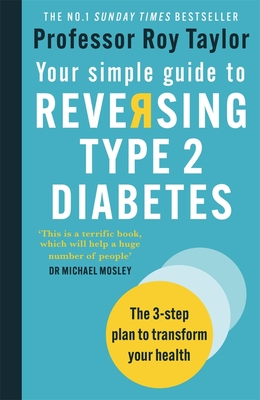
Your Simple Guide to Reversing Type 2 Diabetes: The 3-step plan to transform your health
In this pocket version of his bestselling Life Without Diabetes, Professor Roy Taylor offers a brilliantly concise explanation of what happens to us when we get type 2 and how we can escape it.
Taylor's research has demonstrated that type 2 is caused by just one factor - too much internal fat in the liver and pancreas - and that to reverse it you need to strip this harmful internal fat out with rapid weight loss.
In simple, accessible language, Taylor takes you through the three steps of his clinically proven Newcastle weight loss plan and shows how to incorporate the programme into your life.
Complete with FAQs and inspirational tips from his trial participants, this is an essential read for anyone who has been given a diagnosis of type 2 diabetes or pre-diabetes and wants to understand their condition and transform their outcomes.
Taylor's research has demonstrated that type 2 is caused by just one factor - too much internal fat in the liver and pancreas - and that to reverse it you need to strip this harmful internal fat out with rapid weight loss.
In simple, accessible language, Taylor takes you through the three steps of his clinically proven Newcastle weight loss plan and shows how to incorporate the programme into your life.
Complete with FAQs and inspirational tips from his trial participants, this is an essential read for anyone who has been given a diagnosis of type 2 diabetes or pre-diabetes and wants to understand their condition and transform their outcomes.
160 pages, Paperback
Published June 7, 2022
About the author
Roy Taylor
19 books7 followersLibrarian Note: There is more than one author by this name in the Goodreads database.
Roy Taylor is Professor of Medicine and Metabolism at the University of Newcastle upon Tyne in the UK and honorary consultant physician at the Royal Victoria Infirmary in Newcastle. During his career, he has cared for patients admitted with medical emergencies, for people with diabetes, and for women in pregnancy with medical conditions.
Since 1981 he has pursued the basic cause of type 2 diabetes, studying fat cells, muscle cells, and the liver. The potential to develop new techniques to study what happens to food in the body, with or without diabetes, led to a sabbatical year at Yale where he carried out research with Professor Gerald Shulman. This was continued back in the UK, and it was there that he established the groundbreaking Newcastle Magnetic Resonance Centre.
In 2006 he put forward the Twin Cycle Hypothesis, which predicted that people with type 2 diabetes should be able to return to normal by losing a substantial amount of weight. This was proven in 2011, and among other studies, led to the Diabetes Remission Clinical Trial (DiRECT) in collaboration with Professor Mike Lean of The University of Glasgow. This trial showed that achieving remission of type 2 diabetes for at least 2 years was feasible under a primary care physician.
Dr. Taylor's other research activities included the management of women with diabetes during pregnancy, the management of severe hyperemesis, and the prevention of blindness in diabetes. He developed the system of screening for treatable diabetic eye disease, which is now a country-wide program in the UK, where diabetes is no longer the most common cause of avoidable blindness in working-age people.
Roy Taylor is Professor of Medicine and Metabolism at the University of Newcastle upon Tyne in the UK and honorary consultant physician at the Royal Victoria Infirmary in Newcastle. During his career, he has cared for patients admitted with medical emergencies, for people with diabetes, and for women in pregnancy with medical conditions.
Since 1981 he has pursued the basic cause of type 2 diabetes, studying fat cells, muscle cells, and the liver. The potential to develop new techniques to study what happens to food in the body, with or without diabetes, led to a sabbatical year at Yale where he carried out research with Professor Gerald Shulman. This was continued back in the UK, and it was there that he established the groundbreaking Newcastle Magnetic Resonance Centre.
In 2006 he put forward the Twin Cycle Hypothesis, which predicted that people with type 2 diabetes should be able to return to normal by losing a substantial amount of weight. This was proven in 2011, and among other studies, led to the Diabetes Remission Clinical Trial (DiRECT) in collaboration with Professor Mike Lean of The University of Glasgow. This trial showed that achieving remission of type 2 diabetes for at least 2 years was feasible under a primary care physician.
Dr. Taylor's other research activities included the management of women with diabetes during pregnancy, the management of severe hyperemesis, and the prevention of blindness in diabetes. He developed the system of screening for treatable diabetic eye disease, which is now a country-wide program in the UK, where diabetes is no longer the most common cause of avoidable blindness in working-age people.
Ratings & Reviews
Friends & Following
Create a free account to discover what your friends think of this book!
Community Reviews
Displaying 1 - 30 of 50 reviews

August 5, 2021
Definitely simple, this book will not blind you with science. All the same, the author is clear it is based on serious, long-term, nationally recognised research.
It's quite easy to find out online what is the "Newcastle diet" or approach to reversing type 2 diabetes if you don't want to buy the book. In a nutshell it involves losing about 35 pounds fast, then keeping it off. Taylor implies that pretty much everyone who does this within a year or two of diagnosis (and some who do it much later) will keep type 2 diabetes at bay. The simplest way to do this is to use meal replacement products, but he is clear that you can also use real food, you just have to keep calories down to 800 per day for 8 weeks.
I already knew that this was the basic idea, but I wanted to be convinced by a little more of the background - especially why does he recommend losing weight quickly rather than slowly, and if weight is the problem, why do some people who are not overweight get type 2 diabetes? This book answered both of these questions and more in a convincing way.
I don't have diabetes (yet), but it is common in my father's family, and one of my uncles had such horrifying secondary illnesses and disabilities that I want to avoid it at all cost. I'm prepared to give this a try.
It's quite easy to find out online what is the "Newcastle diet" or approach to reversing type 2 diabetes if you don't want to buy the book. In a nutshell it involves losing about 35 pounds fast, then keeping it off. Taylor implies that pretty much everyone who does this within a year or two of diagnosis (and some who do it much later) will keep type 2 diabetes at bay. The simplest way to do this is to use meal replacement products, but he is clear that you can also use real food, you just have to keep calories down to 800 per day for 8 weeks.
I already knew that this was the basic idea, but I wanted to be convinced by a little more of the background - especially why does he recommend losing weight quickly rather than slowly, and if weight is the problem, why do some people who are not overweight get type 2 diabetes? This book answered both of these questions and more in a convincing way.
I don't have diabetes (yet), but it is common in my father's family, and one of my uncles had such horrifying secondary illnesses and disabilities that I want to avoid it at all cost. I'm prepared to give this a try.

June 1, 2021
Life Changing Book. Very bold so beware.
Seriously and wonderfully written book, my first attempt at reading a medical type book.
If I had read this years ago it would have saved me from what I am going through now trying to reverse type 2 diabetes. I was never told I could reverse it when told I was pre diabetic some years ago.
Now told again I am pre diabetic (higher blood count) I was offered tablets or a three month change your diet and loose some weight. I did a crash diet for five months, lost weight and waiting for my next blood test.
I will keep trying to eat sensible and exercise daily. The book really helped me get my mind into gear about the wrong foods, drink we keep pouring down our throats every day. We are killing ourselves slowly. So the book helped me wake up and do something positive about it. So I have started the journey and hope with the truths/facts in the book will continue to strive to stay healthy. I want more years with my granddaughters and grandson.
Seriously and wonderfully written book, my first attempt at reading a medical type book.
If I had read this years ago it would have saved me from what I am going through now trying to reverse type 2 diabetes. I was never told I could reverse it when told I was pre diabetic some years ago.
Now told again I am pre diabetic (higher blood count) I was offered tablets or a three month change your diet and loose some weight. I did a crash diet for five months, lost weight and waiting for my next blood test.
I will keep trying to eat sensible and exercise daily. The book really helped me get my mind into gear about the wrong foods, drink we keep pouring down our throats every day. We are killing ourselves slowly. So the book helped me wake up and do something positive about it. So I have started the journey and hope with the truths/facts in the book will continue to strive to stay healthy. I want more years with my granddaughters and grandson.

January 17, 2024
This all looks very tough!

March 4, 2026
tldr: Lose 10% of your body weight in 2 months, and keep it off.
May 17, 2021
An easy to read, brief but comprehensive in practical terms, approach to weight loss backed by recent research at Newcastle University. Oddly frustrating though that the author prefers to refer to stones in weight and only uses kilogrammes as an afterthought.
April 23, 2023
Good on the Science
I found it a useful reference guide.I thi
nk I will need something more comprehensive for everyday advice, especially on foods to eat, or can be eaten together and diets and recipes.
I found it a useful reference guide.I thi
nk I will need something more comprehensive for everyday advice, especially on foods to eat, or can be eaten together and diets and recipes.

May 29, 2021
Cause of Type 2 Diabetes?
Researching nutrition gets complicated when one enters the science — the body is a system of systems and the terminology has no bottom. But if you have prediabetes or type 2 diabetes and have been trying to fend off the physical wreckage of high blood glucose, this book gets to the nub: lose 2 stone or so (Britspeak for about 28 pounds) and this author says you can reverse T2 diabetes as long as you keep the weight off. This book review is not medical advice; read the book if this subject has some relation to your condition and make up your own mind.
Researching nutrition gets complicated when one enters the science — the body is a system of systems and the terminology has no bottom. But if you have prediabetes or type 2 diabetes and have been trying to fend off the physical wreckage of high blood glucose, this book gets to the nub: lose 2 stone or so (Britspeak for about 28 pounds) and this author says you can reverse T2 diabetes as long as you keep the weight off. This book review is not medical advice; read the book if this subject has some relation to your condition and make up your own mind.
May 30, 2021
No nonsense approach to combating Type 2
This little book is a real game changer, it points out that everyone has an individual fat Storage limit underlining a personal view an the actions that are required. One thing is universal , lose weight rapidly initially over 8 weeks then stick to a regime of controlling calorie intake for the rest of your life.
This little book is a real game changer, it points out that everyone has an individual fat Storage limit underlining a personal view an the actions that are required. One thing is universal , lose weight rapidly initially over 8 weeks then stick to a regime of controlling calorie intake for the rest of your life.

March 16, 2023
Having just been diagnosed with pre diabetes and wanting to know more about how to prevent type 2 I latched on to this book and it has been very useful. The only criticism I have is that it would have been helpful to have some meal plans so for that reason I ve only given 4 stars but the information in the book is easily readable and understandable.
May 18, 2021
Amazing book! The way self-help books should be written.
This book is so straight forward and simple to understand that it makes the solution to type 2 diabetes feel very doable and empowering. Highly recommended!
This book is so straight forward and simple to understand that it makes the solution to type 2 diabetes feel very doable and empowering. Highly recommended!
November 28, 2022
I learnt so much …
I read an article last Saturday in The Times about this book which prompted me to immediately purchase it. What a revelation! No one ever explained things about my Type 2 Diabetes like Prof Taylor. Thank you sooo much!
I read an article last Saturday in The Times about this book which prompted me to immediately purchase it. What a revelation! No one ever explained things about my Type 2 Diabetes like Prof Taylor. Thank you sooo much!

October 24, 2021
Groundbreaking and life-changing! I highly recommend this if you’ve just received a diagnosis. You can have your life back.

May 31, 2025
Rod Taylor’s Your Simple Guide to Reversing Type 2 Diabetes isn’t just a book—it’s a companion. Gentle, respectful, and full of quiet encouragement, it doesn’t lecture or overwhelm. Instead, it pulls up a chair beside you and asks: What if things could be different? What if this diagnosis isn’t the full stop it feels like, but the start of a better story? For anyone feeling confused, ashamed, or simply exhausted by the demands of living with type 2 diabetes, Taylor offers something rare and reassuring: hope grounded in compassion.
At the core of Taylor’s message is a simple but powerful idea—many cases of type 2 diabetes can be significantly improved, even reversed, through meaningful changes in when and how we eat, and how we move our bodies. That might sound like common sense, but what sets this book apart is the way Taylor explains the why behind it all. The science—insulin resistance, inflammation, fat around vital organs—is laid out in a way that’s accessible and kind. You never feel talked down to. You feel supported.
There’s a real gentleness to his tone. Taylor writes with calm conviction and without judgement. He understands how hard it can be to break free from habits, especially when fear and fatigue are part of the picture. He doesn’t offer a miracle fix. Instead, he offers understanding—patient, steady, and hopeful. And that alone feels like a breath of fresh air in a genre that can so often veer into blame or hardline advice.
The book’s structure reflects this sense of care. It opens with a warm and clear explanation of what’s actually happening in the body when type 2 diabetes develops—helping readers understand the condition before asking them to take action. The practical advice builds gradually and logically, and Taylor isn’t afraid to repeat key points. But rather than sounding redundant, this repetition serves to build confidence. You’re not expected to absorb everything straightaway. You’re allowed to go at your own pace.
Importantly, Taylor doesn’t cut corners with the evidence. His guidance aligns with up-to-date research on metabolic health, and he’s careful to stress that readers—especially those taking medication—should always work alongside their healthcare providers. That sense of balance, between scientific rigour and human experience, gives the book its quiet authority. Taylor honours the science, but never loses sight of the person.
If the book has a limitation, it’s that it only lightly touches on the emotional side of change. While there are glimpses of insight into the psychological challenges—emotional eating, shame, lack of motivation—these sections are brief. Readers looking for more help with the inner journey may wish there was a little more here to hold onto. This isn’t a deep dive into the psychology of health, and it doesn’t claim to be. Still, a bit more exploration of those emotional landscapes could have added depth to an already sensitive guide.
Even so, what is here is quietly powerful. Taylor brings clarity to confusion, calm to chaos, and a gentle hand to those feeling overwhelmed. Compared to more prescriptive voices in the field—like Jason Fung or Michael Mosley—his approach feels more personal, less dogmatic. Rather than handing down rules, he invites reflection. Rather than insisting, he encourages.
And in the end, that might be what makes this book most memorable. It sees you. It believes in your capacity to change, not through pressure, but through understanding. That kind of belief is hard to manufacture—and even harder to forget.
At the core of Taylor’s message is a simple but powerful idea—many cases of type 2 diabetes can be significantly improved, even reversed, through meaningful changes in when and how we eat, and how we move our bodies. That might sound like common sense, but what sets this book apart is the way Taylor explains the why behind it all. The science—insulin resistance, inflammation, fat around vital organs—is laid out in a way that’s accessible and kind. You never feel talked down to. You feel supported.
There’s a real gentleness to his tone. Taylor writes with calm conviction and without judgement. He understands how hard it can be to break free from habits, especially when fear and fatigue are part of the picture. He doesn’t offer a miracle fix. Instead, he offers understanding—patient, steady, and hopeful. And that alone feels like a breath of fresh air in a genre that can so often veer into blame or hardline advice.
The book’s structure reflects this sense of care. It opens with a warm and clear explanation of what’s actually happening in the body when type 2 diabetes develops—helping readers understand the condition before asking them to take action. The practical advice builds gradually and logically, and Taylor isn’t afraid to repeat key points. But rather than sounding redundant, this repetition serves to build confidence. You’re not expected to absorb everything straightaway. You’re allowed to go at your own pace.
Importantly, Taylor doesn’t cut corners with the evidence. His guidance aligns with up-to-date research on metabolic health, and he’s careful to stress that readers—especially those taking medication—should always work alongside their healthcare providers. That sense of balance, between scientific rigour and human experience, gives the book its quiet authority. Taylor honours the science, but never loses sight of the person.
If the book has a limitation, it’s that it only lightly touches on the emotional side of change. While there are glimpses of insight into the psychological challenges—emotional eating, shame, lack of motivation—these sections are brief. Readers looking for more help with the inner journey may wish there was a little more here to hold onto. This isn’t a deep dive into the psychology of health, and it doesn’t claim to be. Still, a bit more exploration of those emotional landscapes could have added depth to an already sensitive guide.
Even so, what is here is quietly powerful. Taylor brings clarity to confusion, calm to chaos, and a gentle hand to those feeling overwhelmed. Compared to more prescriptive voices in the field—like Jason Fung or Michael Mosley—his approach feels more personal, less dogmatic. Rather than handing down rules, he invites reflection. Rather than insisting, he encourages.
And in the end, that might be what makes this book most memorable. It sees you. It believes in your capacity to change, not through pressure, but through understanding. That kind of belief is hard to manufacture—and even harder to forget.
July 14, 2025
This is an excellent book - it’s very clearly written and not remotely patronising.
I’ve been bouncing along at the top end of HbA1c pre-diabetic for some time and gradually getting closer but ignoring it. That is until someone very close to me was diagnosed as definitely type 2 and we recognised the implications and real dangers. We decided to address the issue together, and discovered Prof Taylor’s guidance, which echoed advice from other diabetes specialists.
Rapid weight loss was a common theme to all the advice we heard and that is where we focussed, not with supplements and special meals but by thinking carefully about “what” we were eating and how much. We cut out most, but not all, potatoes (especially crisps), rice and wheat pasta, increased protein and fibre from real food like chicken, fish, full-fat natural yogurt, etc and reduced alcohol, not massively but enough to get closer to recommended levels. I still have and really enjoy the occasional steak and chips, Indian meal, chocolate and biscuit but not all the time. We haven’t taken any supplements throughout this process.
We’ve also increased the amount of exercise we undertake but again, not dramatically - I really do not like gyms but enjoy walking so just do more of that.
The result; we’ve both lost a lot of weight with me down almost 2 stone (c13kg) in less than six months and both our HbA1c levels have dropped dramatically. I feel much better, fit more clothes than I have for years and even needed an extra notch in my belt!
Prof Taylor knows what he’s talking about and his advice works. This is a great book to help us understand what’s happening and how to do something about it. It’s a great start to get us onto the journey away from Diabetes and to feel so much better about ourselves in the process.
I’ve been bouncing along at the top end of HbA1c pre-diabetic for some time and gradually getting closer but ignoring it. That is until someone very close to me was diagnosed as definitely type 2 and we recognised the implications and real dangers. We decided to address the issue together, and discovered Prof Taylor’s guidance, which echoed advice from other diabetes specialists.
Rapid weight loss was a common theme to all the advice we heard and that is where we focussed, not with supplements and special meals but by thinking carefully about “what” we were eating and how much. We cut out most, but not all, potatoes (especially crisps), rice and wheat pasta, increased protein and fibre from real food like chicken, fish, full-fat natural yogurt, etc and reduced alcohol, not massively but enough to get closer to recommended levels. I still have and really enjoy the occasional steak and chips, Indian meal, chocolate and biscuit but not all the time. We haven’t taken any supplements throughout this process.
We’ve also increased the amount of exercise we undertake but again, not dramatically - I really do not like gyms but enjoy walking so just do more of that.
The result; we’ve both lost a lot of weight with me down almost 2 stone (c13kg) in less than six months and both our HbA1c levels have dropped dramatically. I feel much better, fit more clothes than I have for years and even needed an extra notch in my belt!
Prof Taylor knows what he’s talking about and his advice works. This is a great book to help us understand what’s happening and how to do something about it. It’s a great start to get us onto the journey away from Diabetes and to feel so much better about ourselves in the process.

February 8, 2026
Reversing Type 2 Diabetes by Professor Roy Taylor was okay. Yes it's factual but I am not sure why I bought this book. What recommended it!
Anyway it does say that type 2 diabetes comes about because we are too fat. It is becoming an increasingly big problem in our modern world. Countries spend millions of dollars on the results of it each year.
So what about those of us with pre-diabetes? Well this author says - lose weight quickly. That's for those who have already reached diabetic level. I am pre-diabetic but wouldn't like to lose much weight. But the thing is the Professor says you must lose weight then.... keep it off. Which makes sense. I aim to lose a little bit of weight - maybe about 5kg - slowly. And keep it off. So I have to watch what I eat. Most likely it is making me eat more healthily. I have cut back on carbs and made sure I eat more protein.
Roy Taylor says that there are a variety of diets out there and most of them will work if they suit you. He also says it's wise for diabetics to have the support of family and friends. I think that's wise. If they understand they won't be pressing you with sugary food. He believes diabetes is reversible and I think he is right. His research has shown him this.
The book is simple and easy reading. It gives motivation to combat diabetes.
Anyway it does say that type 2 diabetes comes about because we are too fat. It is becoming an increasingly big problem in our modern world. Countries spend millions of dollars on the results of it each year.
So what about those of us with pre-diabetes? Well this author says - lose weight quickly. That's for those who have already reached diabetic level. I am pre-diabetic but wouldn't like to lose much weight. But the thing is the Professor says you must lose weight then.... keep it off. Which makes sense. I aim to lose a little bit of weight - maybe about 5kg - slowly. And keep it off. So I have to watch what I eat. Most likely it is making me eat more healthily. I have cut back on carbs and made sure I eat more protein.
Roy Taylor says that there are a variety of diets out there and most of them will work if they suit you. He also says it's wise for diabetics to have the support of family and friends. I think that's wise. If they understand they won't be pressing you with sugary food. He believes diabetes is reversible and I think he is right. His research has shown him this.
The book is simple and easy reading. It gives motivation to combat diabetes.
January 30, 2024
okay as far as it goes
I’m not sure I can get on this bandwagon completely. There were some good tips but it was mostly just regurgitating old hat. Much of it was contradictory, such as “there’s no such thing as one size fits all” and “returning to 3/4s of what you ate before starting as a rule of thumb.” The whole book advocates one size for all—2.5 St weightloss is one size. Also, if the reader used to eat a massive bar of chocolate each day, and then started to eat 3/4s of said bar, the issue would remain.
I’m not sure I can get on this bandwagon completely. There were some good tips but it was mostly just regurgitating old hat. Much of it was contradictory, such as “there’s no such thing as one size fits all” and “returning to 3/4s of what you ate before starting as a rule of thumb.” The whole book advocates one size for all—2.5 St weightloss is one size. Also, if the reader used to eat a massive bar of chocolate each day, and then started to eat 3/4s of said bar, the issue would remain.
February 8, 2024
The basic premise is that people can be thin but still have fat surrounding the liver and pancreas that causes diabetes. He advocates quick weight loss using an 800 cal per day eating plan and outlines the different ways this can be accomplished-shakes, low calorie foods etc.
It's an interesting concept, he made a statement that did make sense, that slow and steady makes people lose hope and that quick weight loss keeps the motivation up because people see results (paraphrased).
It's an interesting concept, he made a statement that did make sense, that slow and steady makes people lose hope and that quick weight loss keeps the motivation up because people see results (paraphrased).
June 7, 2025
Really Sound Advice on How to Come Back from Type 2 Diabetes
If you want to know what type 2 Diabetes is, how it affects you, how to prevent it, and how to come back from your Type 2 diagnosis, then this is the book for you.
Read it, digest it, act on it, and improve your life for the better.
Coming back from Type 2 Diabetes is not easy, but the help you will need is within these pages.
Good luck with your journey.
If you want to know what type 2 Diabetes is, how it affects you, how to prevent it, and how to come back from your Type 2 diagnosis, then this is the book for you.
Read it, digest it, act on it, and improve your life for the better.
Coming back from Type 2 Diabetes is not easy, but the help you will need is within these pages.
Good luck with your journey.
September 30, 2023
Simple non-judgemental science
I read this book in one sitting as it is so accessible and well-structured. It is a straightforward, no-nonsense explanation of the condition and its results/remedies. A brilliant read for anyone who has just been diagnosed as pre-diabetic as it will give them a chance of avoiding diabetes quickly, before it impairs their health forever.
I read this book in one sitting as it is so accessible and well-structured. It is a straightforward, no-nonsense explanation of the condition and its results/remedies. A brilliant read for anyone who has just been diagnosed as pre-diabetic as it will give them a chance of avoiding diabetes quickly, before it impairs their health forever.
September 6, 2024
it does work!
I know this is successful and full of good facts because I lived it. My type 2 diabetes was reversed, I didn’t need any meds (that really are harsh) and yoga was primarily responsible. Good exercise and focus on clean living can work wonders!! But YOU have to want it! Yoga is very personal and you’ll get out of it essentially what you put in. Do go for it!
I know this is successful and full of good facts because I lived it. My type 2 diabetes was reversed, I didn’t need any meds (that really are harsh) and yoga was primarily responsible. Good exercise and focus on clean living can work wonders!! But YOU have to want it! Yoga is very personal and you’ll get out of it essentially what you put in. Do go for it!

April 15, 2023
I don't learn much from this book since I have read other books same about altenative solution for diabetes and weight loss. Since it is a small book so I can't blame it. I wish it explains more about diets, vitamins, etc.

May 8, 2023
This is a wonderfully-informative book by a world specialist in diabetes reversal! He explains the issue in simple language, and offers a plan to help people get over their diabetes through diet and exercise.
December 5, 2023
questionable for reversing diabets
Did not agree with food choices that the author recommended. I did agree that rapid weight loss is beneficial in diabetes reversal. But saying that red meat is good? I don’t agree…. Red fatty meat is the cause of many diseases.
Did not agree with food choices that the author recommended. I did agree that rapid weight loss is beneficial in diabetes reversal. But saying that red meat is good? I don’t agree…. Red fatty meat is the cause of many diseases.

January 9, 2026
No nonsense facts about diabetes 2 and pre-diabetes, the course of the disease if not taken seriously and what to do to reverse it. It gave me the kick up my backside I needed and I've lost 12 kg so far, feeling so much better although I have another 7-8kg to go.

May 25, 2026
This book gave a great insight how to prevent diabetes from taking over. I've have written down notes of how I will change eating habits, both to eliminate fat and carb content from my eating habits. I found the book a great help.
May 19, 2021
Eat less, way less. That is about it.
June 24, 2021
This was a quick and informative read that I have taken to heart. I made my own calorie plan and got the desired health improvements quickly.
November 2, 2021
Stop eating so much. And lose weight.

February 17, 2022
Absolutely worth reading - full of sensible and practical advice

September 2, 2022
This is a good book with valuable information for people afflicted with type 2 diabetes.
It's a research-based book by Dr. Roy Taylor describing how to reverse type 2 diabetes.
It's a research-based book by Dr. Roy Taylor describing how to reverse type 2 diabetes.
Displaying 1 - 30 of 50 reviews