
What do you think?

The Most Wonderful Books: Writers on Discovering the Pleasures of Reading
Perhaps as many people set out to be writers now because of things they've seen--movies and TV--as do because of what they've read. This is for those in the latter category. A cozy compendium of authors discussing first books they've loved, letting the mysteries and pleasures of becoming readers--requisite before becoming any kind of writer--envelop them. Editors Michael Dorris and Emilie Buchwald have assembled a range of stories, from Nicholson Baker's shock at a death in The Hobbit, to Mona Simpson's "ABC" lessons with alphabet soup, and more. You'll be reaching for old Nancy Drew and Hardy Boys books before you know it.
297 pages, Paperback
First published January 1, 1997
About the author
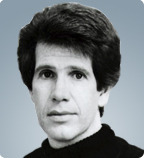
Michael Dorris
38 books89 followersMichael Dorris was a novelist, short story writer, nonfiction writer, and author of books for children
The first member of his family to attend college, Dorris graduated from Georgetown with honors in English and received his graduate degree in anthropology from Yale. Dorris worked as a professor of English and anthropology at Dartmouth College.
Dorris was part-Native American through the lineage of his paternal. He founded the Native American Studies department at Dartmouth in 1972 and chaired it until 1985.
In 1971, Dorris became the first unmarried man in the United States to adopt a child. His adopted son, Reynold Abel, was diagnosed with fetal alcohol syndrome and his condition became the subject of Dorris' The Broken Cord,(the pseudonym "Adam" is used for his son in the book).
In 1981, Dorris married aspiring writer Louise Erdrich. Throughout their relationship, Erdrich and Dorris edited and contributed to each other's writing.
In 1991, Dorris' adopted son, Reynold Abel, died after being hit by a car. In 1996, Louise Erdrich separated from Dorris. On April 10, 1997, Dorris committed suicide in Concord, New Hampshire.
The first member of his family to attend college, Dorris graduated from Georgetown with honors in English and received his graduate degree in anthropology from Yale. Dorris worked as a professor of English and anthropology at Dartmouth College.
Dorris was part-Native American through the lineage of his paternal. He founded the Native American Studies department at Dartmouth in 1972 and chaired it until 1985.
In 1971, Dorris became the first unmarried man in the United States to adopt a child. His adopted son, Reynold Abel, was diagnosed with fetal alcohol syndrome and his condition became the subject of Dorris' The Broken Cord,(the pseudonym "Adam" is used for his son in the book).
In 1981, Dorris married aspiring writer Louise Erdrich. Throughout their relationship, Erdrich and Dorris edited and contributed to each other's writing.
In 1991, Dorris' adopted son, Reynold Abel, died after being hit by a car. In 1996, Louise Erdrich separated from Dorris. On April 10, 1997, Dorris committed suicide in Concord, New Hampshire.
Ratings & Reviews
Friends & Following
Create a free account to discover what your friends think of this book!
Community Reviews
Displaying 1 - 14 of 14 reviews

August 6, 2013
"Think back, for a moment, to the first book you really loved - the one you read over and over, day and night, because it took you someplace you never wanted to leave. Or remember the person - a teacher, a parent, a librarian - who showed you how words could make magic."
This book is a collection of essays written by fifty-seven writers on the books they have loved. Some essays I loved; others I didn't, but instead of telling you what they were and why, I was inspired to write my own essay:
Are You There, Judy Blume? It’s Me, Michelle
For my ninth birthday, my dad gave me four Judy Blume books: "Iggie’s House," "Otherwise Known as Sheila the Great," "Then Again, Maybe I Won’t," and, my favorite, "Are You There God? It’s Me, Margaret." On the inside of each cover, my dad wrote: “To Michelle on her 9th birthday – 1983. Love, Dad.” I loved the look of those books – each one a different color: blue, red, green, and purple, each one the same size and about the same length. I knew the author, Judy Blume. My teacher, Mrs. Hedgepeth had read aloud "Tales of a Fourth Grade Nothing" to our class.
I remember reading those Judy Blume books while curled up in my sleeping bag on the living room floor of my dad’s apartment while he read a novel of his own. I remember him commenting one night, way past my bedtime, “Wow, you must really like those books, huh?”
I was glad that it was dark in the living room and that my dad couldn’t see me blush. Those books were filled with embarrassing things: periods, bras, masturbation, and even scarier things, like racism and God. I was pretty sure that my dad had never actually read these books, or he would have certainly never bought them for me. Then again, maybe he would have. My dad was never one to censor what me and my brother watched, let alone read.
Those books weren’t just embarrassing, they were informative. I learned about growing up and that many of my own feelings about growing up were perfectly normal. Some of the things I thought about and was worried about, other kids felt, too, or, at least, Judy Blume had, and that was enough to make me feel better. I also learned new things. Those books were my first exposure to Jewish culture, or the east coast, or bagels (wasn’t sure what they were, but were convinced they must be delicious).
Those books were the first time I was really aware of the author who wrote them. I became very aware that Judy Blume was a real person and having read so many of her books in a row, I came to understand her style of writing - a style that I wanted to emulate in my own stories. I had known from the age of about three that I wanted to write my own books, but now, at the age of nine, I finally knew what kind of books I wanted to write. I wanted to write realistic fiction for kids – just exactly like Judy Blume’s books. It was shortly after reading those four birthday present books that I started to write my first novel.
In sixth grade, a girl in my class gave an oral report on "Are You There God? It’s Me Margaret." After her report, my language arts teacher, Mr. Powell, exclaimed, “What kind of book is this? You should be reading 'Little Women' or 'Black Beauty'!”
All the girls in the class started protesting. “Mr. Powell! "Are You There God?" is the best best best book ever!” And everyone started sharing their favorite parts from that treasured book.
I, who had read the book years earlier, and who happened to be in the middle of "Little Women," contributed my favorite parts to the collective memory while we laughed and reminisced over the Four PTS’s secret club meetings, and Margaret’s crush on Moose Reed, and Norman Fishbein’s supper party where everyone played “Two Minutes in the Closet.”
Mr. Powell shook his head at us all as he completely lost control of the class for the rest of the period. Nothing could tear us away from discussing that book which had meant so much to all of us. I remember being both surprised and not surprised that a book I had loved so much was also so well loved and so well read by my female classmates. "Are You There God?" speaks to the pre-teen female condition in no way any other novel had before or has since. It is a classic – more beloved than even "Little Women."
Probably that same night, I went home and reread it. I’ve read that book so many times that some of the words in it have literally worn away. I know what they say, though. I know that book forward and back, like a pair of old, comfortable tennis shoes.
The most wonderful books are the books that change your life, the ones you read in a single sitting, the ones you can read over and over again and never grow tired of, the ones you can giggle over when you're discussing them with your girlfriends, the ones that your daddy gave you that you still have thirty years later. The most wonderful books are the ones that feel special just to you, but are somehow special to just about everyone else. The most wonderful books stand the test of time – even though "Are You There God?" was written before I was born, I’m pretty sure my own daughter will love it just as much as I did and probably my granddaughter will, too. Like "Charlotte’s Web," and "The Little House" Series, like "Winnie the Pooh" and yes, "Little Women," "Are You There God? It’s Me, Margaret" is a true classic that has stood the test of time. (And the other Judy Blume books still hold up, too.)
This book is a collection of essays written by fifty-seven writers on the books they have loved. Some essays I loved; others I didn't, but instead of telling you what they were and why, I was inspired to write my own essay:
Are You There, Judy Blume? It’s Me, Michelle
For my ninth birthday, my dad gave me four Judy Blume books: "Iggie’s House," "Otherwise Known as Sheila the Great," "Then Again, Maybe I Won’t," and, my favorite, "Are You There God? It’s Me, Margaret." On the inside of each cover, my dad wrote: “To Michelle on her 9th birthday – 1983. Love, Dad.” I loved the look of those books – each one a different color: blue, red, green, and purple, each one the same size and about the same length. I knew the author, Judy Blume. My teacher, Mrs. Hedgepeth had read aloud "Tales of a Fourth Grade Nothing" to our class.
I remember reading those Judy Blume books while curled up in my sleeping bag on the living room floor of my dad’s apartment while he read a novel of his own. I remember him commenting one night, way past my bedtime, “Wow, you must really like those books, huh?”
I was glad that it was dark in the living room and that my dad couldn’t see me blush. Those books were filled with embarrassing things: periods, bras, masturbation, and even scarier things, like racism and God. I was pretty sure that my dad had never actually read these books, or he would have certainly never bought them for me. Then again, maybe he would have. My dad was never one to censor what me and my brother watched, let alone read.
Those books weren’t just embarrassing, they were informative. I learned about growing up and that many of my own feelings about growing up were perfectly normal. Some of the things I thought about and was worried about, other kids felt, too, or, at least, Judy Blume had, and that was enough to make me feel better. I also learned new things. Those books were my first exposure to Jewish culture, or the east coast, or bagels (wasn’t sure what they were, but were convinced they must be delicious).
Those books were the first time I was really aware of the author who wrote them. I became very aware that Judy Blume was a real person and having read so many of her books in a row, I came to understand her style of writing - a style that I wanted to emulate in my own stories. I had known from the age of about three that I wanted to write my own books, but now, at the age of nine, I finally knew what kind of books I wanted to write. I wanted to write realistic fiction for kids – just exactly like Judy Blume’s books. It was shortly after reading those four birthday present books that I started to write my first novel.
In sixth grade, a girl in my class gave an oral report on "Are You There God? It’s Me Margaret." After her report, my language arts teacher, Mr. Powell, exclaimed, “What kind of book is this? You should be reading 'Little Women' or 'Black Beauty'!”
All the girls in the class started protesting. “Mr. Powell! "Are You There God?" is the best best best book ever!” And everyone started sharing their favorite parts from that treasured book.
I, who had read the book years earlier, and who happened to be in the middle of "Little Women," contributed my favorite parts to the collective memory while we laughed and reminisced over the Four PTS’s secret club meetings, and Margaret’s crush on Moose Reed, and Norman Fishbein’s supper party where everyone played “Two Minutes in the Closet.”
Mr. Powell shook his head at us all as he completely lost control of the class for the rest of the period. Nothing could tear us away from discussing that book which had meant so much to all of us. I remember being both surprised and not surprised that a book I had loved so much was also so well loved and so well read by my female classmates. "Are You There God?" speaks to the pre-teen female condition in no way any other novel had before or has since. It is a classic – more beloved than even "Little Women."
Probably that same night, I went home and reread it. I’ve read that book so many times that some of the words in it have literally worn away. I know what they say, though. I know that book forward and back, like a pair of old, comfortable tennis shoes.
The most wonderful books are the books that change your life, the ones you read in a single sitting, the ones you can read over and over again and never grow tired of, the ones you can giggle over when you're discussing them with your girlfriends, the ones that your daddy gave you that you still have thirty years later. The most wonderful books are the ones that feel special just to you, but are somehow special to just about everyone else. The most wonderful books stand the test of time – even though "Are You There God?" was written before I was born, I’m pretty sure my own daughter will love it just as much as I did and probably my granddaughter will, too. Like "Charlotte’s Web," and "The Little House" Series, like "Winnie the Pooh" and yes, "Little Women," "Are You There God? It’s Me, Margaret" is a true classic that has stood the test of time. (And the other Judy Blume books still hold up, too.)
August 12, 2011
This was a mixed-bag assortment of essays on the pleasures of reading that varied in quality from stale and meaningless to the occasional brilliant nugget that ultimately made the entire experience worthwhile.

September 18, 2010
Most entries in this anthology were rather dry, but there were a few gems, which I dog-eared and will look at again.
October 23, 2017
Wondrous marvel to read. It delighted me when I looked it up on the library catalog and saw this book in circulation. Most of the authors in this volume I had not been aware of. Michael Dorris, I learned from the biography, was married to Louise Erdrich. He died unexpectedly before the book was published.

February 23, 2018
The title is self explanatory, writers contributed brief essays on when they started to read and why and how. I have always liked this sort of thing, so I enjoyed it. And the entries are fairly short, so no one got too long winded.

September 26, 2016
I just love to read about how people come to the love of reading, which seems to happen to most people during their younger days instead of older in life. I never tire of hearing, or reading the often similar account. This book for the most part is about that exact subject but there are a few accounts that seem to get off the subject in my opinion. That seemed to happen around the 3/4 section of the book but then it came back to the love of reading again toward the end and ended with a pleasant note.

January 13, 2012
I think this book is more useful to teach your children how to love reading, more than teaching it to yourself.
The following quotation by Ellen Howard (The magic of reading)is the most inspiring words I have found in this book:
"Reading ability is necessary to all of us in the modern world, but I must conclude from my own family’s experience that a love of reading is a special inborn gift. Reading can, and should, be nurtured by early happy experiences with books and stories. It can, and should, be competently and creatively taught. It can, and should, be treated with the respect due it as a source of information and information and insight.
But the joy of reading, I believe, is a gift. It has to do with who we are and to what we aspire. It has to do with our individual weaknesses and strengths. I do not love mathematics or mechanics or sports, though to live fully I need some understanding of these things. I do not believe that everyone can, or even should, love to read. But everyone, I believe, needs, at least, to know how to read.
After that, it is up to the books themselves to work their magic where they will. For me, they always have."
And I think the books have done the same for me :)
The following quotation by Ellen Howard (The magic of reading)is the most inspiring words I have found in this book:
"Reading ability is necessary to all of us in the modern world, but I must conclude from my own family’s experience that a love of reading is a special inborn gift. Reading can, and should, be nurtured by early happy experiences with books and stories. It can, and should, be competently and creatively taught. It can, and should, be treated with the respect due it as a source of information and information and insight.
But the joy of reading, I believe, is a gift. It has to do with who we are and to what we aspire. It has to do with our individual weaknesses and strengths. I do not love mathematics or mechanics or sports, though to live fully I need some understanding of these things. I do not believe that everyone can, or even should, love to read. But everyone, I believe, needs, at least, to know how to read.
After that, it is up to the books themselves to work their magic where they will. For me, they always have."
And I think the books have done the same for me :)

July 26, 2009
I'm a sap for reading books about books and books about readers, so this book was perfect for me.
My favorite essay was by Bill Holm. Here's a little bit that I liked:
"...I read them (books) like an addict. A day---even an hour or two---without print makes me edgy and hungry. I hide books in my car, both trunk and cubbyhole, in my office drawers, in side pockets of duffel bags....The vision of jail with a good library is not so bad. With no books, I'd be a fine candidate for suicide....Books contain the seven basic food groups of the soul. Ignore them and you starve inside; you die with a malnourished, shrivelled, bony spirit...."
My favorite essay was by Bill Holm. Here's a little bit that I liked:
"...I read them (books) like an addict. A day---even an hour or two---without print makes me edgy and hungry. I hide books in my car, both trunk and cubbyhole, in my office drawers, in side pockets of duffel bags....The vision of jail with a good library is not so bad. With no books, I'd be a fine candidate for suicide....Books contain the seven basic food groups of the soul. Ignore them and you starve inside; you die with a malnourished, shrivelled, bony spirit...."
November 30, 2011
I saw a reference by Nancy Pearl to this anthology of writers writing on reading and ordered it. I loved the variety of the writers who had submitted. I think there were at least fifty. Some wrote a page and others many pages. I'd read a few each night and then recount them to my walking partner each day. I think this book is valuable for parents, teachers, writers and readers. This wasn't about what made them writers, but readers. An important distinction. One story in particular stuck with me above all others, involving a hot summer and library bus with air conditioning. The book reminded me of how crucial it is to somehow pass the magic of reading onto our youth. Is it still possible?
August 8, 2015
Middle of the road collection of essays by readers and writers about their proclivities for books and reading. Here's a good quote by Marion Dane Bauer: "I read in order to live, more deeply, more fully, and with a more certain alliance with this human world." If this is your thing, you will probably enjoy it, especially as pick-up reading.

April 7, 2008
The editors collected short essays by fairly well-known authors in which they describe the first book they remember reading or how reading began for them. Contributors include Sherman Alexie, Nicholson Baker, Gretel Ehrlich and Robert Pinsky. It's a kind of celebration of reading and memory.
May 29, 2013
A fun read. It's great to hear writers commenting on their reading practices. There are a few too many "when I was a child..." accounts (not that there's anything wrong with that formulation, but more variety would have been nice). But overall this was a really enjoyable read.
August 2, 2013
I really enjoyed reading this. As a reader, I am as interested in what other people are reading as I am in what I'm reading myself. It was great fun learning what initially turned various authors on to reading and what early experiences we had in common.
Displaying 1 - 14 of 14 reviews