El reconocido filósofo Pascal Bruckner plantea en este lúcido ensayo cómo los avances de la ciencia han hecho del tiempo un aliado paradójico para el ser humano; desde mediados del siglo XX, la esperanza de vida ha aumentado de veinte a treinta años, equivalente a toda una existencia en el siglo XVII.
Es al llegar a los cincuenta años cuando experimentamos una suerte de suspensión entre la madurez y la vejez, un intervalo en el que la brevedad de la vida realmente comienza ya que nos planteamos las grandes cuestiones de nuestra condición humana: ¿queremos vivir mucho tiempo o intensamente, empezar de nuevo o reinventarnos? ¿Cómo evitar la fatiga del ser, la melancolía del crepúsculo, cómo superar las grandes alegrías y los grandes dolores? ¿Cuál es la fuerza que nos mantiene a flote contra la amargura o el hartazgo?
En esta obra, ambiciosa e imprescindible, Bruckner fundamenta sus reflexiones en estadísticas y en diversas fuentes de la literatura, las artes y la historia; así, nos propone una filosofía de la longevidad fundada en la resolución, y nunca en la resignación, para vivir esta vida extra de la mejor manera posible.
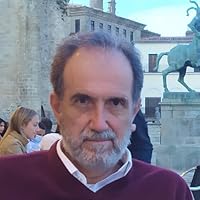
Pascal Bruckner est un romancier et essayiste français, d'origine suisse protestante, né à Paris le 15 décembre 1948. Après des études au Lycée Henri IV à Paris, à l'université de Paris I et de Paris VII, et à l'Ecole pratique des hautes études, Pascal Bruckner devient professeur invité à l'Université d'Etat de San Diego en Californie et à la New York University de 1986 à 1995. Maître de conférences à l'Institut d'études politiques de Paris de 1990 à 1994, il collabore également au Monde et au Nouvel Observateur. Romancier prolifique, on lui doit Lunes de fiel - adapté à l'écran par Roman Polanski - Les Voleurs de beauté - prix Renaudot en 1997 - et plus récemment L'Amour du prochain (2005).
Pascal Bruckner is a French writer, one of the "New Philosophers" who came to prominence in the 1970s and 1980s. Much of his work has been devoted to critiques of French society and culture. He is the author of many books including The Tyranny of Guilt, Perpetual Euphoria and The Paradox of Love. He writes regularly for Le Nouvel Observateur.
A pesar de no ser una gran lectora de ensayo, debo reconocer que este libro de Pascal Bruckner sobre la longevidad, me ha atrapado desde el primer momento. Si perder un ápice de rigor, es un libro divulgarivo sobre la madurez y la vejez, sobre la longevidad y la eternidad. Citando a grandes pensadores de todos los tiempos, celebra la vida en esa etapa crepuscular que comienza en los 50 años. Es una batalla ganada a la resignación y la melancolía, un canto a disfrutar de esa parte regalada del final de la existencia.
Bruckner is an Enlightenment man. He appeals to the reason of individual people, largely neglecting the interests of the society, especially the families to which those individuals belong.
The theme of the book is the issues of advancing age. For Bruckner, this starts about 50. Vanishing physical prowess and sex appeal. What you do for an encore after life’s major accomplishments? What is the substance of life? What is the balance between repetitions, such as the cycles of the hours of the day, the seasons of the year, and the stages of one’s life and new adventures and experiences? Curiously, he addresses these as issues primarily for people younger than himself. Bruckner is discussing what Merriam-Webster defines as middle age, running from 45 to 64, more than “young old age” 65 to 84 and certainly not “old old age.”
Bruckner’s biography lists no wife or children. It is amply clear that he has dedicated his life to intellectual pursuits. I am widely read, but Bruckner is in a class by himself. This book is worthwhile simply for the bibliography, the intellectual history he presents and great quotes from well-recognized authors.
With a focus on older people, he asks the most fundamental question of philosophers: what is the meaning of life? Is it fulfillment through personal accomplishments? Is it love? Is it health?
Affluence and medicine have given us an extra 30 years of longevity. Retirement laws in place since Bismarck often dictate that we spend them in retirement. How do we make a good accounting of this time? He notes that in our modern age we can do things all out of sequence. A man can summit formidable mountains, attend university and have children as his school mates are having great-grandchildren. Our sense of age-appropriate activities has been distorted.
Yet, the reality of physical decay persists. Bruckner is perhaps unduly harsh on the subject of old Lotharios pursuing sweet young things, and cougars tender young boys. His discussion emphasizes sexual attraction, body to body, more than the attraction of people to one another. It would downplay certain observable facts.
Older men such as Harrison Ford and the recently deceased Sean Connery have a timeless appeal. Women will ignore signs of aging such as crepe-like skin. They are, and have always been, attracted to wealth, intelligence, and personality. My wife shuts me up when I mention the almost two generation difference between us. She has made her commitment and doesn’t want to think about it.
Bruckner mentions the phenomenon described in “Regulating Sex” of older First World women vacationing in Africa, the Dominican Republic and elsewhere with the express intent of having sex with hard bodied young men. The batikhaexa, older women who sponsor Third World immigrants in order to take sexual advantage of them, are a recognized phenomenon of Sweden and elsewhere in northern Europe. He instead discusses the still rather rare circumstance of older women such as Mme. Macron in France who attract husbands a generation younger.
Bruckner ignores a couple of factors in female-male May-December relationships. The most obvious is prostitution. An older guy can simply rent a younger body if he wants one. The girls are pleased to have a client who is grateful for whatever they offer. With regard to more permanent relationships, Bruckner briefly mentions but does not investigate the notion of the marriage market. Their social and economic background establishes what will be beneficial to both parties. First world men are relatively attractive as marriage partners to Latin American, Southeast Asian and Eastern European women. Societies in which male/female role distinctions have not been erased still recognize traditional obligations for spouses to one another. Great sex may not be at the top of the list for either. If a man can fulfill his expected role, age is not such a large issue.
Bruckner is scathing about the Baby Boomer generation, who have spent the inheritance from prior generations and mortgaged future generations for their own pleasure. They live for the present. “Thus we would be the cannibal generation that takes advantage of both sides of history, leaving behind us an immense debt and granting ourselves privileges that are just so many larcenies. And our successors have the feeling that they live less well than we do. In addition, they curse us for our role in what awaits them – the destruction of their health, of their illusions. Isn't it time for us to make our exit?" See Comment one for some more pithy quotes.
People have historically not looked just for the present. Bruckner writes: "In the history of ideas, three forms of immortality are generally distinguished: that of the people, for Jews; that of the polis for the Greeks; and that of the individual, for Christians."
I will quibble just a bit. Afterlife is indeed an individual concept, not prominent in Jewish or Greek thought. However, to earn that afterlife Christians were expected to support their society. In Christian marriage St. Augustine identified three inherent goods: fides, proles, et sacramentum - faith, trust, and love between husband and wife, and parent and child, that goes beyond the faith demanded of any other temporal relationship. The Christians, just like Greeks and Jews, succeeded because they were committed to perpetuating their bloodlines and their culture.
In this age, as neither Christians nor Jews believe in immortality, the Western democracies have no compunction about maximizing present consumption at the expense of future generations. I am alone among my age mates in having started a late second family. They are unconcerned that they by and large do not have children and grandchildren, nor that those whom they do have are gay, incels or otherwise unlikely to have children. They are willing participants in the “Suicide of the West.”
Bruckner observes that our desires lessen as we become older. Not only our sex drive, but our seeking new adventures, new friends, entertaining new ideas and giving up old ways. Case in point: observing that today’s Levis are nowhere near as well-made as they were in my youth, I have started buying ordinary cotton slacks. My son and I dress in ironed shirts. My contemporaries stick with Levis and T-shirts because that’s what they’ve always worn.
Bruckner dwells on the themes of sexual attraction and sex, overlooking the facts that (1) marriage offers many satisfactions besides sex, and (2) people who like each other for other reasons are pretty easily satisfied with their sexual relationship. Obviously writing for people outside of marriage, he says: "Sex, which in the West is in principle available to everyone, is in fact denied to many people: the declared freedom is above all the summons issued to the obscure and the ugly to resign themselves to solitude and unhappiness. Our society, by exalting everywhere and always the radiant power of pleasure, penalizes even more those who are denied it — the solitary, the old, all those refused the right to joy and a seat at the great banquet of erotic bliss. The frustration is all the greater because hedonism has been imposed as the sole norm.”
Bruckner touches on the possibility of extended longevity, mentioning Larry Ellison who has cryogenically preserving his DNA and Ray Kurzweil who projects transferring our personalities from carbon-based to silicon based substrates. These concepts are out in the ether. Last year’s “Borrowed Time” offers a more realistic picture. Our bodies age along a great many dimensions, and it is unlikely that we will come up with mechanisms to slow the process anytime soon. The record for longevity of 122 set by Jeanne Calment in 1997 does not appear to be under threat.
Approaching his conclusion, Bruckner asks what is a successful life, and when does it end? Having accomplished most of the big things we are ever going to do, what remains? Once again, he is focused on the individual, and not that individual's role in society. My take is that the individual can continue to give, to prepare others of his society and of his lineage to carry on. There are things to be done, things to be accomplished, but perhaps not through him alone.
Bruckner’s riff on digital knowledge, the way children grow up as digital natives, is amusing. Immensely immersed in books as he is, Bruckner is clearly a man of a previous age. He would understand this one better if he had young children. Writing as a computer guy, a teacher and the father of six, I can say with authority that for all the time they spend with computers, the vast majority of kids don’t use them well. As Bruckner notes, the geniuses of Silicon Valley wisely deny these geegaws to their own children.
Bruckner doesn't delve into what's happening to society. We are becoming genetically stupider, and we are purposefully dumbing down our education. A worthy undertaking for a person towards the end of their years would be to give something back to society. Contribute his superior genetic stuff to children, and pass on the habits of mind that made him successful to children and grandchildren
A five star effort.
Comment 1 – Here follows a delicious quote about Baby Boomers
OLD INFANTS AND YOUNG DOTARDS What is the baby-boomer generation? The one that exalted youth, theorized the rejection of authority, the end of hierarchies and of paternal power. Also the one that swept away every rule or taboo in the name of the omnipotence of desire, convinced that our passions, even the most unseemly, are innocent, and that multi¬plying them indefinitely is the way to come closest to bliss, great joy. But this indulgent generation wanted to teach its children nothing but the rejection of authority, which was identified with arbitrariness. It made its incompetence a dogma, its indifference a virtue, and its resignation the nec plus ultra of liberal pedagogy. The supremacy of fathers who were pals, of mothers who were girlfriends, denying all difference between them and their children and offering the latter only an ultra-permissive credo: do whatever you want. That is why these "adult juveniles" (Edgar Morin) did not equip their offspring for the tasks that awaited them and, believing that they were giving birth to a new humanity, raised anxious young people who are often tempted by conservatism. Hence, in their progeny, a demand for order, a moral rigidification and a need for points of reference at any cost: these young old people demand of their Peter Pan mothers and fathers that they finally acknowledge their age and their responsibilities. But pot-bellied, bald and myopic, the children of the baby boom, who have often become prominent and orderly, remain attached to their illusions. Old rascals to the end, alongside young worriers who are ageing prematurely, aware that their parents, by refusing to grow up, have stolen their youth
A final example to date: the elevation of a young Swedish woman, Greta Thunberg, sixteen years old, into a heroine of the struggle against global warming. Nominated for the Nobel Prize, received by many heads of state and the pope. She carries in her wake tens of millions of high-school students, weeps for the planet and offers her anxious face, framed by two braids, as a symbol of the coming disaster. But our Scandinavian Pythia, a cross between Fifi Brindacier and Joan of Arc, limits herself to repeating what the media have been drumming into us for years: namely, that the human adventure is over, that the apocalypse is near. A strange kind of ventriloquism: people are delighted to find in her and her followers the concerns that have been inculcated in them, and swoon over this infantile echolalia. The little parrots scold us by proxy, teach us a good lesson on which we are supposed to meditate. But it's a simple echo chamber, and we find among the puerile people the words that have been put in their mouths by continuous indoctrination. This nihilism with a childish face is directly inspired by catastrophist sects. The propaganda of fear is doing enormous damage among our children, whom we tell day and night that the globe will catch fire and cataclysms will destroy us. In the name of the just war against climate disturbance, we are creating terrified generations, and in so doing we are robbing them of their insouciance. We are paralyzing them more than we are mobilizing them. The right to conflate everyone's age makes it impossible for children to experience their childhood.
The "Global Strike for the Future" is occurring just when we are explaining to young people that they don't have one, that the general collapse has begun. If concern about the environment is universal, the end-of-the-world disease is purely Western and says a great deal about our culture.
El libro era prometedor y la premisa muy atractiva, además de perfectamente adecuada a la edad y momento de este humilde lector. Pero no, no me ha gustado. Me ha parecido un totum revolutum de ideas, un seguido de frases que muchas veces he tenido que releer para acabar sin entenderlas. Es como una recopilación de reflexiones metidas una detrás de otra, en minicapítulos entre los que muchas veces se pierde la conexión. No he acabado de entender la propuesta, sinceramente. Seguramente no estaré al nivel de este libro. Es lo más probable. ¿Qué le vamos a hacer?
Gran reflexión sobre la vejez y la aceptación del inevitable paso del tiempo… Todos los mayores de 40 lo deberíamos de leer al menos alguna vez en la vida.
Indudablemente es un libro que me generó, ansiedad y desasosiego, pero después, a través de la asimilación y la reflexión me ha llenado de nueva energía, de una visión renovada de los días futuros. Aceptar lo que ya no pudo ser y esperanza activa por lo que aún tiene potencial de realización.
Insufrible. Denso. Caótico. No he logrado leer dos paginas seguidas que hayan desencadenado el interés por seguir leyéndolo. Una lástima porque el concepto que subyace a este ensayo es tremendamente interesante.
Van pasando los años, nosotros seguimos siendo los mismos, con nuestras virtudes y defectos, sin embargo, nuestro cuerpo va cambiando, poco a poco van surgiendo sensaciones que antes no teníamos y que eran desconocidas, aumento de fatiga, menor resistencia o la aparición de molestias y dolores, es decir, todos los cambios que el envejecimiento de un cuerpo trae consigo. Nuestra mente no ha cambiado a penas, nuestro cuerpo sí.
Pascal Bruckner, ha escrito un ensayo filosófico que he disfrutado y que me ha divertido bastante; por mi edad, soy claramente público objetivo. Me agrada reconocerme en algunas de sus exposiciones sobre cómo nos vemos a partir de determinada edad, me saca una sonrisa cuando analiza la obsesión actual por querer mantenernos siempre perfectos, el ideal de la juventud de nuestros cuerpos como objetivo a alcanzar o mantener, y del que tanto se aprovechan muchos sectores empresariales, desde los cosméticos a las clínicas estéticas. Me hace caer en la cuenta de la paradoja actual, donde se han invertido los papeles de formación, siendo los jóvenes quienes tienen que enseñar a los mayores como desenvolverse en un mundo fuertemente tecnologizado incluso para realizar las actividades más básicas.
Y así poco a poco, va desgranando pequeños temas que me llevan a la reflexión a través de un libro que me entretiene a pesar de que en muchas ocasiones es caótico en sus exposiciones.
Me reconforta ver que no estoy sólo en esta situación.
Es un buen libro y, desde luego, es una lectura amena.
Si tienes más de treinta años, ya te interesa, si todavía no los has cumplido, ya te interesará.
No le doy una valoración de cinco estrellas porque no es demasiado original, tampoco lo pretende. No le doy cuatro, porque hacia el final se me hizo repetitivo y hubiera querido que llegara a otra orilla (reconozco que llega a la única que puede llegar).
Tiene reflexiones lúcidas, aporta ideas claras y sirve de apoyo a esa hoguera que necesitamos alimentar cada vez más con los años: la de que sumar días no significa que debamos abandonar toda esperanza y toda actividad. Ya habrá tiempo cuando hayamos muerto.
It’s hard to critique a translation because it’s unclear if the author meant to state things in a particular way and how many creative liberties the translators have taken. But, based on the translation I read: what a wild book!
It’s the ramblings of a weird old man with very gross ideas, especially around sex and relationships, and basic human rights (stating that an American life is inherently more valuable than an “Asian or African” - p. 89).
Cool idea to discuss the philosophy of our extended longevity, but really horrific execution - at least in translation. Maybe if I read the original text it would not be as repugnant, but as is, it is unhinged.
Lo he dejado a mitad. Empece a escuchar el audiolibro, luego leí el libro la primera parte muy interesante. Pero después alcanzó un ritmo pesado y desordenado. El caso es que la expresión y los conceptos son interesantes, tiene frases memorables, pero en conjunto la lectura es difícil de mantener a un ritmo agradable de lectura, y no por denso sino por una narrativa torbellino y desorganizada a la que cuesta engancharse.
It is not an easy book for a not -Frenchman. However c’était bien de lire le livre avec un connaissance philosophique et de philosophie. C’est une livre à recommander vers le 50 et peu après le 50...ou même plus tard.
Me gusta la sencillez del lenguaje usado. Las multiples referencias a otras obras. Voy a cumplir 45, pero siento que me acerco a pasos cada vez más rápidos a lo que el autor llama ese "instante eterno" ♾♾♾
Cada destino es un puente entre dos abismos. No somos indispensables para nadie, desapareceremos en el cosmos, anónimos y polvorientos, pero allí no hay ninguna aflicción.
Entertaining and somewhat philosophical overview of the mindset(s) one may have, or may want to adopt, when entering one's fifties...sound literary research, solid facts.