American Cavewall Sonnets attempts to record the aftermath of a tragedy, to build an archive against a backdrop of erasure. The various unnamed speakers of these sonnets— the anonymous I’ s, the anonymous eyes— grapple with fears that the things that wreck us daily could wreck us ultimately. C. T. Salazar reminds us that the narratives that survive aren’ t by default the truth, and the means of their survival should be suspect as well.
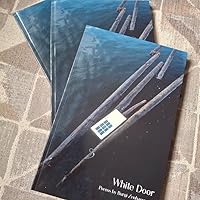
I've been coming back to these poems for a month now, reading one or two at lunch, and they never fail to draw me in. Gorgeous and haunting, lean but packed with evocative language, and the book itself is beautifully made by Bull City Press.
I don't often read chapbooks. Not because I dislike them, but because I usually just don't have access to them. During the week of AWP, I ended up purchasing some chapbooks from Bull City Press, and this was one of them. I bought it because I'm increasingly obsessed with sonnets as a form of poetic expression, and the title of this chapbook was simply too interesting to pass up. I figured the poems would be good, that I would have a nice, short read for a week, and that I would walk away feeling good about the purchase.
I was not prepared, in any way, for the absolute mind-shattering quality of these sonnets. I intended to read this collection slowly over the course of a week. I ended up reading the whole thing in a single night. I couldn't stop myself. I couldn't put the book down. I was underlining and writing down quotes nonstop. The writing in these poems, the use of language and imagery to capture themes of family, place, heritage, and loss astounded me. "This is my box of twilight and inside / flickers everything" (page 5). "When I remember you I remember / the animal we built out of stray bones / from the riverbed" (page 12).
And then this quote which made me absolutely melt: "The underside of logic / is still the softest place to be barefoot. / I walked it once. I didn't want to leave" (page 15). And this one: "Even a whisper can bruise" (page 27).
Chapbooks are usually not more than 30-35 pages long, and I found myself increasingly heartbroken that this book of poems didn't go on for another 35 pages, at least. There was such a reverence woven into these sonnets, such a sense of the sacred in every day experiences, that it was like I couldn't ever catch my breath. I was in a particularly hungry emotional and creative space that week, unable to get enough of the books I was reading, and so I think I was primed to encounter this book. I'm so incredibly glad I bought it.
I honestly can't tell you enough to buy this book and read it. I look forward to when Salazar's next book of poems comes out.
I had the pleasure of hearing poet C. T. Salazar speak and read this weekend at the 2022 Southern Literary Festival at the Mississippi University for Women (otherwise known as The W) in Columbus, Mississippi. Salazar's poetry is achingly and often heartbreakingly honest, replete with beautiful metaphors and touching sweet nothings. I was so lucky as to have Salazar sign my copy of American Cavewall Sonnets, and I look forward to reading his collection Headless John the Baptist Hitchhiking soon.
"Place / your ear right here if you want to listen," ends the first sonnet in this stunning wreath of sonnets, drawing its addressee, and with that the reader as well, right into its text and a place where God seems as lost as its seekers, where "every belief grows teeth to chew you" (from "Sonnet River"), but where the poems' voice rises vulnerable, clear, and strong. Each time I return to this beautiful chapbook, I discover another nuance, another shimmering facette I had overlooked.
Salazar artfully explores and invigorates the sonnet in this delightful chapbook. The second section, "Sonnet River" is an absolutely shattering crown, and should be required reading for anyone interested in this form. It was a fantastic read!