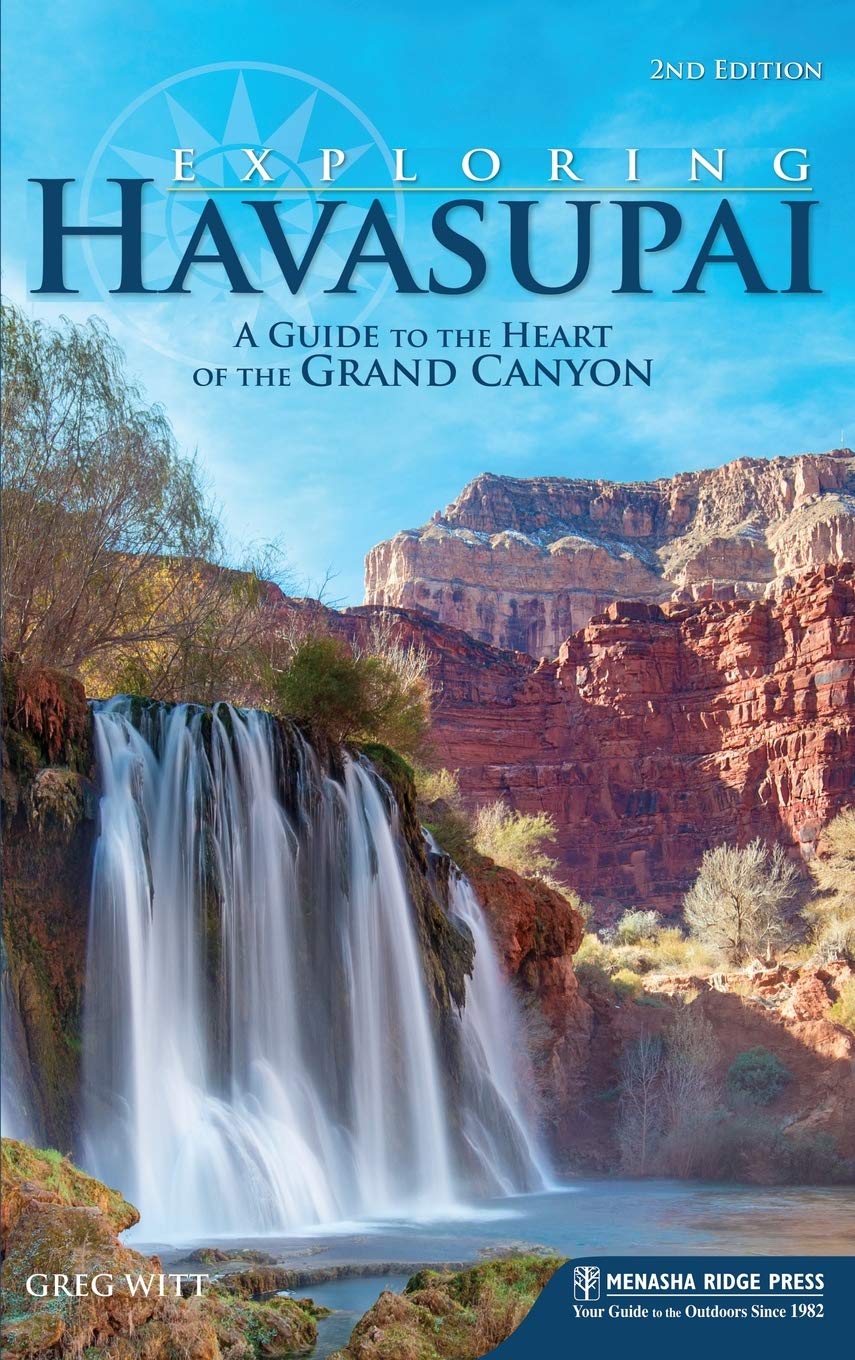
This is a guidebook. It’s a good one as the scenic nature of Havasu Canyon (a side canyon of the Grand Canyon) is spectacular. But my particular interest was in the Havasupai tribe (650 population) and the following stands out from the guidebook:
“Before their arrival in Havasu Canyon [hundreds of years before Columbus] the Havasupai were likely part of the Yuman-speaking Pai Indians, whose traditional lands included much of the lower Colorado River valley and adjacent areas in what is now southern California, western Arizona, and northern Baja California. The Pai are part of a larger Hokan group of people who are believed to have inhabited the area for 30,000 years.”
“By 1882, under pressure from mining and cattle interests the total area of the reservation was surveyed and established with just 518 acres less than a square mile, an area roughly defined by the present –day Suapi village….hundreds of square miles of traditional Havasupai homelands and range became public property, no longer usable by the Havasupai people. The Havasupai, who used to roam freely between the sheltered canyon and plateau expanses were now perennially confined to a small track of land….”
“In 1975…the Havasupai tribe was granted by U.S. Congress 185,000 acres of land adjacent and to the south of Grand Canyon National Park. The enactment of this legislation increased the size of the Havasupai tribal lands from less than 1 square mile to more than 276 square miles.”
“Today, the Havasupai are the only indigenous people who continue to live in the Grand Canyon.”