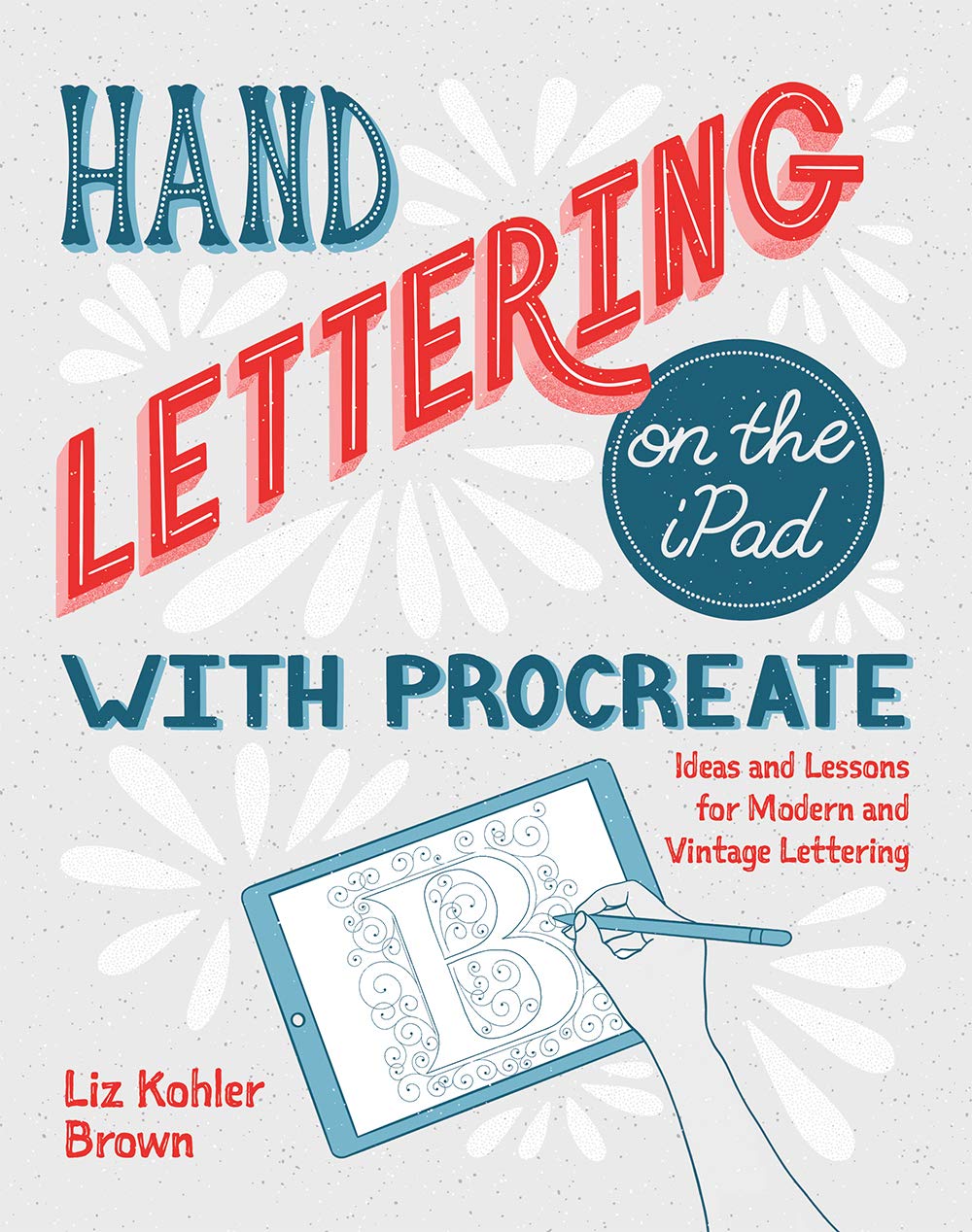
Hand Lettering on the iPad with Procreate is the ultimate guide to every step of the digital hand lettering process.
Using the versatile and intuitive iPad drawing and design app Procreate, author and noted lettering instructor Liz Brown composes a series of fun and easy lettering projects that will build confidence by giving all the necessary tools to create gorgeous compositions from the ground up. Each project comes with its own Procreate brush downloads so users can follow along to create their own unique hand lettered quotes, words, and phrases.
This book features step-by-step lessons
Finding inspiration with color palettes and letterforms for unique stylesUsing Procreate tools for creating and decorating lettersTips and tricks for adding textures, layers, shading, and depth to lettering projectsCreative ideas for jazzing up space around lettersAnd much, much more!Whether you’re a beginner interested in learning a fun new skill, or an experienced letterer ready to start creating on your iPad, this book will give you everything you need to take the next step in your iPad hand lettering journey.
While this has a lot of the technical information you might want for creating lettering on an iPad, I was floored when I read the author’s piece on going digital. One feels how they feel, and from an economical pov, art supplies are expensive, but so is an iPad. Adobe subscriptions are outrageously high and in order to keep access to your files you either have to convert them so you can open them in something else or keep paying. I love digital, it’s so fast! But to be an artist is to get your hands dirty. It’s the tooth of the paper, it’s the thickness and opacity of paint. It’s trying to control a medium that’s difficult to control. Honing your craft may also mean working with fewer tools, having those constraints is actually very liberating (mid 20th century limited palettes, anyone?). What can prevent people from actually creating is too much digital, not enough tactile input. Also, all the old school references look so different, but many of the sample digital images look the same. That kind of proves the point about traditional vs. digital in this context. The author seemed so worried about mistakes when they were starting out but you have to make them. How else to you have happy accidents? That’s very often the way artists find their technique. Digital doesn’t allow you to sit with them, you can just hit “undo”and “fix” it. What that can do is create a staccato in your process. Editing on the fly isn’t usually good practice. And lastly, having every color or brush at your disposal doesn’t make you more creative. On the contrary, if you have three brushes, you’ll become an expert with those brushes. If you have three hundred, first you’ll be distracted, but then you’re likely to be an expert using maybe 15 of those. Don’t even get me started about color and light. Digital isn’t the best or the worst, it’s a tool, of which you should have several, to keep your creative muscle sharp. If you want great lettering, I like the Stephen Heller, Louis Fili or Jessica Hische books.
I'm not super interested in Hand lettering I got this mostly to explore handwriting styles. Its a really good tutorial book it has a lot of useful step by step breakdowns that feel useful as a beginner. If you like hand lettering definitely recommend or If you just simply want to explore a new way to express your art.