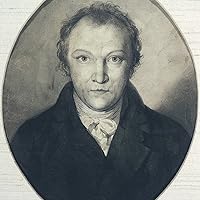
William Hardy McNeill was a historian and author, noted for his argument that contact and exchange among civilizations is what drives human history forward, first postulated in The Rise of the West (1963). He was the Robert A. Milikan Distinguished Service Professor Emeritus of History at the University of Chicago, where he taught from 1947 until his retirement in 1987. In addition to winning the U.S. National Book Award in History and Biography in 1964 for The Rise of the West, McNeill received several other awards and honors. In 1985 he served as president of the American Historical Association. In 1996, McNeill won the prestigious Erasmus Prize, which the Crown Prince of the Netherlands Willem-Alexander presented to him at Amsterdam's Royal Palace. In 1999, Modern Library named The Rise of the West of the 100 Best Nonfiction Books of the 20th century. In 2009, he won the National Humanities Medal. In February 2010, President Barack Obama, a former University of Chicago professor himself, awarded McNeill the National Humanities Medal to recognize "his exceptional talent as a teacher and scholar at the University of Chicago and as an author of more than 20 books, including The Rise of the West: A History of the Human Community (1963), which traces civilizations through 5,000 years of recorded history".
This booklet contains two short lectures delivered by the American-Canadian historian William H. McNeill in 1979, at a time when he had published his most important books: The Rise of the West: A History of the Human Community(1963, the first real step towards a Global History), and Plagues and Peoples (1976, the first systematic study of the influence of diseases in world history). ‘The Pursuit of Power would follow in 1982, in which he would explore the role of technology and military strength. McNeill has always been a man of the big picture, and this is more evident than ever in these lectures. He focuses on two major processes that, like two grinding stones on top of each other, also keep each other in balance: the microparasitic (the role of viruses and bacteria) and the macroparasitic (the role of domination and exploitation by humans). This is certainly not McNeill's most successful work: his starting point seems somewhat forced, and the best evidence for this is that he cannot fully maintain his thesis. More about that in my History account on Goodreads: https://www.goodreads.com/review/show....
I am not going to go into too much detail here about the contents of this short book, representing two lectures that William H. McNeill gave at Clark University (Worcester, Massachusetts) in 1979. McNeill tries to connect ecological and political history by focusing on the role of viruses and bacteria on the one hand and on military-political developments on the other. His argument contains bursts of brilliant insight (for example, the fact that we do not really control nature, which has become clearer than ever in the recent Covid period), but also of weak, rather arbitrarily chosen theses (the role of gunpowder, for example). This seems like written in a bit of a rush, without much deeper reflection. Yet it contains some great insights from McNeill's other works: that the role of disease and epidemics in history should not be underestimated, any more than that of the nomads, and that China was the leading nation on an economic, political and cultural level, for the greater part of the second millennium.
I do not want to deprive you of the final paragraph of this short book. It testifies to a firm, perhaps naive, belief in the value of history: “What we think we know about the past largely determines our behavior in the present and what we do to shape the future. If these lectures help even a little bit to give us a better picture of the past, then I will be very satisfied. Because the more correct the image of our past, the greater our insight into the present and the less imperfect our image of the future. So, a good picture of history helps to improve human history, something we undoubtedly all strive for.” Hear, hear!
This book contains two essays by McNeill given as the Bland-Lee Lectures at Clark College. He uses the ideas of microparasiticsm in terms of disease and macroparasistism in terms of taxation to give a sweeping analysis of human history. With these processes, McNeill is able to present how societies developed, encountered one another, developed trade, trade routes, and complex economies, and warfare. These essays are a succinct summary of his ideas. Well worth reading.
Voorstelling van de menselijke geschiedenis waarbij de mens gekneld zit tussen twee molenstenen: de microparasieten (kleine organismen) en de macroparasieten (homo homini lupus). McNeill onderscheidt in de hele geschiedenis twee grote omwentelingen: de stedelijke en commerciële transformatie.
De verdienste van deze bundeling van lezingen is dat ze een globale (en niet enkel eurocentrische) geschiedenis presenteert. Aan het proces van wisselwerkingen tussen de mens, de microparasieten en de macroparasieten komt geen einde. Onze huidige tijd is geen eindpunt, maar een fase in een grotere geschiedenis. Alles is in beweging, tot er tijdelijk een nieuw evenwicht wordt bereikt.
Dutch translation with an epilogue by Samuel Vriezen. Could have done without the epilogue. Essays by William H. McNeill are written in accessible language, despite the brevity and (some) scientific terminology.
William McNeill attempts to explain the whole of human history in 75 pages. It doesn't come off, but the framework—societies develop though an interplay between biology and class power—is an interesting one. These essays can be seen as a staging post in McNeill's thinking as he moved on from the Rise of the West and, ultimately, towards the arguments of The Human Web.