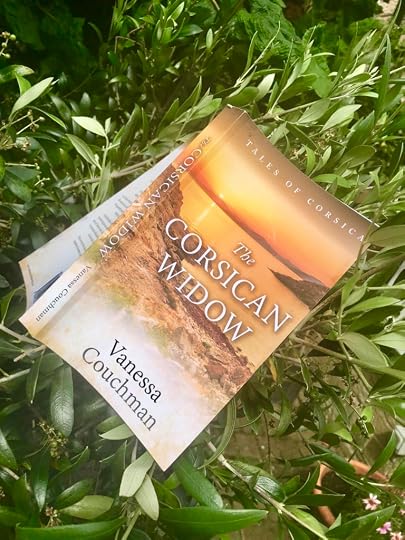
A strict island society. A forbidden love. The two are bound to collide. Corsica, 1755 . Valeria Peretti’s family plans to marry her to a wealthy older man whom she has never met. Valeria expects to lead a quiet life, but a prophecy on the eve of her wedding spells mortal danger ahead. After her husband’s death, Valeria finds herself friendless in a hostile village and turns to her only ally. But when she is unjustly accused of a serious crime, she is shocked to learn that a secret enemy wants her dead. While Corsica fights for its independence, can Valeria win her own desperate battles to save her life? A tale of passion, injustice and revenge. "I highly recommend this beautifully written and engaging story for lovers of historical fiction." BookMuse "In the best historical novel tradition." Discovering Diamonds "The rugged, often starkly sublime colour of the island [is] beautifully portrayed. A well written and easy read." Tripfiction The Tales of Corsica are standalone historical novels set on the captivating island of Corsica.
Vanessa moved to southern France in 1997 and hasn't looked back. Being a "history nut", she's in totally the right place. The beguiling Mediterranean island of Corsica also provides great inspiration, and she visits whenever she can.
Two of her three novels, THE HOUSE AT ZARONZA and THE CORSICAN WIDOW, are set on Corsica; the third, OVERTURE, is set in Southwest France and Paris, as is AUGUSTINE, a novella prequel.
Vanessa's short stories have been placed in writing competitions and published in anthologies. The stories in FRENCH COLLECTION: TWELVE SHORT STORIES are inspired by and set in France.
When she's not writing, Vanessa is reading, singing, walking, or enjoying France's famed cuisine and wine. She writes a popular blog about life in France, Life on La Lune.
I really enjoyed Vanessa Couchman’s first historical novel set on the island of Corsica: The House at Zaronza, and her second, The Corsican Widow, was just as enjoyable.
It follows the story of a young woman, Valeria, just before her arranged marriage to a much older man. This marriage, in which she is expected to cater to her husband’s every wish, and to provide him with children, will remove her from family and friends and everything she has ever known. So when, despite Valeria’s best efforts, he dies, she finds herself a lonely, isolated widow, trapped in the chains of the traditions of the customary bereavement period.
Valeria is strong, tenacious and craving independence in a time when attitudes to women were so very different from today. This provides for an emotional roller-coaster of a story as we share with Valeria her widowed plight.
Via well-researched historical detail, descriptive settings –– the herb-scented hill paths, the stone forts, the fountains and village squares –– and skilled characterisation, the author cleverly evokes the customs and traditions of 18th-century Corsica, and the Corsicans’ fight for independence.
After reading The Corsican Widow, I feel I know a lot more about the history of the island, and especially the traditional, archaic and cruel attitudes towards women. This all helps the reader to empathise with Valeria and to fight her seemingly impossible battles alongside her, all the way.
I highly recommend this beautifully-written and engaging story for lovers of Historical Fiction.
I have read the first book in the series, "House in Zaronza" and was curious about the second novel. I think it's amazing! It seems unbelievable, until you read the author's note at the end, and remember that Corsica is a relatively small island and its people must have been as described, with anachronistic beliefs and customs, especially in the 18th century. The author researched history of Corsica well, and offers a good story with the heroine who develops from the innocent girl into a woman who experienced a lot and suffered and yet is reconciled with the past in the end. The natural beauty of Corsica is vividly described, and the story flowing. I really enjoyed reading this book.
As a fan of Vanessa Couchman’s writing, I was eager to read The Corsican Widow. I was not disappointed. This unique storyline kept me engaged through the wee hours of the morning. In addition to Ms. Couchman’s admirable writing skills, she offers a notable protagonist, Valeria Peretti, who courageously zigzags through a labyrinth of dishonor, duplicity, and peril. My compliments to Ms. Couchman for this enjoyable read. Paperback edition
This was a very fine book, and it reminded me why I love reading historical fiction to begin with. You have an unusual setting-- mid 18th century Corsica, with nary a Bonaparte in sight-- a down-to-earth heroine, and the stakes could not be higher. Vendettas! Witchcraft! Superstition! Revolutionary uprisings! I love adventure stories with a strong sense of place and scenes of survival, with just a bit of romance to spice things up. There are so many great scenes of nail-biting suspense where I could not put my Kindle down. And the prose was pared-down but lovely and evocative, suitable for the beautiful Corsican mountains and the maquis (or, in Corsican, the machja) that is described so well.
My only complaint is that I wish the romance threads had been developed a little more, but this was such a gem to find, that it makes me very happy I have Kindle Unlimited. Now to read more by the same author!
How do I find the right words to describe this fantastic book? Set in Corsica and France during the turbulent mid 18th century. A story of injustices, mis-understandings and hardships. A very compelling read which I can't recommend highly enough.
The author creates a good historical setting for the storyline. The book opens in 1755, a time when Corsica was ruled by the Genoese; in 1768 it came under French rule but the locals never let their culture and spirit be squashed by their masters. The author sets her story against this backdrop, with the rugged, often starkly sublime colour of the island beautifully portrayed.
The Corsican Widow is loosely based on a true story. Young Valeria, a country girl, is married off to a considerably older man, Santucci, who is wealthy and respected and treats her well, but she is nevertheless subservient to him, the traditional position of women at that point in time. The couple moves from her small village to fictional Zaronza. She also slides in a character from the time, Pasquale Paoli, who seeks independence and who meets with Santucci.
As might be anticipated from the title, however, Valeria is soon widowed. She tries to manage Santucci’s ending by brewing a cocktail of herbs to ease his pain (she learned her considerable skills of healing with herbs from Margherita, a local in her village). Towards the end of his life she even resorts to sorcery, finding a woman who could drive out the evil eye that has taken over her husband’s ailing body. But he nevertheless passes away and tradition dictates that she must remain in the house for 3 months and wear black for the foreseeable future. A very lonely existence.
Her husband’s shepherd Benedettu Colonna caught Valeria’s attention when she first arrived in Zaronza, those piercing blue eyes, that scar… the frisson of connection between these two was evident from the outset. There is scant build-up to anything meaningful developing between the two, and it is a rather curt and improbable coupling between Benedettu and Valeria one rainy evening which moves the story forward, loneliness driving these two to subterfuge in an era and culture when morals are dictated by the men in government. Accused of poisoning her husband – retribution for her relationship with Benedettu – she has to be extremely resourceful. Most of her family members choose to disown her and it is only her brother Antone on whom she can rely.
Moving on to Marseille, Valeria has to rethink her life, and serendipitous encounters enable her to create a new life away from Corsica, although the island is etched into her heart and mind.
A well written and easy read, The Corsican Widow enables the reader to gain a bit of historical perspective.
The path to love and happiness is never easy or the outcome guaranteed in Vanessa Couchman's novels. But the journey is well worth taking. I quickly empathised with the main character, Valeria, and rooted for her survival in circumstances that were almost impossible to surmount. The Corsican landscape and the history of the region, vividly and intricately woven into the novel, greatly added to my enjoyment of the story and made it step off the page to become real for me. I really enjoyed this book - it's well written and engaging. This is the second novel the author has set in Corsica and I would love to return to the island for a third one as soon as she writes it. I wholeheartedly recommend this novel.
I was drawn to research Corsica more fully when I read the first book in the Tales of Corsica series, The House at Zaronza. With this second book I found myself in the country once more, this time in the1700s, discovering the low regard in which women were held in a very male dominated culture. Combine an arranged marriage, superstition, jealousy, and a love affair that seemed unfairly forbidden and you have the solid foundation on which this novel was built. I love the skill with which the author weaves well researched history and the antiquated societal values of this fascinating island with strongly drawn, believable characters.
In The Corsican Widow we follow the story of Valeria, meeting her just before her marriage to an older, wealthy widow; a situation she has no say in and one that will take her away from her friends and family, and most notably her younger brother. Set in the latter half of the 1700’s when Corsica was fighting for its independence from Genoa, it is a time when customs and traditions were very different to today and life, for women especially, was very austere.
Her role was to provide the comforts her husband required, to give him children (sons preferably) and to respect him and her family name at all times. After years of marriage and no babies, he becomes ill and despite her best efforts in providing herbal medicines for him, he dies. It is a lonely life for a young widow who has many boundaries; she must not leave the house for the first few years and she must never be seen with another man as to do so would bring shame on her husband’s name and on her family. However, a prophecy on the eve of her marriage seems to predict trouble, but does she have the power to resist?
Valeria is an independent woman, strong of spirit and caring towards those she meets. I admired her tenacity and fight and enjoyed my time with her, although there were many times when her situation seemed so bleak I was torn between not wanting to know what was coming next and not being able to put the book down! When her name is disgraced in the village she must accept the fate that is decided for her, even if her treatment by the village elders is unjust. I don’t want to say too much about her story, it’s best you discover it for yourself, but be warned, it was very emotional in places.
Through this book Vanessa has taught me a lot about Corsican history, their fight for independence and the customs and traditions of the time. It has made me even more determined to visit Corsica; to follow the paths Valeria took over the hills from village to village, to stand by a fountain in a village square and think about the Corsican women from hundreds of years ago fetching their water, to see the old stone forts built during the war for independence and to smell the herb scented hillsides. I feel I know the island a little better now than I did before.
This book would be a perfect read for those of you who enjoy historical fiction where the real trials of life in a different era are expertly woven around love and emotions that have changed little over the years.
This was an engrossing read. It wasn't always a comfortable read, some very old Corsican customs not quite being what we're used to today, but they did make it very easy to empathise with the main character, Valeria. Being so very biddable at the beginning of the novel was compatible with the expectations of the time for a young woman on Corsica, although the author showed that Valeria was already stepping out of the mould before her traditional, and essentially forced, marriage to an older, if kindly, man. Those little hints of escape, from the tight restraints of adhering to family respectability, are built upon as the story progresses to the point at which Valeria is able to fend for herself, when she finds life turns very nasty for her. Some of the male characters who feature in the background are easy to like as well, others definitely not so much, but as this is essentially Valeria's story their appearances are very well portrayed in this well-written and well-edited tale of Corsica, and beyond. I liked learning a little of the history of Corsica, and would definitely recommend it as a good holiday read for a Mediterranean trip, or for someone who likes to read light historical fiction with a hint of intrigue.
Reading this novel forced me to compare my position as an independent woman with that of Valeria, the main character. It is through her eyes that we see the world of Corsica in the mid-18th century and feel deeply disturbed by the traditional attitudes towards women. I was with Valeria all the way, applauding her courage and tenacity in the face of terrible cruelty. This is a beautifully written book, which drew me in through the historical detail, gorgeous setting and vivid characterisation. Certainly one to put on the re-read shelf.
Another excellent story from Vanessa Couchman set in 18th century Corsica. The writing style is simple, accessible and flows beautifully. The settings are captivating and I particularly admired the way Valeria, the protagonist, has a character that fits with the era and yet has touches of feminism that make her a person the contemporary reader roots for. The plot is concise and the storyline realistic. A very satisfying read.
Clearly a labour of love! The author knows a lot about the historical period. Those who are really into romantic historical fiction might enjoy it more.
On a line level, I found it hard to get through. There’s a LOT of telling as opposed to showing, and over-explaining.
Truth and lies, shame and honour, a death penalty and misguided revenge, and an entire island’s future in the balance . . . The interwoven elements of this story make for a heady mix, yet it is all kept under control in a sad story about a girl who is the victim of her social circumstances and the prevailing morals of her time. Valeria Peretti’s family have very little: a house, a patch of land, and their self-respect. Respect or ‘honour’ is the only thing a poor family can boast in this harsh Corsican environment: it is Valeria’s mother’s single proud possession. This reputation, and the fact that Valeria is tall, strong and healthy, leads to her being chosen as a second wife by a wealthy widower; the loss of it, when after her husband’s early death Valeria seeks a few moments passion with an impossibly charismatic shepherd, means her death. A neighbour accuses Valeria of poisoning her husband (Valeria was giving him herbal infusions to help his stomach pains); the village elders learn of her affair with the shepherd, if one can even call it that, and Valeria is condemned to die – by poison. Her mother insists on giving her the fatal potion. Saying what happens next would be an unforgivable spoiler, suffice it to say Valeria escapes to Marseille, a vast, heartless city, where she enters another desperate struggle for survival – and the life of her unborn child. This should have been a gripping tale, but if I wasn't gripped quite as much as I could have been it is because despite the emotional intensity of Valeria’s tale and the tensions on the island the narrative is rather one-paced. As with her previous novel about Corsica the author’s passion for her subject is evident; the description of the island is beautiful, the account of Valeria’s hard life is convincing, but dialogue lacks natural rhythm and spontaneity, and a few too many passages tell the reader what to think. This makes it an easier, more accessible read, but it meant that while I had a great deal of sympathy for Valeria I could not truly engage in her plight or rejoice in her rescue. Nevertheless, this is a good story, and well worth reading – especially if you are familiar with Mediterranean islands or its coastline. As Couchman points out in her Author’s Note, the condemnation of Valeria by the town elders is based on a recorded event. What happens in 18th century Corsica may seem extreme by modern standards, but the concept of respectability and the social constraints placed on young women – right into the 20th century – are spot on. It is also, in the best historical novel tradition, a meaningful way of learning more about Corsica’s troubled history.
This book will make a modern-day woman cringe! It made my blood boil as I read this story based on true events about a young widow in mid to late 18th century Corsica.
The patriarchal society in which this young woman lived is beyond anything I could imagine. From her homelife as a girl in a village where she lives with her widowed mother and two younger brothers, one of which is now head of the family, to her betrothal and eventual marriage to a man twice her age who makes her hide herself from all other male visitors, she has been taught to obey and serve and never dishonor the family. Women are basically treated as broodmares and servants to men.
It was hard enough to imagine such a confining life but then after her husband's death she is expected to live as a widow in basic seclusion in honor of her deceased husband regardless of the fact she's only in her mid-twenties. The claustrophobic loneliness leads her into an affair with a man outside her social status and the worst possible outcome ensues.
I'm astonished at the backward and absolute evilness of the men involved, but even more so by the women. It seems most women of the era were in total agreement with this ugly system and those that weren't simply acquiesced.
This is a good one for readers of historical fiction and women's novels. It's stomach-turning, but very well written.
I was anticipating that there would be a connection with the characters in the first on the series. The only connections were places.
Once I recovered from my surprise at being taken back to the 18th Century I thoroughly enjoyed this book.
Valeria was an engaging character and sheer determination enable her to overcome the difficult and often dangerous situations in which she found herself. This book made me despair of how we treat each other and how societies put in place structures to control and hold back women and how indeed women can sabotage each other. However, it also inspired me that with determination, kindness and empathy women can and do survive to make better lives for themselves and their children.
These two books are the first I’ve read by Vanessa Couchman and I look forward to discovering more.
This book gives an extremely interesting insight into Corsican culture and its thirst for independence in the 18th century. The marriage and subsequent life of Valeria Peretti are dominated by deep beliefs and social customs of this island community. Women are largely un-free: their families select their husbands, they may not leave the house without a scarf covering their hair, and they may not converse with any male outside of the family circle. Within this rigid social fabric vendettas run rife, herbal medicine serves both good and bad motives, and witchcraft thrives. An excellent read.
I loved Vanessa's first book - The House at Zaronza - set on Corsica and when I got the opportunity to read this book before publication date I absolutely leapt at the chance.
This is a great book, it had my heart in my mouth in several places as I feared the worst would happen but true to Vanessa this was a heart warming story, full of the flavours of Corsica and Marseilles and I truly loved it.
This historical novel set in the 1700s is the story of a woman and her life, marriages, horrible injustices from people who supposedly believed in honor but took revenge when they could. The characters were described well and the story held my interest so much that I didn’t want to stop reading. I look forward to the next book.
This book has received a Discovering Diamonds Review: Helen Hollick founder #DDRevs
"The interwoven elements of this story make for a heady mix, yet it is all kept under control in a sad story about a girl who is the victim of her social circumstances and the prevailing morals of her time."
I read this to get familiar with Corsica. Because of the time period, I was hoping to glimpse Napoleon but no such luck. It was a nice but not great story.