Goblins, demons and worse spill over the Dark Border, attacking Rath Tintallain and the priceless treasure it holds. The Hasturs fear that the fall of Rath Tintallain will bring utter destruction, and summon a gathering of the greatest heroes—elves, dwarves, and mortal men—for a desperate stand. And Istvan DiVega is called to join the fray, fighting shoulder to shoulder with men of legend. They are the last defense against the Shadow...
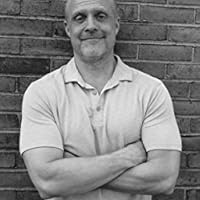
Paul Edwin Zimmer (1943 – 1997) was an American poet and author. He was also an accomplished swordsman and founding member of the Society for Creative Anachronism.
When PEZ writes a novel, he leaves nothing behind. When I finish reading a novel by him I look back and I cannot think of one more thing that could have happened within the story. This statement has never been so true as it was for this novel.
The setting in itself is nothing special and has probably been done too often since this was written. Ultimately, we're looking at a defence/siege scenario of a fortress in a fantasy setting. The dwarven citadel city is being attacked by orcs and goblins, dragons and dark things. Sound familiar? But this is not what makes this book the epic tale that it is. There are added elements that would be spoiler alerts but are what make the battles so intense. (And yes, I'll touch on spoilers, but I won't reveal all!)
The devil is in the detail, as they say. And the detail is gritty. Paul does not glaze over any of the finer detail. From the start, from the actual gathering of heroes to the journey to fortress city Rath Tintallain (in the demon forest), to the overwhelming attacks against the wall or in dwarven tunnels, or even the assault from the sky Paul leaves nothing to chance. And yet, if the story was just a description of a siege, why go into such detail? Why write it at all? This book has approximately 45 main characters. This single factor is probably the hardest to fathom I feel. You just cannot learn about them all in one reading of the book, and you cannot feel attached to so many heroes. Many of these characters have detailed (and sometimes conflicting) personalities, histories, and abilities. Yet there are a few that outshine the others.
Istvan DiVega, known as Istvan the Archer, whose personal development we follow throughout the story. Ingulf, son of Fingold, who has his own novel to tell his story. Prince Tahion, Carrol Mac Lir, and Arthfayal Mac Ronan, who all play large and important roles in the outcome of the siege.
And then there are the immortal Hasturs, the dwarves, and the elves - each of whom have their main characters highly detailed.
I feel that the main story presented is actually the interaction of the main characters while they attempt to resolve the issue at hand; the siege. For more than half of the battle Istvan, and other human heroes, feel that their presence isn't actually required. They provide nothing more than elves, dwarves or immortal mages. It is as the story develops that we realise how and why they are desperately required. But having humans amongst elves always causes problems when PEZ is writing the story. And then there is the issue of a conflicting chain of command, warriors with inferior equipment or fighting styles, or the fact that humans are not incorruptible by evil. And why exactly is there a siege occuring here anyway? What IS so special about Rath Tintallain?
Even though the first two battles are quite possibly the largest, this book scales throughout its journey. And once the battle is joined, it never lets up until there is a clear victor. And just when you think that has happened, there's one more problem about to arise.
Thankfully, many of the heroes do die. Without this, the book would be too unmanageable. And with it we gain a sense of realism, we don't just have a story where heroes are immune to danger. There is a sense of loss, and with that we can achieve a greater sense of victory.
This is not Paul's grittiest work, but I think it was probably the hardest of all his novels to read. Yet for the few who do, there is something valuable held within these covers, something worth discovering. Also, Paul gives us some more insight into the workings of his world. How evil came there in such force, how the council of seven came to almost overthrow them. But we also learn smaller details, such as how the mighty elven swords were once forged - in such a detail as you would not expect. Other authors just make a declaration; that elves can forge mighty magical swords. There is no explanations, we must assume that to have elves is to have elven swords. Paul likes us to think there is science involved as well as fantasy. Every time I read a book by Paul, I find something that I can take and apply to each of the other novels he has written. This definitely adds to the appeal.
This is a fantasy novel unlike any other. The plot revolves around a group of heroes called together to defend a critical fortress against an army made of evil creatures. The heroes are mostly from a highlands-style culture. Each is known for his great deeds, jealous of his reputation, and caught up in a web of politics that makes it very hard for the good guys to stay united to try and save the day.
The story is told from the point of view of an outsider—Istvan the Archer, perhaps the greatest swordsman currently alive. He’s very different than the highlanders in that he comes from a culture much more akin to the Italian City States and he is the commander of a mercenary company (not with him for this adventure) which means that he is used to fighting a more orderly and disciplined war than these highlanders do. The reader gets to learn about the situation even as Istvan does.
And then there are the heroes among the bad guys—notable villains who are every bit as talented and fearsome as the heroes defending the fortress. And that’s really what makes this novel work so well—watching the heroes among the bad guys face off against those among the good guys and often win the day (which is obviously bad for the forces of good). It’s a remarkable novel with many memorable scenes and an ending that will test the metal of even the bravest hero.
Not really a continuation of the series, this book instead goes back in time about 10 years. Istvan DiVega is involved in events mentioned briefly in the previous books.
Il mio 'comfort fantasy' di riferimento da quando, non ancora adolescente, lo comprai con la mancia dei nonni, divorandolo per la prima volta. In pochi libri succedono tante cose come in questo.
Assedio che fa impallidire Dros Delnoch, Le Termopili e tutti gli altri 5/5 Heroic fantasy old style 5/5 Scontri di spada 5/5 Ambientazione originale, space fantasy psionica cthulhiana ispirata a Tolkien 5/5 Copertina di Whelan 5/5 Nostalgia per i tempi andati 5/5
Published in 1987. Back in around 1983-4 I read teo "Dark Border" novels by Zimmer: "The Lost Prince" and "King Chondos' Ride". This particular one is a third but not directly related to the first two. I had always wanted to read the third book but for one reason or another never got to it. Now I have some 29 years later. It is somewhere between a cross of Conan and Tolkien in nature. Plenty of goblins, werewolves, dragons, elves, dwarves magic and human heroes. The heroes seem to be a noisy bickering lot and not necessarily grateful to be part of a force protecting "something" from the dark forces. The elves are meddling; often creating more problems than helping. The dwarves die by the hundreds against their foes. Every now and then some poetry and/or song is thrown in for good measure. The battle scenes are vividly portrayed. Zimmer, the author, was somewhat of a eccentric person in his own right and practiced swordsmanship which is evident throughout. He died quite suddenly in 1997 at the age of 54.
Now I know this book is #3 of the trilogy but I have never read the previous two novels, because I couldn’t find them, so (to me) this was always a standalone story. Unlike some books you don’t need the previous stories to know what is going on it’s a straight forward action/adventure story with a vast cast and memorable settings. The story speeds by because you can’t put the book down, it’s that good!