

What do you think?

The Minister of Evil, and the Secret of the Fox Hunter
William Tufnell Le Queux (1864-1927) was a British journalist and writer. He was also a diplomat, a traveller, a flying buff who officiated at the first British air meeting at Doncaster in 1909, and a wireless pioneer who broadcast music from his own station long before radio was generally available. He studied painting in Paris. He was foreign editor of The Globe newspaper during the 1890s. He subsequently wrote professionally. He reported on the First Balkan War. He wrote in the genres of mystery, thriller, and espionage, particularly in the years leading up to World War I. Apart from fiction he wrote extensively on wireless broadcasting, various travel works including An Observer in the Near East and several short books on Switzerland, and an unrevealing and often misleading autobiography, Things I Know about Kings, Celebrities and Crooks. He also wrote The Czar's Spy: The Mystery of a Silent Love (1905). The Minister of Evil (1918), The Doctor of Pimlico (1919), Mademoiselle of Monte Carlo (1921), The Four Faces: A Mystery (1914) and The Secret of the Fox Hunter.
- GenresHistory
308 pages, Paperback
First published January 1, 1918
About the author
William Le Queux
557 books30 followersNovelist William Tufnell Le Queux was born in London on 2 July 1864. His father, also William of Chateauroux, Indre, was a French draper's assistant and his mother was English.
He was educated in Europe and studied art under Ignazio Spiridon in Paris. He walked extensively in France and Germany and supported himself for a time writing for French newspapers. It was one of his sensational stories in The Petit Journal that attracted the attention of the French novelist Emile Zola and it was supposedly he who encouraged Le Queux to become a full-time writer.
In the late 1880s he returned to London where he edited the Gossip and Piccadilly magazines before joining the staff of The Globe newspaper in 1891 as a parliamentary reporter. But he resigned in 1893 and decided to abandon journalism to concentrate on writing and travelling. And his extensive travelling saw him visit Russia, the Near East, North Africa, Egypt and the Sudan and in 1912–13 he was a correspondent in the Balkan War for the Daily Mail. On his travels he found it necessary to become an expert revolver shot.
His first book was Guilty Bonds (1891), which concentrated on political conspiracy in Russia to such a degree that it was subsequently banned in that country. A series of short stories Strange Tales of a Nihilist followed in 1892 and from then on he was producing books on a regular basis until his death, and beyond, as a number of posthumous works were published.
His works mainly related to espionage activity and it was said that he was employed for a number of years as a member of the British Secret Service, where he was an expert on wireless transmission. He did claim to have been the first wireless experimenter to have broadcast from his station at Guildford in 1920/21 and he was president of the Wireless Experimental Association and a member of the Institute of Radio Engineers.
He stated at one time that he began writing to help finance his work for British Intelligence for whom he was required to undertake much travelling and to make personal contact with royalty and other high-ranking people. He recorded some of the latter meetings in his autobiography entitled Things I Know about Kings, Celebrities and Crooks (1923).
He was at one time Consul of the Republic of San Marino and he possessed Italian, Serbian and Montenegrin decorations. He was also a keen collector of medieval manuscripts and monastic seals.
However, all his activities did not stop him turning out novel after novel and at the time of his death he had well over 100 books to his credit.
After several weeks' illness, he died at Knocke, Belgium, in the early hours of 13 October 1927. His body was returned to England and on 19 October he was cremated at Golders Green with the Reverend Francis Taylor of Bedford conducting the service, which was attended by Le Queux's brother and a few intimate friends. (Gerry Wolstenholme, January 2013)
He was educated in Europe and studied art under Ignazio Spiridon in Paris. He walked extensively in France and Germany and supported himself for a time writing for French newspapers. It was one of his sensational stories in The Petit Journal that attracted the attention of the French novelist Emile Zola and it was supposedly he who encouraged Le Queux to become a full-time writer.
In the late 1880s he returned to London where he edited the Gossip and Piccadilly magazines before joining the staff of The Globe newspaper in 1891 as a parliamentary reporter. But he resigned in 1893 and decided to abandon journalism to concentrate on writing and travelling. And his extensive travelling saw him visit Russia, the Near East, North Africa, Egypt and the Sudan and in 1912–13 he was a correspondent in the Balkan War for the Daily Mail. On his travels he found it necessary to become an expert revolver shot.
His first book was Guilty Bonds (1891), which concentrated on political conspiracy in Russia to such a degree that it was subsequently banned in that country. A series of short stories Strange Tales of a Nihilist followed in 1892 and from then on he was producing books on a regular basis until his death, and beyond, as a number of posthumous works were published.
His works mainly related to espionage activity and it was said that he was employed for a number of years as a member of the British Secret Service, where he was an expert on wireless transmission. He did claim to have been the first wireless experimenter to have broadcast from his station at Guildford in 1920/21 and he was president of the Wireless Experimental Association and a member of the Institute of Radio Engineers.
He stated at one time that he began writing to help finance his work for British Intelligence for whom he was required to undertake much travelling and to make personal contact with royalty and other high-ranking people. He recorded some of the latter meetings in his autobiography entitled Things I Know about Kings, Celebrities and Crooks (1923).
He was at one time Consul of the Republic of San Marino and he possessed Italian, Serbian and Montenegrin decorations. He was also a keen collector of medieval manuscripts and monastic seals.
However, all his activities did not stop him turning out novel after novel and at the time of his death he had well over 100 books to his credit.
After several weeks' illness, he died at Knocke, Belgium, in the early hours of 13 October 1927. His body was returned to England and on 19 October he was cremated at Golders Green with the Reverend Francis Taylor of Bedford conducting the service, which was attended by Le Queux's brother and a few intimate friends. (Gerry Wolstenholme, January 2013)
Ratings & Reviews
Friends & Following
Create a free account to discover what your friends think of this book!
Community Reviews
Displaying 1 - 8 of 8 reviews

Did Not Finish
April 3, 2022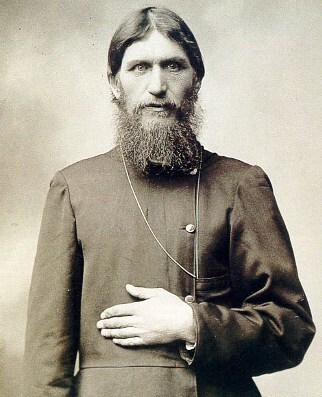
"I do not believe he was working for Germany—as he had very little notion of what Germany was and could not even pronounce three consecutive words of his own language correctly. (...)
He was an obscure being and degraded even so. He prophesied that the Tsarevitch would lose his health if he, Rasputin, should cease to support him. I should say the boy’s health would improve, now that the black arts have been removed."
Stephen Graham

January 3, 2016
I am in awe
This book has taught me about this era in Russian/Germanic history that I had never known. Rasputin was by far one of the most evil men in history yet portrayed himself as a pious Saint. How blasphemous he was.
This book has taught me about this era in Russian/Germanic history that I had never known. Rasputin was by far one of the most evil men in history yet portrayed himself as a pious Saint. How blasphemous he was.

March 8, 2016
A classic. I like the historical mystery novels, so author is one of my mainstays.
Free on Librivox.org
And
Gutenberg.org
Free on Librivox.org
And
Gutenberg.org
June 22, 2021
Fascinating! The author claimed that this was a historical account given by Rasputin's secretary, Feodor Rajevski. I suspect he is fictional, but I'm sure much of the story is true. Fact or fiction, it's a good read that takes you into the court of the ill-fated Tsar Nicholas II. It drags a little toward the end--the number of murders and intrigues start to run together, but it is relevant to our times. As the shenanigans of our modern politicians are revealed, I see parallels to Rasputin's manipulations of the Tsar and people of Russia. Perhaps we should read this story as a warning on how not to let such things happen in our own country.
January 15, 2013
This is a very interesting book. There are parts of it that feel like they have intense fictional elements about it, even though it was supposed to have been an eye-witness account of Rasputin's activities in Russia. There are also non-fiction elements about the piece as well.
I did some research about the author, William Le Queux and discovered he had written 150 fictional books and a small number of books reported to be non-fictional, including The Minister of Evil: The Secret History of Rasputin's Betrayal of Russia. If it is non-fictional and truthful, all I can say is "Wow! What an evil man!" in reference to Rasputin.
As a character Rasputin is fascinating; as a historical figure the same can also be said, but if he did the things this book claims he did, well, the man was downright evil.
There are so many questions I have concerning the factual Rasputin that I am seriously considering researching him in-depth, or as in-depth as I can possibly go via books and Internet.
I did some research about the author, William Le Queux and discovered he had written 150 fictional books and a small number of books reported to be non-fictional, including The Minister of Evil: The Secret History of Rasputin's Betrayal of Russia. If it is non-fictional and truthful, all I can say is "Wow! What an evil man!" in reference to Rasputin.
As a character Rasputin is fascinating; as a historical figure the same can also be said, but if he did the things this book claims he did, well, the man was downright evil.
There are so many questions I have concerning the factual Rasputin that I am seriously considering researching him in-depth, or as in-depth as I can possibly go via books and Internet.

October 25, 2013
I have watched films and documentaries about Rasputin over the years and this is the first piece of literature I've read on this notorious Russian.
This is a fictional account of Rasputin's life based on facts - that is facts according to Le Queux. With this being written within a couple of years after Rasputin's assassination it's hard to know how much is true and what has been exaggerated.
I recall a documentary on the events building to the 1917 Russian revolution, focusing on the Romanovs, yet Rasputin only gets a brief mention, yet according to this account he was Czar in all but name.
It seems Rasputin's life will always be an ambiguous one - and a fascinating one.
As for this account, I thought it well-written, interesting, at times morbidly fascination, though overall the first person narrative was not gripping.
This is a fictional account of Rasputin's life based on facts - that is facts according to Le Queux. With this being written within a couple of years after Rasputin's assassination it's hard to know how much is true and what has been exaggerated.
I recall a documentary on the events building to the 1917 Russian revolution, focusing on the Romanovs, yet Rasputin only gets a brief mention, yet according to this account he was Czar in all but name.
It seems Rasputin's life will always be an ambiguous one - and a fascinating one.
As for this account, I thought it well-written, interesting, at times morbidly fascination, though overall the first person narrative was not gripping.

May 25, 2014
Loved it.

August 4, 2024
Passionnant et instructif. Très bien écrit. On le lit d'une traite!
Displaying 1 - 8 of 8 reviews