This volume contains is the a series of letters between an American self-made millionaire and his son who is just entering the family business. Dating back to the 1890s, the letters contain timeless advice and words of wisdom that are as useful today as when first written. "Old Gorgon Graham - More Letters from a Self-Made Merchant to His Son" is highly recommended for anyone involved in business and not to be missed by young entrepreneurs. George Horace Lorimer (1867-1937) was an American author, journalist, and publisher most famous for being the editor of The Saturday Evening Post between 1899 and 1936. As editor, the paper's circulation rose from a few thousand to over a million. "The Letters from a Self-Made Merchant" was well known during the early 20th century and was the basis for the 1922 film "A Self-made Man" starring William Russell. Many vintage books such as this are becoming increasingly scarce and expensive. We are republishing this volume now in an affordable, modern, high-quality edition complete with the original text and artwork.
George Horace Lorimer (October 6, 1867 – October 22, 1937) was an American journalist and author. He is best known as the editor of The Saturday Evening Post. During his editorial reign, the Post rose from a circulation of several thousand to over a million. He is credited with promoting or discovering a large number of American writers, e.g. Jack London.
Lorimer was born in Louisville, Kentucky, the son of the Rev. George C. Lorimer and Belle Burford Lorimer. He attended Moseley High School in Chicago, Colby College, and Yale University. In 1899 he became editor-in-chief of The Saturday Evening Post, and remained in charge until the last day of 1936, about a year before his death from throat cancer. He served also as vice president, president, and chairman of Curtis Publishing Company, which published the Post.
This book is the preserved correspondence between Old Gorgon Graham, a self-made millionaire in Chicago, and his son who is coming of age and entering the family business. The letters date back to the 1890s but feel like they could have been written in any era. They are surprisingly stoic. Honest. Genuine. Packed with good advice. Normally these types of books are unreadably boring and personal. My version has only Graham's letters and none from his son so there is only one voice, one perspective to follow. It gives the book a sense of narrative and flow that most books of letters lack (for which they suffer). One of my favorite parts is where Graham suggests that history should be taught backwards because most people never make it up to the present. I had a history teacher do this for one class in high school and it's still the only formal education I've had on some of those subjects. I've since had plenty of time to go back and get caught up with what happened in the few thousand years prior.
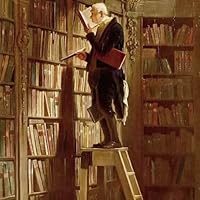
The book is in the public domain - I've never even heard it mentioned outside of Joseph Epstein's Ambition: The Secret Passion (which is also good) - so this specific copy is a little strange. It has some arbitrary pictures that obviously were not included in the letters themselves and has unusually large font. The book looks a bit like one a college textbook but don't let that fool you, it is very readable.
This is a fantastic book. The first book was great and this continues in the exact same fashion. When I read the first book I made more highlights and notes than I ever had before and this book is easily second. There is so much insight packed into each chapter. There are small sentences that are mantras for life. I really got so much out of it. Maybe it's a great time in my life to be reading this but regardless it's great. Some of the language is a little out of date and I could see that rubbing some people the wrong way. If you read this book with purpose and read analytically there is a lot of wisdom you can squeeze out. The two books are not a substitute for a father but certainly great compliments.