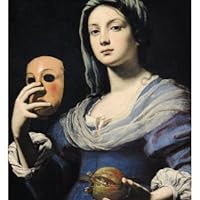
De las treinta y tres comedias que escribió Agustín Moreto (1618-1669), la más aplaudida ha sido siempre El desdén, con el desdén. Es la más ingeniosa, chispeante y la mejor desarrollada. Compite con las más lúcidas de Lope de Vega, Tirso de Molina o Calderón de la Barca. Su trama es muy Diana (dama esquiva) que ha jurado nunca enamorarse, desdeña tenazmente a sus pretendientes, y entonces uno de ellos, Carlos, decide combatir el desdén con el desdén. Pero esta trama tan simple se desarrolla a través de muchas y variadas peripecias, que son justamente las que constituyen el cuerpo de la comedia. Una buena comedia pide una buena presentación y una buena anotación. La profesora Willard F. King ha realizado a pedir de boca esta doble tarea. De las no pocas ediciones que se han hecho de El desdén, es ésta, sin duda alguna, la mejor, la más esmerada.
Agustín Moreto y Cabaña, was a Spanish Catholic priest, dramatist and playwright of Italian descent. He was educated at the University of Alcalá de Henares (1634-1637) where he studied logic and physics. He earned a Licentiate in December 1639.
Ladies and gentlemen after such a touching criticism (that of the "Siberian Girl" by Xavier Le Maistre) https://www.goodreads.com/author/show...https://www.goodreads.com/review/show... this play of the Spanish Golden Age will be commented. This work has been written by the Spaniard of Italian descent Agustín Moreto "El desdain con el desdén" (his other most famous work, which has also been read, and which will soon be reviewed is "El lindo Don Diego" also very interesting) https://www.goodreads.com/book/show/6... which is original although I liked "El desdain con el desdén"). Despite some political corrections, and concessions to the current ideologies, the prologue of both works, since they were read together has seemed good to me, and serves to familiarize oneself with the work of Agustín de Moreto, and to understand these two works. The surprising thing is that I liked them more than the plays of Juan Ruiz de Alarcon ("Las paredes oyen", and "La verdad suspicious" https://www.goodreads.com/book/show/2...) https://www.goodreads.com/book/show/1...https://www.goodreads.com/author/show... ), and more than those of Lope de Vega https://www.goodreads.com/author/show... , although my favorite will remain Pedro Calderón de la Barca https://www.goodreads.com/author/show... . "Disdain with disdain" here we disagree Professor Manuel Alfonseca, and I https://www.goodreads.com/author/show... (I guess everyone will think I'm doing it to make him rage like dwarves do with Bilbo in "The Hobbit", https://www.goodreads.com/book/show/5... but no). For him "Disdain with Disdain" had too much disdain in my opinion of my brilliant friend (I recommend his new novel "Return to Colony Earth-9" https://www.goodreads.com/book/show/6... .) In fact it is pure homeopathy this play of the Spanish of Italian descent similia similibus curantur. That is, to conquer an indomitable woman (almost an Amazon, a real Diana, as the name of the protagonist suggests. It is actually a prototype of the French intellectual that will be in vogue from the French eighteenth century. The typical pedantic woman, who has been indoctrinated in hatred of the male sex whom she disdains). In fact, it is a precedent of the War of the sexes. A comedy that is at the end of the Baroque (the Novatores are noted successors of the arbitrators, and predecessors of that enlightened Frenchness). It's pure Slapstick, and a screwball. The protagonist the Count of Urgell (title disappeared in the sixteenth century, which has decisive historical importance in the history of Spain, since in the fifteenth century the last Aragonese monarch Martin I the human died, and to succeed him two candidates Fernando de Antequera were presented who was the victor of the ruling family in Castile the Trastámara where the Catholic Monarchs come from, and the other contender was the Count of Urgell. The ruling was pronounced by San Vicente Ferrer https://www.goodreads.com/author/show... ) she is in love with the daughter of the Count of Barcelona (who is a calzonazos, and is afraid of her daughter. The expression calzonazos is used with the male who is dominated by the women of his environment, or consents them too much). Diana is a very Frenchified woman, and the prototype of the enlightened, who values wisdom more than love, and does not like men. Take pleasure in snubbing them, and despise them. So the protagonist (Carlos) showing that he is very intelligent, and brilliant (something very rare, because he is not usually the hero of the theater of the golden age so intelligent, and it is usually the funny one who shows intelligence, and who frees him from the worst troubles with his wit. This is one of the charms of this work.) But this time the idea comes from the hero, who has a plan to put the funny Moth as a fifth columnist with the plan to win Diana's will, and provide the ground for the protagonist (Moth the name of the funny man will pretend to agree with his anti-masculine disdain, and will prepare it for Don Carlos the Count of Urgell). Charles's plan is very simple to feign disdain for disdainful to surpass the counts of Bearn, and Foix (titles of Catalan-French regions. At this time the Spanish-French domination was disputed by Roussillon, and the Cerdanya that the Spaniards lost with the Treaty of the Pyrenees, skillfully negotiated by the sevidor of Louis XIV Hugo de Lionne), and that this one wishes to have what it cannot have. This reminds us of that story of Count Lucanor by the Infant Don Juan Manuel https://www.goodreads.com/book/show/6...https://www.goodreads.com/author/show... and William Shakespeare's Taming of the Shrew, https://www.goodreads.com/book/show/4.... The opposite case is that of the play "Lost Love's Labours" by William Shakeseare https://www.goodreads.com/book/show/3...https://www.goodreads.com/author/show..., where the opposite happens, and it is the Queen of France, and her female entourage who seduce King Don Ferdinand of Navarre, and his court of friends, who had made a vow to devote themselves to study, and renounce the earthly pleasures of any kind, giving them a little lesson. As the Gospel would say "The spirit is ready, but the flesh is weak", and we must recognize it just as here Charles defeats the female in Shakespeare's play, male pride is seriously defeated by ingenuity, and the charm of women Another case of feminine cunning in which the wit, and the charm of a woman triumphs against an unredeemed misogynist is in the charming work "La Locandiera" by Carlo Goldoni https://www.goodreads.com/book/show/3... (https://www.goodreads.com/author/show... an erotic version of it was made). But this in my modest opinion is much better, than those cited, except "La Locandiera" that I love, since Mirandolina is adorable, and the female prototype of Don Juan https://www.goodreads.com/book/show/6...https://www.goodreads.com/author/show...https://www.goodreads.com/book/show/8...https://www.goodreads.com/author/show... (I do not want to imagine, what would happen if both characters coincided, although one lives in the sixteenth century, seventeenth, and the other is the daughter of the eighteenth-century Enlightenment). The work of Don Carlos will not be easy, since he has to feign disinterest in the person who matters most to him in the world, and it is an unbearable internal torture (which gives more incentives to the work). It is very interesting both the description of the gardens, and the music that influence the plot. The ending is hugely sympathetic, reminiscent of Jane Austen's novels https://www.goodreads.com/author/show... . Some have branded the protagonist as Machiavellian and immoral, but it does not seem to me that he does anything wrong (on the contrary, but to demonstrate his cunning, and ingenuity. In fact, I find it much more questionable what Mosquito will do in the same author's "Lindo Don Diego"). In fact, it is an antidote to these times of intolerance, bigotry, dogmatism, and political correctness. My grade is (4/5).
Obra más memorable y reputada de Agustín Moreto, de nuevo es un divertido enredo amoroso en ambiente palaciego.
Como buen seguidor de Calderón, abundan las largas relaciones llenas de inventiva conceptista sobre el amor, los celos, el entendimiento, la inclinación, los agravios y un sinfín de abstracciones, pero siempre de forma graciosa y oportuna.
Los personajes vuelven a ser las típicas figuras de la baraja habituales de la comedia palaciega, pero aquí con particularidades y defectillos que los individualizan hasta cierto punto.
Lejos de la gracia y la vivacidad de las obras de Lope o Tirso, y de la volatilidad y gracejo de sus personajes, las comedias palaciegas y de capa y espada de Moreto son herederas de Calderón, y por ello más centradas en el mecanismo perfecto, en la estructura irreprochable, en dar otra vuelta de tuerca al enredo sentimental de sus predecesores.
Aun así la trama no resulta especialmente complicada, al no tratarse de un enredo que se complique y se desarrolle acto tras acto. Divertida sin más.
While I'm familiar with other writers of the Spanish Golden age, I was not very familiar with Moreto (who actually was a bit later than Calderon). This is a wonderful version of a very fun play translated by Dakin Matthews with the express purpose of performance (at the Old Globe in San Francisco, and I wish I could have seen it). Matthews notes in the appendix that his fidelity in translating was to express Moreto's theatrical intentions rather than the strict letter of the text. Therefore, he has sometimes substituted English equivalents for the puns, jokes, etc., and this ensures the text is not stiff. And, he has included rhyme, since the original followed various typical rhyming schemes of the day. This also helps the language flow and just begs to be read aloud. I will have to explore more of Moreto's plays. While the story is uncomplicated, the 2 main characters have a wonderful "Beatrice and Benedict" like sparring and transformation. Kudos to Dakin Matthews and the Old Globe for such a fine job with a rare gem. I wish more Spanish Golden Age plays would be performed in the U.S.