Jump to ratings and reviews
Rate this book

A winter in the hills

Rate this book
'[A] triumph of mature observation and art.' - Daily Telegraph'A winter's tale of light and laughter.' - Sunday Times'What is especially enjoyable is the rough-edged tenderness and kindness of Mr Wain's concern ... probably his most substantial achievement to date.' - Robert Nye, Saturday Times Review'[S]ubstantial and serious ... sustains a vigorous narrative line - he has always been an excellent storyteller.' - Times Literary Supplement'[A] love affair between its author and North Wales itself.... It is a novel with its heart in the right place, and it knows where the right place is.' - The Observer'Clever and entertaining.' - The GuardianRoger Furnivall is a forty-year-old philologist with no money and no sex life. But he thinks he's found a way to solve both a cushy university post in Sweden pays well and promises access to plenty of beautiful blondes. There's just one the job requires a knowledge of Welsh. Taking a sabbatical in North Wales to learn the language, Roger expects a long and dreary winter of linguistic study, but instead quickly finds himself drawn into the drama of local affairs. A large corporation seeking a monopoly has squeezed every bus operator out of business but taciturn hunchback Gareth Jones is the lone holdout. Seeing in this one man's struggle for survival against the faceless forces of corporate greed a problem more important than any he has ever faced, Roger is moved to help. But when the company's hired thugs begin to make attempts on his life, Roger discovers that his winter in the hills may end up being much more than he had bargained for ...John Wain (1925-1994) catapulted to fame with Hurry on Down (1953), the defining novel of what the media called the 'Angry Young Men' movement, but it was in his later works, in which he explored the unresolved place of the individual in a world of social change driven by abstract and impersonal economics, that he was at his best. This edition of A Winter in the Hills (1970), one of his finest novels, includes a new foreword by Will Wain.

384 pages, Hardcover

First published January 1, 1970

6 people are currently reading
132 people want to read

About the author

John Wain

148 books17 followers
John Barrington Wain was an English poet, novelist, and critic, associated with the literary group "The Movement". For most of his life, Wain worked as a freelance journalist and author, writing and reviewing for newspapers and the radio.

Wain was born and grew up in Stoke-on-Trent, Staffordshire, the son of a dentist, Arnold Wain, and his wife Annie, née Turner. He had an older sister and a younger brother, Noel. After attending Newcastle under Lyme High School, he entered St. John's College, Oxford, gaining a first in his BA in 1946 and MA in 1950. He was a Fereday Fellow of St. John's between 1946 and 1949. On 4 July 1947, Wain married Marianne Uffenheimer (b. 1923 or 1924), but they divorced in 1956. Wain then married Eirian Mary James (1920 - 1988), deputy director of the recorded sound department of the British Council, on 1 January 1960. They had three sons and lived mainly in Wolvercote, Oxford. Wain married his third wife, Patricia Adams (born 1942 or 1943), an art teacher, in 1989. He died in Oxford on 24 May 1994.

Ratings & Reviews

What do you think?
Rate this book

Friends & Following

Create a free account to discover what your friends think of this book!

Community Reviews

5 stars
38 (33%)
4 stars
49 (43%)
3 stars
20 (17%)
2 stars
6 (5%)
1 star
0 (0%)
Displaying 1 - 13 of 13 reviews
Profile Image for Nataliya.
986 reviews16.1k followers
April 27, 2023
I remember finding John Wain's A Winter in the Hills on a dusty library shelf, with the library borrowing slip inside its front cover stamped only a couple of times in at least a decade it spent there. In the years since I haven't met anyone who has heard of this book. For some reason it seems to exist in relative obscurity. (3 reviews on Goodreads in 2014? That's all? Really? Huh). Strange - after all, it made enough impression on me not only to remember it through the years but also to hunt down a copy now, for the long-overdue reread.

I've noticed that it's rather hard to escape the gnawing apprehensive feeling I get when deciding to re-read an old favorite. I can help wondering: Will it hold its own against the older me? Will it still have the same pull years later?

Well, yes and no.

Was it as amazing as I remembered? No, not quite, seen now through less rosy-tinged glasses. It did not age as gracefully as some books do, and some flaws became more prominent with time.

But does it deserve the banishment to the obscurity, relegated to a dusty shelf in a corner of the library frequented only by couples with no better place to go for some hanky-panky? Absolutely no. It's too good for that, and too good to be forgotten. Dated in some ways, it's still very relevant in others.

John Wain's 1970 novel A Winter in the Hills is a story of a middle-aged English philologist unexpectedly becoming caught in the middle of a conflict between the rich and the not-so-rich in a small community in North Wales. On what was planned to a be a sabbatical dedicated to learning the Welsh language, Roger Furnivall meets a local bus driver, Gareth, who is about to lose his livelihood to a local rich crook, Dic Sharp, whose goal is quick profit from the sale of all the local bus service to a large English monopoly. The other bus drivers have all sold their buses after relentless threats and violence; Gareth stubbornly holds on. On an impulse, Roger offers his help to Gareth and finds himself in the middle of more trouble than he bargained for.

At the beginning, Roger Furnivall is not the most likable guy. Initially he appears quite shallow, driven in most of his actions by a vain search for any woman who'd sleep with him, taking it as almost an affront when they do not, walking on the edge of overt sexism with the blissfully clueless pre-political correctness attitude. It's only later, as he goes through some major character growth, that the outer crass and selfish layer is peeled off and we get to see what lies at the core of Roger's misery - his loneliness and isolation from others, his quiet desire to find people who'd be willing to enter his life. As these emotions eventually rise to the surface, he becomes painfully human:
"An outcast in cold, wet clothes, his hair plastered to the side of his head, Roger felt his bones aching with pure grief. I need happiness! he wanted to shout, suddenly, into the gusts of rain. I can't go on like this! Make room for me somewhere, let me live! The words came so strongly to his mind that he could not be sure he had not howled them aloud."

Ethnic issues are quite important in this story. Roger in an Englishman who temporarily moves to North Wales and is surprised to find himself an outsider in a small Welsh community, both culturally and linguistically - a gap that takes quite an effort to bridge, to build trust, to overcome the weight of the centuries of quiet resentment the people of a smaller nation can still harbor towards the 'conqueror' dominant nation. He learns to respect and admire the facets of the culture that some of his bigoted acquaintances dismiss as a 'dead end'.
"Welsh talk washed over him as he rounded a corner. Didn't these people know they had been officially classed as an anachronism? Who gave them permission to go on living above ground?"
Besides ethnic issues, social tensions are at the core of this book. It's the eternal struggle between the rich and the poor, the haves and the have-nots, those trying to stuff their pockets and those just trying to survive. Both Roger and the author himself are clearly on the side of 'little people', even if the fight for survival seems grim and hopeless, even when a larger battle seems impossible to win. Because sometimes even the smallest victories are worth it. Because rich cannot - and should not - always mean powerful, and it's worth to remember that.
"Every battle, every skirmish in every battle, every hand-to-hand struggle round a slit trench, is a separate episode. A separate victory for one, a separate defeat for another. They're not tempted to add it up. They live from day to day, from one clash with the enemy to the next. That's why they're rejoicing now. They're not fools - they don't think their troubles are over. They know their lives will be one struggle after another, and at the end of it, every one of them will lose, because death will cut him down. There'll always be that one last fight that no created being can win. So when they've had a hard day's fight and won some ground that they can see, they rejoice and enjoy themselves and take a drink when it's offered them. Look at them, girl, and tell me if they aren't right."
Overall it's a quiet but engrossing book, focusing not on grand occurrences but on smaller quieter events in life - and it's done quite well, meriting recognition even now. I don't regret rereading it, and I can still see quite a bit of magic - the one only good writers can make - that made me love it back when I was quite a bit younger.

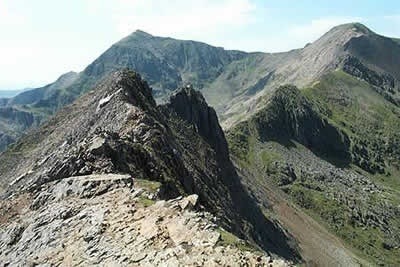
If you ever come across this book on a dusty library shelf, I hope you'll pick it up and spend a few hours with it. Who knows, maybe it will speak to you as well.

3.5 stars.

——————
Also posted on my blog.
Profile Image for Tom.
676 reviews12 followers
February 7, 2012
This was one of those rare books that I really didn't want to finish. Roger, an Englishman who comes to North Wales to learn the language so that he can get a better paid job in a unversity gets caught up in the lives of those living there and a battle between a small time bus operator and an unscruplious businessman. Wain really manages to get the atmosphere of N. Wales into this book, a pleasure to read.
Profile Image for Димитър Тодоров.
Author 1 book39 followers
April 18, 2023
Краят на 1960-те. Филологът Роджър Фърнивал, наскоро навършил 40, погребва в Лондон душевно пострадалия си брат, на грижа за когото се е бил посветил с цената на саможертва в личния си живот, и прави план. Ще прекара една зима в северен Уелс, където сравнително най-много хора ползват уелски във всекидневието си; ще общува с тях, ще го научи, ще публикува студия с фокус върху фонетиката; ще събуди с нея интереса на университета в Упсала и … ще го поканят да чете лекции пред пълни аудитории блондинки със сини очи. Сред които ще направи своя избор. Очевидният (но не и за него) недостатък на плана е непредвидимостта на събитията в Уелс през въпросната зима. И на времето! Метеорологическото. Астрономическото е абсолютно и, без да е проверил предварително, зимата ще приключи точно в деня на Св. Давид – патрона на княжеството – на 1 март. Ако се падне и събота, кулминацията на събитията да се счита за насрочена. Но дотогава? Как ще го посрещнат, ще го приемат ли, ще му се доверят ли, ще се отворят ли към него или веднага ще му друснат един тупаник. И дали търсеният избор няма да му се предостави, без да се налага да пътува за Швеция. Как да предположи, че доброволно ще поеме длъжността кондуктор с кауза. На стар модел селски рейс, правещ по няколко курса на ден към окръжния град с големия замък на брега на Ирландско море. И че в живота му ще се забъркат поне три жени. Ако не броим плашливата хазяйка, вечно недоволната от маршрута на боклуджийската служба английска вдовица, сляпата майка на интровертния шофьор и мистериозната фройлайн Инге, чийто външен вид до последно остава като тест за въображението му. Носталгичен гъдел за читателя от половин век по-късно е, че в книгата се разрешава, даже се приема за най-нормалното нещо, единият положителен герой да пие бира, преди да вози пътници, а другият да си закопава пластмасовите отпадъци в двора на параклиса. Забавно е как английски автор пише за Уелс, ужким именно да ни запознае с тяхната гледна точка на културно потиснато племе, подложено на езикова асимилация. Подобно на франкофоните в Канада и на бретонците във Франция. Или още по-назад - чероки в Северна Америка. Но както им е дал думата, така и не е устоял да я преведе с лично отношение. Когато става дума за социалните им каузи (освен боклуджийската!) и борбата им за оцеляване пред местните бабаити, е напълно сериозен. Но по темата за езика и поезията на келтските езици (не е само уелски) не може да устои и се отпуска в добронамерена насмешка. Изведнъж се превръщат във Вазови Чичовци. Че даже и Боримечка с черешово топче си имат. Италиански военнопленник, предпочел да научи уелски вместо английски в новата си родина. Разбира от наливна бира и пластичен експлозив.
Profile Image for Vishy.
810 reviews287 followers
February 13, 2024
A few years back one of my friends told me this story. She said that she went to the library and discovered a book by a writer she'd never heard of before. She borrowed the book and read it. She loved it so much that she read it again. She didn't have the heart to return it to the library. So she went to the library and told the librarian that she'd lost the book and she paid the fine for it. I asked my friend who was this writer who impressed her so much and what was the name of the book. My friend said that the writer's name was John Wain. (Yes, you are reading it right, it is John Wain, not John Wayne.) I'd never heard of him either.

So after hearing my friend's story, I thought I should read a book by John Wain. They were hard to find at that time – they were mostly out-of-print and pre-loved copies were hard to find. So I gave up at that time. Recently, when I remembered John Wain again, I thought I'll look for his books. I discovered that old editions of his books were available, and some of them have come back into print. I liked the title 'A Winter in the Hills', which was very evocative, and got it. I just finished reading it today.

The main character in the story, Roger, is a professor at a university in London. He has taken a break from work and is in North Wales now. He hopes to spend a few months there and improve his Welsh. During this time his life gets entwined with that of the locals. One of them is Gareth who runs a bus service. Unfortunately for Gareth, a bigger operator is trying to crush his business and buy him off. But Gareth is an old-fashioned Welsh person. He decides to resist. And Roger decides to help him. What happens after that forms the rest of the story.

There is good news and bad news. First the good news. I loved that main plot. The struggle of the little man against the big, rich men, and how the little man finds the courage and energy to resist oppression is a tale as old as time, and it is beautifully told here. Gareth was one of my favourite characters in the book. He was big, quiet, brooding and for me, very likeable. Another of my favourite characters was Gareth's mom. She comes only briefly in the book, but she steals the show there. She is a strong character who is kind and I loved all the scenes in which she makes an appearance. There is a scene in which Roger visits Gareth's home and meets him mom for the first time, and that was one of my favourite parts in the book.

Now, the had news. Our main character, Roger – whenever he meets a woman, he objectifies her. He has only one thought in his mind. He wants to have sex with her. He has sexual fantasies about her. First he meets a young woman who is rich and invites her for a hike in the mountains. Later when they are resting, he tries to have sex with her. She rejects him. Later he meets another woman who is married and invites her home for dinner. She accepts his invitation and comes, but later when she discovers his intentions, she rejects him. Later he meets another woman and invites her for dinner. She accepts his invitation at first, but later stands him up. Then Roger takes out a thick sheaf of paper writes a long letter to the second woman, the married woman, and sends it to her. At this point, we don't know whether to laugh or to cry. We want to scream at Roger, "What are you doing, man? Why are you doing this? Don't you get the message? These women are not interested in you. They are not going to do it with you. What do you have to offer? You are a 40-year old academic. You don't have much savings in your bank account. Your present job is unstable and not high-paying. Can you make any of these women happy? You can't. So why are you just keeping at this? Instead of doing this, why don't you go and teach some poor kids at school? You'd have done a good deed, and you'd have improved someone's life. Maybe someone will see you doing a good deed and might fall in love with you." In one of my favourite Chinese series, 'The Rational Life', one of the characters is courting a woman, and at this time another character asks him, "Nǐ shì shéi? Nǐ yǒu shénme?" ("Who are you? What do you have?") I wanted to scream that at Roger – "Nǐ shì shéi? Nǐ yǒu shénme?" But Roger was not listening, of course, and he stumbles into one pitfall after another.

I know this kind of stuff was quite common in literary fiction in the 1970s – objectifying women, describing the main male character's sexual fantasies – and these were probably regarded as art at that time and probably praised by reviewers, but now it is just annoying to read this. It just makes us angry to think that people wrote stuff like this.

So the book really has two parts. One part is the fight of the little man against oppression. The second part is what I've described above. If you're ready to wade through this second part to reach the first part, you'll find it rewarding, because that first part is really good, and it is worthwhile to make the acquaintance of Gareth and his mom and his friends. But it is hardwork wading through that second part. It is really frustrating. And towards the end, in the last 50 pages, the story collapses into a screwball comedy and gets even more annoying.

After reading all this, if you still decide to read this book, I wish you best of luck. I hope you like the first part as much as I did, and I hope the preceding annoyance was worth it.

Have you read this or any other book by John Wain?
Profile Image for Stephen Hayes.
Author 6 books135 followers
October 31, 2024
A Bildungsroman about Roger Furnivall, a middle-aged philologist who goes to Wales to learn Welsh in order to further his career, and learns a lot about human relationships as well as about the Welsh language.
Profile Image for Szeee.
443 reviews66 followers
March 20, 2016
Ahh, hogy lehet ilyen jól írni? :)
Mikor kezdődik az igazi élet, ha nem akkor, amikor egy londoni értelmiségi, nyelvész ember nyelvtanulás céljából beveszi magát a észak-walesi hegyek közé, az apró kis falvakba, hogy egy helyközi buszjáraton legyen kalauz? :)

Ez a történet valahogy klasszikus, egyenes vonalú, kiszámítható. Wain azonban olyan derűvel, kritikus, de emberszerető módon, az irodalom gazdag eszköztárát megcsillogtatva díszíti fel, hogy nem lehet félretenni.
Különösen tetszett az ember rafinált kis gyengeségeinek a megvilágítása, olyan dolgoké, amiket magunk is elkövetünk vagy érzünk gyarlóságunkban, de fel sem tűnik. Ezeket olvasva akár kellemetlenül is érezhetnénk magunkat, ha az író nem elfogadóan írná le őket: olyan "látom a hibáidat, de ezekkel együtt szeretlek" módon.

Áh, ritka jó olvasmány volt, én mondom.
Profile Image for Mike.
Author 9 books15 followers
September 14, 2010
Written in the '70s so the problems are dated, but Wain had good insight into characters and their motives.
He has a great touch at settings and one can feel the chilly weather in the North Wales mountains.
Hardly action-packed, but the narrative moves along well enough because his observation of common events is fresh.
Profile Image for Christopher.
991 reviews3 followers
January 10, 2021
I'm going to say that this book is not for me. It is a "midlife crisis novel," about a forty year old academic who is trying to learn Welsh in a small town. What the novel spends most of it's time with is his attempts to get a woman, which come off chauvinistic in their portrayal at best by today's standards. The boo moves at an absolute snails pace, and nothing much happens, though Wain will often show an ability to give rich insight into character here and there. But mostly I found the book to be incredibly dull.
Profile Image for Preetam Chatterjee.
6,833 reviews368 followers
March 5, 2020
Roger Furnival, 40, a London philologist, taking a sabbatical, travels to North Wales for attaining expertise in Welsh with an eye to add to his resume, so that he can get a better job. There, Roger gets involved in an incensed row of transport operators. Dic Sharp has bought up all small bus operators apart from taciturn hunchback Gareth Jones, who puts up brawny resistance.

Roger comes to his abet by offering to act, voluntary, as his conductor. He thwarts all of Dic's malevolent machinations of victimisation against Gareth, including a murderous battering by his thugs.

Tipped off by his agents in the Transport Board on the imminent nationalisation of transport services, Dic auctions off all his buses, so that all the ousted bus-men get back their buses cheap.

They celebrate this victory over Dic by joining in the festivities that are being held on the occasion of a Colloquium of Celtic poets.

Dic and the economists think the bus operators are dunces to celebrate, for they have gained only a year's breather before being ingested by the Government. Roger, however, justifies the merriment on the ground that the bus-men's life is a recurrent mêlée for survival and each episode in that skirmish has its import as triumph or failure. The Government's viewpoint is uncongenial.

A great part of the book is filled with the sexual escapades of the protagonist, in lingo that does little acknowledgment to the author. Roger ends his winter in the hills by carrying off a former colleague's wife and two unearned children.
Profile Image for CQM.
266 reviews31 followers
April 13, 2020
If you like books about English philologists in Wales then this is the book for you.
A serious but occasionally funny story of a man leaving the past behind and discovering something of humanity.
Not for the faint hearted in the main characters thought on women but if you can get by them you realise that actually he is lying to himself for much of the book and covering up his true feelings.
Must try more of this chaps work.
Profile Image for Oleg Moskalev.
1 review
July 11, 2016
It is so lovely old-fashioned lefty naive book, I think I like it a lot. If you have couple of days you can take it.
1 review
January 27, 2023
Интересно, преди 3 дни видях, че има коментар на друг българин.

Романът те въвлича трудно, но упорито в събитията си. Умерената разхвърляност на събитията, може да ви накара да не усетите лесно замисъла на автора.
Има и някак си едно странно несъответствие в личността на главния герой в началните глави на романа.
Творчеството успешно представя социалния сговор и сдружението към пътя за успеха.
Добро четиво за зимните дни.
Profile Image for Felicity.
388 reviews14 followers
May 22, 2022
Quirky local drama set in Wales, relating to buses, love & coming to be accepted as an outsider.
Precursor in style to Marina Lewycka maybe.
An engaging & amusing read.
Displaying 1 - 13 of 13 reviews

Can't find what you're looking for?

Get help and learn more about the design.