

What do you think?

The World's Greatest Unsolved Mysteries
In this truly bizarre collection, Damon Wilson investigates the full stories behind some of the most incredible phenomena that have baffled scientists and fascinated the rest of the world for millennia.
What causes frogs, periwinkles and even jelly to fall from the sky? How can people just disappear? Why do some objects seem to bring misfortune on the people who come into contact with them? Do people really combust spontaneously? Who or what caused everyone on board the Mary Celeste to abandon ship? Why have so many vessels and aircraft disappeared in the Bermuda Triangle? How much of the legend of the vampire is based on truth? Are there such things as miracles?
These questions and many more are explored inside . . .
What causes frogs, periwinkles and even jelly to fall from the sky? How can people just disappear? Why do some objects seem to bring misfortune on the people who come into contact with them? Do people really combust spontaneously? Who or what caused everyone on board the Mary Celeste to abandon ship? Why have so many vessels and aircraft disappeared in the Bermuda Triangle? How much of the legend of the vampire is based on truth? Are there such things as miracles?
These questions and many more are explored inside . . .
- GenresNonfictionParanormal
485 pages, Hardcover
First published January 1, 1994
Ratings & Reviews
Friends & Following
Create a free account to discover what your friends think of this book!
Community Reviews
Displaying 1 - 6 of 6 reviews
October 5, 2014
I was expecting this book to be sensationalist, being a collection of unsolved mysteries. The first two sections were...shockingly rational. The editor (author?) doesn't take sides in the issues, and instead focuses on simply relaying the facts of the subject at hand, provides historical case studies (nothing newer than 1970 is mentioned), and the various explanations that have been attributed to each mystery.
Each mystery has a sort of "what if..." explanation, but there's no attempt to claim a solution to any of the cases. It's all merely speculation.
The only real break in impartiality in the first two sections was the chapter on the Loch Ness Monster
...which may not sound like a biased opinion, except it's the first time in the book where the author takes an "us vs them" stance on a topic.
I actually ended up learning quite a bit from this book. For instance, I had not known that werewolves and lycanthropes are not the same thing.
That quote ended up making me laugh quite a bit, seeing as how lycanthrope has become one of the more popular terms to use for wolf shifters, when people don't want to call them werewolves. In my mind, I've been going back through books that use the lycanthrope term, and picturing the characters only thinking they can turn into wolves.
I also did not know that Zora Neale Hurston collected accounts of zombies.
I learned to have a new appreciation for all those cheesy b-movie creature features, where a monster would kidnap a woman, and a man would have to come save her.
I'm never going to be able to see Eegah the same way again. That paragraph makes the movie's premise sound like straight-up art.
I also learned that fans of grunge, and emos are really just wanna-be Bigfeet.
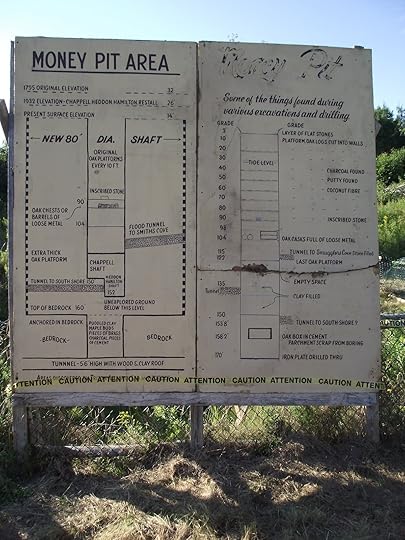
The book wasn't full of supernatural phenomena, either - there were, occasionally, genuine mysteries thrown in, such as the Money Pit on Oak Island. There's nothing supernatural about the Pit, but to this day we don't know who built it, or what, if anything, is down there.
Despite the book's strong start, the final section of the book throws all sense of impartiality out the window.
(You have no idea how hard I tried to find a gif of that scene from The Emperor's New Groove. You know the one I mean.)
The entire section on magic, esp, and psi offers no other viewpoints than "it's totally real, you guise!" This strange fascination with the occult leads to some absolutely contradictory examples.
Take the case of Madame Blavatsky. The book says,
and then, a few paragraphs later, the chapter is summed up with,
...which might not seem like too bold a statement. Except this all came after it was well established that Madame Blavatsky's best shows of magic were the Letters, Koot Hoomi, and the manifestations. All of her most famous feats were proven to be fake. Yet it's fairly certain that she was genuine?
I call bullshit.
Also, apparently the way to make magic or spiritual stuff like that work is to really, really want it to happen.
Yes. Because desperately wanting something supernatural to happen won't, in any way, affect your perception of what happens.
In general, though, the book was a fun read. The writing wasn't dry, which is always a worry when the book relies so much on historical cases, and scientific explanations. And, aside from the last section, the book manages to maintain a fairly balanced view between belief and skepticism.
Each mystery has a sort of "what if..." explanation, but there's no attempt to claim a solution to any of the cases. It's all merely speculation.
The only real break in impartiality in the first two sections was the chapter on the Loch Ness Monster
Could they have used their skills of adaptation and hiding to penetrate the depths of oceans and lakes and find a way to survive? It is not entirely impossible. After all, huge sea animals really did exist. They are not a figment of our imagination as some sceptics seem to imply. Let us explore the possiblities that may defy the sceptics. (pg 260)
...which may not sound like a biased opinion, except it's the first time in the book where the author takes an "us vs them" stance on a topic.
I actually ended up learning quite a bit from this book. For instance, I had not known that werewolves and lycanthropes are not the same thing.
In reaching their verdict the court had to decide whether Roulet was a werewolf, as he claimed, or a lycanthrope, which is related but different. A werewolf is a living person who has the power to change into a wolf. The word comes from Old English wer, meaning man and wolf. A lycanthrope is someone suffering from a mental illness that makes him believe he is transformed into a wolf. (pg 171)
That quote ended up making me laugh quite a bit, seeing as how lycanthrope has become one of the more popular terms to use for wolf shifters, when people don't want to call them werewolves. In my mind, I've been going back through books that use the lycanthrope term, and picturing the characters only thinking they can turn into wolves.
I also did not know that Zora Neale Hurston collected accounts of zombies.
Haiti is the home of the zombie and the island abounds with stories of people who have died, been buried, and reappeared as walking corpses, sometimes years later. One of the most famous cases, first recorded by American writer Zora Hurston in 1938, is still recounted in Haiti today. (pg 186)
I learned to have a new appreciation for all those cheesy b-movie creature features, where a monster would kidnap a woman, and a man would have to come save her.
Certainly the role of the wild man as our second self comes across strongly in stories of courtly love. Among the aristocracy, marriage and romantic love were kept separate. A lady might be married and yet also have a spiritual lover whose behavior towards her was marked by extreme respect, even worship. He performed brave actions to win her approval, offered her songs and poems but never dared to approach her sexually.
Obviously maintaining such an artificial and idealized relationship would have been a strain on both parties. The interior struggle between courtly ideal and natural inclination found expression in innumerable stories and pictures of the knight subduing the wild man for the sake of the lady. Often the lady is abducted by the wild man and carried off to his cave. The knight appears on the scene just in time and, after a battle, slays the wild man. (pg 206)
I'm never going to be able to see Eegah the same way again. That paragraph makes the movie's premise sound like straight-up art.
I also learned that fans of grunge, and emos are really just wanna-be Bigfeet.
A current example of the appeal of the wild man image is the hairy look favored by some young men. It is not merely a matter of wearing the hair long, which was fashionable and acceptable in society until the last century. It is a matter of leaving long hair uncombed and unwashed to suggest an intentional rejection of civilization and an affinity with raw nature.
Similarly, in listening to some of the more extreme types of rock music popular in the last three decades and in observing modern dancing, with its tacit rejection of form and its celebration of the primitive, we are tempted to think that the wild man has been absorbed into modern man's self image. (pg 207 - 8)
The book wasn't full of supernatural phenomena, either - there were, occasionally, genuine mysteries thrown in, such as the Money Pit on Oak Island. There's nothing supernatural about the Pit, but to this day we don't know who built it, or what, if anything, is down there.
Despite the book's strong start, the final section of the book throws all sense of impartiality out the window.
(You have no idea how hard I tried to find a gif of that scene from The Emperor's New Groove. You know the one I mean.)
The entire section on magic, esp, and psi offers no other viewpoints than "it's totally real, you guise!" This strange fascination with the occult leads to some absolutely contradictory examples.
Take the case of Madame Blavatsky. The book says,
In 1884 the bombshell came. A housekeeper with whom Madame Blavatsky had quarrelled told a Western journalist that most of the magical effects were merely tricks. The Mahatma Letters were simply dropped through a crack in the ceiling of the room in which the disciples had gathered and the seven-foot-tall Koot Hoomi was actually a model carried around on someone's shoulders. Examination of a cabinet in which many manifestations had occurred revealed a secret panel. (pg 375)
and then, a few paragraphs later, the chapter is summed up with,
In retrospect, it seems fairly certain that Madame Blavatsky was a genuine medium of unusual powers. It is more certain that, when her somewhat erratic powers were feeble, she helped them out with trickery - a temptation to which dozens of bona-fide mediums and magicians have succumbed. (pg 376)
...which might not seem like too bold a statement. Except this all came after it was well established that Madame Blavatsky's best shows of magic were the Letters, Koot Hoomi, and the manifestations. All of her most famous feats were proven to be fake. Yet it's fairly certain that she was genuine?
I call bullshit.
Also, apparently the way to make magic or spiritual stuff like that work is to really, really want it to happen.
How do we make contact with such forces? The answer seems to be that you have to want to with an intense inner compulsion. (pg 380)
Yes. Because desperately wanting something supernatural to happen won't, in any way, affect your perception of what happens.
In general, though, the book was a fun read. The writing wasn't dry, which is always a worry when the book relies so much on historical cases, and scientific explanations. And, aside from the last section, the book manages to maintain a fairly balanced view between belief and skepticism.
May 17, 2020
Some chapters were of more interest to me than others. Part three was the one that was a harder read for me. So it took much longer to read.
September 9, 2011
Great compilation, although the drafting could have been better..


1
September 24, 2008amazon.com

August 31, 2017
to-read
Displaying 1 - 6 of 6 reviews